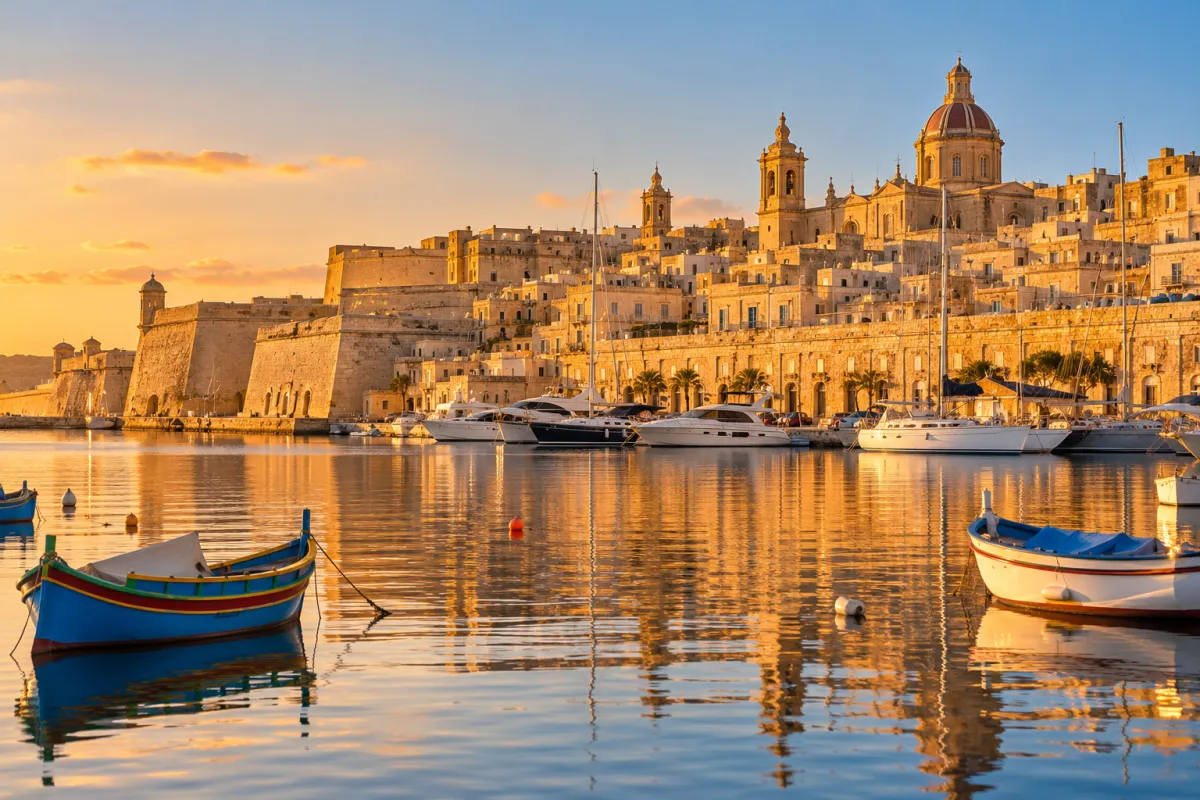
Living in Birgu and the Three Cities means swapping Sliema’s apartment blocks for limestone alleys, a working harbour and a short ferry hop to Valletta instead of a crawl along the coast road. For a lot of newcomers it is the part of Malta that finally feels like the postcards, and it is still quieter than the St Julian’s strip.
It is not for everyone, though. The streets are steep and narrow, parking is tight, old houses can be damp, and the evening crowd is local families rather than other expats. This guide is written for people in their twenties and thirties arriving alone who want to know, practically, whether Birgu (Vittoriosa), Senglea (Isla) or Cospicua (Bormla) would suit them, and how to rent there without getting burned.
Every price below is dated and linked to the official source. Where there is no verified figure, such as rents, we describe the market honestly rather than invent a number.
Living in Birgu and the Three Cities: the honest overview
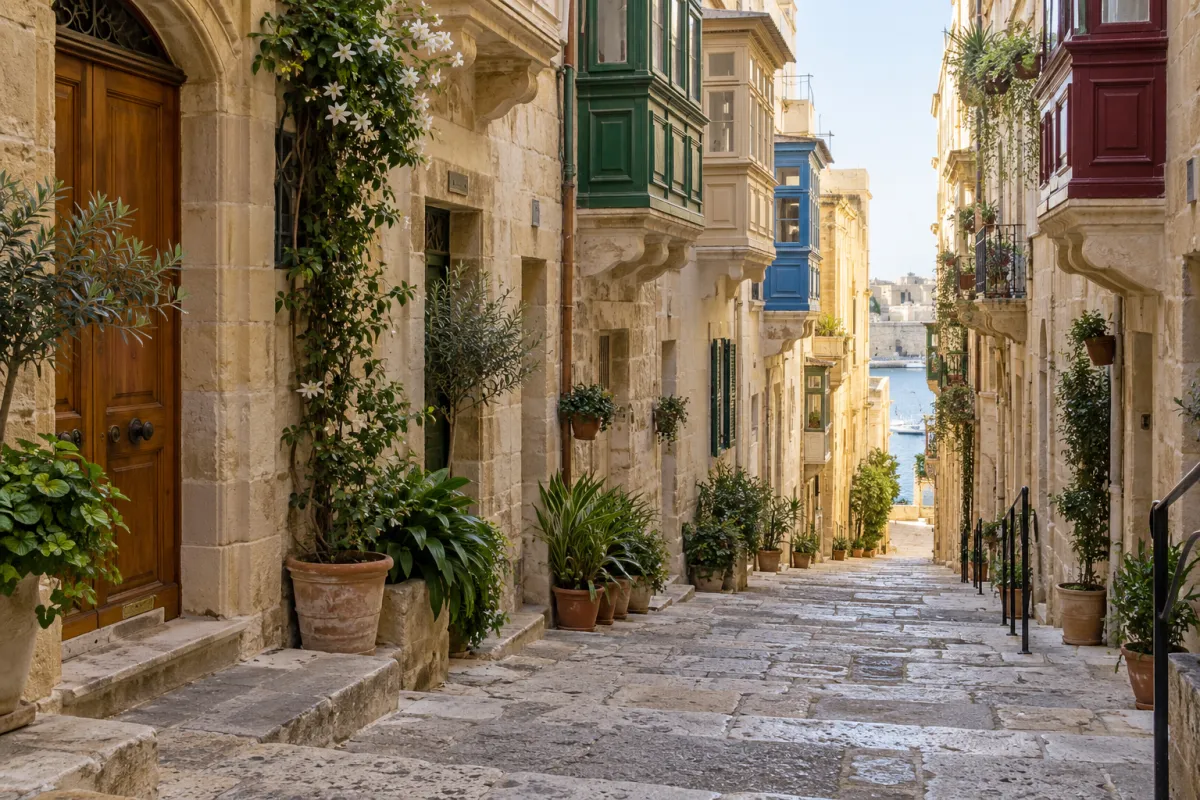
The Three Cities sit across the Grand Harbour from Valletta, on the fingers of land the Knights of St John fortified before the capital was built. Birgu is home to Fort St Angelo and the marina, Senglea ends in the Gardjola watchtower garden looking straight back at Valletta, and Cospicua wraps around the old dockyard creek. Kalkara, just next door, is often lumped in by landlords and listing portals.
What newcomers usually love: the light on the bastions in the evening, the fact that you can walk to a waterfront in two minutes, the sense of a real community where neighbours know each other, and a commute to Valletta by boat. What they find harder: fewer international supermarkets and gyms within walking distance, a slower social scene, and buildings that were never designed for modern insulation or lifts.
If you are still deciding between areas, our wider guide on where to live in Malta, with rents and bus links by area puts the Three Cities next to Sliema, Gżira, Msida and the north. If Valletta itself is on your shortlist, compare with our piece on living in Valletta, including noise and parking, because the trade-offs are similar but the prices and crowds are not.

Birgu, Senglea and Cospicua compared
The three towns are close enough to walk between, but they feel different. The table below is a relative guide based on what newcomers typically find when browsing listing portals; there is no official published rent average for each town, so treat the rent column as a comparison, not a price list, and always check current listings.
| Town | Maltese name | Rent level (relative) | Vibe | Main links |
|---|---|---|---|---|
| Birgu | Il-Birgu / Vittoriosa | Highest of the three, especially restored townhouses and marina-view flats | Polished, historic, marina restaurants, popular with visitors in the day | Walk to Cospicua ferry landing; buses towards Valletta |
| Senglea | L-Isla | Mid range; harbour-view flats ask more | Quiet, residential, steep streets, strong local identity | Walk or short bus to the ferry; buses towards Valletta |
| Cospicua | Bormla | Often the most affordable of the three | Everyday working town, dockyard heritage, local shops | Ferry landing to Valletta on the waterfront; buses |
| Kalkara (neighbour) | Il-Kalkara | Varies widely; fewer listings | Village feel, creek, very quiet | Buses; longer walk to the ferry |
Relative comparison based on listing portals, last checked May 2026. No official per-town rent figures are published.
Birgu: for character and the marina
Birgu is where most expats picture themselves. The old core is car-light, the alleys are beautifully kept, and the marina front gives you somewhere to walk every evening. The downside is that the prettiest houses are often converted holiday lets, so long-let stock is thinner, and daytime visitor footfall around the main square can be busy in summer.
Senglea: for views and quiet
Senglea is a small peninsula, so nearly every street ends at the water. It is noticeably calmer than Birgu and feels more lived-in. Expect steep inclines and stairs, which matter if you are carrying shopping or a suitcase from the bus.
Cospicua: for value and convenience
Cospicua is the least touristy of the three and the most practical for daily errands. It has the ferry landing, more everyday shops and a more mixed housing stock, from old terraced houses to newer apartments. It is a good choice if you want the ferry on your doorstep and do not need a postcard view from the bedroom.
Ferry, buses and getting around
The ferry is the single biggest reason people choose the Three Cities. The Valletta Ferry Services route runs between Cospicua and Valletta, landing below the Upper Barrakka Lift, which takes you straight up into the capital. The key fact for anyone staying long-term: holders of a personalised Tallinja card travel free on the Cospicua to Valletta route, on both day and night services (Malta Public Transport).
| Ticket option | Price | Source |
|---|---|---|
| Personalised Tallinja card | Free on Cospicua to Valletta and Sliema to Valletta routes | Malta Public Transport |
| Adult single (day service) | €1.50 | Transport Malta |
| Weekly pass | €10.00, unrestricted for 7 consecutive days on both routes | Transport Malta |
Ferry fares last checked May 2026. A separate, slightly higher evening tariff applies on the night service; check the operator before you travel.
Until your personalised card arrives, a standard adult single on the day service costs €1.50 (Transport Malta). If you are commuting daily during your first weeks, the weekly pass at €10.00 for seven consecutive days on both routes is usually the better deal (Transport Malta). Once you have a personalised card, you stop paying on this route altogether, so applying for it early is one of the easiest savings you can make.
Buses
Buses link the Three Cities to the Valletta terminus and to neighbouring towns such as Paola and Fgura, where you will find larger supermarkets. Journeys to Sliema, St Julian’s or the university area usually mean changing in Valletta or combining the ferry with the Sliema ferry. Check routes and times in the official Tallinja app or on the Malta Public Transport website rather than relying on old blog posts, because routes do change.
Walking and the traditional boats
Within the Three Cities, walking is the default. You will also see traditional dgħajsa water taxis crossing the harbour; agree the price before you step aboard. For everything else, a folding bike works on the flat waterfront, but the inland streets are hilly.
Driving
Old-town streets in Birgu and Senglea are narrow and resident parking is scarce. If you plan to keep a car, ask the landlord directly about parking before signing, and read our guide to driving in Malta, licence conversion and parking.
Renting a flat or townhouse
Rental stock in the Three Cities splits into three types: restored townhouses (often marketed as houses of character), older terraced homes with minimal renovation, and newer apartment blocks, mostly in Cospicua and on the edges of the towns. Long lets are thinner than in Sliema or Msida, and a share of the prettiest properties are held for short-term holiday rental, so start looking early and be ready to view quickly.
Rooms in shared flats exist but are less common than in the student and expat belt around Msida and Gżira. If you are on a tighter budget, our guide to shared apartments in Malta, room prices and leases explains what a fair room deal looks like. For the full monthly picture, including food and bills, see our cost of living in Malta breakdown.
Lease registration: the rule that protects you
Long-term private leases in Malta fall under the Private Residential Leases Act, and the landlord is legally bound to register the contract with the Housing Authority within 30 days from the start of the lease (Housing Authority). Registration within that window carries a registration fee of €10 (Housing Authority), while contracts submitted after the 30-day window face a late registration fee of €120 (Housing Authority).
Why this matters to you as a tenant: a registered lease is your proof of address, it underpins your rights on deposits and notice, and it is often needed for residence and other admin. A landlord who refuses to register is a red flag, whatever the reason given.
Questions to ask before signing
- Is the lease going to be registered with the Housing Authority, and will I receive confirmation?
- What exactly does the deposit cover, and how and when is it returned?
- Who pays utility bills, and are the meters in my name or the landlord’s?
- Is there a dehumidifier or any ventilation solution for damp rooms?
- Is there a residents’ parking option nearby?
- Are there stairs only, or a lift? How many floors up is the flat?
- Is any part of the building rented out short-term?
Old stone houses can be cool in summer but cold and humid in winter, and many run on electric heating and air conditioning. Read our guide to electricity bills in Malta and tariffs before you agree to a lease where bills are passed on at the landlord’s own rate.
Malta rental scams: how to spot them in the Three Cities
Malta rental scams tend to follow the same script everywhere on the island, but the Three Cities attract a particular version: a beautiful restored townhouse with a harbour view, listed at a price that seems too good, by an owner who happens to be abroad. Newcomers searching from overseas are the main target.
Red flags
- The landlord cannot show you the property in person or on a live video walk-through, only photos.
- You are asked to pay a deposit or first month’s rent before viewing or before a contract exists.
- Payment is requested by money transfer services, crypto, or to a foreign bank account.
- The same photos appear on several listings with different addresses or prices.
- The price is far below comparable listings in the same street.
- The landlord refuses to register the lease or says registration is not needed.
- Pressure tactics: other people are interested, you must pay within the hour.
How to protect yourself
- View the property in person, or ask a trusted contact already in Malta to view it for you.
- Run a reverse image search on listing photos.
- Ask for the landlord’s ID and evidence they own or are authorised to let the property.
- Pay only against a written contract, by traceable bank transfer, and keep every receipt.
- Do a dated photo and video inventory of the flat on move-in day and send it to the landlord in writing.
- Confirm the lease registration within the legal window.
If something feels off, walk away. There will be another flat. For a short-term base while you search, many newcomers book a few weeks in a guesthouse or serviced flat and hunt in person.
Admin basics: social security number in Malta for foreigners
Your address in the Three Cities does not change the national admin, but your registered lease will be one of the first documents you need. The question of a social security number in Malta for foreigners comes up in almost every first week: you generally need one to work legally and to access some public services, but the exact process and paperwork depend on your nationality, residence status and whether you are employed, self-employed or studying.
We do not give legal or immigration advice. Start with the official government services portal at servizz.gov.mt, and use Identity Malta for residence and ID matters. If you have a job offer, your employer or HR department will usually tell you what they need from you and may start parts of the process on your behalf.
For the full sequence of first steps, from documents to bank account to healthcare, see our moving to Malta step-by-step guide and checklist.
Daily life: shops, noise, damp and parking
Shopping
Each of the three towns has small grocers, bakeries, pastizzi shops and pharmacies. For a big weekly shop, most residents drive or take the bus to larger supermarkets in neighbouring towns such as Paola and Fgura. Online grocery delivery helps if you live up several flights of stairs.
Noise and festas
The Three Cities are generally quieter than St Julian’s, but they are proud parish towns. Expect church bells, fireworks and band marches during local feast seasons, and some daytime visitor noise around Birgu’s square and marina in the warmer months. Ask neighbours or the landlord when the local feast falls if you are a light sleeper.
Damp and heat
Thick limestone walls keep houses cooler in summer, but ground-floor and basement rooms can be humid in winter. A dehumidifier is close to essential in older properties. Our guide to Malta weather by month explains what to expect season by season.
Healthcare and services
Local health centres and pharmacies are nearby, while Mater Dei Hospital is on the other side of the harbour. Factor travel time into any regular appointments and register with a GP early.
Pros and cons at a glance
| Pros | Cons |
|---|---|
| Free ferry to Valletta with a personalised Tallinja card | Fewer gyms, coworking spaces and international shops nearby |
| Historic streets and harbour views | Steep streets and stairs, limited lifts |
| Calmer than Sliema and St Julian’s | Smaller expat social scene |
| Strong local community feel | Tight parking and narrow roads |
| Cospicua often more affordable | Damp in older houses |
Move-in checklist for the Three Cities
- Decide which town fits your routine: Birgu for character, Senglea for quiet, Cospicua for value and the ferry.
- Book short-term accommodation for your first weeks so you can view flats in person.
- Compare listings on several portals and check photos for reuse.
- View properties at different times of day to judge noise and light.
- Ask about stairs, damp, parking and short-let neighbours before signing.
- Sign a written contract and make sure the lease is registered with the Housing Authority within the legal window.
- Pay the deposit by traceable transfer and keep receipts.
- Photograph and video the flat on move-in day and email the inventory to the landlord.
- Apply for your personalised Tallinja card; buy a weekly ferry pass while you wait if you commute daily.
- Check social security and residence steps on the official government portals.
- Buy a dehumidifier if your flat is in an older building.
- Find your nearest grocer, pharmacy and health centre on your first walk.
Meeting people when you live here
The biggest adjustment for solo newcomers in the Three Cities is social, not practical. Your neighbours will greet you, but the expat crowd mostly gathers on the Sliema and St Julian’s side. The ferry makes Valletta easy, so many residents build their social life there and come home to the calm. Talking to the people who run your local café or grocer, joining a class, sports club or language course, and saying yes to invitations from colleagues all help. If you want to understand local habits faster, our list of things newcomers notice about Malta is a good primer.
When you meet someone new, keep it simple and safe: choose a public place, tell a friend where you are going and who you are meeting, arrange your own way home, and leave if anything feels uncomfortable.
Want to turn this into an actual plan? MeetNow is a free app for meeting people in person: a host posts a plan at a public place, says who pays (host pays, split, pay your own or free) and picks who joins. It is live on the web and works in your browser, starting in Malta. The Android app is on Google Play; the iPhone app is not in the App Store yet. Open MeetNow and see the plans posted in Malta.
Frequently asked questions about living in Birgu and the Three Cities
Is living in Birgu and the Three Cities good for expats?
Yes, if you value character, harbour views and a calmer pace over convenience. The ferry to Valletta makes commuting to the capital easy, but you will have fewer expat-focused shops, gyms and coworking spaces nearby than in Sliema or St Julian’s, and the social scene is more local.
Which of the Three Cities is cheapest to rent in?
Cospicua is often the most affordable of the three, Senglea sits in the middle, and Birgu usually asks the most, especially for restored townhouses and marina views. There are no official per-town rent averages, so compare current listings on several portals before deciding.
Is the ferry from the Three Cities to Valletta free?
It is free for holders of a personalised Tallinja card, on both the day and night services between Cospicua and Valletta. Without the card you pay a standard fare, and a weekly pass is available for frequent travellers while you wait for your card.
Does my landlord have to register my lease?
Yes. Under the Private Residential Leases Act, the landlord must register a long-term private residential lease with the Housing Authority within the legal deadline after the lease starts, and late registration carries a higher fee. A landlord who refuses to register is a warning sign.
How do I avoid Malta rental scams when searching from abroad?
Never pay a deposit before viewing the property in person or on a live video walk-through, never send money via transfer services or to foreign accounts, reverse-search listing photos, and only pay against a written contract by traceable bank transfer. If possible, book short-term accommodation and search once you arrive.
Where do I get a social security number in Malta as a foreigner?
The process depends on your nationality, residence status and work situation, so start with the official government portal servizz.gov.mt and Identity Malta for residence matters. If you have a job offer, your employer will usually explain what documents they need and may help start the process.