Short answer: where you live in Malta decides your rent, your commute and your social life more than anything else. Most newcomers start in the harbour belt (Sliema, Gżira, St Julian’s, Swieqi, Msida) because it is walkable, international and close to work, but it is also where rents are highest: the Housing Authority’s median for a new two-bedroom lease in St Julian’s was €1,500 a month in the first half of 2025, against €850 in St Paul’s Bay and €800 in parts of Gozo. Valletta and the Three Cities suit people who want character and calm evenings; St Paul’s Bay, Mellieħa and Gozo give you more space for the money but longer trips to see people. Below is an area table with rents, vibe and bus links, then one section per area and a box on rental scams and deposits.
I have lived in three of these areas and spent a lot of evenings in the others. My honest rule after years here: pay a bit more to live within walking distance of the people and places you will see every week. A cheap flat with a 50-minute bus ride to everything is not cheap if it means you stay in.
Where to live in Malta: the area table
Two sources sit behind the rent column. Official Housing Authority medians come from registered leases, but they are only published for a few localities. For the others I quote the market planning ranges in Finorum’s Malta cost of living guide (updated September 2026), which are editorial ranges based on listings, not official statistics.
| Area | Rent guide | Vibe | Best for | Bus and ferry links |
|---|---|---|---|---|
| Sliema | 1-bed €1,100 to €1,700+ in prime streets (market range) | Seafront, shops, cafés, very international | First-timers who want everything walkable | Routes 13, 15, 21 to Valletta; 202, 203, 212, 222 from Sliema Ferries; ferry to Valletta |
| Gżira | 1-bed €900 to €1,400 (market range) | Promenade, more local, slightly cheaper | Value close to Sliema and the university | Routes 13, 15, 21 along the coast to Valletta |
| St Julian’s / Paceville | 2-bed median €1,500 (official, H1 2025) | Busy, nightlife in Paceville, office towers | People working in the St Julian’s office belt | Route 13A to Valletta; Airport Direct TD2 and TD3 |
| Swieqi | No official median; generally priced with the harbour belt | Residential and quieter, hilly | People who want calm near St Julian’s | Route 16 to Valletta; 233 to Mater Dei |
| Msida | 1-bed €900 to €1,400 (market range) | University and hospital area, practical | Students and Mater Dei staff | Many Valletta routes; 122 to Mater Dei |
| Valletta | 1-bed €1,100 to €1,700+ (market range) | Historic, quiet at night, steps | People who want character and walkability | Main bus terminus; ferries to Sliema and the Three Cities |
| St Paul’s Bay / Buġibba / Qawra | 2-bed median €850 (official, H1 2025) | Seaside, bigger flats, long-stay community | Space for the money, remote workers | Routes 45, 48 to Valletta; 203, 212 to Sliema |
| Mellieħa | Northern range: 1-bed €750 to €1,200 (market range) | Hilltop village above a sandy bay | Beach lovers, families, people who drive | Route 222 to Sliema; Valletta–Ċirkewwa routes |
| Birgu and the Three Cities | No official median; southern localities range 1-bed €750 to €1,200 (market range) | Historic harbour towns, local, quiet | Character, water views, slower pace | Routes 1 to 4 from Valletta; Three Cities ferry |
| Gozo | 2-bed median €800 in Żebbuġ/Munxar (official, H1 2025); 1-bed €600 to €950 (market range) | Rural, slow, close-knit | Remote workers, families, nature lovers | Gozo buses to the Mġarr ferry; ferry to Ċirkewwa |
Official figures: Housing Authority rental dashboard, first half of 2025, via Business Now. Market ranges: Finorum, updated 11 September 2026, described by the publisher as editorial planning ranges, not measured averages. Bus routes: Malta Public Transport. Last checked October 2026.
Where renters actually live
The Housing Authority’s register also shows where rental contracts are concentrated. In the first half of 2025, St Paul’s Bay had the most active contracts, with more than 10,000, followed by Sliema, Msida, Marsaskala, St Julian’s, Gżira and Birkirkara. In other words, the north is not a niche choice: it is where the largest group of renters lives.
Best areas to live in Malta for expats, area by area
Living in Sliema
Sliema is the default for many newcomers, and for good reason. The seafront promenade runs for kilometres, you can swim from the rocks in summer, and shops, supermarkets and cafés are everywhere. The ferry to Valletta leaves from the Sliema Ferries area, which is also a bus hub for the north. The downsides: rents are among the highest on the island, streets are noisy, construction is common and parking is hard. If you live here, you will rarely need a car.
Living in Gżira
Gżira sits between Sliema and Msida along the same stretch of coast. It feels more local, the promenade faces Manoel Island and Valletta, and it is usually a little cheaper than prime Sliema for similar flats. It is a good compromise if you want to walk to Sliema but pay less, or if you work or study in Msida.
Living in St Julian’s and Paceville
St Julian’s has some of the island’s prettiest bays (Spinola and Balluta) and Paceville, its nightlife district. Many gaming and tech offices are here. It is ideal if you work nearby and like being in the middle of things; less ideal if you need quiet nights, especially close to Paceville at weekends. It is also one of the priciest areas, with the €1,500 median for a new two-bedroom lease in H1 2025.
Living in Swieqi
Swieqi is a residential area on the hill above St Julian’s. It is quieter, greener in places and popular with professionals and university students who want calm without being far from the coast. Expect hills and fewer shops on your doorstep; route 16 runs to Valletta and 233 to Mater Dei.
Living in Msida
Msida is home to the University of Malta and Mater Dei Hospital, so it is practical rather than pretty. Rents tend to be lower than in Sliema, a large number of bus routes pass through on the way to Valletta, and you are close to everything in the harbour area. A strong choice for students, healthcare workers and anyone who values location over views.

Living in Valletta
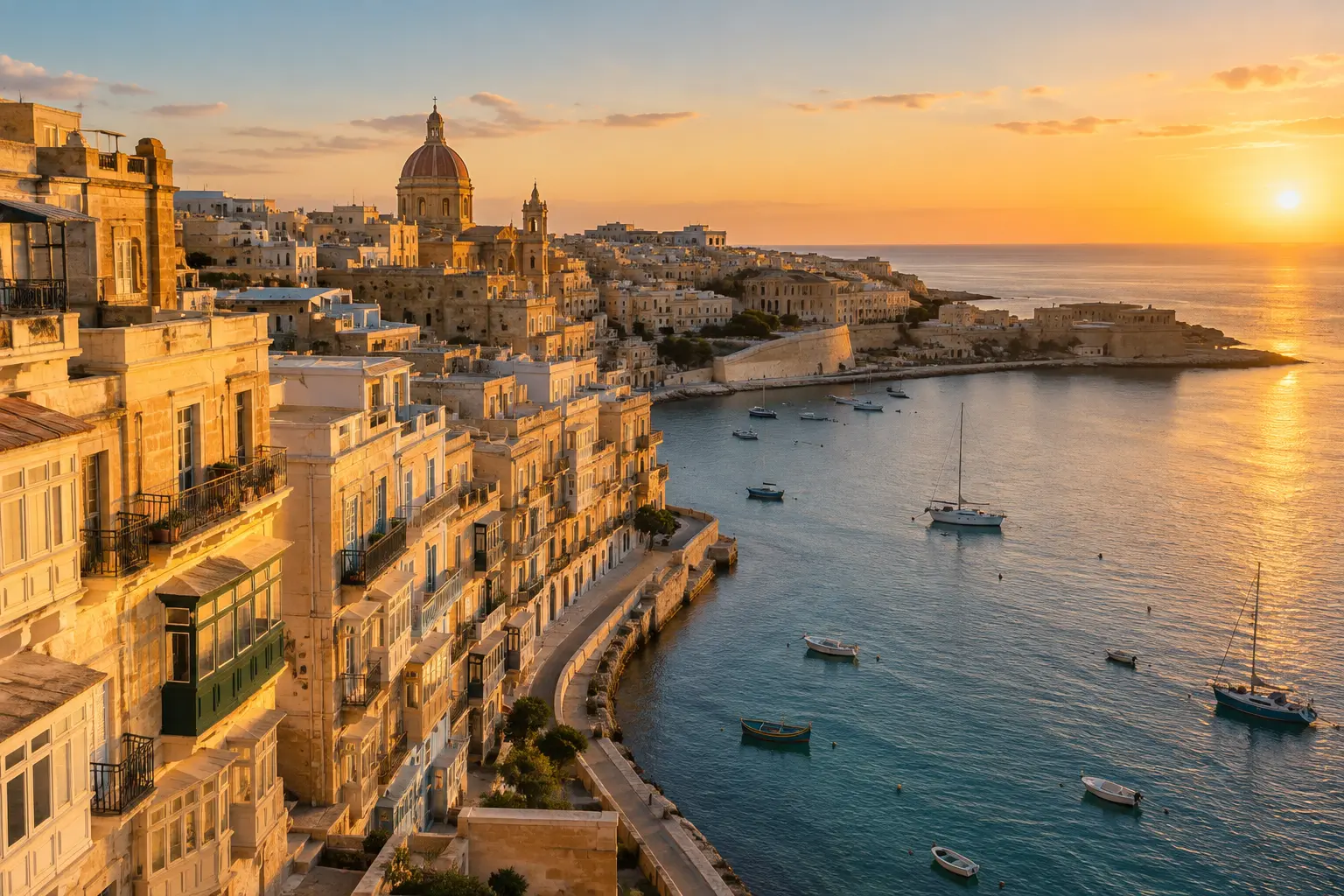
Living in Valletta means waking up in a UNESCO World Heritage city, walking everywhere and having the main bus terminus and ferries on your doorstep. Evenings are quieter than in St Julian’s, though the city has its own bars and restaurants. The trade-offs: many flats are in old buildings with steps and no lift, some are small or dark, and deliveries and parking are complicated. People who love Valletta rarely want to leave.
Living in St Paul’s Bay, Buġibba and Qawra
St Paul’s Bay is where the largest number of rental contracts are registered, and the median new two-bedroom lease was €850 in H1 2025. You get larger flats, sea views and a big international community. The cost is time: buses to Valletta (45 and 48) and Sliema (203 and 212) take longer, especially at rush hour. It works well for remote workers, people working in the north and anyone who values space.
Living in Mellieħa
Mellieħa is a hilltop village above Mellieħa Bay (Għadira), Malta’s best-known sandy beach. It is quieter and more traditional than Buġibba, with a strong village feel. Route 222 links it with Sliema, and the Valletta–Ċirkewwa routes pass nearby, but many residents drive. Good for families and beach lovers; harder if your social life is in the harbour area.
Living in Birgu and the Three Cities
Birgu (Vittoriosa), Isla (Senglea) and Bormla (Cospicua) face Valletta across the Grand Harbour. They are historic, local and beautiful, with a waterfront and marina, and they are generally quieter than the harbour belt. The Three Cities ferry to Valletta is free with a personalised tallinja card, and routes 1 to 4 run from Valletta. When I checked in October 2026, Malta Public Transport listed detours on these routes because of construction, so check the app.

Living in Gozo as an expat
Gozo is smaller, greener and slower than Malta. Rents are lower (a €800 median for a new two-bedroom lease in Żebbuġ and Munxar in H1 2025), the countryside is close and communities are tight-knit. It suits remote workers, families and people who want a quieter life. The trade-off is the ferry: commuting to Malta every day is tiring, and evenings out on the main island need planning. A full Gozo ferry guide is coming to this site. If you choose Gozo, the Gozo Resident card is one of the options in our guide to the tallinja card.
Other areas worth a look
Plenty of newcomers end up somewhere that rarely appears in expat guides, and many are happy there.
- Birkirkara and the central towns. Birkirkara is one of the localities with the most rental contracts on the Housing Authority register. Inland Malta is less glamorous but well connected; Finorum’s September 2026 market range for inland one-bedroom flats was €800 to €1,400+.
- San Ġwann. A residential area next to St Julian’s and Swieqi, with Airport Direct TD2 and TD3 passing through.
- Marsaskala. A seaside town in the south-east, also high on the list of localities with the most rental contracts. Quieter and more local than the north, with longer trips to the harbour belt.
- Mosta and Naxxar. Central towns popular with families, with a village feel and a car-friendly lifestyle.
Viewing checklist: what to check before you sign
- ☐ Walk from the flat to the nearest bus stop and check the routes and frequency in the tallinja app.
- ☐ Turn on every air conditioner and check whether it also heats.
- ☐ Look for damp and mould in corners, behind furniture and in bathrooms.
- ☐ Ask what the last summer electricity bill was, and whether bills are passed through at cost.
- ☐ Check mobile signal and ask which internet provider the flat uses.
- ☐ Look out of every window for building sites and ask about planned works next door.
- ☐ Ask about the deposit, the lease length and Housing Authority registration before you pay anything.
- ☐ Visit at a different time of day if you can, especially near bars or busy roads.
How to choose: five questions
- Where will you be four or five days a week? Work, school or university. Start your search within one bus ride of it.
- Do you need quiet nights? Avoid streets near Paceville and busy bar strips if you do.
- Will you drive? If not, stay on the main bus corridors or within walking distance of a ferry.
- Do you want space or people? The north and Gozo give space; the harbour belt gives people within walking distance.
- What is your real budget? Add bills, transport and a social budget to the rent before you decide. Our cost of living in Malta guide has worked budgets.
Honest notes on noise, construction, parking and flooding
- Construction. Building work is common across Malta. Look at neighbouring plots and ask the landlord about planned works before you sign.
- Noise. Visit on a weekday morning (construction) and a Friday night (nightlife) if you can.
- Parking. In Sliema, St Julian’s, Gżira and Valletta, street parking is scarce. If you have a car, ask about a garage space.
- Heavy rain. Some low-lying streets collect water quickly in storms. Ask neighbours, and avoid ground-floor flats with steps down from the street if water is a worry.
- Damp. Older stone buildings can be damp in winter. Check for mould behind wardrobes and in corners.
Rental scams and deposits: protect yourself
- Never pay a deposit or holding fee for a flat you have not seen in person or by live video with the landlord.
- Be wary of prices far below the area range, urgency (“three people want it”) and requests to pay by untraceable methods.
- Get a written lease with an inventory, and photograph every room on moving-in day.
- Ask for proof that the landlord has registered the lease with the Housing Authority; check the current registration rules on its site.
- Write down in the lease how much the deposit is and when and how it will be returned.
The social side of choosing an area
The area you choose decides how easy it is to see people. In Sliema, Gżira and St Julian’s, a coffee or a swim with a new friend is a ten-minute walk. In Mellieħa or Gozo, it is a planned trip. Neither is wrong, but be honest with yourself: if you are moving alone and want to build a social life quickly, start in the harbour belt for your first year, then move somewhere quieter once you have your people. Our 30-day plan for making friends in Malta works best when your weekly activities are within walking distance.
Already decided? Our guides to moving to Malta step by step and Malta bus routes cover the next steps.

Frequently asked questions
What is the best area to live in Malta for expats?
For most newcomers without a car, the harbour belt (Sliema, Gżira, St Julian’s, Swieqi and Msida) is easiest because it is walkable and well connected. If you want more space for your money, look at St Paul’s Bay, Mellieħa or Gozo, accepting longer journeys.
Where is the cheapest place to live in Malta?
Among the localities with official Housing Authority figures, St Paul’s Bay (a €850 median for a new two-bedroom lease in H1 2025) and parts of Gozo (€800) were well below St Julian’s (€1,500). Market ranges also show the north, the south and Gozo cheaper than prime Sliema and Valletta.
Is Sliema a good place to live?
Yes, if you want everything within walking distance, a seafront and lots of other newcomers. It is expensive, busy and noisy in places, and parking is hard, but you rarely need a car.
Is it a good idea to live in Gozo as an expat?
It suits remote workers, families and people who want a quieter life, with lower rents than the harbour area. Daily commuting to Malta by ferry is tiring, so it works best if your work or studies are on Gozo or online.
Which areas of Malta are quiet?
Swieqi, Valletta in the evenings, the Three Cities, Mellieħa and most of Gozo are generally quieter than St Julian’s, Paceville and central Sliema. Always visit at night and on a weekday morning before you sign.
How do I avoid rental scams in Malta?
Never pay before seeing the flat in person or by live video with the landlord, be wary of prices far below the area range, insist on a written lease with an inventory, and ask for proof that the lease is registered with the Housing Authority.
Do I need a car if I live in Malta?
Not in the harbour belt or Valletta, where buses and ferries cover most needs and are free with a personalised tallinja card. In Mellieħa, rural areas and parts of Gozo, a car makes life much easier.
Want to turn this into an actual plan? MeetNow is a free app for meeting people in person: a host posts a plan at a public place, says who pays (host pays, split, pay your own or free) and picks who joins. It works in your browser and on Android through Google Play, starting in Malta; the iPhone app is not in the App Store yet. Open MeetNow and see the plans in Valletta, Sliema and St Julian’s.
We may mention products we are connected with; see our affiliate and product disclosure.