Remote jobs in Malta come in two kinds: roles with Malta-based companies that let you work from home some or all of the week, and jobs with foreign employers that you do from Malta. The first follows normal Maltese employment rules. The second depends on your passport: EU citizens can simply move, while non-EU workers usually need the Nomad Residence Permit.
This guide shows where each kind of remote job is advertised, what the legal set-up looks like, the tax and social security questions to ask, and how to make working from home on a small island sustainable.
Two kinds of remote jobs in Malta
| Malta employer, remote or hybrid | Foreign employer, you live in Malta | |
|---|---|---|
| Contract | Maltese employment contract | Contract under another country’s law, or via an employer of record |
| Registration | Employer registers you with Jobsplus | Depends on the set-up; often no Maltese employer |
| Non-EU workers | Single Permit with that employer | Usually the Nomad Residence Permit |
| Social security | Maltese contributions | Depends on EU coordination rules and your situation |
| Typical sectors | iGaming, tech, finance, marketing, support | Tech, design, consulting, writing, product |
Simplified overview; last checked November 2026. Your own case may differ, so get advice before you sign.
Remote and hybrid roles with Malta employers
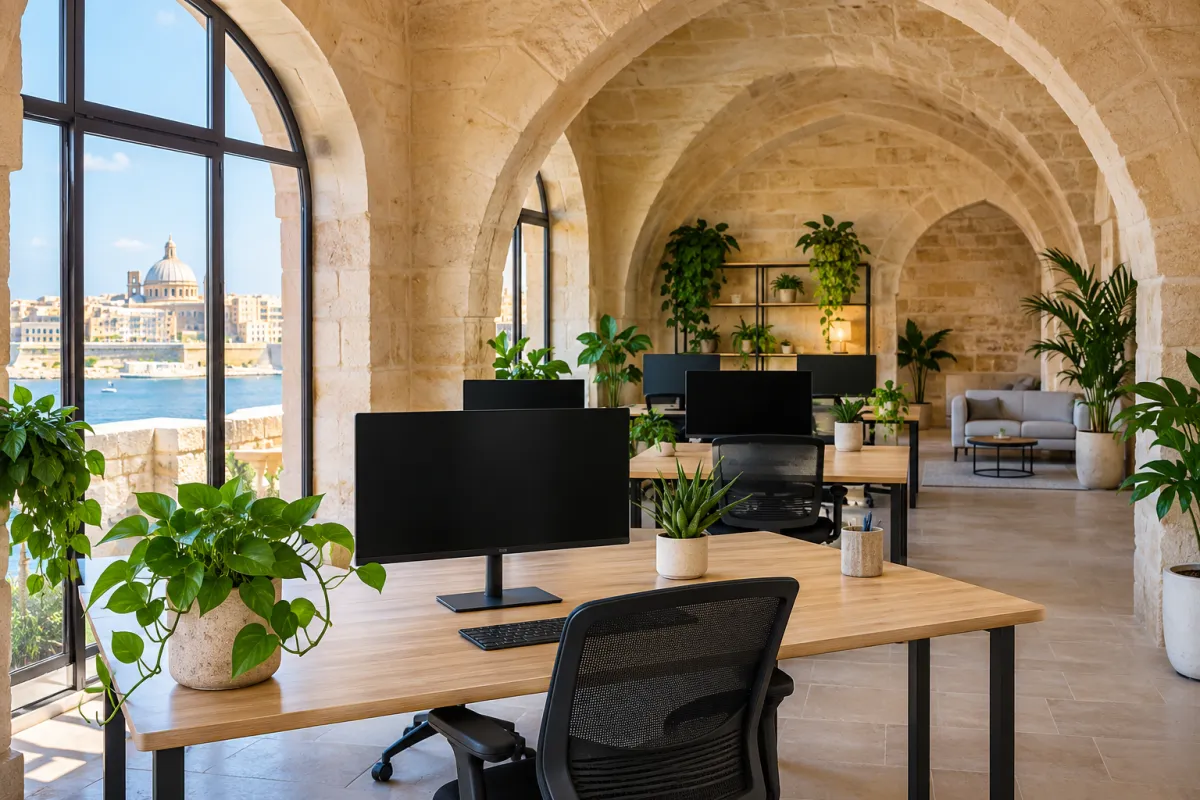
Many Maltese companies, especially in iGaming, software, payments and digital marketing, offer hybrid work, usually a few days in the office and the rest at home. Fully remote roles with Malta employers exist but are less common, because many companies like teams to meet in person on such a small island.
The advantage of a Malta-based remote job is simplicity: a Maltese contract, local payroll, Maltese social security and, for non-EU nationals, a Single Permit tied to that employer. Our Malta careers guide explains which sectors hire most expats, and our article on working from home rules for Malta employers covers what employers must put in writing.
When you apply, look for phrases such as “hybrid”, “remote-first” or “work from home” in the ad, and ask at interview how many office days are expected in practice. Policies on paper and habits in the team are not always the same.
Working for a foreign employer from Malta
This is what most people mean by remote work in Malta: keeping a job with a company abroad and living on the island.
- EU, EEA and Swiss citizens can live in Malta and work remotely without a work permit. If you stay longer than three months, register your residence with Identità. Our guide on whether EU citizens can work remotely from Malta covers the steps.
- Non-EU nationals usually apply for the Nomad Residence Permit from Residency Malta Agency. It requires remote work for an employer or clients outside Malta and a minimum gross income of €42,000 a year. The permit is issued for one year and can be renewed, up to a total of four years.
Our Malta Nomad Residence Permit guide explains the application in detail. Note that the permit is for working for employers or clients abroad: taking a job with a Maltese company needs a different permit.
Where to find remote jobs Malta residents can take
- Company career pages. Many remote-first companies list roles by country or time zone. Malta is in the Central European time zone, which suits European employers.
- Professional networks. Set your location to Malta and filter for remote or hybrid roles. Recruiters often search by location.
- Remote job boards. Specialist boards list fully remote roles open to people in Europe. Read the location requirements carefully: many say “remote, EU only” or “remote, UK only”.
- Malta recruiters. Local recruitment agencies place people in hybrid roles and often know which teams allow home working before it appears in an ad.
- Your current employer. Often the simplest route: ask whether you can keep your job and move to Malta. Many companies agree, but some need an employer of record to do it legally.
Whichever route you use, check that the employer accepts workers living in Malta before you invest time in an application.
Tax and social security basics
This is where remote work gets complicated, so treat this section as a starting point, not advice:
- Tax residence. Spending more than 183 days in Malta in a calendar year generally makes you tax resident here, and you can become resident earlier if you move with the intention of living here. Your home country may have its own rules, so check both sides.
- Nomad Residence Permit tax. Income from authorised remote work under the permit is subject to a special 10% flat rate under dedicated rules, with an initial exemption period in some cases. Our guide to Nomad Residence Permit tax in Malta explains the details.
- Social security in the EU. Under EU coordination rules, you are normally covered by the social security system of the country where you physically work. Exceptions exist, for example for short postings or work in several countries, and are proven with an A1 certificate from the country that remains responsible.
- Freelancers. If you work for yourself rather than for one employer, registration and contributions work differently; see our guide to freelancing in Malta as an expat.
A one-hour session with a tax adviser who knows both Malta and your employer’s country is money well spent before you move.
Red flags in remote job ads
- Pay far above the market for little experience.
- Requests for an upfront fee for training, equipment or a “visa service”.
- Interviews only by chat, with no video call and no named company.
- Payment in cryptocurrency or through personal accounts.
- Vague job descriptions and no contract until after you start.
A genuine employer will happily tell you who they are, put the offer in writing and explain how they will pay you in Malta.
Setting up to work from home
Practical things to sort before your first remote day:
- Internet. Fibre is widely available, but check what your building actually supports before you sign a lease. Our guide to internet providers in Malta compares the options.
- A real desk. Many furnished flats come with a sofa and a dining table, not a workspace. Ask before you rent, or budget for a desk and chair.
- Winter comfort. Stone flats can be cold and damp indoors in winter. A dehumidifier and a heater make a big difference when you are home all day.
- A backup place to work. A coworking space or a café with good wifi for days when the power or internet fails. Start with our guide to coworking spaces in Malta.
Staying connected
The biggest risk of remote work in Malta is not the paperwork. It is isolation. When your colleagues are on a screen, it is easy to go days without a real conversation, especially in winter when the beach crowd disappears.
Build a weekly structure from the start: two days in a coworking space, one regular evening activity, one weekend plan with people. Our guide to working remotely in Malta and feeling isolated has practical ideas. Small, repeated plans with the same few people work better than occasional big networking events.
Want to turn this into an actual plan? Open MeetNow and see the plans in Malta. It is free and works in your browser: a host posts a plan at a public place, says who pays (host pays, split, pay your own or free) and picks who joins from the short notes people send. MeetNow is live on the web, starting in Malta.
Frequently asked questions (FAQ)
Can I work remotely from Malta for a foreign company?
Yes. EU, EEA and Swiss citizens can do so without a work permit and register their residence if they stay longer than three months. Non-EU nationals usually need the Nomad Residence Permit, which requires remote work for employers or clients outside Malta.
What income do I need for the Malta Nomad Residence Permit?
Residency Malta Agency requires a minimum gross income of €42,000 a year. The permit is issued for one year and can be renewed, up to a total of four years, as long as you still meet the conditions.
Do Maltese companies offer remote jobs?
Many offer hybrid work, especially in iGaming, tech, payments and marketing. Fully remote roles with Maltese employers are less common, because many teams prefer to meet in person.
Do I pay tax in Malta if I work remotely here?
Usually, if you become tax resident, for example by spending more than 183 days in Malta in a calendar year. Nomad Residence Permit holders have special rules. Get advice that covers both Malta and your employer’s country.
How do I avoid remote job scams?
Avoid offers that ask for upfront fees, pay in cryptocurrency, interview only by chat or will not name the company. A genuine employer puts the offer in writing and explains how you will be paid.