The main digital nomad Malta pros and cons are easy to state. On the plus side: English everywhere, the Central European time zone, EU membership, a dedicated Nomad Residence Permit and the sea on your doorstep. On the minus side: high rents for the size of flat, construction noise, traffic, damp winters indoors and a small island where social circles turn over quickly.
Whether Malta works for you depends on which of those matter most. This guide weighs each one honestly, adds a scorecard, and suggests how to test Malta before you commit to a year.
Digital nomad Malta pros and cons: the scorecard
| Factor | Verdict | Why |
|---|---|---|
| Language | Strong pro | English is an official language, used in admin, banks and healthcare |
| Time zone | Pro | Central European Time suits European clients and teams |
| Legal route | Pro | EU citizens move freely; non-EU workers have the Nomad Residence Permit |
| Climate | Mostly pro | Long, sunny summers and mild winters, but cold, damp flats |
| Internet | Mostly pro | Fibre is widespread in towns; check the building before you sign |
| Housing | Con | High rents in popular areas, small flats, variable quality |
| Noise and construction | Con | Building work is common, especially in the harbour towns |
| Getting around | Mixed | Short distances, but traffic and slow buses at peak times |
| Social life | Mixed | Easy to meet people, harder to keep friends as people move on |
Our assessment for remote workers; last checked November 2026.
The pros
English, everywhere
English is one of Malta’s two official languages. Contracts, rental agreements, doctors, banks and government services all work in English. For a remote worker that removes a whole layer of friction you would face in most other Mediterranean countries.
A good time zone for European work
Malta uses Central European Time, the same as Rome, Berlin and Paris. If your team or clients are in Europe, your working day lines up neatly, and calls with the UK are only an hour apart.
A clear legal route
EU, EEA and Swiss citizens can live and work remotely in Malta without a permit, registering their residence if they stay longer than three months. Non-EU nationals have a purpose-built route: the Nomad Residence Permit from Residency Malta Agency, which requires a minimum gross income of €42,000 a year and is renewable up to four years in total.
The sea and the outdoors
You are never far from the water. A swim before work in summer, a coastal walk at lunchtime or a weekend in Gozo are part of normal life here, and that is a big reason remote workers stay longer than planned.
A ready-made community
Malta has a large international population and plenty of coworking spaces, meetups and activity groups. Our guide to the digital nomad community in Malta lists the main ones.
The cons
Rent and space
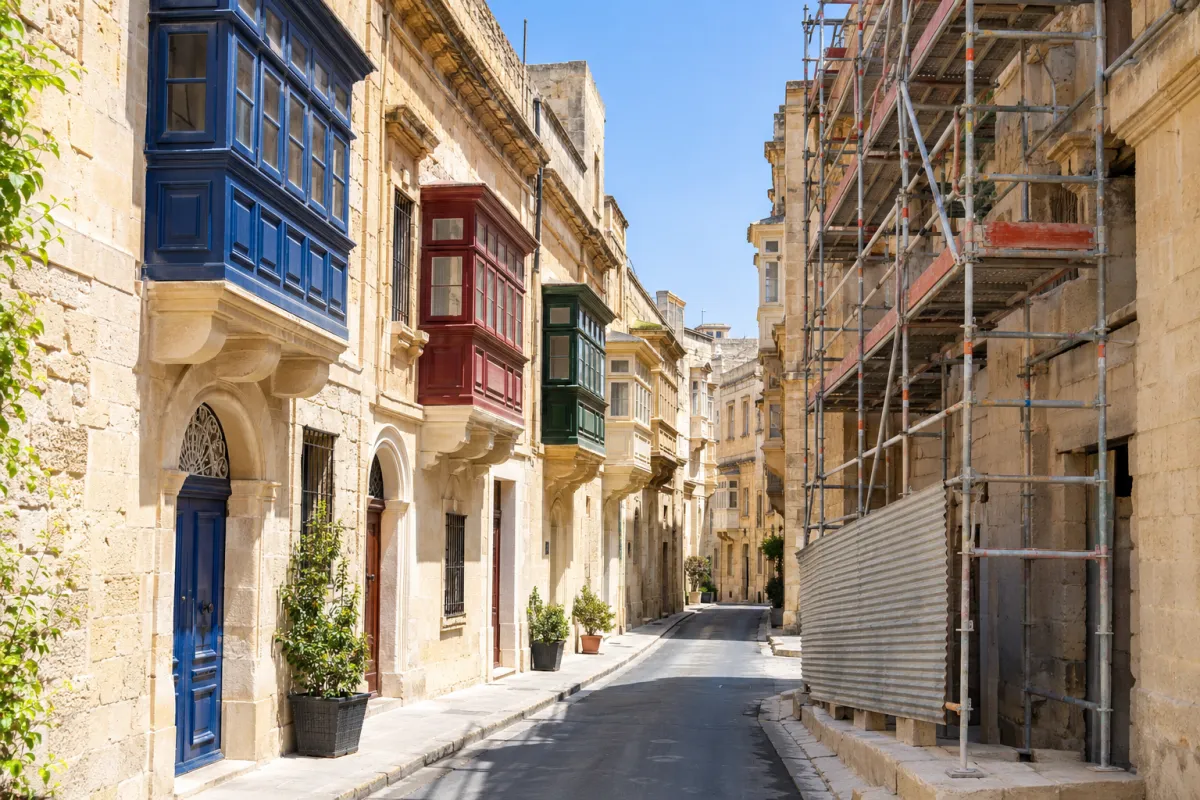
Rents in the popular areas, such as Sliema, St Julian’s and Gżira, are high for the size and quality of the flats. Many nomads end up in smaller places than they expected, or in shared flats. Our guide to the best area in Malta for digital nomads compares the trade-offs.
Construction and noise
Malta builds constantly. A quiet street can gain a building site next door within months, and drilling from 7 in the morning is a common complaint among people who work from home. Ask about planned works nearby before you sign a lease, and keep a coworking space as a backup.
Traffic and buses
Distances are short, but roads are busy. Buses are cheap but can be slow and crowded at peak times. Many remote workers choose an area where they can walk to the essentials and treat longer trips as occasional.
Damp winters indoors
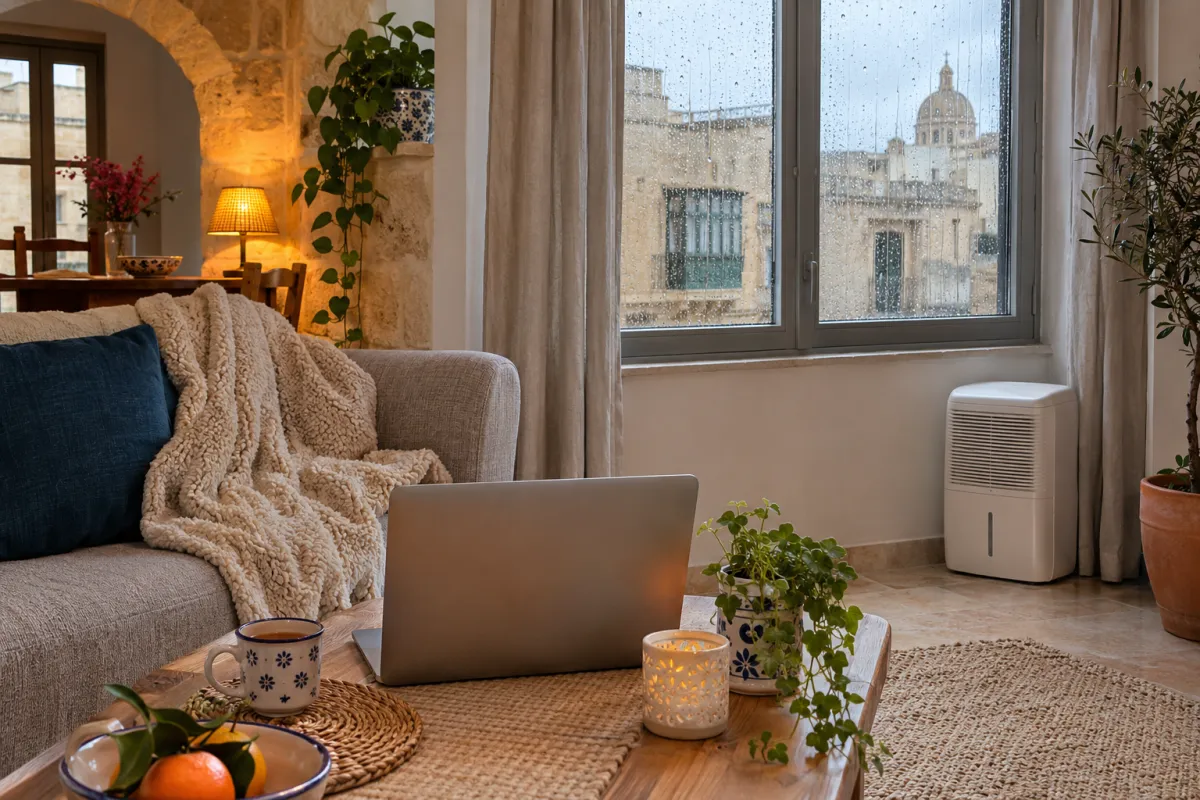
Malta’s winter is mild by northern European standards, but many stone flats have no central heating and get damp. It can feel colder inside than out. A dehumidifier, a heater and a flat with good light make a real difference; our guide to Malta in winter for digital nomads covers how to prepare.
A small, shifting social circle
Malta is easy for meeting people and harder for keeping them. Many nomads and expats stay a few months or a couple of years, so friendship groups change constantly. The island’s small size also means you can feel you have “done” it after a season unless you build routines.
Pro or con: the size of the island
Malta’s size cuts both ways. Everything is close: the airport, the beach, the coworking space and the supermarket are rarely more than a short ride apart, and Gozo is a ferry away for a change of pace. The flip side is that you will see the same streets and faces often, and some nomads start to feel restless after a few months. The people who stay happily tend to go deeper rather than wider: learning a few words of Maltese, joining a local club, exploring village festas in summer and the quieter south of the island. Treat Malta as a place to put down light roots, not a checklist of sights, and the small size becomes a comfort rather than a limit.
The permit question
For non-EU remote workers, the Nomad Residence Permit is both a pro and a constraint. It gives you a legal base in an EU country for up to four years, but you must keep working for employers or clients outside Malta, meet the income threshold, hold suitable health insurance and renew each year. Income from the authorised remote work is taxed under special rules; our guide to Nomad Residence Permit tax in Malta explains how. The detailed income rules are in our article on the nomad permit income requirement.
Who Malta suits, and who it does not
| Malta suits you if… | Malta may frustrate you if… |
|---|---|
| You work European hours and want English everywhere | You need a quiet, large flat on a tight budget |
| You love the sea and outdoor weekends | Noise and building work drive you to distraction |
| You enjoy meeting new people often | You want deep, stable friendships quickly |
| You like a compact place where everything is close | You need big-city culture or wide open countryside |
| You are happy to build routines to fight isolation | You expect community to happen without effort |
For a broader view beyond remote work, our guide to the pros and cons of living in Malta covers families, retirees and long-term residents.
How to test Malta before committing
- Come for four to eight weeks first, ideally once in summer and once in winter, as they feel like different countries.
- Work from three different places: your flat, a coworking space and a café. Check the internet in each.
- Stay in two areas, for example Sliema and a quieter town, to see which rhythm suits you.
- Join one weekly activity from the first week, to see how easy it is for you to build a social life.
- Price a real year: rent, utilities, transport, health insurance and travel home.
A short let is a good way to do this without committing to a year; see our guide to short lets in Malta. If you still need the job itself, our guide to remote jobs in Malta explains where to look.
Making the social side work
The nomads who love Malta tend to build a simple weekly structure early: a couple of coworking days, one sport or class, one dinner or outing with people, and one weekend trip. That turns a crowded island into a familiar one within a month or two.
When your first friends move on, and some will, keep inviting newcomers. Hosting small plans is the fastest way to stay at the centre of a social circle in a place where people come and go.
Want to turn this into an actual plan? Open MeetNow and see the plans in Malta. It is free and works in your browser: a host posts a plan at a public place, says who pays (host pays, split, pay your own or free) and picks who joins from the short notes people send. MeetNow is live on the web, starting in Malta.
Frequently asked questions (FAQ)
Is Malta good for digital nomads?
For many, yes. English, the Central European time zone, EU membership, the Nomad Residence Permit and the outdoor lifestyle are strong advantages. High rents, noise, traffic and damp winters are the main drawbacks.
What are the biggest downsides of Malta for remote workers?
Housing costs and quality in popular areas, construction noise, traffic, cold and damp flats in winter, and a social circle that changes as people move on.
Do I need a visa to work remotely from Malta?
EU, EEA and Swiss citizens do not. Non-EU nationals staying long term usually need the Nomad Residence Permit, which requires remote work for employers or clients abroad and a minimum gross income of €42,000 a year.
Is the internet good enough for remote work in Malta?
In most towns, yes, with fibre widely available. Quality varies by building, so test the connection or ask the landlord before signing, and keep a coworking space as a backup.
How long should I stay to decide if Malta suits me?
Four to eight weeks is a good test, ideally including some winter time. Stay in two areas, work from several places and join one weekly activity from the start.