Short answer: Malta is a good place to live if you value sunshine, the sea, English everywhere, a strong job market and a small, sociable island, and if you can live with high rent in the popular towns, traffic, construction, slow bureaucracy and very hot summers. Expats themselves are split: in InterNations’ Expat Insider 2024 survey, Malta ranked 46th of 53 destinations overall, yet 84% of respondents were happy with the climate and 68% with the quality of medical care, while Malta ranked 52nd of 53 for admin topics and 45th for travel and transit. Below is my honest verdict, a scorecard, and who Malta suits and who it does not.
I have lived here for years and I still love it, but I have also waved off plenty of friends who left after a year, usually because of rent, traffic or feeling stuck on a small island. Both reactions are reasonable. The trick is knowing in advance which kind of person you are.
The verdict in one table
| Area of life | Verdict | Why |
|---|---|---|
| Climate and outdoors | Strong pro | Mild winters, long swimming season; 84% of Expat Insider respondents happy with the climate |
| Language | Strong pro | English is an official language alongside Maltese |
| Jobs | Pro | Unemployment 3.5% in Q1 2026 (NSO); Malta 23rd of 53 for the local job market in Expat Insider 2024 |
| Healthcare | Pro | Public and private options; 68% of Expat Insider respondents happy with medical care |
| Social life | Mostly pro | Large international community; 57% of respondents said they feel welcome |
| Housing costs | Con | Median new two-bedroom lease €1,500 a month in St Julian’s (H1 2025) |
| Transport and traffic | Con | Cheap buses, but Malta ranked 45th of 53 for travel and transit; 55% rated road infrastructure negatively |
| Bureaucracy | Strong con | 52nd of 53 for admin topics in Expat Insider 2024 |
| Space and nature | Mixed | Beautiful coast, but a small, densely built island with lots of construction |
Survey figures: InterNations Expat Insider 2024, as published on the InterNations Malta page. Rent: Housing Authority via Business Now. Unemployment: NSO Labour Force Survey via Malta Business Weekly. Last checked October 2026.
The pros of living in Malta
1. The weather and the sea
This is the big one. Winters are mild compared with northern Europe, spring and autumn are glorious, and you can swim for much of the year. Life happens outdoors: coffee on the promenade, evening walks, weekend swims. It is no surprise that 84% of Expat Insider respondents said they were happy with the climate and weather.
2. English everywhere
English is an official language, used in government, business, signage and daily life. You can sort your paperwork, see a doctor and build a career without learning Maltese, although a few phrases go a long way with neighbours.
3. A strong job market
The NSO’s Labour Force Survey put unemployment at 3.5% in the first quarter of 2026, and employment was up 3.3% on a year earlier. Gaming, financial services, tourism, health and tech hire constantly. In Expat Insider 2024, 51% of respondents said moving to Malta had improved their career prospects. Our guide to working in Malta covers sectors and pay.
4. Healthcare
Malta has public health centres and hospitals, led by Mater Dei, plus a large private sector. In Expat Insider 2024, 68% of respondents were happy with the quality of medical care. Our guide to healthcare in Malta for expats explains entitlement and costs.
5. A small island is a sociable island
Everything is close, there is a large international community, and you bump into the same people again and again. In the survey, 57% of expats said they feel welcome. Our guide to the expat community in Malta lists the groups that make it easy to start.
6. History and culture on your doorstep
Valletta, Mdina, the Three Cities, village festas, carnival, Neolithic temples: Malta packs thousands of years of history into a tiny space. In the survey, 60% of respondents were happy with culture and nightlife.
7. Free buses for residents
With a personalised tallinja card, day and night bus routes, the Valletta ferries and the Barrakka Lift are free. That makes car-free life realistic in the harbour area.

The cons of living in Malta
1. Rent in the popular towns
Housing Authority data put the median new two-bedroom lease at €1,500 a month in St Julian’s in the first half of 2025, against €850 in St Paul’s Bay. On a modest salary, living alone in the harbour area is hard, and many newcomers share for their first year. Our cost of living guide has worked budgets.
2. Traffic and roads
The island is small but busy. In Expat Insider 2024, 55% of respondents rated road infrastructure negatively, and Malta ranked 45th of 53 for travel and transit. Buses are cheap (free with the card) but can be slow at rush hour and full in summer.
3. Bureaucracy
Residence documents, leases, bank accounts and permits can take time, multiple visits and a lot of paperwork. Malta ranked 52nd of 53 destinations for admin topics in the survey. Patience and a folder of copies help.
4. Construction and density
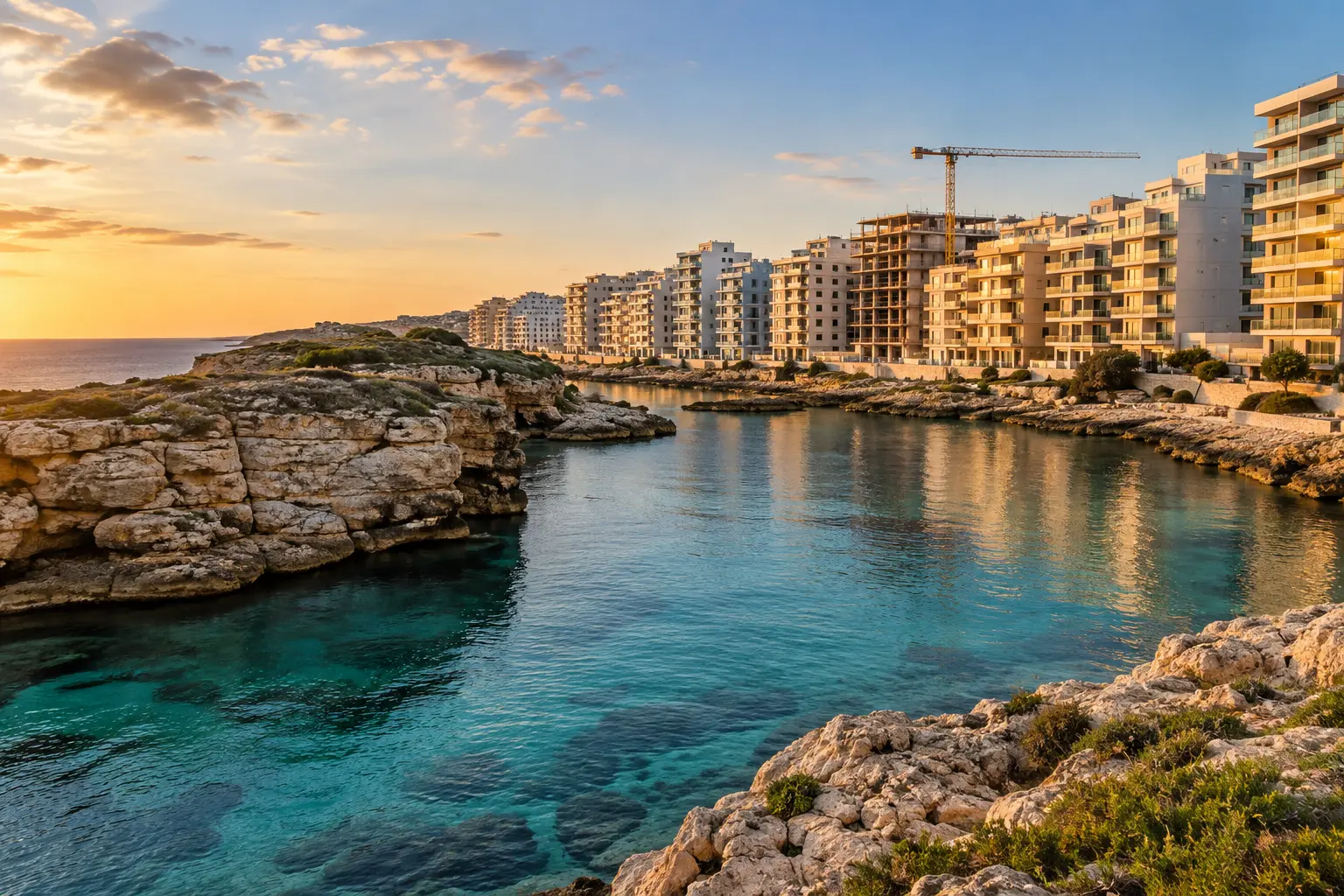
Building work is everywhere, and some areas feel very built up. Ask about planned works before you sign a lease, and visit on a weekday morning.
5. Summer heat and winter damp
Summers are hot and humid, and air conditioning pushes up bills. Many homes have no central heating, so winters can feel damp indoors even when it is mild outside.
6. Living on a small island
Some people start to feel “island fever” after a year or two: the same places, the same roads, limited wild nature. Regular trips to Gozo, off-season travel abroad and a varied routine help.
7. A transient social scene
Many expats come for a contract or a course and leave. Friendships can be intense and short. Keep adding new people, and make an effort to know Maltese neighbours and colleagues too.
Is Malta a good place to live? Who it suits
The table below is the quick version; for a fuller verdict by profile and a seven-question self-test, read whether Malta is a good place to live for you.
| Malta probably suits you if… | Malta may frustrate you if… |
|---|---|
| You love the sea, sun and outdoor life | You need forests, mountains or wide open countryside |
| You work in gaming, finance, tech, tourism or health | Your field has few jobs in a small economy |
| You are happy to share a flat or live outside the most expensive towns | You expect a large flat in a prime area on an average salary |
| You are patient with paperwork | Slow admin will drive you mad |
| You like small, walkable communities | You crave big-city anonymity and variety |
| You make friends by showing up to things | You wait for invitations |
My honest scorecard
| Category | Score out of 5 |
|---|---|
| Climate and lifestyle | 5 |
| Ease of language | 5 |
| Job opportunities | 4 |
| Healthcare | 4 |
| Social life (if you make the effort) | 4 |
| Housing affordability | 2 |
| Transport and traffic | 2 |
| Bureaucracy | 2 |
My personal scores, based on years of living here and the survey data above. Yours will depend on your job, budget and temperament.

Pros and cons by type of newcomer
Students
Pros: teaching in English, 33 licensed English schools on the ELT Council’s July 2026 list, a large international student scene, and free buses with a Student tallinja card. Cons: rent near the schools and the university, summer crowds and the temptation to spend every night in Paceville. The University of Malta budgets €550 to €700 a month for a shared room and about €450 for food.
Remote workers and digital nomads
Pros: a European time zone, English everywhere, cafés and coworking in the harbour towns, and the Nomad Residence Permit for non-EU workers earning at least €42,000 a year. Cons: isolation if you work from home, rent, and the paperwork and insurance requirements of the permit.
Families
Pros: short distances, outdoor life, English-language schooling and a family-centred local culture. Cons: housing space for the money, traffic on school runs and summer heat. Visiting schools and neighbourhoods before you commit makes a big difference.
People moving for a job
Pros: a tight job market (3.5% unemployment in Q1 2026) and colleagues who are often newcomers too. Cons: salaries that can look modest against harbour-town rents, and long commutes if you live far from the office.
Retirees
Pros: the climate, English, a slower pace in Gozo and the villages, and a large community of people who have made the same move. Cons: steps and hills in older towns, traffic if you drive, and the need to sort healthcare entitlement and insurance carefully before you arrive. Check the official residence and healthcare rules for your nationality first.
Day-to-day costs beyond rent
Once rent is covered, Malta is more manageable than its reputation suggests. A few reference points, all checked in October 2026:
- Inflation: annual HICP inflation was 2.0% in August 2026, according to NSO data.
- Electricity: residential rates start at €0.1047 per kWh for the first 2,000 kWh (Enemalta), but summer air conditioning can push you into higher bands.
- Food: the University of Malta budgets about €450 a month per person for food and drink, excluding eating out.
- Transport: free on day and night bus routes with a personalised tallinja card; €2.00 to €2.50 per single journey without it.
Where costs bite is eating out regularly, summer bills and imported goods. Where Malta is generous is everything free outdoors.
How the seasons change the verdict
- Spring: the island at its best. Green countryside, warm days, the sea warming up. Everyone loves Malta in April.
- Summer: beach life, festas and long evenings, but also heat, humidity, crowds, full buses and high electricity bills.
- Autumn: the sea is still warm, the crowds thin out, and the first storms arrive later in the season. Many residents’ favourite time.
- Winter: mild by northern standards and often sunny, but homes without central heating can feel damp and cold, and some seaside places go quiet.
If you can, visit in two different seasons before you decide. A week in July and a week in January tell you more than any guide.
Things I wish I had known
- That the flat matters more than the area, and the bus route matters more than the flat.
- That a dehumidifier is a winter essential.
- That paperwork always takes one more visit than you expect.
- That Maltese friends are made slowly but kept for life.
- That the best things here (the sea, the walks, the free ferry) cost nothing.
Questions to ask yourself before you move
- Can I afford the rent in the area where I want to live, or am I willing to share or live further out?
- Is there real demand for my job or skills here?
- How will I cope with heat, traffic and slow admin?
- Do I build friendships by joining things, or do I wait to be invited?
- How often will I want to leave the island, and can I afford those trips?
How to make the pros outweigh the cons
- Choose your area for your routine, not the view. A short commute fixes half the traffic problem. Our guide to where to live in Malta compares areas.
- Share at first. A room in a shared flat buys you time to learn the market.
- Get the tallinja card in your first month and use the ferries.
- Start your paperwork early and keep copies of everything.
- Escape regularly. Gozo weekends and off-season trips abroad keep island fever away.
- Build a weekly social routine. One club, one class, one small plan a week.
Try before you commit: a one-month test
If you are unsure, test Malta before you sign a year-long lease. Rent a room or short let for a month in the area you are considering, outside the summer peak if you can. In that month:
- do your real commute at rush hour, by bus, at least three times;
- visit two or three flats in your budget so you see what the money buys;
- join one weekly group or class and go every week;
- spend one weekend in Gozo and one at home doing nothing in particular;
- notice how you feel on a grey, windy day as well as a sunny one.
By the end, you will know whether the pros or the cons weigh more for you, which is the only verdict that matters.
A note on the social pro
The biggest pro of Malta, in my experience, is how easy it is to build a life with people in it once you start: everything is close, people are open and there is always someone new in town. The biggest con is that nobody does it for you. Small, specific plans, with a place, a time and who pays, are what turn the island’s potential into actual friendships.
Safety when meeting new people
- Meet in public places first: a café, the promenade, a busy beach.
- Tell a friend where you are going.
- Know your way home.
- Leave whenever you feel uncomfortable.
Frequently asked questions
Is Malta a good place to live?
For many people, yes, especially those who love the sea and sun, work in Malta’s main sectors and do not mind sharing or living outside the priciest towns. It is less suited to people who need big-city variety, wild nature or fast bureaucracy.
What are the biggest downsides of living in Malta?
High rent in the popular harbour towns, traffic, construction and slow bureaucracy. In InterNations’ Expat Insider 2024 survey, Malta ranked 52nd of 53 for admin topics and 45th for travel and transit.
How do expats rate Malta?
In Expat Insider 2024, Malta ranked 46th of 53 destinations overall. Respondents rated the climate (84% happy), medical care (68% happy) and career prospects (51% said they improved) well, but rated admin, transport and cost of living poorly.
Is Malta expensive to live in?
Rent is the main expense: the median new two-bedroom lease was €1,500 a month in St Julian’s and €850 in St Paul’s Bay in the first half of 2025. Transport can be free with a tallinja card, and annual inflation was 2.0% in August 2026.
Is it easy to make friends in Malta?
Easier than in many countries, because English is spoken everywhere and the international community is large; 57% of Expat Insider respondents said they feel welcome. It still takes effort, because many expats move on after a year or two.
Do people regret moving to Malta?
Some do, usually because of rent, traffic or island fever; many others stay for years. Visiting outside summer, choosing your area carefully and building a social routine early make a big difference.
Is Malta good for families?
It can be: English-language schooling, short distances and outdoor life are strong points. Housing space, traffic and summer heat are the main challenges. Visit schools and neighbourhoods before deciding.
Want to turn this into an actual plan? MeetNow is a free app for meeting people in person: a host posts a plan at a public place, says who pays (host pays, split, pay your own or free) and picks who joins. It works in your browser and on Android through Google Play, starting in Malta; the iPhone app is not in the App Store yet. Open MeetNow and see the plans in Valletta, Sliema and St Julian’s.
We may mention products we are connected with; see our affiliate and product disclosure.