
Shipping belongings to Malta from UK addresses stopped being a simple EU-to-EU move once Brexit took effect. Boxes leaving Britain now arrive as imports from a third country. That means a customs declaration, a set of residence and ownership tests, and possible VAT and duty if the paperwork goes wrong. The good news is that the relief for people genuinely moving house is generous. Most newcomers who plan ahead pay nothing on their own used things.
This guide is for the people who actually make this move: a remote worker with a laptop and too many jackets, a couple sending a part-load of furniture, a student wondering whether a car is worth the hassle. It covers the customs conditions in plain English and how to choose between sea freight, road freight, air freight and extra suitcases. It also covers what is worth sending to a small island where many flats come furnished, and how your area affects the delivery itself, from the hilly lanes of Swieqi to the northern village of Mellieħa. If you are still at the early planning stage, start with our step-by-step guide to moving to Malta and come back here once you know roughly when you are going.
One honest note before the detail: I am not a customs broker or a lawyer. Rules change and individual circumstances vary. Treat this as a map, and confirm your case with Malta Customs or your shipping company’s clearing agent before anything leaves the UK. For residence permits, visas and ID documents, use the official sources, Identity Malta and servizz.gov.mt, rather than forums.
Customs rules for shipping belongings to Malta from UK
Malta is in the EU and the UK is not, so anything you send from Britain is treated as a third-country import. Without relief, that can mean import VAT and, for some goods, customs duty, calculated on the value of what you send. The relief that protects people who are moving house is called transfer of residence. It covers your personal effects: the furniture, clothes, kitchenware, books, bikes and electronics you already own and use.
The relief depends on a few conditions. To qualify, you must have had your normal place of residence outside the EU for a continuous period of at least 12 months, and each used item must have been in your possession and used by you for at least six months before it was exported (Malta Customs Department). In practice, this is why brand-new purchases are a problem. That new sofa you ordered for the move, still in its plastic, is not a personal effect in the customs sense. Buy it in Malta instead, or expect to pay tax on it.
Timing matters too. Your shipment can arrive up to six months before you establish residence, or it must be imported within 12 months of establishing official residence in Malta, and you can split it into more than one consignment (MTCA transfer of residence guidance). Arriving early usually involves some form of security or guarantee, so ask your clearing agent before you rely on it. Splitting the move is useful for newcomers: bring the essentials first, then send the rest once you have a long-term flat.
There is also a condition that applies after clearance. Relieved goods cannot be lent, given as security, hired out or transferred, whether sold or given away, within 12 months from the date of importation (Malta Customs Department). If your plan was to ship a load of furniture and sell half of it on a Facebook group a few weeks later, that plan does not fit the relief.
Residence, not passport. The customs wording is about where you normally lived, not your nationality. An Italian who has lived in Manchester for years and a British citizen moving from Bristol are assessed on the same basis: where was your normal residence, and are you now genuinely moving it to Malta?
Some goods are usually handled outside the personal-effects relief, even when everything else qualifies. Typical examples are alcohol, tobacco, items for business use, and anything restricted such as weapons, certain medicines or plants. If something on your list falls into a grey area, ask before you pack it.

Documents Customs will ask for
Your shipper or clearing agent will normally prepare the declaration for you. You still need to supply the evidence, and gaps in it are the most common cause of delays at the port. The exact list is set by Malta Customs and can change, so treat the table below as a starting point.
| Document | Why it matters | Where to get it |
|---|---|---|
| Passport or national ID | Identifies the person transferring residence | Your own documents |
| Proof of former UK residence | Shows your normal residence was outside the EU | Council tax bills, tenancy agreements, utility bills, payslips |
| Proof of new Malta residence | Shows you are genuinely moving to Malta | A registered Maltese lease, residence document or employment contract |
| Detailed inventory with values | Customs checks what is in the boxes | You, with your removal company’s template |
| Bill of lading or air waybill | Links the shipment to you | Your shipping company |
| Declaration of personal effects transferred from third countries | The formal claim for relief | Malta Customs, usually filed by your agent |
Document list last checked May 2026. Confirm the current requirements with Malta Customs before shipping.
Write the inventory box by box, not as a vague list. “Box 14: kitchen, pans, cutlery, mugs” is far more useful than “household goods”. Photograph valuable items and keep receipts where you have them, both for customs and for insurance claims.
Sea, road, air or suitcases: choosing a method
There is no single best way to ship to an island. The right method depends on volume, budget and how quickly you need your things. Here is how the options compare for a typical newcomer.
| Method | Best for | Upside | Watch out for |
|---|---|---|---|
| Extra checked luggage | Solo movers, students, remote workers | Arrives with you; no freight paperwork | Airline weight limits; awkward to carry onto a bus |
| Courier boxes | A handful of boxes sent after you arrive | Door-to-door, simple booking | Ordinary parcels may be treated as regular imports; ask how the courier handles personal effects |
| Road part-load (van or trailer) | A room or two of furniture | Flexible, often door-to-door | Includes a sea crossing to Malta; check how customs clearance is handled |
| Sea groupage (shared container) | Small to medium household moves | You pay only for your share of the space | Slower; your goods wait until the container fills |
| Full container | Families and full houses | Your goods only, loaded once | Costly for small moves; access issues on narrow Maltese streets |
| Air freight | Small, urgent or valuable items | Fastest freight option | Expensive per kilo; still needs customs clearance |
For most single people arriving with a job offer or a language course booked, the honest answer is suitcases plus a few courier boxes. Many flats in Malta are let furnished, so the big freight decision mainly applies to people bringing a household. If you are moving with a partner and have furniture you love, get quotes for both groupage and road part-load. The prices and schedules vary enough between companies that the comparison is worth the effort.
What is worth shipping and what to leave behind
One fact makes British moves easier than most: Malta uses the same three-pin plugs as the UK, so your kettle, lamps and chargers work without adapters. That removes one of the classic reasons to sell electricals before moving abroad.
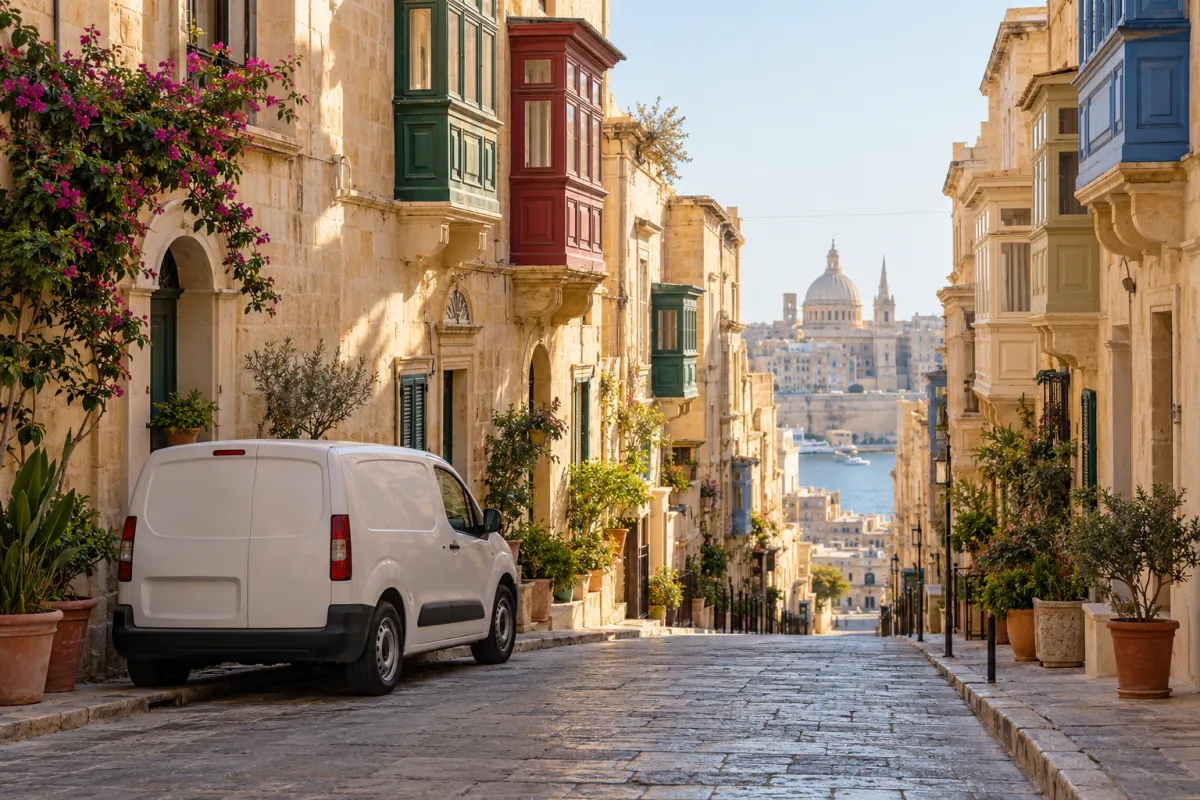
Bulky furniture is a different story. Older buildings in Sliema, Gżira and Valletta often have narrow stairwells and small lifts, or no lift at all. Sofas and wardrobes that went into a British semi may not fit. Compare the cost of shipping a piece with buying locally or second-hand; our cost of living in Malta guide gives you a feel for local prices before you decide.
Usually worth bringing
- Good bedding, duvets and warm layers. Maltese homes are built for heat, and winters indoors can feel cold and damp. Our Malta weather by month guide explains what to pack for each season.
- Quality kitchen knives, pans and small appliances you already like.
- Bikes, sports and diving gear you already own and use.
- Sentimental items, photo albums and anything irreplaceable.
- Prescription medicines with a copy of the prescription, in your hand luggage.
- Important paperwork: degree certificates, driving records, medical and vaccination records, tax documents.
Usually better left behind
- Large sofas, beds and wardrobes, unless you have confirmed your new flat is unfurnished and the access works.
- Big fridges and washing machines, which most furnished rentals already include.
- Brand-new items bought for the move, which do not meet the customs ownership test.
- Anything you plan to sell soon after arriving, because of the post-import restriction.
- Garden furniture and outdoor kit for a garden you may not have.
How your area changes the delivery: Swieqi, Mellieħa and more
A removal quote assumes the lorry can reach your door. On Malta’s narrow, busy streets that is not always true, and the difference can mean shuttling goods in a smaller van, paying for extra labour or rebooking the delivery. Know your exact street before you book. If you have not chosen an area yet, our where to live in Malta guide compares rents and bus links area by area.
| Area | Vibe | Delivery access | Bus links |
|---|---|---|---|
| Sliema | Busy seafront, many expats | Narrow streets, heavy traffic, older blocks without lifts | Frequent services to Valletta and along the coast |
| Gżira and Msida | Central, practical, near the university | Congested main roads; side streets easier | Well connected to Valletta and the university area |
| St Julian’s | Lively, lots of construction | Tight streets and frequent roadworks | Good links along the coast and inland |
| Swieqi | Residential, quieter, a step back from St Julian’s | Steep roads, but usually more room for a van | Links towards St Julian’s and beyond |
| Valletta | Historic capital, compact | Vehicle access is controlled; plan with your mover | The main hub of the bus network |
| St Paul’s Bay | Large, mixed, seaside | Generally workable; busy in summer | Services to the north and towards Valletta |
| Mellieħa | Northern village, slower pace | Hilly lanes; a longer drive from the main hubs | Links towards Valletta and the Gozo ferry terminal |
Area notes last checked May 2026. Check current bus routes and timetables with the operator before you commit to an address.
Living in Swieqi: easier logistics, steeper streets
Living in Swieqi suits people who want to be near St Julian’s without its noise. Many buildings are newer apartment blocks with lifts, and the streets are generally less cramped than in Sliema, which helps on delivery day. The catch is the gradient: some roads are steep, so ask your mover whether their vehicle and crew are used to hill deliveries. Tell them about parking restrictions outside your block too.
Living in Mellieħa as an expat: plan for distance
Living in Mellieħa as an expat means a quieter village life, beaches nearby and a longer journey to the central areas where many people work. For shipping, that distance can mean a slightly different delivery quote, so give the exact address up front rather than just “Malta”. If you are heading to Gozo instead, there is an extra ferry leg to factor in, and some movers handle it while others subcontract it.
Bringing a pet to Malta: rules to check first
Bringing a pet to Malta has its own rules, separate from the customs relief for furniture and boxes, and the order of steps matters. Since Brexit, pet passports issued in Great Britain no longer work for travel into the EU. Instead, your vet arranges an animal health certificate issued by an official vet, alongside a microchip and a valid rabies vaccination. Malta is also one of the countries that asks for tapeworm treatment for dogs before arrival, and the timing of that treatment is strict.
Because these rules change and the timing windows are tight, confirm the current requirements with Malta’s Veterinary Regulation Directorate and your UK vet before you book anything. Check your airline’s pet policy early as well: some carry pets only as cargo, and some restrict pets in the hold during the hottest months.
- Check with the landlord before signing that pets are allowed in writing; many Maltese leases say no.
- Book the vet appointments backwards from your travel date, not forwards from now.
- Keep printed copies of every certificate in your hand luggage.
- Research a vet near your new address before arrival.
- Think about the Maltese summer: dogs used to British weather need shade, water and early or late walks.
Shipping a car from the UK
Malta drives on the left, so a British right-hand-drive car is practical on the road. Whether it is practical financially is another question. Bringing a car means shipping costs, registration with Transport Malta and, unless you qualify for an exemption, registration tax.
The exemption has stricter conditions than the household relief. For registration tax exemption under the transfer of residence scheme, you must have lived outside Malta for a continuous period of at least 24 months, and the vehicle must have been registered and used by you abroad for at least 24 months before the transfer (Ministry for Finance). Students should not assume that a period of study abroad counts as a transfer of residence for vehicle purposes. Check your situation directly with the authorities before shipping.
Many newcomers to Sliema, Gżira or St Julian’s decide they do not need a car at all, because parking is genuinely difficult and distances are short. Our guide to driving in Malta covers licence conversion, parking and running costs, so you can make that call before paying to ship a car.
Timeline and moving checklist
Treat these stages as a rough rhythm rather than fixed deadlines. A light move with suitcases can be squeezed into a few weeks; a household move with pets and a car needs a few months.
Before you book a mover
- Confirm your right to live in Malta through Identity Malta or servizz.gov.mt.
- Check you meet the residence and ownership conditions for customs relief.
- Decide what goes, what is sold and what is stored in the UK.
- Measure key furniture and compare it with typical Maltese flat sizes.
- Start pet vet appointments if you are bringing an animal.
Once you have an address
- Get at least three written quotes on the same inventory.
- Send the mover your exact Maltese address, floor, lift details and parking situation.
- Prepare the inventory box by box, with values.
- Gather proof of UK residence and proof of your Malta residence.
- Arrange transit insurance and read the exclusions.
On collection day
- Check the inventory the crew signs matches yours.
- Photograph furniture condition before wrapping.
- Keep passports, medicines, laptop and documents with you, not in the shipment.
When it lands in Malta
- Answer the clearing agent quickly; delays usually come from missing documents.
- Be at the flat for delivery and check every box against the inventory.
- Note damage on the delivery paperwork before you sign.
- Keep customs paperwork safe and remember the post-import restriction on selling or lending relieved goods.
Getting quotes and avoiding expensive mistakes
The quote that looks cheapest is often the one that leaves things out. Ask each company to say clearly whether the price covers packing, export paperwork, the sea or road leg, port handling in Malta, customs clearance, delivery to the door, carrying upstairs, unpacking and taking away packing material. Destination charges at the Maltese end are a classic surprise, so ask about them in writing.
- Insurance: standard liability is often limited. Ask what full-value cover costs and how claims work.
- Payment: be wary of anyone who wants full payment by bank transfer to a personal account before anything is collected.
- Storage: if your flat is not ready, ask what storage in Malta costs per week and whether it is insured.
- Access: tell the mover about narrow streets, steps and missing lifts before the quote, not on the day.
There is a rental angle too. Never ship your belongings to a flat you have only seen in online photos and paid a deposit for without viewing. Rental scams target newcomers who are not yet on the island, and a container of furniture heading to an address that does not exist is an expensive way to find out. Our guide to shared apartments in Malta, leases and scams covers the warning signs. Many people book a short-term room first, find a long-term flat in person, and only then send the shipment.
Want to turn this into an actual plan? MeetNow is a free app for meeting people in person: a host posts a plan at a public place, says who pays (host pays, split, pay your own or free) and picks who joins. It is live on the web and works in your browser, starting in Malta. The Android app is on Google Play; the iPhone app is not in the App Store yet. Open MeetNow and see the plans posted in Malta.
Whenever you meet someone new, keep it simple and safe: choose a public place, tell a friend where you are going, arrange your own way home and leave if anything feels off.
FAQ
Do I pay VAT on personal belongings shipped from the UK to Malta?
Usually not, if you qualify for transfer-of-residence relief. You must meet the Malta Customs conditions on prior residence outside the EU, how long you have owned and used the items, and when they arrive. New goods, business items and some restricted goods are treated differently and can attract VAT and duty.
Can I ship my things before I have found a flat in Malta?
The rules allow a shipment to arrive before you establish residence, normally with a security or guarantee, but in practice it is safer to wait until you have a confirmed long-term address. Many newcomers rent a short-term room, find a flat in person and then send the shipment, which also protects them from rental scams.
Does the relief apply if I am an EU citizen living in the UK?
The customs conditions focus on where your normal residence was, not on your passport. An EU citizen who has genuinely lived in the UK and is moving to Malta is assessed on the same residence, ownership and timing tests as a British citizen. Confirm your case with Malta Customs or your clearing agent.
Is it worth shipping furniture to Malta?
For solo movers and students, rarely, because many rentals come furnished and older buildings have narrow stairs and small lifts. For couples and families with furniture they value, it can make sense once a long-term unfurnished flat is confirmed and the mover has checked street and building access.
Do UK electrical appliances work in Malta?
Yes. Malta uses the same three-pin plugs as the UK, so British kettles, lamps, chargers and small appliances work without adapters. Large appliances are rarely worth shipping because furnished flats usually include them.
Can I sell items I shipped duty-free soon after arriving?
Not straight away. Goods cleared under transfer-of-residence relief cannot be sold, lent, hired out or given away during the restricted period after import set by Malta Customs. If you plan to sell something soon, leave it in the UK or expect to pay tax on it.