The best areas to live in Malta for expats are Sliema, Gżira and St Julian’s if you want a short walk to work and a ready-made social life; Swieqi, San Ġwann and Naxxar if you want the same access with more calm; Mellieħa, St Paul’s Bay and the south if rent matters most; and Gozo if you work remotely and want space. There is no single best area, only the best area for your commute, budget and stage of life.
Our full guide to where to live in Malta, with areas and rents describes each locality in detail. This article does the opposite: it starts from what you need and gives you a shortlist of two or three areas for each priority, so you can book viewings in the right places from day one.
Quick picks: the best areas to live in Malta for expats, by priority
Malta is small: from Sliema to Mellieħa is about 20 kilometres. Yet the difference between areas is bigger than the map suggests, because traffic, bus links and noise change sharply from one locality to the next. Use this table to pick your first shortlist.
| Your top priority | Shortlist | Typical one-bedroom asking rent | Main trade-off |
|---|---|---|---|
| Walk to work in iGaming, finance or tech | St Julian’s, Gżira, Sliema, Ta’ Xbiex | About €1,000–1,800 | Highest rents, construction noise |
| Meeting people quickly | Sliema, St Julian’s, Gżira | About €1,000–1,800 | Busy streets, late nights near Paceville |
| Family routine and schools | Swieqi, San Ġwann, Naxxar, Attard | About €900–1,400 | You will often want a car |
| Lower rent | St Paul’s Bay, Birkirkara, the south, Gozo | About €650–1,050 | Longer commute, fewer English-speaking groups |
| Quiet, sea and space | Mellieħa, Marsaskala, Gozo | About €700–1,200 | Smaller social scene outside summer |
Rent bands are rounded asking prices for a one-bedroom flat on a long let, compiled from agency and listing reports; last checked November 2026. Registered contract rents are often lower than asking prices, and summer short lets cost more.
Best areas for a short commute
Most expat jobs are concentrated around the north harbour: St Julian’s (including Paceville and Portomaso), Ta’ Xbiex, Gżira, Pietà, Mriehel and the business parks near Birkirkara and San Ġwann. In rush hour a 6 km drive can take 40 minutes, so living within walking distance of the office is the single biggest quality-of-life upgrade you can buy.
- Gżira is the commuter’s sweet spot: flat, on the Sliema–Valletta bus corridor, a walk from Ta’ Xbiex and Sliema, and usually a little cheaper than its neighbours. Our guide to living in Gżira, street by street covers it in detail.
- St Julian’s works if your office is in Portomaso, Spinola or Paceville. Choose the Spinola side or Swieqi border rather than central Paceville if you want to sleep at weekends.
- Sliema is ideal for jobs in Sliema, Gżira or Valletta (the Sliema ferry crosses to the capital in a few minutes). Our guide to living in Sliema, with rents and daily life covers the streets to aim for.
- Mriehel or Birkirkara make sense if your employer is in the Mriehel business district: you can avoid the coast road entirely.
Rule of thumb: before you sign, do the commute at 08:00 on a weekday, not on a Sunday afternoon viewing.
Best areas for a social life
If you are moving alone, where you live shapes how quickly you meet people. The Sliema, Gżira and St Julian’s strip has the densest mix of gyms, language exchanges, running clubs, co-working spaces and cafés where newcomers end up talking to each other. Being able to walk home after a dinner also means you say yes to more invitations.
The trade-off is noise. Paceville stays loud until the early hours, construction is constant along the coast, and older flats are rarely soundproofed. Many people choose the quieter edge of the strip, such as upper Gżira, Ta’ Xbiex or the Swieqi side of St Julian’s, and walk ten minutes to the action.
If you move further out for the rent, plan your social life on purpose: pick one or two regular activities in Sliema or Valletta and make them a weekly habit, so the distance does not quietly turn into staying home.

Best areas for families
Families tend to weigh three things: school runs, a bit of outdoor space and less traffic outside the front door. The localities that score well on all three are slightly inland or slightly north of the busiest strip.
- Swieqi: residential, close to St Julian’s offices and several international and independent schools in the area, with larger flats and maisonettes than the coast.
- San Ġwann: practical and central, with supermarkets, parks and quick access to the regional road. See our guide to living in San Ġwann as an expat.
- Naxxar, Mosta and Attard: village cores, more houses with terraces or small yards, and good access to schools in the centre of the island. A car makes daily life much easier here.
- Mellieħa: a seaside town with beaches nearby and a slower pace, best if one parent works remotely or the commute is flexible.
Before you choose, map the school first and the flat second. A 3 km school run across the island’s central bottlenecks can take longer than a 10 km run in the north.
Best areas on a tighter budget
Malta’s rents are high compared with local wages, and the gap between the north harbour and the rest of the island is large. If budget comes first, these areas give you the most space for the money while keeping a reasonable bus link:
- St Paul’s Bay, Qawra and Buġibba: a large stock of flats, a seafront promenade and a big international community. Commutes to St Julian’s are long at peak times.
- Birkirkara, Msida’s inland streets and Qormi: central, less glamorous, often cheaper, and close to the Mriehel offices.
- The south: Żabbar, Fgura, Marsaskala and Birżebbuġa ask noticeably less, and the Three Cities offer character for a similar price to the centre.
- Sharing: in your first year, a room in a shared flat in Gżira or Sliema can cost less than a one-bedroom in a cheaper area and keep you close to work. Read our guide to finding a shared apartment in Malta before you start messaging landlords.
Work out rent as a share of your net pay before deciding. Our breakdown of the cost of living in Malta with real figures helps you build the full monthly budget, not just the rent.

Best areas for quiet and space
If you work from home or you are retired, the calculation changes: commute matters less and noise, light and space matter more.
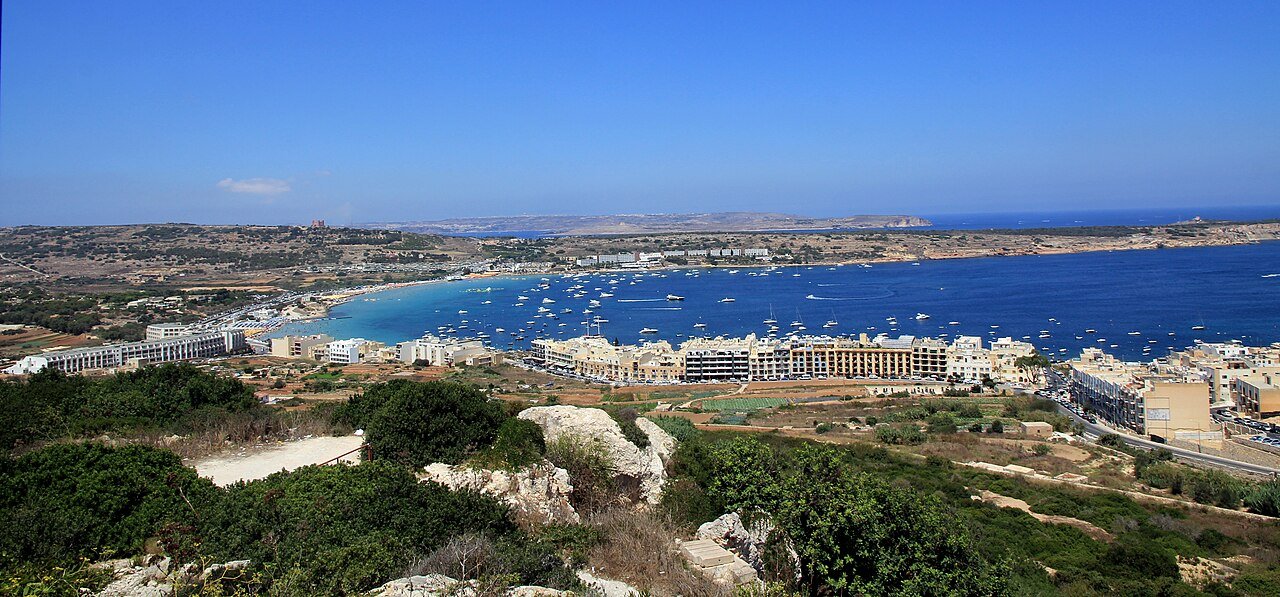
- Mellieħa sits on a ridge above the island’s longest sandy bay, with countryside walks and a village feel. Expect quiet winters.
- Marsaskala is a relaxed seaside town in the south-east with a promenade and generally lower rents than the north.
- Gozo offers the most space for the money, a slower rhythm and a strong community feel. Daily commuting to Malta by ferry is tiring, so it suits remote workers best. Our guide to living in Gozo as an expat covers the practical side.
Quieter areas have one hidden cost: fewer spontaneous social contacts. Plan regular trips to the busier towns for clubs, classes or dinners, especially in the first six months.
How to test an area in two weekends
Photos and listings cannot tell you what a street sounds like at 23:00 on a Friday. Use a short let for your first weeks and run this test on each shortlisted area:
- Weekday morning: do your real commute at rush hour, by bus or car, and time it.
- Friday night: walk the street of the flat after 22:00. Listen for bars, traffic and building sites.
- Saturday: do a normal shop at the nearest supermarket and find the closest pharmacy, gym and bus stop.
- Sunday: check the nearest open space or seafront you would actually use.
- Ask a neighbour about planned construction nearby. Building permits next door are the most common reason expats move after a few months.
Only then sign a registered lease. Never pay a deposit for a flat you have not seen in person, and be wary of listings that ask for money before a viewing.
Once you have the keys, the fastest way to feel at home in a new area is to start seeing the same faces every week, whether at a club, a class or a small dinner nearby.
Want to turn this into an actual plan? Open MeetNow and see the plans posted in Malta. It is free and works in your browser: a host posts a plan at a public place, says who pays (host pays, split, pay your own or free) and picks who joins, starting in Malta.
Frequently asked questions (FAQ)
Which area of Malta has the most expats?
The biggest concentration of foreign residents is in the north harbour area: Sliema, St Julian’s, Gżira, Msida and Swieqi, plus St Paul’s Bay further north. These localities are close to the main office districts and have the most English-speaking services, gyms and cafés.
What is the best area in Malta for expats without a car?
Gżira, Msida and Sliema are the easiest without a car: many bus routes pass through, the Sliema ferry runs to Valletta and most offices in St Julian’s, Ta’ Xbiex and Pietà are reachable on foot or by a short ride. Valletta also works well if you commute to the capital.
Is it cheaper to live in the south of Malta?
Usually, yes. Localities such as Żabbar, Fgura, Marsaskala and Birżebbuġa tend to ask noticeably less than Sliema or St Julian’s for a similar flat. The trade-off is a longer commute to the north harbour offices and fewer English-speaking social options nearby.
Is Gozo a good place to live for expats?
Gozo suits remote workers, retirees and families who want space and quiet, and rents are generally lower. It is harder if you commute to Malta every day, because the ferry adds time and cost, and the social scene is smaller, especially in winter.
Should I sign a lease before I arrive in Malta?
It is safer not to. Book a short let for the first few weeks, view flats in two or three areas at different times of day and only then sign a registered lease. Never pay a deposit for a flat you have not seen in person.