San Ġwann is the inland town most newcomers pass on the Regional Road without noticing. It sits between Swieqi, Msida, Gżira and Birkirkara, which is exactly why so many people end up renting there. If you are weighing up living in San Gwann Malta (locals spell it San Ġwann, with a dotted Ġ, and say it roughly as “san jwan”), you are looking at a residential, mostly quiet locality. It is a short bus or taxi ride from the Sliema and St Julian’s coast, without the seafront price tag or the weekend crowds.
I have watched friends sign leases there, renew them, and sometimes move back to the coast. The pattern holds. People who choose San Ġwann for space and calm tend to stay. People who expected to step out of the door onto a promenade tend to leave after one lease. This guide should help you work out which group you belong to before you pay a deposit.
It covers what the town feels like day to day, how it compares with Gżira, Sliema and Swieqi, how the rental market works, the lease registration rule every tenant should know, buses and cars, and a move-in checklist. One honest note first: we only publish figures we can source and date. Instead of inventing a rent range, we show you where to find current prices and what pushes them up or down.
San Ġwann is a residential inland town in Malta’s Northern Harbour district, close to Sliema, Gżira, Swieqi, Msida and the University of Malta. It suits newcomers who want quieter streets and more space than the coast offers while staying a short bus or taxi ride from it. Expect hills, busy main roads and a calm evening scene, and always make sure your lease is registered with the Housing Authority.
Living in San Gwann Malta: what it is really like
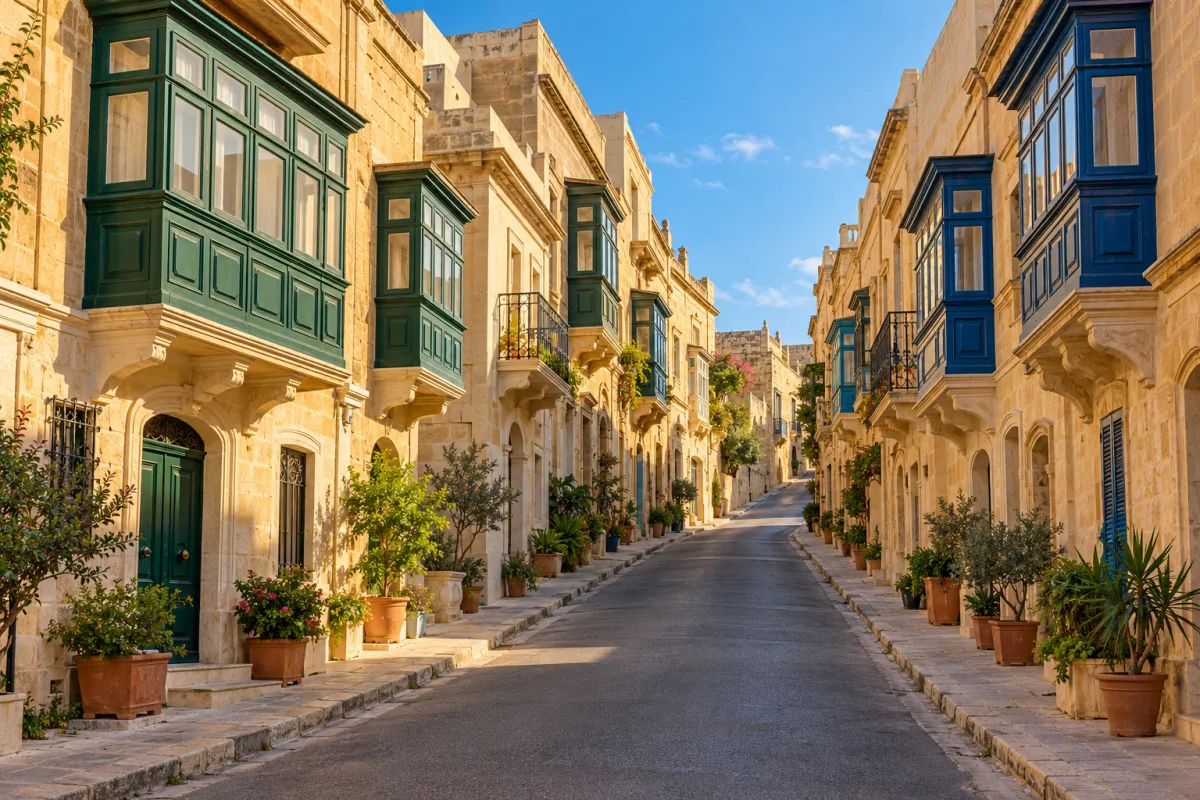
San Ġwann is a working, lived-in town, not a tourist postcard. The streets mix apartment blocks, maisonettes and older terraced houses. Maltese families who have lived there for decades share stairwells with international renters, students and healthcare workers. You won’t find a seafront, a cluster of hotels or a promenade, and for many residents that is the point.
For statistics, the town belongs to a busy part of the island. In the National Statistics Office census and demographic reporting, San Ġwann is counted within the Northern Harbour district, the densest urban belt in Malta and one with a large international resident population. In practice, the town feels more suburban than its neighbours, but it still sits inside the island’s main built-up corridor. Shops, clinics, the university and the coast are all close.
The everyday texture is what you would expect of a residential Maltese locality. There are small grocers and corner shops, pharmacies, a few cafés and takeaways, church bells, and the occasional festa in summer. As almost everywhere in Malta, there is also some construction. Evenings are calm. If you want bars and a busy weekend scene, you will travel to St Julian’s or Sliema for it, which is easy enough but worth planning for.
Expat reality check: the quiet that people love about living in San Ġwann comes with trade-offs. You will walk uphill more than you expect, and your nearest swim is a bus ride away. A lease can also look great on paper but sit next to a building site. Visit at different times of day before you commit.

Where San Ġwann sits: neighbours and pockets
Look at a map and San Ġwann sits roughly in the middle of the central conurbation. Swieqi and St Julian’s are to one side, Gżira and Sliema towards the harbour, Msida close by, and Birkirkara inland. That central position is its main selling point. The University of Malta and Mater Dei Hospital are both in neighbouring Msida, which is why you meet so many students, researchers, nurses and doctors who live here.
The town is not uniform. It includes several distinct pockets, such as Kappara and Tal-Għargħar. Streets near the main arterial roads, including around the Regional Road at Kappara, are busier and noisier. Interior residential streets can be very quiet. Two flats with the same asking rent can feel completely different depending on which side of town they are on, how steep the walk to the bus stop is, and what overlooks the bedroom window.
How to judge a street before you sign
- Walk to the nearest bus stop from the front door and note the gradient. A five-minute stroll downhill is a very different walk back in August.
- Stand outside at rush hour. Streets that feed into main roads can become rat runs.
- Look for cranes and empty plots nearby. An empty plot next door often means building work later in your lease.
- Check where the nearest grocer and pharmacy are. Without a car, this decides how pleasant the place feels in practice.
San Ġwann vs Gżira, Sliema, Swieqi and Msida
Most people looking at San Ġwann are also viewing flats in the neighbouring towns. The table below compares them on feel and convenience. The rent column is deliberately relative rather than a number. Prices move quickly and vary street by street, so check current listings and our cost of living in Malta breakdown for dated figures.
| Area | Vibe | Rent level (relative) | Bus links | Best for |
|---|---|---|---|---|
| San Ġwann | Residential, inland, family streets, hilly in places | Usually below comparable seafront flats in Sliema and Gżira; varies a lot by street and finish | Routes through town towards Valletta, the Sliema and St Julian’s coast and the Msida university and hospital area; check your exact stop | Space, calm, students, hospital staff, people with a car |
| Gżira | Busy, central, waterfront facing Manoel Island | Often a step below Sliema for similar flats; higher on the front | Very well served along the coast road | People who want the sea and Sliema within walking distance |
| Sliema | Dense, lively, promenade, shops everywhere | Among the pricier areas for newcomers | Strong bus links plus the ferry to Valletta | People who want everything walkable |
| Swieqi | Residential, newer blocks, near St Julian’s | Wide range; some larger, pricier apartments | Decent, though some streets are uphill from stops | Quiet living close to St Julian’s |
| Msida | Mixed, marina, next to the university and Mater Dei | Varies; strong student demand near campus | A hub for university and hospital routes | Students and healthcare staff |
Relative comparison based on our experience of the local market; not a price survey. Last checked May 2026.
San Ġwann or living in Gżira?
This is the comparison I am asked about most. Living in Gżira puts you on the harbour side, with a waterfront facing Manoel Island and an easy walk into Sliema. Buses run constantly along the front, and you can step outside for a sea-view walk whenever you like. The trade-off is noise, traffic, parking and, on the front, higher rents for smaller spaces. San Ġwann gives you the opposite deal: more interior space and quieter nights for the money, in exchange for hills and a bus ride to the sea.
If you are torn, ask yourself how you will spend a normal Tuesday evening. If the answer is a walk by the water, Gżira or Sliema will make you happier. If it is cooking, working on a laptop or going to bed early before a hospital shift, San Ġwann wins. For a deeper look at the coastal option, read our guide to living in Sliema, and for the wider map see where to live in Malta by area.
Renting in San Ġwann: how the market works
San Ġwann is not a niche choice. The Housing Authority counts it among Malta’s prominent rental localities, alongside towns such as Birkirkara, Swieqi, Mosta and Naxxar, each with more than 1,000 active registered private rental contracts. For you as a tenant, that means plenty of stock, plenty of competition from other renters, and a lot of variation in quality.
What you will typically find
- Two- and three-bedroom apartments in residential blocks, often larger than similar listings on the coast.
- Maisonettes with their own front door, sometimes with a yard or roof access.
- Rooms in shared flats, especially near the Msida side, popular with students and early-career professionals. Our shared apartment guide covers room leases and the common scams.
- Older townhouses, which have character but need extra checks for damp, insulation and wiring.
What pushes the price up or down
Within San Ġwann, the same factors come up again and again. These include distance from the main bus routes, whether there is a lift, the number and age of air-conditioning units, how new the furniture and appliances are, whether a garage or parking space is included, and any view or outdoor space. Furnished flats are the norm for newcomers. Unfurnished ones can be cheaper but leave you buying beds and white goods for what might be a one-year stay.
Bills are usually extra. Electricity and water in Malta are billed according to consumption, and an inefficient flat with old air conditioning gets expensive in summer and winter. Before you sign, ask the landlord how bills are paid and whether the account will be in your name. Our guide to electricity bills in Malta explains tariffs and what a residential account means for you.
Viewing checklist
- Open wardrobes and look at corners and ceilings for damp or mould, especially in ground-floor and older flats.
- Run the taps and shower, and ask how hot water is heated.
- Switch on every air-conditioning unit, in both heating and cooling modes.
- Ask which internet providers can serve the building.
- Check the windows close properly, because winter wind and rain find every gap.
- Ask whether the building has a water tank or pump, and how water pressure holds up on upper floors.
Lease registration and deposits: protect yourself
This is the most important section of the guide, wherever in Malta you rent. Under Chapter 604 of the Laws of Malta, the Private Residential Leases Act, private residential leases must be registered online through the Housing Authority’s portal. The landlord is required to register the lease within 10 days of the start date, according to the Housing Authority. Registration gives your tenancy formal legal standing. It is also often what you need to show when dealing with other official processes as a resident.
If a landlord suggests skipping registration, offers a lower rent “without papers” or says it does not apply to you, treat that as a serious warning sign. An unregistered lease can leave you exposed if there is a dispute over the deposit, repairs or an early exit. This is general information, not legal advice. For your specific situation, go directly to the Housing Authority and to official government guidance on servizz.gov.mt.
| Before you pay | Why it matters | What to ask or do |
|---|---|---|
| Written lease | Sets the term, rent, deposit and notice rules | Read every clause on early termination and who pays for repairs |
| Lease registration | Legal protection under Maltese law | Ask for confirmation once it has been registered with the Housing Authority |
| Deposit receipt | Proof of what you paid and when | Pay by traceable bank transfer, never cash without a receipt |
| Inventory with photos | Protects your deposit at move-out | Photograph every room, appliance and mark, with dates, and email the photos to the landlord |
| Bills arrangement | Avoids surprise charges | Agree in writing who pays which bills and how readings are taken |
| Agency terms | Agency fees are common in Malta | Ask what the fee is and when it is due before you view |
Scam rule of thumb: never send money for a flat you have not seen in person or by a live video call with the landlord or agent in the property. Be wary of anyone who pushes for a quick deposit “because others are interested”. Genuine landlords in San Ġwann have plenty of applicants and no reason to rush a stranger into paying first.
Getting around: buses, walking and cars
San Ġwann is served by scheduled Malta Public Transport routes that pass through or along the edges of town. They connect it with Valletta, the Sliema and St Julian’s coast and the Msida area where the university and Mater Dei are. How useful that is for you depends almost entirely on your exact street. Before signing, open the official journey planner and check how many routes stop within a short walk, and how often they run at the times you actually travel.
Residents can apply for a personalised Tallinja card. Resident concessions on scheduled buses have been generous in recent years, but check the current terms with Malta Public Transport rather than relying on what a friend told you. Buses get crowded at peak times, and traffic on the main roads around the town can slow journeys considerably. Build in a buffer for work start times and university lectures.
Walking and cycling
Walking is realistic for local errands and for reaching parts of Msida, Swieqi or Gżira from the right edge of town. Pavements can be narrow or interrupted, though, and the hills are real. In high summer, a midday walk uphill is hard going. Cycling is possible for the confident, but the main roads are busy and not built with cyclists in mind. An e-bike makes the gradients manageable.
Cars and taxis
A car makes San Ġwann more convenient for reaching beaches, supermarkets and the north or south of the island. It also brings the usual Maltese issues of congestion and the hunt for street parking in residential areas. If parking matters to you, ask whether a garage or space comes with the flat, because it can change your daily life completely. Ride-hailing apps and taxis operate across the area and are handy for late returns from the coast.
Daily life: shops, council and services
Day to day, San Ġwann covers the basics well. You will find small supermarkets and grocers, butchers, bakeries, pharmacies, hairdressers and the usual mix of takeaways within the town. Larger supermarket shops are an easy drive or bus ride in the surrounding towns. Because the University of Malta and Mater Dei Hospital are next door in Msida, many residents can reach work, study or a hospital appointment without crossing the island.
Local matters are handled by the San Ġwann Local Council, which operates under the Department of Local Government. According to gov.mt, the council looks after local administrative services, public garden upkeep, local tenders such as waste collection and green initiatives, and community notices. You can reach it at sangwann.lc@gov.mt. This is the place to ask about waste collection days, a broken streetlight or a problem with a public garden.
Waste collection, noise and neighbours
Malta separates household waste into different streams collected on set days. Getting this wrong is the fastest way to annoy your new neighbours. Ask your landlord, or the council, which days apply to your street for mixed waste, recyclables and organic waste, and stick a note inside a kitchen cupboard. Bags go out the evening before collection, not days early.
Noise in San Ġwann is usually about construction, traffic on the main roads and, in summer, the odd round of festa fireworks or band marches typical of Maltese towns. Apartment walls can carry sound, so a friendly hello to neighbours early on goes a long way. Many newcomers are surprised by how much of Maltese daily life happens around family and the parish, and you will notice this more in a residential town than on the tourist coast.
Who San Ġwann suits, and who it doesn’t
After years of watching people move in and out, I would sum it up like this.
It tends to suit
- University students and staff who want to be close to campus but not live in the busiest student streets.
- Healthcare workers at Mater Dei who value a short commute and quiet sleep after shifts.
- Remote workers who want a bigger flat with a proper desk space and don’t need a café scene downstairs.
- Couples and small families looking for more space for their budget than the seafront offers.
- People with a car, or who don’t mind short taxi rides to the coast.
It can disappoint
- People who want to walk to the sea for a swim or sunset whenever they like.
- New arrivals without a car who work in the far north, the south or on Gozo.
- Anyone whose main reason for moving was a busy social life right on their doorstep.
- People who struggle with heat and hills, unless the flat is close to a well-served stop.
If you are still shaping the bigger move, our moving to Malta step-by-step guide puts the housing decision in the context of paperwork, banking, healthcare and your first weeks.
Malta vs Cyprus for expats: a quick sanity check
Plenty of readers looking at San Ġwann are still deciding between countries, so here is an honest, figure-free view of Malta vs Cyprus for expats. Both are EU members, both use the euro, both drive on the left, and English is widely used in both. In Malta it is an official language alongside Maltese, which makes daily admin and work in English very straightforward.
The big differences are scale and lifestyle. Malta is small and dense. Towns like San Ġwann run into each other, and an island-wide bus network means you can live without a car if you choose your area carefully. Cyprus is much larger, with more distinct cities and more space, and daily life there generally leans more on having a car. Malta trades space for proximity: almost everything is close, but everything is also busy.
On residency, tax and work permits, don’t rely on comparison blogs, including this one. Rules depend on your nationality and situation and they change. For Malta, start with Identità and servizz.gov.mt. For Cyprus, use the official Cypriot government portals. Once you have that answer, decide on lifestyle: if a compact, English-speaking island with everything close by appeals to you, Malta and towns like San Ġwann make a lot of sense.
Move-in checklist for San Ġwann
Work through this in your first few weeks after getting the keys.
- Confirm the lease is registered with the Housing Authority and keep a copy of the confirmation.
- Do the inventory on day one: photos and video of every room, meter readings and existing damage, emailed to the landlord.
- Sort the utility account for electricity and water, and agree in writing how bills are split if they stay in the landlord’s name.
- Book internet installation early, as appointments can take time.
- Apply for a personalised Tallinja card once you are eligible, and save your nearest stops in the journey planner.
- Find your nearest pharmacy, grocer and health centre, and register with a GP if you need one.
- Check official residency and address steps for your situation with Identità and servizz.gov.mt.
- Learn your waste collection days and get the right bags.
- Save the local council contact (sangwann.lc@gov.mt) for local issues.
- Walk your neighbourhood at different times of day so you know which routes are shaded, flat and safe after dark.
Meeting people when you live inland
The one thing almost everyone underestimates about living in San Ġwann is how easy it is to become a commuter-and-sofa person. The coast has a built-in social scene. Inland, you have to make your own plans. That is very doable, as the coast is close, but it takes intention, especially if you arrived alone.
Things that work for newcomers here include university societies and open events if you are studying, language exchanges, sports clubs and gyms, coworking days if you work remotely, and regular walks along the Gżira and Sliema front, where it is easy to say yes to a coffee. Pick one recurring activity in your first month. A repeated face becomes a friend far faster than a single meeting does.
When you meet someone new, keep it simple and safe: choose a public place, tell a friend where you are going and who you are meeting, arrange your own way home, and leave whenever you feel uncomfortable. None of that is unusual in Malta, and nobody will think twice if you do it.
Want to turn this into an actual plan? MeetNow is a free app for meeting people in person: a host posts a plan at a public place, says who pays (host pays, split, pay your own or free) and picks who joins. It is live on the web and works in your browser, starting in Malta. The Android app is on Google Play; the iPhone app is not in the App Store yet. Open MeetNow and see the plans posted in Malta.
FAQ
Is San Ġwann a good place to live for expats?
Yes, for many people. It is a residential, mostly quiet town in the central built-up area, close to Sliema, Gżira, Swieqi, Msida, the University of Malta and Mater Dei Hospital. It suits people who want more space and calmer streets than the coast. It is less suited to anyone who wants to walk to the sea or have a busy social scene on the doorstep.
How far is San Ġwann from Sliema and the coast?
It is a short bus or taxi ride, and from some edges of town you can walk to parts of Gżira or Swieqi. Journey times depend heavily on traffic and on how close your flat is to a well-served bus stop, so check the official journey planner for your exact street before signing a lease.
Is San Ġwann cheaper than living in Gżira or Sliema?
Comparable flats in San Ġwann usually rent for less than seafront flats in Sliema and Gżira, and you often get more space for the money. Prices vary a lot by street, condition and furnishing, so compare current listings and dated cost-of-living figures rather than relying on a single average.
Does my landlord have to register the lease?
Yes. Under Maltese law, private residential leases must be registered online with the Housing Authority, and the landlord has a short legal deadline to do this after the lease starts. Ask for confirmation of registration, and treat any offer of an unregistered lease as a red flag.
Can I live in San Ġwann without a car?
Yes, if you choose your street carefully. Scheduled buses connect the town with Valletta, the Sliema and St Julian’s coast and the Msida university and hospital area. Pick a flat within a short, preferably flat, walk of a stop with frequent routes, and expect hills and summer heat when walking.
Should I choose Malta or Cyprus as an expat?
Both are EU countries that use the euro and where English is widely used. Malta is smaller and denser, with an island-wide bus network, while Cyprus is larger and generally more car-dependent. Check residency, work and tax rules for your situation on official government sources first, then decide based on lifestyle.