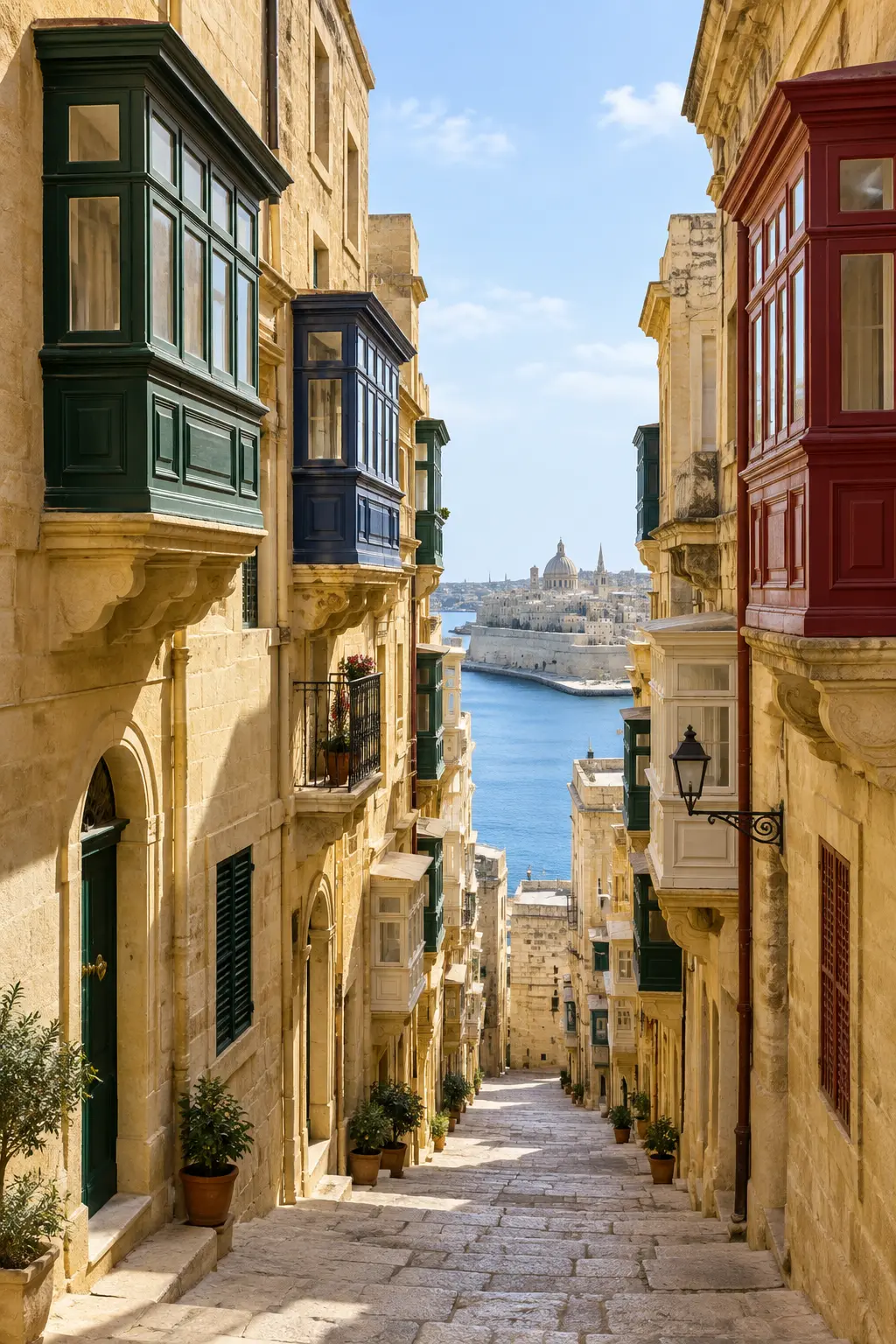
Short answer: moving to Malta in 2026 is mostly a paperwork-and-housing project squeezed into your first six weeks. Sort your residence route on the official Identità site before you fly, rent a room or flat with a lease the landlord registers with the Housing Authority, apply for a personalised tallinja card so the buses cost you nothing, open a bank account, and register with a GP or health centre. Then, from week two onwards, put one social plan in your diary every week. This guide walks through each step in order, with a printable checklist, dated figures and the official links that actually decide your case.
I have watched a lot of people arrive on this island. The ones who settle quickly are rarely the ones with the most money. They are the ones who treat the first month as a sequence: one admin task a day, one honest look at the rent market, and one small plan with other people each week. Malta is small enough that a bit of order goes a very long way.
Before you move: EU and non-EU routes
Your nationality decides almost everything about the paperwork, so start here and read the official pages rather than forum posts. This site does not give visa, residence or tax advice; the rules change and individual cases differ. What follows is the shape of the process so you know what to look for.
EU, EEA and Swiss citizens
If you are an EU or EEA national planning to live in Malta for longer than three months, you apply for a residence document through the Expatriates Unit at Identità. According to Identità, the application starts online through the Expatriates Portal, the agency replies with a biometrics appointment and a list of documents, and you bring originals plus copies. The standard document is generally valid for five years. The basis you apply under (employment, self-employment, study, self-sufficiency) changes which documents you need, so pick the right one before you book.
In practice, the documents people most often scramble for are a signed and registered lease, an employment contract or proof of funds, and health insurance where your basis requires it. Have scans of everything on your phone and paper copies in a folder. Appointment slots can be weeks out in busy months, so apply as soon as you have an address.
Non-EU nationals
Third-country nationals usually need a permit that is tied to a specific purpose: a job offer (the single permit route), study, a nomad residence permit, or another scheme. Each route has its own conditions, fees and processing times, and some must be started before you travel. Use only the official sources: identita.gov.mt for residence and work permits, and Residency Malta Agency for the residence programmes it runs. If an agent promises a timeline that the official page does not, treat it as a sales line.
Things to do in your home country first
- Check your passport or national ID card has plenty of validity left.
- Get apostilled or certified copies of any documents your route needs (degree certificates, birth or marriage certificates). Ask the official page which ones, then order them early.
- Keep your home bank account open for the first months; a new Maltese account can take time.
- Download your medical records and repeat prescriptions in English if you take regular medication.
- If you are an EU citizen, carry your European Health Insurance Card (EHIC) for the period before you are registered locally.
- Decide whether you need your driving licence. Malta drives on the left, and conversion rules depend on where the licence was issued; check Transport Malta.

Your first week in Malta: the order that saves time
The first week is about getting connected and getting an address you can actually use on forms. Do these roughly in this order, because later steps tend to ask for the earlier ones.
- Get a local SIM. The three mobile networks are GO, Epic and Melita. A local number makes every later step easier: banks, landlords, GP clinics and delivery drivers all text Maltese numbers first. Prepaid is fine to start; you can move to a contract once you have a bank account.
- Lock down housing. Short-term stays (a room booked for two to four weeks) are a sensible base while you view flats in person. Do not pay a deposit on a flat you have only seen in photos.
- Sign a proper lease. Residential leases in Malta must be registered with the Housing Authority by the landlord. An unregistered lease is a common problem, and a registered address is often asked for in residence and other applications. Ask your landlord for the registration confirmation and check the current deadline and fee on the Housing Authority site or its rent registration portal.
- Start your residence application. Once you have the lease, submit your residence application through Identità and book the biometrics appointment.
- Buy a few bus journeys. Until your personalised tallinja card arrives, pay on board by contactless card. Malta Public Transport lists a single day-route fare of €2.00 in winter and €2.50 in summer, valid for two hours when paid by cash or contactless (checked October 2026 on publictransport.com.mt). If you will ride a lot before the card arrives, the 12 Single Day Journeys card is €19.
- Walk your neighbourhood. Find the nearest pharmacy, supermarket, health centre and bus stop. It sounds obvious; it is the step that makes a place feel like home.
Your first month: banks, tallinja, health and work
Apply for a personalised tallinja card
This is the single best money-saver for newcomers. According to Malta Public Transport, holders of a personalised tallinja card travel free on day routes, night routes and selected special services, on the Valletta ferries between Sliema, Valletta and the Three Cities, and on the Barrakka Lift. tallinja Direct routes and On Demand services are not included. The registration fee is €25 for Adult, Student and Gozo Resident cards and €5 for Child and Concession cards, plus postage, and cards are typically delivered within two weeks (all checked October 2026). Until 30 October 2026, Malta Public Transport is also offering free registration for Child and Student cards. You apply online with an email address, a mobile number, a photo and a copy of your identity document.
Open a bank account
The main retail banks include Bank of Valletta, HSBC Malta, APS Bank and Lombard Bank. Expect to be asked for your passport or ID, proof of address (your registered lease helps), proof of income or an employment letter, and sometimes a reference from your current bank. Appointments and compliance checks can take a while, so many newcomers use an EU e-money account for their first few weeks and move salary payments once the local account is open. Requirements differ by bank and by your situation; ask the bank directly what they need before you go in.
Register for healthcare
Malta has a public system of health centres and hospitals, with Mater Dei Hospital in Msida as the main general hospital, and a large private sector of GP clinics and pharmacies. Your entitlement to free public care depends on your status (for example, being employed and paying social security contributions, or being covered by an EU scheme). Check your situation on the Ministry for Health site. In an emergency, call 112.
Many newcomers keep it simple: find a private GP clinic near home for small things, know where your local health centre is, and save 112 in your phone.
Work: Jobsplus, contracts and pay
If you are starting a job, your employer handles your engagement with Jobsplus, the public employment service, which is also where many vacancies are advertised. Ask your employer which tax and social security numbers you will need and how they will be issued; the tax side is run by the Commissioner for Revenue. For context on pay: the national minimum wage for workers aged 18 and over is €229.44 a week in 2026 (Legal Notice 289 of 2025). That figure is pre-budget: Budget 2027 is presented on 26 October 2026 and the annual cost-of-living adjustment for 2027 will be announced then, so check for the new rate after that date.
Costs snapshot: what a newcomer actually pays
Rent is the number that decides your budget. Everything else in Malta (food, phone, transport with a free tallinja card) is manageable on an ordinary salary; rent in the popular harbour towns is where people get squeezed.
The most reliable public data comes from the Housing Authority, because it is built from registered leases rather than asking prices. Its rental dashboard, as reported by Business Now in October 2025, gave these medians for new two-bedroom contracts in the first half of 2025:
| Locality | Median monthly rent, 2-bed (new contracts, H1 2025) | Middle half of contracts |
|---|---|---|
| St Julian’s | €1,500 | €1,200 to €1,800 |
| St Paul’s Bay | €850 | €700 to €1,000 |
| Gozo: Żebbuġ (incl. Marsalforn) and Munxar (incl. Xlendi) | €800 | not reported |
| Shared rooms (per tenant) | about a third of new shared contracts were €200 to €299 a month | not reported |
Source: Housing Authority rental dashboard via Business Now, 10 October 2025. Last checked October 2026. These are the latest locality figures we could verify from official data; asking prices on listing sites often run higher.
Three things to read into those numbers. First, the harbour towns (St Julian’s, Sliema, Gżira, Swieqi) cost a lot more than the north or Gozo for the same size of flat. Second, a shared flat changes the maths completely, which is why so many newcomers start with a room. Third, the Housing Authority figures are medians of registered contracts; you will see cheaper and dearer flats, and the gap between a renovated seafront flat and a ground-floor flat two streets back can be large.
Other monthly costs to plan for:
- Utilities: electricity and water are billed by ARMS Ltd. Many leases pass bills through at cost; read the clause, and ask what the previous tenant paid in summer, when air conditioning pushes bills up.
- Transport: close to zero on buses with a personalised tallinja card, apart from the one-off registration fee.
- Phone and internet: compare GO, Epic and Melita; bundles change often.
- Food: supermarket prices depend heavily on imported brands; local produce from vegetable vans and markets is often cheaper.
- Social budget: put a line in your budget for it. A coffee, a beach day or a shared dinner once a week is the cheapest way to stop feeling like a visitor.
Choosing an area: where newcomers live
Where you live decides how easy everything else is: how long your commute takes, whether you can walk to the sea, and whether you bump into the same people at the same café each week. Here is a quick orientation. Rent figures are shown only where we could verify them from Housing Authority data; for the others, use the Housing Authority rent tools and current listings.
| Area | Rent guide (2-bed, H1 2025) | Vibe | Bus and ferry links |
|---|---|---|---|
| Sliema | among the most expensive; no verified 2025 median | busy seafront, shops, cafés, many newcomers | many routes along the coast; ferry to Valletta |
| Gżira | no verified 2025 median | promenade, local feel, close to Msida | short ride to Valletta and Sliema |
| St Julian’s / Swieqi | €1,500 (St Julian’s) | nightlife near Paceville, quieter in Swieqi | frequent coastal buses |
| Msida | no verified median | university and hospital area, students and staff | on many routes into Valletta |
| Valletta | no verified median | historic capital, quiet at night, steps and hills | main bus terminus; ferries to Sliema and the Three Cities |
| St Paul’s Bay / Buġibba / Qawra | €850 (St Paul’s Bay) | larger flats, seaside, long-stay community | longer rides to the harbour area |
| Gozo | €800 (Żebbuġ/Munxar) | slower pace, rural, close-knit villages | ferry from Mġarr to Ċirkewwa; buses on Gozo |
Last checked October 2026. Rent source as in the table above.
A practical rule: if you work in the St Julian’s, Sliema or Gżira office belt and do not drive, living within walking distance or one bus ride of work is usually worth more rent. If you work remotely and want space, the north and Gozo get you more flat for the money, at the cost of longer trips to see people.

Renting safely: scams, deposits and inventories
Most landlords and agents are fine. The problems cluster around a few patterns, and all of them are avoidable.
Common mistakes to avoid
- Paying a deposit or “holding fee” before viewing in person or by live video with the landlord.
- Signing without a written inventory of the furniture and its condition. Photograph every room on the day you move in and email the photos to the landlord.
- Accepting a lease that the landlord says they will “register later”. Ask for proof of registration with the Housing Authority.
- Not checking who pays the bills and how they are calculated.
- Agreeing a deposit without writing down when and how it will be returned.
If something goes wrong, the Housing Authority is the first official stop for questions about lease registration and your rights as a tenant. Keep every message with your landlord in writing.
Moving to Malta checklist (printable)
Copy this into your notes app or print it. Tick each line as you go.
Before you fly
- ☐ Read your residence route on identita.gov.mt (EU) or the relevant permit page (non-EU)
- ☐ Collect originals and copies of documents your route asks for
- ☐ Book two to four weeks of short-term accommodation as a base
- ☐ Keep your home bank account and cards active
- ☐ Carry your EHIC (EU citizens) and any prescriptions
Week 1
- ☐ Local SIM (GO, Epic or Melita)
- ☐ View flats in person; sign a written lease with an inventory
- ☐ Get proof the lease is registered with the Housing Authority
- ☐ Submit your residence application and book biometrics
- ☐ Save 112 and find your nearest pharmacy and health centre
Weeks 2 to 4
- ☐ Apply for a personalised tallinja card (€25 adult, checked Oct 2026)
- ☐ Open a local bank account
- ☐ Set up utilities with ARMS if they are in your name
- ☐ Register with a GP clinic you can walk to
- ☐ Confirm your employer’s Jobsplus engagement and tax details
- ☐ Make one plan with other people each week
Month 2 and beyond
- ☐ Collect your residence document
- ☐ Review your budget after the first full month of bills
- ☐ Decide whether you need a car or are fine on buses and ferries
- ☐ Join one recurring activity (a class, a sports club, a language course)
Building a social life from week two
Here is the part most moving guides skip. Malta is easy to like and surprisingly easy to feel lonely in. Maltese social life is built around family and friends from school, and many expats are on contracts of a year or two, so friend groups shift constantly. English is spoken almost everywhere, which removes the language barrier, but it does not remove the need to show up.
What works is boring and reliable: make one small, specific plan every week. A swim at the same spot on Saturday mornings. A Wednesday language exchange. Lunch with a colleague who is also new. Small plans with a clear place, time and who pays are much easier to say yes to than “we should hang out sometime”. Classes and clubs help too, because you see the same faces weekly and nobody has to invite anyone.
Our upcoming guide to making friends in Malta goes into a full 30-day plan. For now, two habits: say yes to the first three invitations you get, and be the person who suggests the next plan. If you want to know who writes this site and why, read about the people behind Malta Expat Life.

Safety when meeting new people
- Meet in a public place for the first few times: a café, a promenade, a busy beach.
- Tell a friend or flatmate where you are going and who with.
- Arrange your own way home, whether that is a bus, a ferry or a ride-hailing app.
- Leave whenever you feel uncomfortable. You owe nobody an explanation.
What surprises people in the first three months
A few honest notes so nothing catches you off guard:
- Paperwork moves at its own pace. Book appointments early, bring copies of everything, and expect to go back at least once.
- Buses are good value but not always on time. Traffic and full buses in summer can stretch journeys; leave margin for anything that matters.
- Construction is everywhere. Ask about building work next door before you sign a lease, and visit at a weekday morning, not only on a Sunday.
- Homes are built for heat, not cold. Many flats have no central heating, and winters can feel damp indoors. A dehumidifier and a heater are common first purchases.
- Distances feel bigger than they look. The island is small, but crossing it at rush hour can take a long time. Choose where you live with your weekly routine in mind.
Frequently asked questions
Do EU citizens need a residence document to live in Malta?
If you plan to live in Malta for longer than three months, Identità asks EU and EEA nationals to apply for a residence document through its Expatriates Unit. The documents you need depend on your basis (work, study, self-sufficiency). Check the current list on identita.gov.mt before you book your appointment.
How much rent should I budget when moving to Malta in 2026?
It depends on area and whether you share. Housing Authority data for new contracts in the first half of 2025 gave a two-bedroom median of €1,500 a month in St Julian’s and €850 in St Paul’s Bay, while about a third of new shared contracts were €200 to €299 per tenant. Check current listings and the Housing Authority tools before you commit.
Does my landlord have to register the lease?
Yes. Residential leases must be registered with the Housing Authority, and the duty sits with the landlord. Ask for proof of registration, because you may need a registered address for your residence application. Check the current deadline and fee on housingauthority.gov.mt.
Are buses free in Malta for residents?
Travel is free on day and night routes, the Valletta ferries and the Barrakka Lift for holders of a personalised tallinja card, according to Malta Public Transport. The adult card costs €25 to register (checked October 2026). Without the card, a day-route fare is €2.00 in winter and €2.50 in summer.
Can I live in Malta with English only?
Yes. English is an official language alongside Maltese and is used in government, business and daily life. Learning a few Maltese phrases is still appreciated and helps you connect with Maltese neighbours and colleagues.
What should I do in my first week in Malta?
Get a local SIM, secure housing with a written, registered lease, start your residence application, and learn your nearest bus routes, pharmacy and health centre. Leave the bank account and tallinja card for week two, when you have an address and documents ready.
Is the minimum wage in Malta changing in 2027?
The 2026 national minimum wage is €229.44 a week for workers aged 18 and over. Budget 2027 is presented on 26 October 2026, and the 2027 cost-of-living adjustment is normally announced with it, so check official sources after that date for the new figure.
How do I make friends after moving to Malta?
Make one small plan with other people each week and join one recurring activity, such as a class, a sports club or a language exchange. Seeing the same people regularly builds friendships faster than one-off big nights out.
Next steps
Take the checklist above, put dates next to the first five lines, and start with the residence route on the official site. Everything else on the island gets easier once you have an address, a phone number and a bus card in your pocket.
Want to turn this into an actual plan? MeetNow is a free app for meeting people in person: a host posts a plan at a public place, says who pays (host pays, split, pay your own or free) and picks who joins. It is launching in Malta first: coming soon to the App Store and Google Play, follow along for early access.
We may mention products we are connected with; see our affiliate and product disclosure. Questions or corrections? Contact the Malta Expat Life team.