The cheapest areas to live in Malta are usually not where newcomers start looking. Most people arriving for a job, an English course or a remote-work stint open a listings portal, type Sliema or St Julian’s, wince at the asking rents, and only then start scrolling south or north. If you reverse that order and begin with the towns where contracted rents actually sit lower, you save money and a lot of disappointing viewings.
The pattern is consistent in official reporting. Rents are highest along the northeastern coast of the Northern Harbour region, in Sliema, St Julian’s and Gżira. Lower median rents show up across the south, in places such as Fgura, Żejtun, Paola, Bormla and Birżebbuġa, and in outer localities such as parts of St Paul’s Bay and Gozo (Housing Authority).
This guide takes those areas one at a time. It covers what each one feels like, how the buses work for a commuter, what you give up compared with the coastal hub, and how to check that the rent you are quoted is fair before you sign anything. It is written for people arriving alone and on a budget, which is how most of us started.
What makes an area cheaper in Malta
Malta is small, so cheap here rarely means remote. It means further from the cluster of offices, language schools, seafront promenades and short-let flats that runs from Gżira through Sliema to St Julian’s. A few factors push rents down in a locality, and knowing them helps you judge a listing quickly.
- Distance from the coastal hub. The further you are from the Sliema–St Julian’s–Gżira strip, the less competition there is from people who want to walk to work and to the seafront.
- Less tourism pressure. Areas that attract fewer holiday lets keep more flats on long leases, which tends to steady rents.
- Housing stock. Older townhouses and maisonettes in traditional towns are often let at lower rents than new blocks with pools and sea views.
- No sea view, no premium. A flat two streets back from the water is usually cheaper than the same layout on the front, even in the same town.
One warning before you compare anything: listing portals show asking prices, not what people actually sign for. The Housing Authority publishes figures based on registered contracts, which is a better guide to what a fair rent looks like in a given locality. More on that in the section on checking a fair rent.
If you have not yet worked out your full monthly budget, read our cost of living in Malta breakdown with rent, food and bills first, because the cheapest rent is not always the cheapest life once transport and utilities are included.
The cheapest areas to live in Malta compared
The table below compares the localities that official reporting places in the lower rent brackets with the Northern Harbour hub most newcomers start with. Rent bands are relative, not euro figures, because listing prices move constantly and the most reliable numbers are on the Housing Authority dashboard for each town and bedroom count.
| Area | Relative rent level | Vibe | Bus and transport links | Best for |
|---|---|---|---|---|
| Fgura | Lower | Dense, residential, busy shopping streets | Buses towards Valletta and neighbouring southern towns | Budget renters who want shops on the doorstep |
| Paola | Lower | Working town, large main square, practical | Well connected towards Valletta and Marsa | Commuters to Valletta and the harbour area |
| Żejtun | Lower | Traditional village core, quiet evenings | Buses towards Valletta; fewer direct links north | People who want a local, settled feel |
| Bormla (Cospicua) | Lower | Historic harbour town, fortifications, waterfront | Buses plus the harbour ferry from the Three Cities to Valletta | Valletta workers who like history and water |
| Birżebbuġa | Lower | Seaside town in the far south, calm outside summer | Buses towards Valletta; closer to the airport than the north | Swimmers, frequent flyers, people who work south |
| St Paul’s Bay (Buġibba, Qawra) | Lower to mid | Seafront resort, large international community | Long bus rides to Sliema and Valletta at peak times | Remote workers and people working in the north |
| Gozo | Lower | Rural, slower, close-knit | Ferry to Malta plus a separate island bus network | Remote workers who rarely need to cross |
| Sliema, St Julian’s, Gżira | Highest | Busy, walkable, international | The hub most routes pass through | People who want to walk everywhere and can pay for it |
Relative rent levels based on Housing Authority regional reporting (housingauthority.gov.mt), last checked May 2026. Check the Rental Market Dashboard for current locality figures.
For the full picture of every major area, including the pricier ones, our pillar on where to live in Malta with areas, rents and bus links covers the best areas to live in Malta for expats side by side.
Southern Malta: Fgura, Paola, Żejtun, Bormla, Birżebbuġa
The south is where most budget-minded newcomers end up once they have done the maths. It is more Maltese in feel than the Sliema strip: you hear more Maltese in the shops, parish feasts shape the summer calendar, and neighbours notice who has moved in. For many people that is a plus, not a drawback.
Fgura
Fgura is compact and densely built, with a long commercial spine of supermarkets, pharmacies, bakeries and small shops. You can run most errands on foot, which matters if you do not have a car. It is not pretty in a postcard sense, but it is practical, and its neighbours Paola, Tarxien and Żabbar spread the choice of flats wider. Expect mostly apartments and maisonettes in residential streets rather than modern complexes.
Paola
Paola sits between the Grand Harbour area and the inner south, with a large main square and a working-town atmosphere. It is also home to the Ħal Saflieni Hypogeum, a reminder that the south has plenty of history under the everyday surface. Its main advantage for newcomers is position: getting to Valletta and the harbour towns is straightforward, which makes it a sensible base if your job or school is in or near the capital.
Żejtun
Żejtun has one of the more traditional cores in the south, with old townhouses, narrow streets and a strong local identity. Evenings are quiet. It suits people who want to settle rather than party, and who are happy to build a routine around a local café, the parish square and the bus. The honest downside is that direct buses to the northern hub are fewer, so a daily commute to St Julian’s is a commitment.
Bormla (Cospicua)
Bormla is one of the Three Cities on the Grand Harbour, ringed by fortifications and facing Valletta across the water. It has real character: waterfront walks, historic churches and a sense of place you do not get in a new-build block. The harbour ferry from the Three Cities to Valletta is a genuine quality-of-life bonus for anyone working in the capital. Housing ranges from restored townhouses to older flats that need a careful look for damp, so view in person and check windows and walls.
Birżebbuġa
Birżebbuġa is a seaside town in the far south, close to Pretty Bay and the Freeport. It is calm outside the summer season and closer to the airport than most of the island, which suits frequent travellers. It is further from everything else, though, so it works best for people who work in the south, work remotely, or simply want the sea without the Sliema price tag.
South commuting tip: before you sign, take the bus from the flat to your workplace or school at the time you would actually travel. A route that looks short on a map can be slow in morning traffic, and that single test tells you more than any listing description.
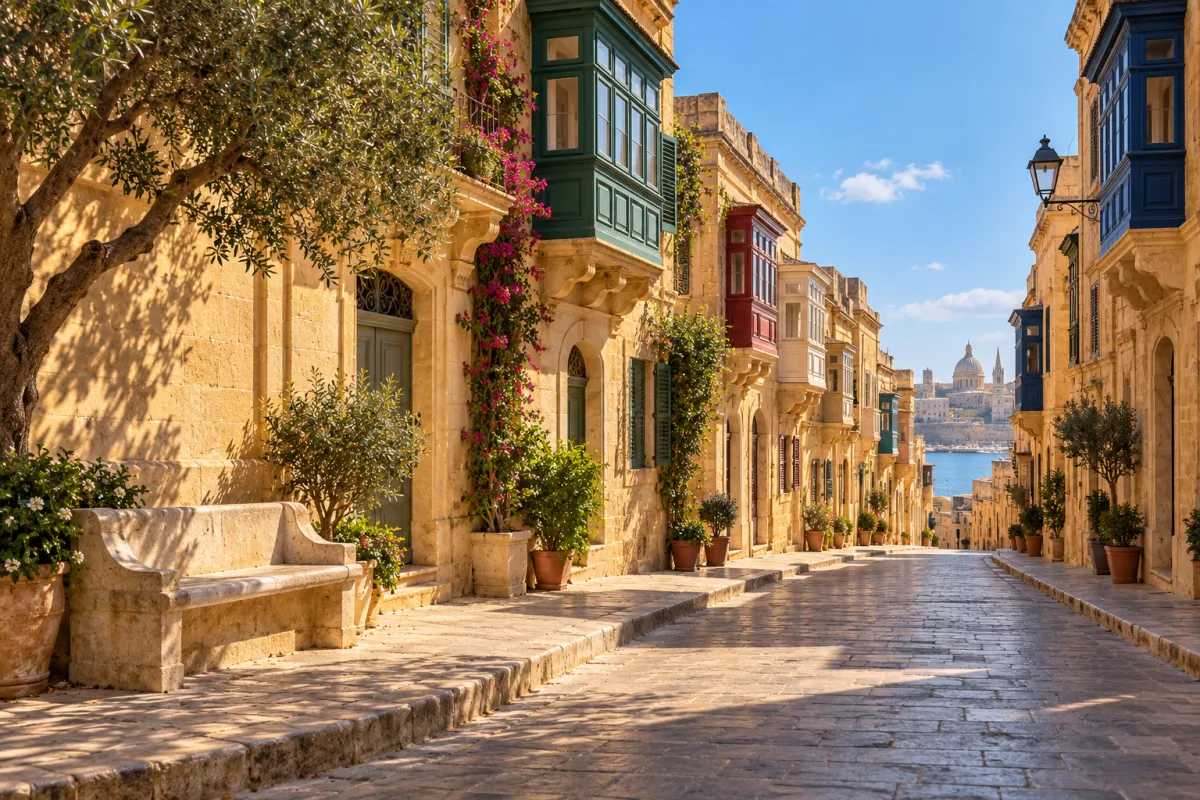
St Paul’s Bay, Buġibba and Qawra
St Paul’s Bay is the largest locality in the north and includes Buġibba and Qawra, the resort-style seafront areas many newcomers know from holidays. Official reporting places parts of St Paul’s Bay in the more affordable brackets compared with the Northern Harbour hub (Housing Authority).
The appeal is easy to see. There is a long promenade, plenty of supermarkets and restaurants, a big international community, and a wide stock of apartments, many built with holiday lets in mind. It is easier to find a furnished flat here at short notice than in a traditional southern village, and you will rarely feel like the only foreigner on the street.
The trade-offs are real too:
- Commute. Bus journeys to Sliema, St Julian’s or Valletta can be long at peak times, and the coast road gets congested.
- Seasonality. Summer is busy and noisier; winter can feel very quiet, with some places closing for the season.
- Building quality varies. Some blocks were built quickly; check insulation, ventilation and any signs of damp, and ask about the lift and common parts.
St Paul’s Bay works best for remote workers, people with jobs in the north, and anyone who has a hybrid schedule and only needs to reach the hub a few days a week.
Gozo: lower rents, a ferry in between
Gozo consistently appears among the lower-rent options in official reporting (Housing Authority), and for the right person it is the best value on this list. You get more space for your money, quieter villages, countryside walks and a slower rhythm of life. Victoria, also called Rabat, is the main town and has most of the shops and services.
The catch is the crossing. Gozo is connected to Malta by ferry between Mġarr and Ċirkewwa, and Ċirkewwa is at the northern tip of Malta, so reaching Sliema or Valletta means ferry plus bus or car. Daily commuting is possible but tiring. Gozo makes most sense if you work remotely, work on the island, or only need Malta occasionally.
If you are seriously considering it, read our guide to living in Gozo as an expat, covering costs, the ferry and social life, and check the Gozo ferry timetable and fast ferry options against the hours you would actually need to travel.
What you trade compared with Sliema and St Julian’s
Living in St Julians, Malta, or in Sliema next door, means paying the highest rents on the island for one main thing: walkability. Offices, language schools, gyms, cafés, the seafront and a large share of the island’s English-speaking social life are all within a short walk. If you are new, alone and do not want to rely on buses, that convenience has real value.
Moving to one of the cheaper areas means giving some of that up. Here is the honest comparison:
| Factor | Sliema, St Julian’s, Gżira | Cheaper areas (south, St Paul’s Bay, Gozo) |
|---|---|---|
| Rent | Highest on the island | Lower median rents |
| Commute to the hub | Walk | Bus, ferry or car; plan for traffic |
| Social life | On your doorstep, very international | More local; you travel for expat meet-ups |
| Noise and construction | Often heavy | Varies; village feasts and works happen everywhere |
| Local integration | Easy to stay in an expat bubble | More contact with Maltese neighbours and routines |
A middle route many people take: rent a room in a shared flat in the hub for the first few months while you learn the island, then move somewhere cheaper once you know where you work and who your friends are. Our guide to shared apartments in Malta, with room prices, leases and scams explains how that works.
How to check a fair rent before you sign
The single most useful tool for anyone hunting for cheaper areas is the Housing Authority’s Rental Market Dashboard and Rent Calculator. They use registered lease data rather than asking prices and break median rents down by locality and by bedroom count, for example one, two or three bedrooms (Housing Authority).
Here is how to use it in practice:
- Pick two or three candidate towns from the table above.
- Look up the median rent for your bedroom count in each one.
- Compare listings you are considering with that median. A flat priced well above it needs a good reason: a renovation, a view, a lift, parking.
- Be suspicious of flats priced far below it in a popular area. That can be a scam signal, not a bargain.
It also helps to know how the government defines affordable: under its schemes, the Housing Authority benchmarks affordable rent at 85% of the median market rent derived from active registered contracts (Housing Authority). That gives you a useful mental yardstick when you judge whether a listing is genuinely cheap or just cheap-looking.
If your income is modest, look into the Private Rent Housing Benefit Scheme, which aims to make sure eligible lower-income tenants renting privately as their primary residence do not spend an unmanageable share of income on rent, with caps and thresholds based on household size and verified income (servizz.gov.mt). Eligibility depends on your circumstances and residence status, so check the official pages rather than relying on what a landlord or agent tells you.
Lease, deposit and scam checklist
Cheaper areas are not riskier by default, but budget hunting does put you in the path of the most common scams, because people under money pressure move fast. Under the Private Residential Leases Act, Chapter 604 of the Laws of Malta, private residential leases must be registered with the Housing Authority (Housing Authority). An unregistered lease can leave you without the protection of a valid contract and stop you securing resident utility rates or applying for housing benefits.
Before you pay anything
- View the property in person, or have someone you trust view it for you.
- Never transfer a deposit or rent to secure a flat you have not seen.
- Ask for the landlord’s full name and check that the person showing the flat is entitled to let it.
- Compare the price with the Housing Authority median for that locality.
- Walk the area at different times of day and test the bus route you will use.
Before you sign
- Get the full lease in writing and read every clause, including notice periods.
- Confirm the lease will be registered with the Housing Authority, and ask how and when.
- Agree the deposit amount in writing, along with the conditions for getting it back.
- Ask how utilities are billed and whether the meters are in your name or the landlord’s.
- Photograph every room, appliance and existing defect on move-in day and email the photos to the landlord.
Red flags
- A landlord who is abroad and can only communicate by message.
- Pressure to pay quickly because other people are interested.
- Refusal to register the lease or to give a written contract.
- Payment requested by untraceable methods.
For questions about residence, permits or your eligibility for any scheme, go to official sources such as servizz.gov.mt rather than forums. Utility costs vary a lot depending on the meter set-up, so read our guide to electricity bills in Malta before you assume a low rent means a low monthly total.
Your first week in Malta in a cheaper area
Your first week in Malta sets the tone, and if you have moved somewhere cheaper and less central, a few small steps make a big difference. Our step-by-step moving to Malta guide and checklist covers the admin side; here is what matters specifically when you live outside the hub.
- Learn your bus routes properly. Find your nearest stops, the routes that go where you need, and a backup option. Travel your commute once outside rush hour and once during it.
- Find your everyday anchors. Locate the nearest supermarket, pharmacy, bakery and a café where you can sit with a laptop. In southern towns, the parish square is often the centre of daily life.
- Check the lease registration. Make sure your contract has been registered and keep a copy, because you will need it for utilities and other admin.
- Say hello to the neighbours. In traditional towns, people notice newcomers. A friendly introduction often leads to useful local knowledge about bins, parking and the best bakery.
- Plan your social life on purpose. In the hub, you bump into people. Outside it, you need to make plans. Choose a couple of regular activities, such as a class, a sports club or a coworking day, and stick with them.
When you meet people you do not know yet, keep the usual habits: meet in a public place, tell a friend where you are going, make sure you have your own way home, and leave if anything feels uncomfortable. That applies whether you met someone at a language school, through a club or through an app.
Want to turn this into an actual plan? MeetNow is a free app for meeting people in person: a host posts a plan at a public place, says who pays (host pays, split, pay your own or free) and picks who joins. It is live on the web and works in your browser, starting in Malta. The Android app is on Google Play; the iPhone app is not in the App Store yet. Open MeetNow and see the plans posted in Malta.
FAQ
What are the cheapest areas to live in Malta?
Housing Authority reporting consistently places lower median rents in southern towns such as Fgura, Żejtun, Paola, Bormla (Cospicua) and Birżebbuġa, in parts of St Paul’s Bay such as Buġibba and Qawra, and in Gozo. The highest rents are in the Northern Harbour hub of Sliema, St Julian’s and Gżira.
Is it worth living in the south if I work in Sliema or St Julian’s?
It can be, but test the commute first. Take the bus from the flat to your workplace at the time you would really travel. If the journey is manageable, the lower rent is usually worth it; if it is long and unreliable, a shared room closer to work may cost less in time and stress.
How can I tell if a rent is fair?
Use the Housing Authority’s Rental Market Dashboard and Rent Calculator, which are based on registered lease data rather than asking prices. Look up the median for your locality and bedroom count and compare it with the listing. Prices far above need a clear reason, and prices far below in popular areas can signal a scam.
Do I have to register my lease in Malta?
Yes. Under the Private Residential Leases Act, private residential leases must be registered with the Housing Authority. An unregistered lease can leave you without a valid contract and can stop you getting resident utility rates or applying for housing benefits, so confirm registration before you move in.
Is Gozo a good cheap option for remote workers?
Often, yes. Gozo is among the lower-rent areas and offers more space and a quieter pace. The trade-off is the ferry crossing to Malta, which makes daily commuting tiring, so it suits people who work remotely or only need to visit Malta occasionally.
Can I get help paying rent in Malta?
The Housing Authority runs the Private Rent Housing Benefit Scheme for eligible lower-income tenants renting privately as their primary residence, with caps and thresholds based on household size and verified income. A registered lease is required. Check the official servizz.gov.mt and Housing Authority pages for current eligibility rules.