The most reliable way to meet remote workers in Malta is not one big event. It is being in the same room, at the same hour, on the same weekday, for about a month, until the person at the next desk stops being a stranger. That sounds slow, but it works better than anything else on this island. It also costs less than a string of networking evenings where you swap names and never see anyone again.
Malta is small and busy. Even so, a remote job can make it feel oddly empty. You wake up in a flat in Gżira or Swieqi, open the laptop, take calls with people in London or Berlin, and realise at six in the evening that the only person you spoke to face to face was the cashier at the corner shop. Many newcomers who arrive alone describe exactly this, and it has nothing to do with being shy. It is simply what happens when your job has no office.
What follows is the practical version: where remote workers actually spend their weekdays, how to use a coworking day pass properly, what to ask before signing up for coliving, a sample weekly routine you can copy, and how to host small plans so you are not always waiting for an invitation. Permit and tax questions come up constantly in these circles, so there is also a short section on where to find the official answers.
Why remote workers get isolated in Malta
Malta looks social from the outside: crowded promenades, packed cafés, festa season, people everywhere. The problem is that most of that social life runs on networks people already have. Maltese friends often date from school, parish or family, and many expats in salaried jobs build their circle through the office. A remote worker has neither by default.
Three patterns show up again and again:
- The flat trap. Your desk, kitchen and sofa are the same three metres. Weeks blur, and going out starts to feel like effort rather than a break.
- The café illusion. Working from a café feels social, but everyone is wearing headphones. You are near people without meeting anyone.
- The calendar clash. If your team is in another time zone, your free hours do not line up with local after-work life, so you keep missing the window.
None of this is a personal failing. It is structural, and the fix is structural too: build repetition into your week. If you have already hit the point where it feels lonely, our honest piece on why it is hard to make friends in Malta and what actually works is worth a read alongside this one.
A small habit that helps: instead of waiting for invitations, post one simple plan a week, such as a Wednesday lunch near your coworking space with four seats and everyone paying their own. MeetNow, a free app for meeting people in person that is launching in Malta first, is built around exactly this kind of plan: a public place, a time, a number of seats and who pays.
Coworking by area: where remote workers spend weekdays
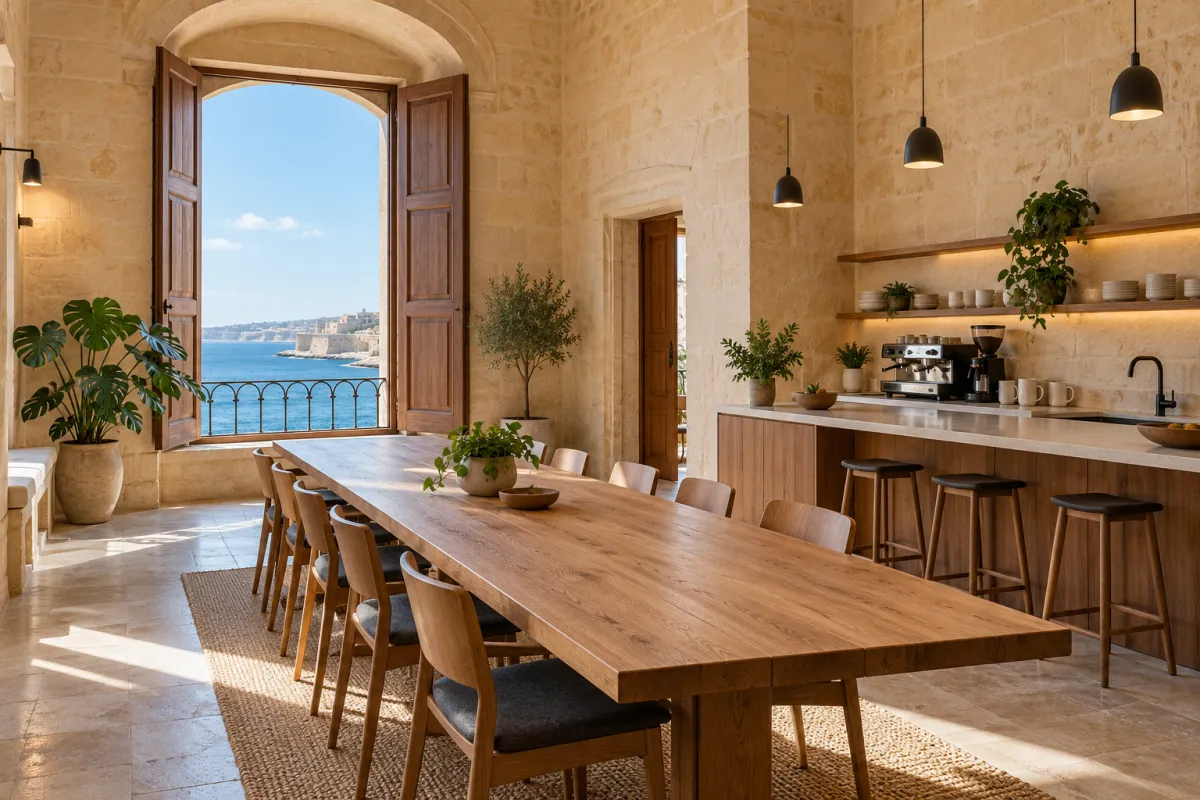
Coworking is the closest thing remote workers have to an office, and in Malta it clusters in a few areas. Each has its own crowd and rhythm. We have deliberately not printed prices here: day-pass and monthly rates change with the season and with promotions, and we only publish figures we have verified. Check each space’s own website before you go, and see our area guides for more detail.
| Area | Who you tend to meet | Social features to ask about | Day pass and monthly price (EUR) |
|---|---|---|---|
| Sliema | A broad mix of nomads, freelancers and small remote teams; the busiest coworking area | Community breakfasts or lunches, member chat groups, talks | Check the space’s own site; see our Sliema coworking guide with day passes and monthly prices |
| St Julian’s | Tech, online-business and startup people; more corporate in feel | After-work meet-ups, skill-share sessions | Check the space’s own site before visiting |
| Valletta | Creative freelancers, consultants, people who like a quieter base | Smaller, more personal communities; occasional events in heritage buildings | Check the space’s own site; see our Valletta coworking guide and its after-work life |
| Msida | Students, researchers and tech workers, thanks to the university nearby | Study-style quiet zones, informal lunch crowds | Check the space’s own site before visiting |
| Gozo | A smaller, tight-knit group of long-stay remote workers | Shared lunches, word-of-mouth gatherings | Check the space’s own site; factor in the ferry if you live on Malta |
A useful rule of thumb: the bigger the space, the more people you will see, but the harder it is to be noticed. Smaller spaces with a visible community manager often produce friendships faster, because someone is actively introducing members to each other.
How to use a coworking day pass in Malta to meet people
Most people use a coworking day pass in Malta to test the wifi and the chairs. Use it to test the people instead. A pass is cheap research, and the right space can do more for your social life than any app or event.
Sample three spaces, then commit
Try three spaces in your first fortnight, ideally in different areas. In each one, notice whether people greet each other, whether there is a shared kitchen where lunch actually happens, and whether a staff member introduces you to anyone. A space where nobody looks up from their screen is fine for deep work but slow for friendships.
Be predictable
Once you pick a space, go on the same days and arrive at roughly the same time. Regulars recognise regulars. By the third week, someone will say hello first, and by the fourth you will have a lunch group without having planned one.
Use the kitchen, not your desk
Eating lunch at your desk is the single biggest missed opportunity in coworking. The kitchen or terrace at lunchtime is where conversations start, usually with something as small as asking where someone bought their salad or whether the coffee machine is working.
Say yes to the first event
If the space runs a breakfast, a talk or an after-work drink, go to the first one you can, even if the topic does not interest you. The point is to meet the other members who also showed up, because they are the ones who want community too.
Join the members’ chat, then use it
Many spaces have a group chat for members. Lurking teaches you nothing. Post something specific once a week: a lunch, a walk, a swim after work. Specific plans get replies; vague offers to hang out sometime do not.
Coliving in Malta: what to ask before you sign
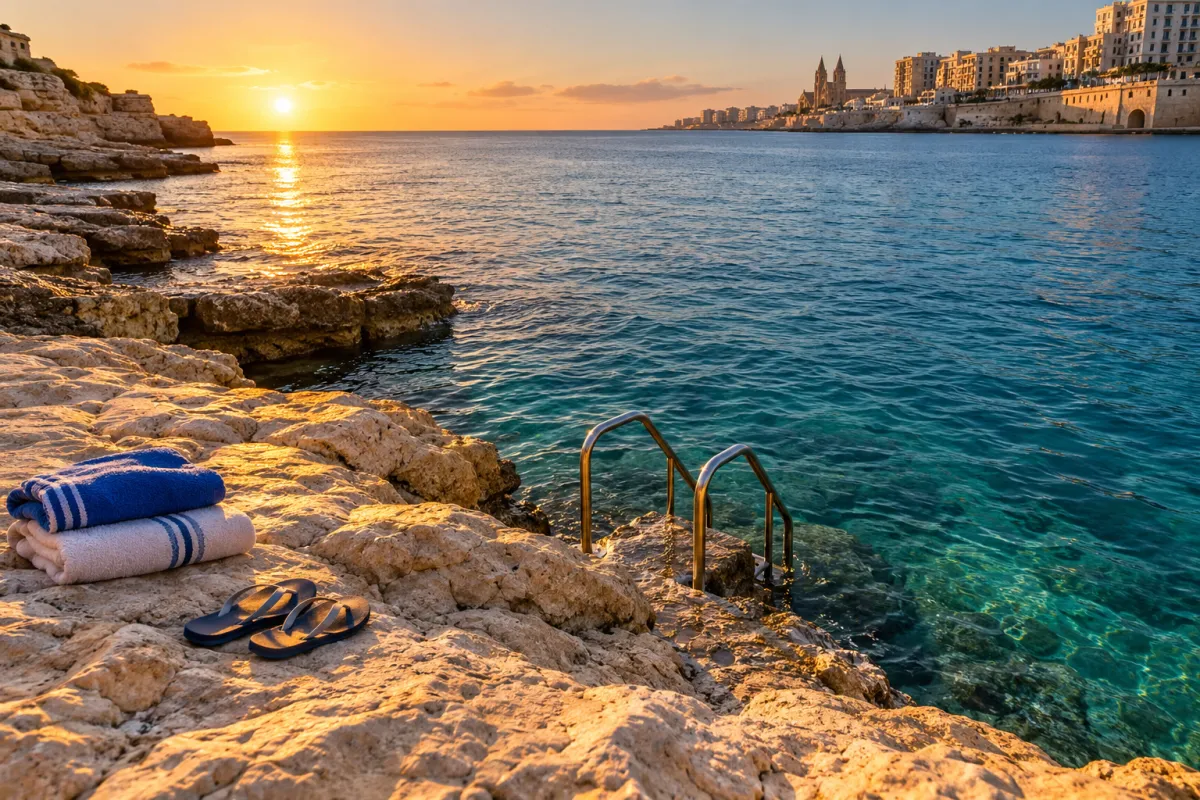
Coliving in Malta promises a ready-made community: a furnished room, shared kitchen and lounge, and housemates who also work remotely. When it works, it solves the isolation problem in a week. When it does not, you are paying for a hotel-style room in a house where everyone keeps their door shut.
Before you commit, ask these questions directly and get the answers in writing where it matters:
- Is there a community manager or host? Someone whose job includes organising house dinners or outings makes a real difference.
- What actually happens each week? Ask for the last month of events, not a brochure description.
- Who lives there? A house of people on two-week stays feels very different from one where most residents stay several months.
- Where can you take calls? Shared spaces are great for socialising but awkward for a 9:00 client call. Check for quiet rooms or a desk in your bedroom.
- What is the internet setup? Ask about backup connections and whether the router is shared across many rooms.
- What kind of contract is it? Understand the minimum stay, notice period, deposit and what happens if you want to leave early.
A practical middle ground many newcomers choose: start in coliving for your first month or two to build a base of contacts, then move into a regular flat once you know which area suits you and have people to see.
A sample weekly social routine
Friendships in Malta tend to come from repetition rather than intensity. The routine below is a template, not a rulebook. It assumes a normal daytime working schedule and keeps two evenings protected for social time. Adjust it to your own hours and budget.
| Day | Daytime | After work | Effort level |
|---|---|---|---|
| Monday | Coworking day; eat lunch in the shared kitchen | Quiet evening at home | Low |
| Tuesday | Work from home; take a proper lunch walk along the seafront | A weekly class: language, fitness, climbing or a hobby | Medium |
| Wednesday | Coworking day; host a small lunch with two or three members | Free | Medium |
| Thursday | Work from home or coworking | After-work swim in summer, or a sunset walk in winter, with someone you met that week | Medium |
| Friday | Coworking morning, lighter afternoon | Early dinner with people from the space | Medium |
| Saturday | Day trip: a coastal walk, a village, or Gozo | Rest | High |
| Sunday | Slow morning, market or brunch | Plan next week’s two social slots | Low |
The weekly class matters more than it looks. It puts you with the same faces every week, which is exactly what coworking does in the day. For ideas that fit a weekday schedule, see our guide to hobbies and activities in Malta for newcomers.
A note on seasons: summer makes everything easier, with sea swims, long light evenings and people outdoors. Winter is when isolation tends to bite, because the island gets quieter and flats can feel cold and damp. Build your routine in autumn so you already have people around when the evenings get shorter.
Host your own plans to meet remote workers in Malta
The fastest shift you can make is from guest to host. Most remote workers are waiting for someone else to suggest something. If you suggest it, you choose the time, the place and the group size, and you will rarely be short of takers.
What makes a plan work
- A real public place. A café near your coworking space, a seafront kiosk, a swimming spot with easy access.
- A specific time. Wednesday at 13:00 gets replies. Lunch sometime next week does not.
- A small number of seats. Three to five people is ideal: enough for conversation to flow, small enough that nobody hides.
- Clarity on who pays. Say upfront whether it is pay your own, split, free, or you are treating. It removes awkwardness at the end.
Three plans that suit remote workers
The weekday lunch. One hour, close to where people work, pay your own. It fits around calls and is low pressure for newcomers.
The after-work swim. Meet at a swimming spot after the working day in the warmer months, swim, then grab something to eat nearby. Shared activity makes conversation easier than sitting across a table.
The coworking-day plan. Agree to work from the same space on a set day, take lunch together and end with a short walk. It is ideal if you work from home most of the week and need a reason to go in.
If you want a wider view of the groups and gatherings where nomads already connect, our guide to the digital nomad community in Malta and where remote workers meet complements the hosting approach here.
Permits, freelancer tax and social security: where to check
Spend a week in any coworking space and you will hear the same conversations: the Nomad Residence Permit, renewals, bringing a partner, and how freelancers handle tax and social security. Swapping experiences is useful, but rules change and personal situations differ, so always confirm on the official pages. Nothing here is legal or tax advice.
| Topic | What to confirm | Official source |
|---|---|---|
| Nomad Residence Permit: what it is | Who is eligible and what kind of remote work it covers | Residency Malta Agency, Nomad Residence Permit |
| Income threshold | The current minimum income and how it must be evidenced | Residency Malta Agency nomad pages |
| Renewal | Whether and how the permit can be renewed, and what to submit | Residency Malta Agency nomad pages |
| Family members | Whether a partner or children can be included and on what conditions | Residency Malta Agency nomad pages |
| Tax treatment | How income is treated for tax while you hold the permit | Commissioner for Revenue |
| Freelancing and self-employment | Tax registration and social security contributions if you work for yourself | Commissioner for Revenue |
For the detail, read our step-by-step guide to the Nomad Residence Permit and what the tax rules say. If you are an EU citizen freelancing from Malta, or anyone considering registering as self-employed, the questions about freelancer tax and social security in Malta are different from the permit questions, and an accountant who works with expats can map out your specific situation.
One social note: these admin chats are a genuine icebreaker. Asking someone how they found the application process is an easy way to start a conversation with a stranger who has been through it, and many people are happy to share what surprised them.
Time zones, internet and protecting your evenings
Malta runs on Central European Time, switching to summer time with the rest of the EU. That suits teams in continental Europe and the UK well. If you work with North America, your meetings often slide into the late afternoon and evening, which is exactly when local after-work life happens. Our guide to the Malta time zone and overlap hours shows the exact windows for each region.
Protect two evenings a week
Block two evenings in your work calendar and treat them like client meetings. Tell your team they are fixed. Without this, late calls quietly eat every social plan you make.
Shift social time to daylight if you must
If your evenings are taken, move your social life earlier: a long lunch, a morning swim before your first call, or a mid-afternoon coffee at the coworking space. Daytime plans are easier in Malta than many newcomers expect, because lots of remote workers are in the same position.
Check the connection before you sign a lease
When viewing a flat, ask which internet provider is installed, whether fibre is available, and run a quick speed test from the room where you would work. A flat that forces you into cafés every day for a stable connection changes your routine, sometimes for the better socially, but it should be your choice. Our guide to coworking in Sliema is a good fallback if home internet lets you down.
Meeting new people safely
Most meetings between remote workers in Malta are relaxed and uneventful in the best way. Still, a few simple habits are worth keeping every time you meet someone new:
- Meet in a public place such as a café, a busy promenade or a popular swimming spot.
- Tell a friend where you are going, who you are meeting and roughly when you expect to be done.
- Arrange your own way home, whether that is a bus, a ride-hailing app or walking, so you are never dependent on someone you just met.
- Leave if you feel uncomfortable. You do not owe anyone an explanation; a polite goodbye is enough.
For swims, add one more rule: check the sea conditions, stick to known spots and never swim alone in rough water, however confident the group sounds.
Want to turn this into an actual plan? MeetNow is a free app for meeting people in person: a host posts a plan at a public place, says who pays (host pays, split, pay your own or free) and picks who joins. It is live on the web and works in your browser, starting in Malta. The Android app is on Google Play; the iPhone app is not in the App Store yet. Open MeetNow and see the plans posted in Malta.
FAQ
What is the easiest way to meet remote workers in Malta as a newcomer?
Choose one coworking space and go on the same two or three weekdays for about a month, eating lunch in the shared kitchen rather than at your desk. Repetition turns strangers into familiar faces, and familiar faces become lunch companions. Add one weekly after-work class and start hosting small, specific plans.
Is a coworking day pass in Malta worth it if I work from home most days?
Yes, if you use it to meet people rather than just to work. Try passes at a few spaces in different areas, notice where members actually talk to each other, then commit to that space on fixed days. Check current prices on each space’s own website, as they change.
Is coliving in Malta a good way to make friends?
It can be, especially in your first month or two. It works best when there is a community manager, regular house events and residents staying several months. Ask for recent examples of events and check the contract terms, call spaces and internet setup before you sign.
Where can I check the rules on the Nomad Residence Permit and its tax treatment?
Use the Residency Malta Agency’s nomad pages for eligibility, income threshold, renewal and family members, and the Commissioner for Revenue for tax treatment. Rules can change, so confirm on those official pages and speak to a qualified adviser about your own situation.
How do freelancers in Malta handle tax and social security?
It depends on your nationality, residence status and how you work, so there is no single answer. The Commissioner for Revenue is the starting point for tax registration and self-employed contributions, and an accountant familiar with expats can explain what applies to you. This article does not give tax advice.
How do I stay social if my work hours follow another time zone?
Block two fixed evenings a week in your work calendar and treat them as unmovable. If evenings are impossible, move social time to daylight with long lunches, morning swims or afternoon coffees at your coworking space, where many other remote workers keep similar hours.