Short answer: the digital nomad community in Malta is real but scattered. There is no single nomad hub or weekly nomad meetup you can walk into, the way there is in some bigger European cities. Remote workers here find each other through coworking spaces, a handful of Meetup groups (general expat socials, tech user groups, a small Gozo nomad group), language and games nights, and, above all, small plans they set up themselves. If you treat your social life like part of your work week, with fixed days and places, Malta is one of the easiest places in Europe to build a circle. If you wait for a community to find you, it can be a lonely island.
I have worked remotely from Malta through several winters. The pattern I see again and again: people arrive expecting a “nomad scene”, find a few quiet Meetup pages and a coworking space where everyone wears headphones, and decide the community does not exist. It does. It just meets in smaller, more ordinary ways: a Tuesday lunch, a Thursday social, a Saturday hike, a coffee after a tech talk. This guide shows where those are and how to plug in during your first weeks.
What the digital nomad community in Malta actually looks like
It helps to know who you are likely to meet. Malta’s remote workers are a mix of:
- Non-EU remote workers on the Nomad Residence Permit, often staying a year or more.
- EU citizens working remotely, who need no special permit and come and go more freely.
- Freelancers and founders in tech, design, marketing and online business.
- Locals and long-term expats working from home for Maltese or foreign employers, an often-forgotten group who are the most likely to still be here next year.
That last group matters. A digital nomad community made only of people passing through resets every few months. The remote workers who settle best in Malta mix with people who live here: colleagues at the coworking space, neighbours, people from a weekly class. Our wider guide to digital nomad life in Malta covers permits, costs and coworking prices in detail; this one is about people.
The permit in one paragraph
Non-EU remote workers usually come on the Nomad Residence Permit run by the Residency Malta Agency. When I checked in October 2026, the agency’s pages listed a minimum gross income of €42,000 a year, full health insurance, a rental agreement and a €300 application fee per person. This is not legal or tax advice: criteria change, so read the agency’s current pages and, for tax, the Commissioner for Revenue or a qualified adviser.
Where remote workers meet in Malta
These are the places I could verify as active when I checked in October 2026. Meetup member counts and event patterns come from each group’s public page.
| Where | Area | What happens | Cost | Status (checked Oct 2026) |
|---|---|---|---|---|
| Malta Mates – Cultural Nomads (Meetup) | Sliema | A weekly Thursday social for expats, nomads, travellers and locals | Check each event | About 1,100 members; Thursday Social listed |
| International Meetups by English Café Malta (Meetup) | St Julian’s and day trips | Games night, conversation evenings, social mixers, weekend hikes and boat trips | €7 for evening events; weekend trips listed at €20–25 | About 3,700 members; several events a week |
| AWS User Group Malta (Meetup) | Valletta | Tech talks and community days for people working in cloud and software | Check each event | About 860 members; events listed |
| Malta Tech Talks (Meetup) | Malta | Evening talks on engineering topics | Check each event | Numbered talk series running |
| Remote Workers and Digital Nomads on Gozo (Meetup) | Victoria, Gozo | Set up for monthly nomad lunches | Pay your own | About 80 members; no upcoming events listed, last lunch was in February 2025 |
| Coworking spaces (Spaces, Regus and independents) | Valletta, Sliema, St Julian’s and other business areas | Members’ events, workshops and networking, depending on the centre | Day passes from about €29 at the international operators | Ask each centre what is on that month |
Sources: the groups’ public Meetup pages and the operators’ Malta websites, last checked October 2026. Groups change their schedules and prices; check before you go. Listing here is not an endorsement.
An honest note on “nomad meetups”
When I looked, the meetup pages for Malta and Sliema on Nomads.com showed no upcoming meetups, and the Gozo nomad group had been quiet for a long time. That does not mean nobody is here. It means the dedicated nomad events come and go, so the reliable routes are the general socials, the tech groups and your own small plans. If you like the idea of a nomad lunch, you may well be the person who restarts it.

Coworking as a social tool, not just a desk
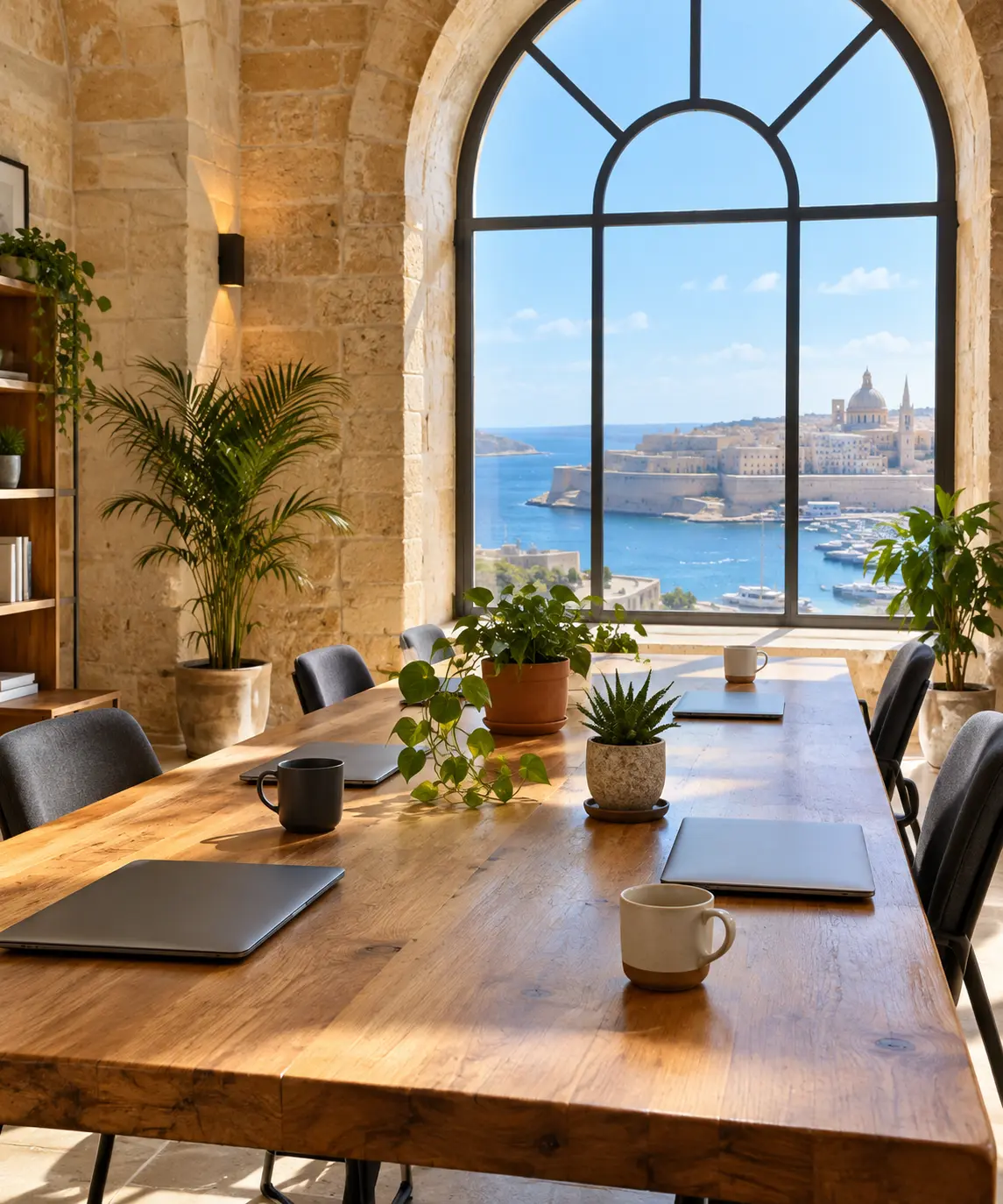
Most remote workers choose a coworking space on price and internet speed. If you are new and alone, choose it on people instead. A cheaper desk where nobody talks is worse value than a slightly dearer one with a members’ lunch every week.
What to ask before you commit
- Is there a community manager? Spaces with one usually run events and introduce newcomers.
- What events ran last month? Ask for specifics, not “we do lots of events”.
- Is there a shared kitchen or lunch area? Lunch is where coworking friendships start.
- Who are the members? A space full of one company’s employees is less social for an outsider.
- Can I try a day first? Go on the busiest weekday and see whether anyone talks.
How to use a coworking space to meet people
- Go on the same days every week. Regulars recognise regulars. Tuesday and Thursday are a good pair.
- Eat lunch in the shared area, not at your desk, and ask the person next to you what they work on.
- Go to the first event that comes up, whatever it is.
- Suggest one small plan in your second week: “A few of us are getting lunch at the place round the corner on Thursday at 1. Pay your own. Join?”
- Turn it into a fixture. The same lunch every Thursday becomes your coworking crew.
A sample weekly social routine for remote workers
This is the kind of week that keeps remote workers in Malta connected without eating into deep work. Adjust the days to your own calls and time zone.
| Day | Work set-up | Social slot | Typical cost (EUR) |
|---|---|---|---|
| Monday | Home, deep work | Evening games night or a promenade walk with someone you met last week | €0–7 |
| Tuesday | Coworking | Lunch with other members | Day pass + lunch |
| Wednesday | Home or a café morning | A tech talk or a class you have committed to for a term | Free to course fee |
| Thursday | Coworking | The Thursday social in Sliema or after-work drinks | Pay your own |
| Friday | Short day | Early swim, then a coffee with a friend | €0 + coffee |
| Saturday | Off | A group hike or a boat trip | €0 self-organised; group trips listed at €20–25 |
| Sunday | Off | A long lunch or a lazy beach day with your new circle | Pay your own |
Group event prices from the organisers’ Meetup pages, last checked October 2026.
The routine works because the slots repeat. After four weeks you have seen the same coworking faces eight times and the same Thursday crowd four times. That is when people start inviting you to things.
Weekday social life in Malta: what works
The biggest advantage of remote work in Malta is flexibility. You can swim at 8, work from 9 and walk the promenade at 6. The biggest risk is that nobody else knows you exist between Monday and Friday. Weekday social life is worth planning on purpose:
- Lunch is easier than evenings. Fewer competing plans, shorter commitment, and everyone eats.
- Early mornings are underrated. A 7:30 swim or run on the Sliema or St Julian’s front has a regular crowd for most of the year.
- Early evening beats late night. A drink at 18:30 lets parents, early risers and people with US calls join.
- Fixed beats spontaneous. “Every Thursday” outlasts “let’s do something sometime”.
For gym classes, climbing and other routines that double as social time, see our guide to gyms in Malta.
After-work activities in Malta that suit remote workers
- Sea swimming from the rocks along Sliema and St Julian’s for much of the year, if you are a confident swimmer. Check the sea and weather first.
- Walking the promenade from Sliema towards St Julian’s, or a cliff walk at the weekend.
- Classes that run for a term: language, dance, art, cooking or yoga. The same people every week is the point.
- Team sports such as five-a-side, padel, water polo or running clubs. Ask about social or beginner sessions.
- Volunteering on a weekday morning, which remote workers can often fit in better than office staff.
- Talks and meetups in your field, where the conversation starts itself.

Best area in Malta for a social remote-work life
Where you live decides how easy all of this is. The short version, from a social point of view:
- Sliema and Gżira: the easiest place to meet people on foot. Most socials, cafés and many coworking options are within walking distance. Rent is high.
- St Julian’s and Swieqi: close to the evening socials and coworking; Swieqi is quieter.
- Msida and Ta’ Xbiex: between Valletta and Sliema, with the university nearby. Good value if you can live with traffic.
- Valletta: beautiful and calm in the evenings, with talks, theatre and cafés, but fewer casual socials than Sliema.
- The north and Gozo: more space and quiet, but you will travel for almost every social plan. Gozo suits people who already have a circle or prefer a slower pace.
Our guide to where to live in Malta has rents and bus links by area.
Working remotely from Gozo
Gozo is calmer, greener and cheaper than the harbour area, and plenty of remote workers love it. The social side takes more effort: fewer events, a smaller international crowd, and the ferry between you and most of what happens on Malta. If you choose Gozo, build a fixed weekly rhythm on the island (a class, a sports club, a regular café) and plan one Malta day a week for socials. Check the internet options at any flat before you sign.

Making friends as a digital nomad in Malta: your first 30 days
- Week 1: book two coworking days and go to one evening social. Say yes to everything.
- Week 2: same coworking days, same social. Swap numbers with two people.
- Week 3: host one small plan: a lunch, a swim, a sunset walk. Three or four people is plenty.
- Week 4: add one local fixture (a class, a sports session, volunteering) so your circle is not only people passing through.
If the first month goes badly, that is normal too. Our guide to loneliness after moving to Malta has a longer 12-week reset plan and the support lines worth knowing.
Hosting small plans is exactly the habit MeetNow is designed around: you post a weekday lunch, an after-work swim or a coworking day at a public place, with a time, seats and who pays, and other people ask to join.
Safety when meeting people from groups and apps
- Meet in public places first: a café, a coworking space, a busy promenade.
- Tell a friend where you are going and who with.
- Know your own way home: bus, night route or a ride-hailing app.
- Leave whenever you feel uncomfortable, and never send money to someone you have just met.
Common mistakes remote workers make in Malta
- Renting somewhere cheap and isolated, then seeing nobody for weeks.
- Working from the flat every day because coworking “isn’t worth it”.
- Going to five different one-off events instead of the same one five times.
- Only making friends with people who leave in three months.
- Waiting for a nomad community to appear instead of starting a small one.
If you later swap remote work for a local contract, our guide to working in Malta covers jobs and work culture.
Frequently asked questions
Is there a digital nomad community in Malta?
Yes, but it is spread out rather than centred on one hub. Remote workers meet through coworking spaces, expat socials such as Malta Mates and English Café Malta on Meetup, tech user groups and their own small plans. Dedicated nomad meetups come and go, so check current listings.
Where can I meet other remote workers in Malta?
Coworking spaces in Valletta, Sliema and St Julian’s, the Thursday social run by Malta Mates in Sliema, English Café Malta’s evening events in St Julian’s, and tech meetups such as AWS User Group Malta. Going to the same ones every week matters more than which you pick.
What is the best area in Malta for digital nomads?
For a social life, Sliema, Gżira and St Julian’s are the easiest because socials, cafés and coworking are walkable. Valletta is calmer, Msida is better value, and Gozo suits people who prefer quiet and will travel for plans.
How much does coworking cost in Malta?
When I checked in October 2026, the big international operators listed day passes from about €29. Monthly memberships vary by centre and contract, and independent spaces set their own prices, so ask for a quote and a trial day.
Is working remotely from Gozo a good idea?
It can be, if you value quiet and space. Social life takes more effort: fewer events, a smaller international crowd and a ferry crossing for most Malta plans. Build a weekly routine on Gozo and plan regular days on Malta.
How do I avoid loneliness as a remote worker in Malta?
Book people into your week like meetings: two coworking days, one weekly social, one class or sport and one small plan you host yourself. Mix with people who live here long-term, not only other newcomers.
Want to turn this into an actual plan? MeetNow is a free app for meeting people in person: a host posts a plan at a public place, says who pays (host pays, split, pay your own or free) and picks who joins. It works in your browser and on Android through Google Play, starting in Malta; the iPhone app is not in the App Store yet. Open MeetNow and see the plans in Valletta, Sliema and St Julian’s.
We may mention products we are connected with; see our product disclosure.