Short answer: living in Sliema means a seafront promenade outside your door, a direct ferry to Valletta, cafés, gyms and shops on every street and the easiest social life in Malta, at the price of some of the highest rents on the island, constant construction and traffic, and summer crowds. The Housing Authority’s last locality report found Sliema the most expensive place to rent, and NSO data for 2025 put Sliema apartment prices about 61% above the national average. It suits people who value walkability and convenience over space and quiet. This guide covers the sub-areas, what the rent data shows, daily life, pros and cons and a checklist before you sign. Last checked October 2026.
Sliema was my first address in Malta, like it is for a lot of newcomers. I loved the evening walk along the front and hated the jackhammer that started at 7:30 every morning across the road. Both are part of the deal. Here is the honest version, so you can decide whether Sliema is right for you or whether a neighbour like Gżira or Msida gives you most of the benefits for less.
Sliema at a glance
| What | Detail |
|---|---|
| Location | North side of Marsamxett Harbour, opposite Valletta; borders Gżira and St Julian’s |
| Feel | Dense, urban, seafront, international |
| Getting around | Walkable; buses island-wide; Valletta Ferry to Valletta (free with a personalised tallinja card) |
| Rent level | Among Malta’s highest (see below) |
| Best for | Newcomers without a car, people working in the harbour area, anyone who wants an easy social life |
| Less good for | Tight budgets, light sleepers, people who want a garden or parking |
Sliema’s sub-areas compared
Sliema is small, but the feel changes block by block. These are the areas people mean when they talk about living there:
| Area | Vibe | Rent level | Transport |
|---|---|---|---|
| The Strand and Sliema Ferries | Busy waterfront facing Valletta, shops, bus and ferry hub | High | Ferry to Valletta, many bus routes |
| Tigné Point | Modern apartments, shopping mall, seafront paths | Highest | Short walk to the ferry and buses |
| Tower Road seafront and Qui-Si-Sana | Promenade, rocky swimming spots, sea views | High, especially with a sea view | Seafront buses |
| Inland Sliema (around the parish churches) | Residential side streets, older townhouses and flats | Moderate to high | A few minutes’ walk to main bus roads |
| Fond Għadir and towards Balluta | Seafront, close to St Julian’s nightlife and offices | High | Seafront buses; walk to St Julian’s |
Rent levels are relative, based on my experience and current listings, not official medians. Last checked October 2026.

Rent in Sliema: what the data shows
Public, locality-level rent data in Malta is patchy, so here is what is solid and what is an estimate:
| Data point | Figure | Source and date |
|---|---|---|
| Sliema average rent, two-bedroom apartment | €1,218 a month | Housing Authority report on registered contracts up to 2022 (older data; rents have risen since) |
| Sliema average rent, three-bedroom apartment | €1,439 a month | Same report |
| St Julian’s median new two-bedroom lease (next door) | €1,500 a month (middle half €1,200 to €1,800) | Housing Authority data, first half of 2025, as reported by Business Now |
| Room in a shared flat, harbour area | €550 to €700 a month | University of Malta planning estimate |
| Sliema apartment prices vs national average | About 61% higher (highest locality) | NSO 2025 data, as reported by MaltaToday |
Last checked October 2026. Asking prices on listing sites are often higher than signed-lease data. Sea views, new builds and Tigné Point command a premium.
In practice, what I tell friends: if a whole flat in Sliema is a stretch, look two streets inland, in Gżira, or in Msida, all within walking distance of the promenade. Our cost of living in Malta guide has the full monthly budget, and the shared apartment guide covers room prices, leases and scams.
Living in Sliema on three budgets
Rather than one “average” figure, here is how three people I know make Sliema work. These are illustrative profiles, not quotes; the rent lines use the data above and the living costs use University of Malta estimates.
The newcomer on an average salary
Room in a shared flat a few streets inland at around €600 to €700 a month, sharing bills with three flatmates, free buses and ferry with a tallinja card, cooking most meals. On the NSO’s Q2 2026 average salary of €2,282 gross (roughly €1,770 net for a single person), this leaves room for a gym, a social life and some savings. Sliema works well at this level as long as you share.
The couple renting a two-bedroom flat
Two salaries make a whole flat realistic. Expect rents well above the Housing Authority’s older €1,218 average for a two-bedroom, especially in newer blocks, and compare with Gżira and Msida, where the same money often buys more space. Couples who want a sea view usually pay a significant premium for it.
The remote worker on a higher income
A one-bedroom or studio near the seafront, coworking a few days a week and cafés the rest. The main trade-off at this level is noise versus view: a front-line flat is beautiful and loud; a higher floor on a side street is calmer and cheaper. Visit both before you choose.
Whatever your budget, the rule from our average salary in Malta guide applies: keep rent under about a third of your take-home pay. In Sliema that usually means sharing for the first year.
Daily life in Sliema
The seafront
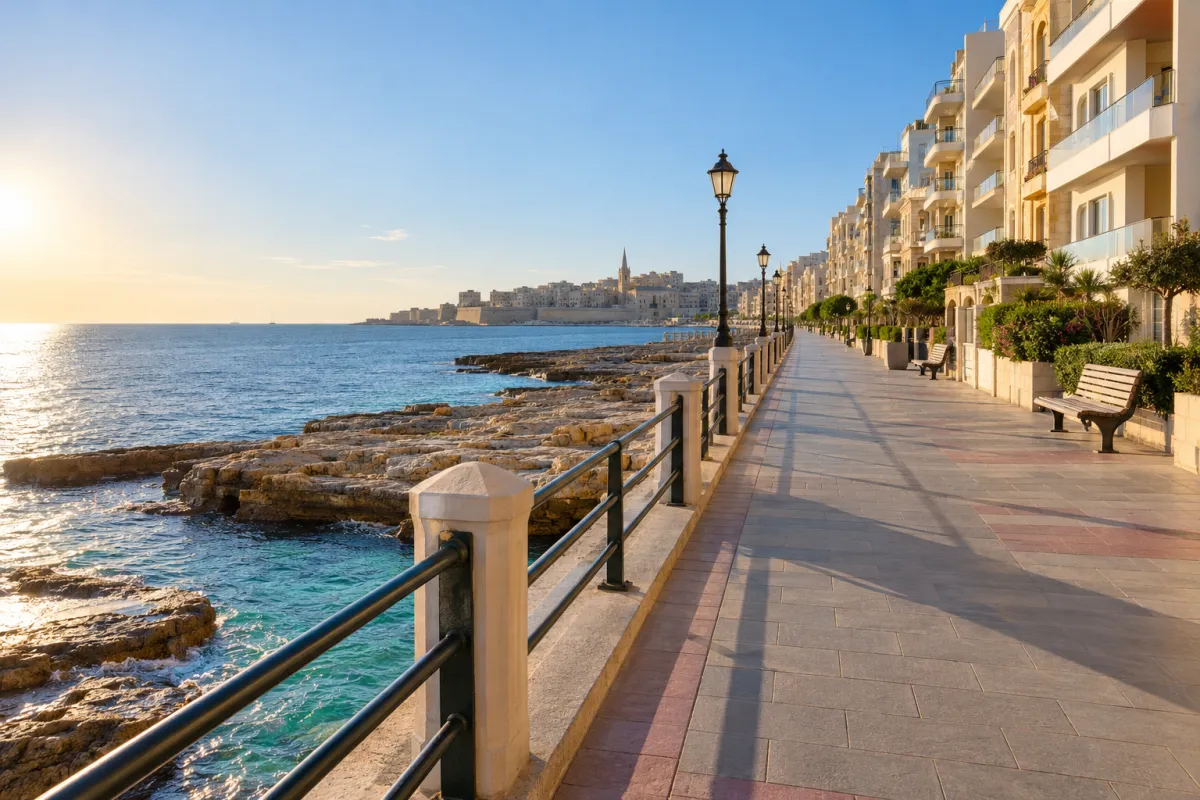
The promenade from Sliema Ferries round to Balluta is the island’s living room. People run, walk, swim off the flat rocks from late spring to autumn, and sit on benches at sunset. It is free and it is the main reason people pay Sliema rents.
The ferry to Valletta
The Valletta Ferry runs directly between Sliema and Valletta with no stops, and travel is free with a valid personalised tallinja card, according to Malta Public Transport. For anyone working in Valletta, it beats the bus at rush hour.
Shops, gyms and cafés
Supermarkets, pharmacies, gyms, cafés and a shopping mall at Tigné Point are all within walking distance. You will rarely need a car for errands, which is lucky because parking is scarce.
Noise and construction
This is the big complaint. Old townhouses are being replaced by apartment blocks, and building work, cranes and road works are part of daily life. Seafront roads carry heavy traffic. Ask neighbours and the landlord about planned works nearby before you sign, and view the flat on a weekday morning.
Practical ways people cope: choose a bedroom at the back of the building, away from the road; ask whether windows are double-glazed; and check whether the flat next door or across the street has a building permit notice posted. If you work from home, a quiet room matters more than a sea view. If you go out to work all day, the morning drilling matters less than the evening walk on the front.
Summer vs winter
In summer Sliema is busy with visitors, the rocks are packed and evenings are lively. In winter it is calmer, the sea is rough, and stone flats can feel damp. Many residents say October and May are the best months of the year here.

Getting around from Sliema
- On foot: Gżira, Msida, St Julian’s and Balluta are all walkable along the seafront.
- Ferry: direct to Valletta, free with a personalised tallinja card.
- Bus: frequent services to Valletta and around the island; free on day and night routes with a personalised tallinja card. Our Malta bus routes guide lists the lines newcomers use most.
- From the airport: Airport Direct TD3 serves Sliema every 30 minutes; see our guide from the Malta airport to Sliema by bus.
- Car: possible, but parking is hard and traffic is slow. Many residents do without.
Pros and cons of living in Sliema
| Pros | Cons |
|---|---|
| Walkable: no car needed | Among the highest rents in Malta |
| Seafront promenade and swimming spots | Construction noise and cranes in many streets |
| Direct ferry to Valletta | Traffic on seafront roads |
| Easy social life: cafés, gyms, classes, other newcomers | Summer crowds |
| Shops, pharmacies and services on every street | Little green space; parking is scarce |
| English everywhere; very international | Can feel like an expat bubble |
Sliema vs its neighbours
| Area | Compared with Sliema | Who picks it |
|---|---|---|
| Gżira | Usually cheaper, same promenade a short walk away, more traffic along the waterfront road | People who want Sliema’s convenience for less |
| Msida | Cheaper, close to the University and Mater Dei Hospital, less scenic | Students, health workers, budget-conscious newcomers |
| St Julian’s | Similar or higher rents, closer to offices and nightlife, noisier around Paceville | People working in St Julian’s offices |
| Swieqi | Quieter, more residential, uphill from St Julian’s | Couples and families wanting calm near the harbour |
| Valletta | Historic, quieter at night, steep streets, ferry back to Sliema | People who work in the capital or love old buildings |
My comparison from living in and around these areas, last checked October 2026.
A week in Sliema: a sample routine
| Day | Plan | Cost |
|---|---|---|
| Monday | Early run or walk along the promenade before work | €0 |
| Tuesday | Ferry to Valletta for work or a lunchtime walk in the Upper Barrakka Gardens | €0 with a personalised tallinja card |
| Wednesday | Gym or class after work | Membership or class fee |
| Thursday | Small dinner with friends, everyone pays their own | €15 to €30 |
| Saturday | Swim off the rocks (late spring to autumn) or a walk to St Julian’s | €0 |
| Sunday | Market, long lunch or a ferry to the Three Cities from Valletta | Varies |
Costs are my planning ranges, not quoted prices.
Who Sliema suits (and who should look elsewhere)
- Great for: people arriving alone, remote workers who want cafés and coworking nearby, anyone working in Valletta, Gżira or St Julian’s, and people who do not want a car.
- Think twice if: you need a quiet bedroom for night shifts, you want a garden or a parking space, or your budget only stretches to a room.
- Families: possible, but space is expensive; many families prefer Swieqi, San Ġwann or towns further inland.
For an honest look at day-to-day life on the island beyond one town, see our guide to expat life in Malta, which covers seasons, costs and how people build a weekly routine.

Practical services nearby
- Supermarkets and grocers: several within walking distance of almost any Sliema address, plus small local grocers on the side streets.
- Pharmacies: many on the main streets; pharmacists are the usual first stop for minor health questions.
- Healthcare: Mater Dei Hospital is a short bus or taxi ride away in Msida.
- Post, banks and government services: branches in Sliema and neighbouring towns; many government services are online once you have an e-ID account.
- Recycling and waste: collection days are set by the local council; ask your landlord or neighbours for the current schedule.
Social life in Sliema
Sliema is the easiest place in Malta to build a social life from scratch, simply because so much happens within walking distance. The promenade is where people meet for walks and runs; gyms and studios run classes every evening; language schools, coworking spaces and cafés are full of other newcomers. The trick is to avoid an endless cycle of one-off nights out and build two or three regular fixtures instead: a weekly class, a Saturday swim, a Thursday walk. Small plans with a clear time, place and “everyone pays their own” are the ones people actually turn up to.
Before you sign a lease: checklist
- View the flat on a weekday morning to hear construction and traffic.
- Ask about planned building works on neighbouring plots.
- Check for damp and mould in winter, and whether air conditioners also heat.
- Confirm the lease will be registered with the Housing Authority.
- Agree the deposit, inventory and how and when the deposit is returned, in writing.
- Check you will be registered on the utility account so you pay residential electricity rates.
- Walk to your nearest bus stop or the ferry and time it.
- Check the floor and whether there is a lift if you have heavy furniture or luggage.
Our step-by-step guide to moving to Malta covers leases, deposits and the rest of your first month.
Living in Sliema: FAQ
Is Sliema a good place to live?
For many newcomers, yes: it is walkable, on the sea, full of cafés, shops and gyms, and has a direct ferry to Valletta. The downsides are high rents, traffic, construction noise and crowds in summer. It suits people who value convenience over space and quiet.
How much is rent in Sliema?
Sliema has long been one of Malta’s most expensive localities. The Housing Authority’s last locality report, based on contracts up to 2022, put average rents at €1,218 for a two-bedroom and €1,439 for a three-bedroom apartment, and rents have risen since. Next door in St Julian’s, the median new two-bedroom lease was €1,500 in the first half of 2025. A room in a shared flat in the harbour area typically costs €550 to €700.
Is Sliema expensive compared with the rest of Malta?
Yes. NSO data for 2025 reported by MaltaToday ranked Sliema first for apartment prices, about 61% above the national average, and it has topped Housing Authority rental comparisons too. Areas such as St Paul’s Bay, Msida and Birkirkara are cheaper.
How do you get from Sliema to Valletta?
The Valletta Ferry runs directly between Sliema and Valletta and is free with a personalised tallinja card. Buses also connect Sliema with the Valletta terminus, though traffic can slow them at rush hour.
Is Sliema noisy?
It can be. Traffic on the seafront roads, construction sites, summer crowds and late-night noise near St Julian’s are common complaints. Flats on inland side streets and higher floors are usually quieter; ask neighbours about planned building works before signing.
Is Sliema good for expats without a car?
Very. Almost everything is within walking distance, buses run to most of the island, the ferry goes to Valletta, and parking is difficult, so many Sliema residents do not own a car.
What are the alternatives to Sliema?
Gżira and Msida next door are often cheaper and still walkable to the promenade. St Julian’s and Swieqi suit people working in the St Julian’s offices. St Paul’s Bay is much cheaper but further from the harbour offices.
Want to turn this into an actual plan? MeetNow is a free app for meeting people in person: a host posts a plan at a public place, says who pays (host pays, split, pay your own or free) and picks who joins. It works in your browser and on Android through Google Play, starting in Malta; the iPhone app is not in the App Store yet. Open MeetNow and see the plans in Valletta, Sliema and St Julian’s.
Rent figures are dated and indicative; always check current listings and registered-lease data. We may mention products we are connected with; see the affiliate and product disclosure page linked in the site footer.