Short answer: driving in Malta means driving on the left, on busy roads, with tight parking in the harbour towns. EU and EEA licences can be used here, and according to Transport Malta, holders of a licence issued outside Malta and the EU can drive for up to 12 months from their last entry into Malta. If you take up normal residence, licences from the EU, EEA, Switzerland, the UK, Australia and the UAE can be exchanged for a Maltese one once you have lived here for at least 185 days in the previous 12 months; others usually need to pass the Maltese tests. Fuel prices are among the cheapest in the EU (petrol €1.34 and diesel €1.21 a litre in 2026). Below: licence rules, parking colours, Valletta’s CVA, costs, ride-hailing alternatives and common mistakes. This is general information; check Transport Malta for your case.
I drove in Malta for my first two years and then gave up the car. Not because driving here is impossible, but because in the harbour area the bus, the ferry and my own feet were usually faster and much less stressful. Whether you need a car depends almost entirely on where you live.
Driving on a foreign licence
EU and EEA licences
Licences issued in EU and EEA countries are recognised in Malta. If you become resident, you may also exchange your licence for a Maltese one; check Transport Malta’s current conditions before you rely on your foreign licence long term.
Licences from outside the EU
Transport Malta states that a person holding a licence issued outside Malta and the European Union may drive in Malta for a period not exceeding twelve months from the date of their last entry into Malta. After that, you need a Maltese licence if you keep driving here.
Malta driving licence conversion (exchange)
According to Transport Malta’s exchange guidance, licences from these places can be exchanged for a Maltese licence after you take up normal residence:
- other EU member states and EEA states;
- Switzerland;
- the United Kingdom (under a memorandum of understanding between Malta and the UK);
- Australia;
- the United Arab Emirates.
The exchange can only take place if you have lived in Malta for at least 185 days in the 12 months before you apply. If your licence is from a country not on the list, you will usually need to pass the Maltese theory and practical tests. Requirements and fees change, so read the official Transport Malta exchange page before applying.

Step by step: driving legally after you move
- Check your licence category. EU/EEA, an exchangeable country, or another country.
- Note your entry date. If your licence is from outside the EU, your 12 months run from your last entry into Malta.
- Count your residence days. Exchanges need at least 185 days of residence in the previous 12 months.
- Prepare documents. Your licence, ID or residence document and anything else Transport Malta’s checklist asks for.
- Apply to exchange, or book your tests. If your country is not on the exchange list, plan the Maltese tests well before your 12 months end.
- Sort insurance and registration if you buy or import a car.
Buying, registering and insuring a car
If you buy a car in Malta, it must be registered and licensed with Transport Malta and insured before you drive. Importing a car from abroad involves registration and taxes; check the official Transport Malta guidance and get quotes before you ship anything. Insurance is compulsory; compare policies from several insurers and check what happens if you drive in Gozo or lend the car to a friend. This site does not give financial or legal advice.
Costs of driving in Malta (2026)
| Cost | 2026 figure | Notes |
|---|---|---|
| Petrol (Euro 95) | €1.34 per litre | Among the cheapest in the EU |
| Diesel | €1.21 per litre | |
| Gozo ferry, car and driver | €15.70 standard return (paid in Gozo) | Gozo Channel, checked October 2026 |
| Valletta CVA | Charged by time spent in the zone at certain times | Check current charges on cva.gov.mt |
| Insurance, road licence, parking | Varies | Get quotes; budget for a garage space in the harbour towns |
Fuel prices from the EU Oil Bulletin as reported by fuel-prices.eu, 2026; Gozo Channel fares from gozochannel.com. Last checked October 2026.
Malta parking rules: the colours
Parking in Malta is mostly about reading the bay colour and the signs next to it.
| Marking | What it generally means |
|---|---|
| White bays | General parking, though check nearby signs for time limits |
| Blue bays | Residents’ parking scheme areas; non-residents may be allowed for set daytime hours. The posted sign decides |
| Green bays | Reserved for residents, for example in Valletta |
| Yellow lines | No parking or waiting |
General guide, October 2026. Rules and hours differ by locality; the signs at each bay take precedence.
Valletta’s CVA
Valletta uses a Controlled Vehicular Access (CVA) system with number-plate recognition cameras. Charges depend on how long you spend inside the zone and when, and residents can qualify for exemptions. Check the official CVA website for current charges and free periods, or leave the car at a park-and-ride and take the bus in.

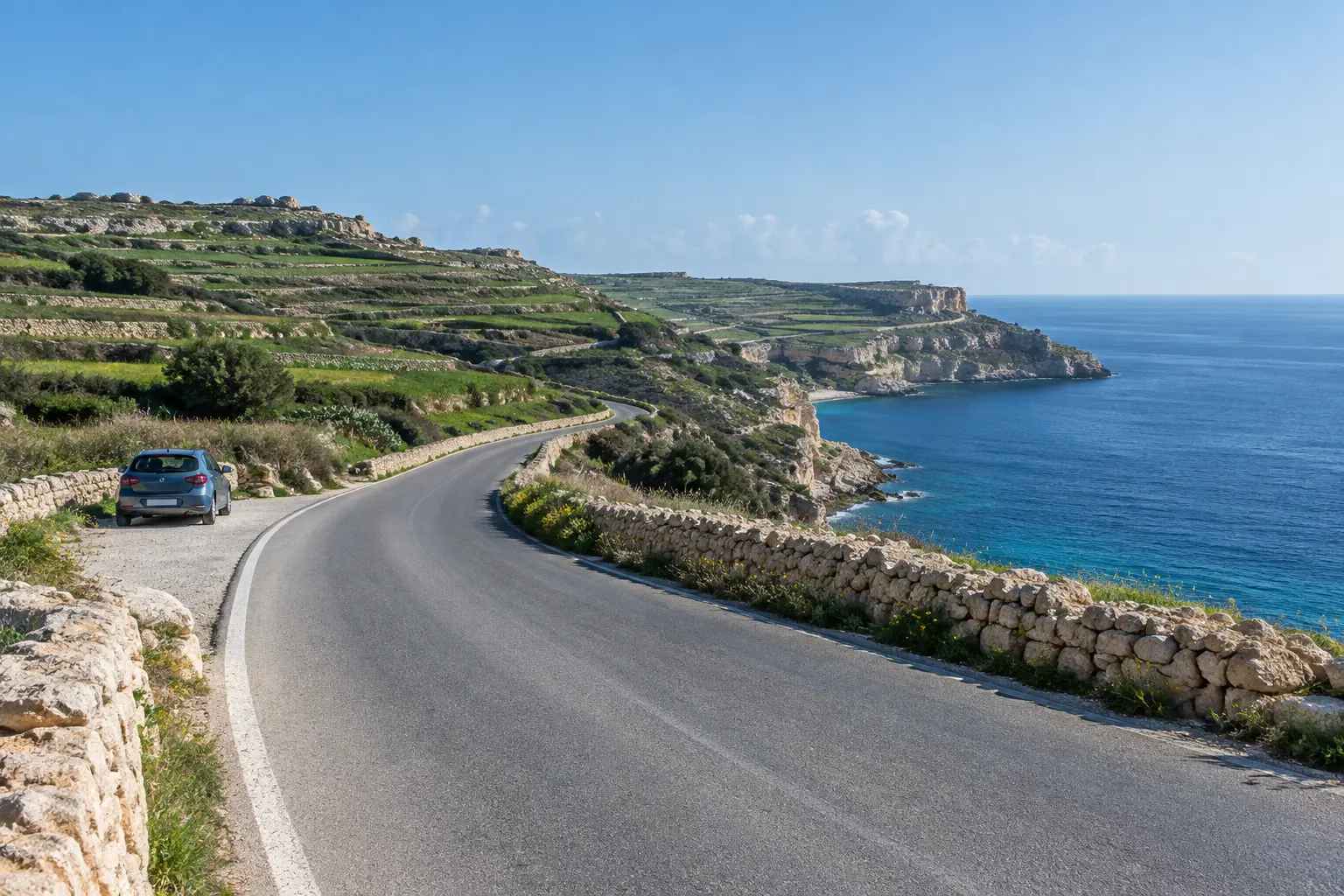
What driving in Malta is actually like
- Left-hand traffic. Malta drives on the left. If you are used to the right, take the first days slowly, especially at roundabouts.
- Roundabouts everywhere. Give way to traffic already on the roundabout, and watch for drivers changing lanes.
- Rush hour. Main routes into the harbour area are busy in the morning and evening, and short distances can take a long time.
- Narrow streets. Old town centres have narrow, one-way streets and tight corners. Smaller cars are easier.
- Roadworks and construction. Diversions are common; a navigation app with live traffic helps.
- Parking. In Sliema, St Julian’s, Gżira and Valletta, finding a space can take longer than the drive. A garage space is worth a lot.
Alternatives: bus, ferry, Bolt, Uber, eCabs
Before you buy a car, try living without one for a month.
- Buses and ferries: free on day and night routes, the Valletta ferries and the Barrakka Lift with a personalised tallinja card. Our Malta bus routes guide and tallinja card guide explain how.
- Ride-hailing: Bolt, Uber and the local operator eCabs all operate in Malta. For “Bolt vs Uber in Malta”, the honest answer is to compare both apps on the same route; prices and waiting times vary by time of day.
- Car rental: useful for occasional trips, such as a Gozo weekend or a day in the north.
- Walking and cycling: the promenades from Sliema to St Julian’s and around Msida are flat and pleasant; hills elsewhere make cycling harder.
Where you live decides most of this. Our guide to where to live in Malta notes which areas work well without a car, and our Gozo ferry guide covers taking a car across.
Common driving mistakes in Malta
- Letting a non-EU licence run past the 12-month limit without arranging a Maltese licence.
- Parking in a residents’ bay outside the permitted hours, or on yellow lines “just for a minute”.
- Driving into Valletta without checking the CVA rules.
- Hesitating at roundabouts, or forgetting which way traffic flows after years of driving on the right.
- Buying a car before checking whether your area really needs one.

Cycling and e-scooters
Cycling is growing in Malta but takes confidence: traffic is heavy, cycle lanes are patchy and the hills outside the coast roads are steep. The flat promenades between Gżira, Sliema and St Julian’s are the easiest stretches, and Malta Public Transport runs a tallinja Bike rental service with docking stations, charged separately from the free bus scheme. Rules for e-scooters and other personal mobility devices have changed in recent years, so check Transport Malta’s current rules on where you can ride, licensing and insurance before you buy one.
Driving in Gozo
Gozo is quieter, roads are narrower and many routes run through villages and countryside. A car makes it much easier to reach rural spots, bays and farmhouses, which is why many Gozo residents drive. If you take your car across, Gozo Channel’s standard car and driver fare was €15.70 when I checked, paid in Gozo before the return; see our Gozo ferry guide for the details. Watch out for tractors, cyclists and walkers on country lanes.
Renting a car: practical tips
- Book ahead in summer and around holidays, when demand is high.
- Choose a small car; narrow streets and tight parking make big cars hard work.
- Photograph the car all round before you drive off, and check the fuel policy.
- Ask whether the insurance covers Gozo and what the excess is.
- Bring your licence and, if your licence is not in English or from outside the EU, check what extra documents the rental company asks for.
If something goes wrong
If there is an accident with injuries, call 112 straight away. For minor collisions, stay calm, move to safety if you can, exchange names, licence, registration and insurance details with the other driver, and photograph the scene and both vehicles. Report the incident to your insurer as soon as possible and follow their instructions. Keep a pen and a copy of your insurance details in the car. If you are unsure of your obligations, ask your insurer or Transport Malta.
Safety habits that help
- Leave more space than you would at home; sudden braking and lane changes are common.
- Expect pedestrians in old town streets without pavements.
- Use a phone holder and live-traffic navigation, set before you drive.
- Avoid driving after drinking; plan a bus, night route or ride-hailing app instead.
- Be extra careful in heavy rain, when some roads flood quickly.
Car or no car? A quick decision guide
| You live in… | Car needed? |
|---|---|
| Sliema, Gżira, St Julian’s, Msida, Valletta | Usually not; buses, ferries and walking cover most needs |
| St Paul’s Bay, Buġibba, Qawra | Optional; buses run to Valletta and Sliema, but trips take longer |
| Mellieħa, rural villages, much of Gozo | Often helpful, especially with children or irregular hours |
| Anywhere, working shifts at night | Consider it; check night bus routes first |
Frequently asked questions
Can I drive in Malta with a foreign licence?
EU and EEA licences are recognised. According to Transport Malta, licences issued outside Malta and the EU can be used for up to 12 months from your last entry into Malta. After that, you need a Maltese licence to keep driving.
How do I convert my driving licence in Malta?
Licences from the EU, EEA, Switzerland, the UK, Australia and the UAE can be exchanged for a Maltese licence after you take up normal residence, provided you have lived in Malta for at least 185 days in the previous 12 months. Other licence holders usually need to pass the Maltese tests. Check Transport Malta for the current process and fees.
Which side of the road do they drive on in Malta?
The left. Cars are right-hand drive, and roundabouts are taken clockwise.
How much is petrol in Malta?
In 2026, Euro 95 petrol was €1.34 a litre and diesel €1.21 a litre, according to EU Oil Bulletin figures, among the cheapest in the EU.
What do the parking bay colours mean in Malta?
White bays are general parking, blue bays are in residents’ parking areas with set hours for non-residents, green bays are reserved for residents (for example in Valletta), and yellow lines mean no parking. Always read the sign at the bay.
Is Bolt or Uber better in Malta?
Both Bolt and Uber operate in Malta, as does the local firm eCabs. Prices and waiting times vary by route and time of day, so compare the apps for your journey.
Do I need a car in Malta?
Not if you live in the harbour area, where buses and ferries are free with a personalised tallinja card. In rural areas, the far north and much of Gozo, a car makes life easier.
Want to turn this into an actual plan? MeetNow is a free app for meeting people in person: a host posts a plan at a public place, says who pays (host pays, split, pay your own or free) and picks who joins. It works in your browser and on Android through Google Play, starting in Malta; the iPhone app is not in the App Store yet. Open MeetNow and see the plans in Valletta, Sliema and St Julian’s.
We may mention products we are connected with; see our affiliate and product disclosure.