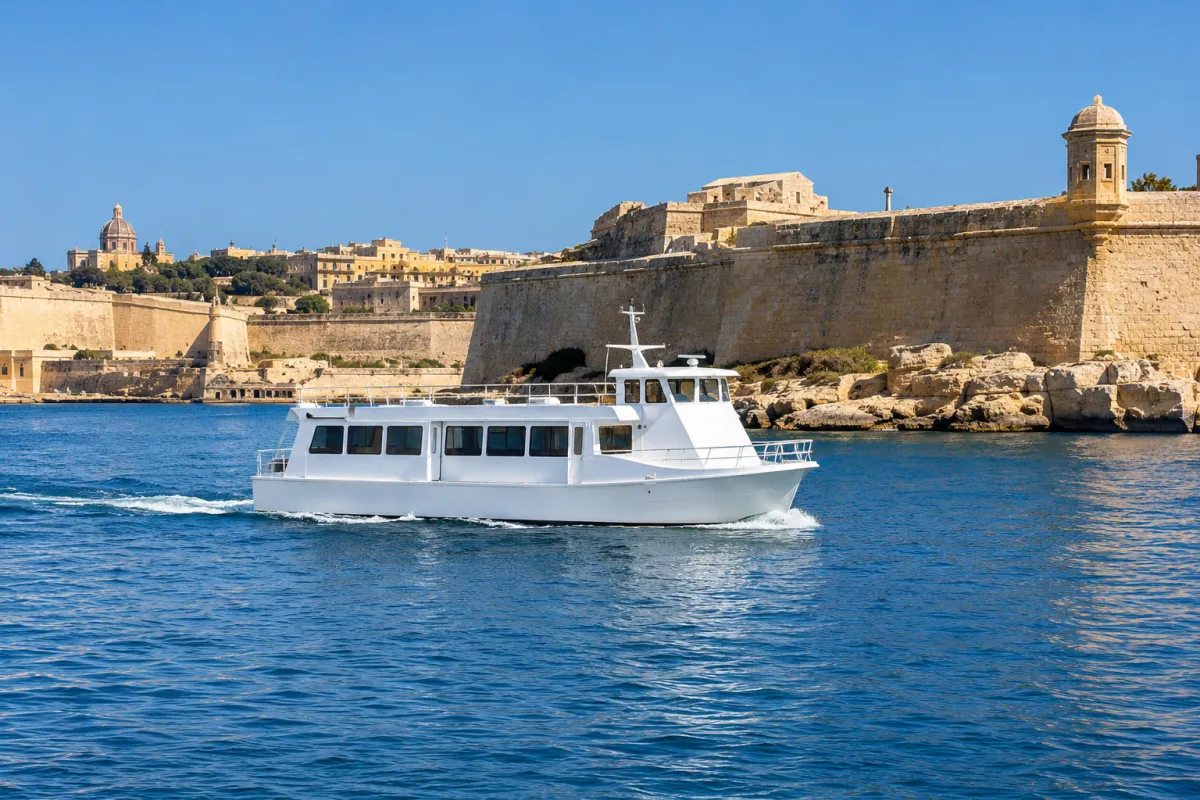
The Three Cities ferry from Valletta leaves from Lascaris Wharf, below the Upper Barrakka Lift, and crosses the Grand Harbour to Cospicua (Bormla) in a few minutes. In winter it runs from 06:30, and in summer it keeps going until 01:30. A day single costs €3.00, and holders of an eligible personalised tallinja card travel free.
For residents, this little crossing is one of the best ways to get around the harbour: no traffic, no parking, and a view that never gets old. This guide covers where to board, when it runs, what it costs and how to fit it into everyday life.
Where the Three Cities ferry from Valletta leaves
The service is run by Valletta Ferry Services, which also operates the Sliema to Valletta crossing. On the Valletta side, the ferry uses the landing at Lascaris Wharf on the Grand Harbour, at the foot of the city’s bastions.
From the centre of Valletta, the easiest way down is the Upper Barrakka Lift next to the Upper Barrakka Gardens. It drops you from the top of the bastions to the waterfront, and the ferry landing is a short walk away. Coming back, take the lift up rather than climbing the steep streets.
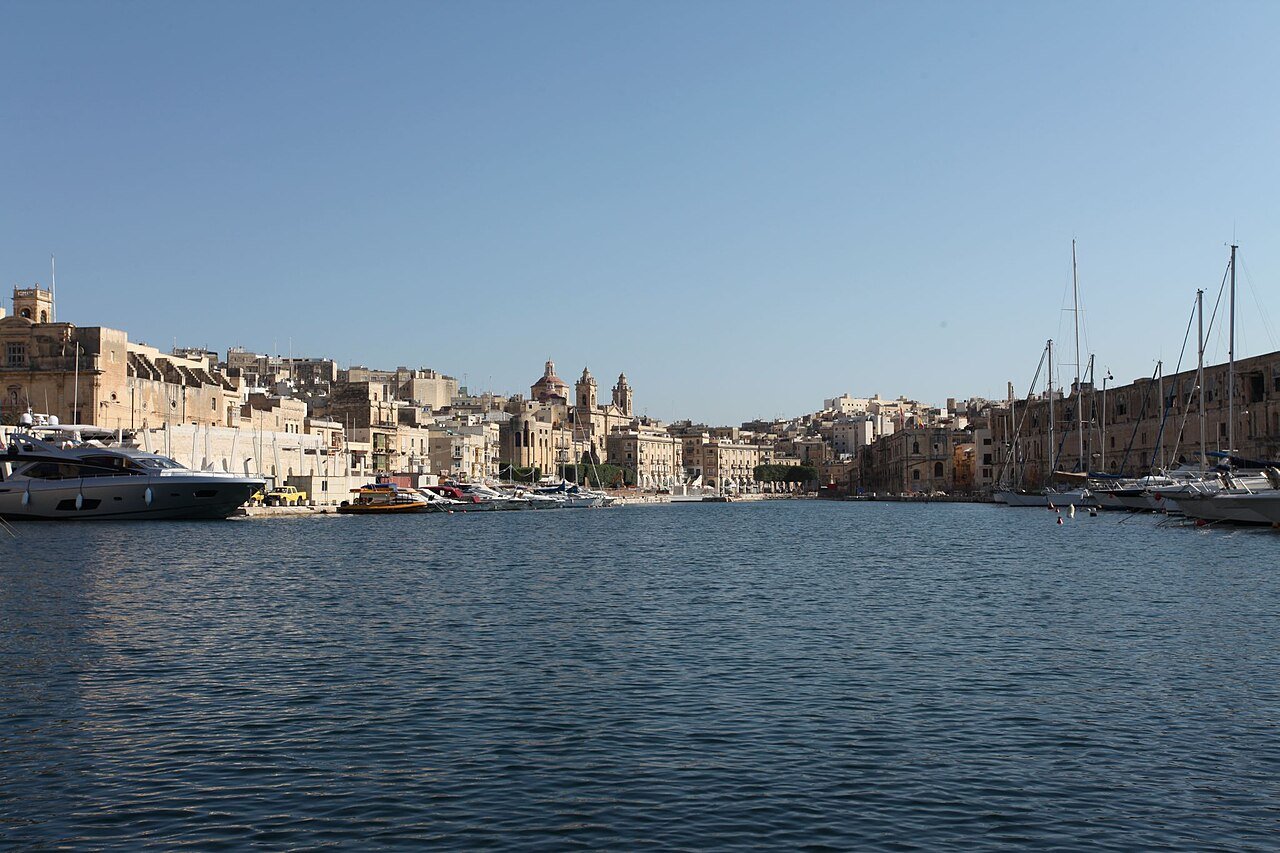
On the other side, the ferry arrives in Cospicua (Bormla), on the waterfront close to Birgu (Vittoriosa). From the landing you can walk along the marina to Birgu in a few minutes, or head inland into Cospicua.
Timetable: winter and summer
The ferry runs to two seasonal timetables. Based on the operator’s published schedule:
| Season | Days | Service hours |
|---|---|---|
| Winter (1 November to 31 May) | Monday to Thursday | 06:30 to 22:30 |
| Winter | Weekend nights | Extra late crossings, the last around 00:45 |
| Winter | Sundays and public holidays | 09:00 to 18:15 |
| Summer (1 June to 31 October) | Daily | 06:30 to 01:30 |
| Summer | Sundays and public holidays | 09:00 to 01:30 |
From Valletta Ferry Services’ timetable; last checked November 2026. Departure times differ slightly at each end, so check the exact times before you travel.
Crossings are frequent during the day, so most people simply turn up. Late at night and on Sundays in winter, check the exact departure times first, because a missed last ferry means a long trip round by road.
Fares and tickets
| Ticket | Single | Return |
|---|---|---|
| Adult, day | €3.00 | €5.00 |
| Child, day | €1.00 | €1.50 |
| Adult, night (from 19:30) | €3.50 | €5.20 |
Fares published by Valletta Ferry Services; last checked November 2026.
A return makes sense if you are coming back the same day. If you travel often, the tallinja card, below, is far better value.
Travelling with a tallinja card
According to Malta Public Transport, a personalised tallinja card gives free travel on regular bus routes and on the Valletta Ferry Services crossings that link Sliema, Valletta and the Three Cities. For a resident commuting across the harbour, that turns the ferry into a free daily option.
Eligibility rules for free travel were part of the Budget 2027 announcements, with changes for some non-EU residents from 2027. Check the current rules for your situation on the Malta Public Transport website before you rely on free travel. Our guides to the tallinja card and the Malta bus app explain how to apply and manage the card.
The dgħajsa alternative
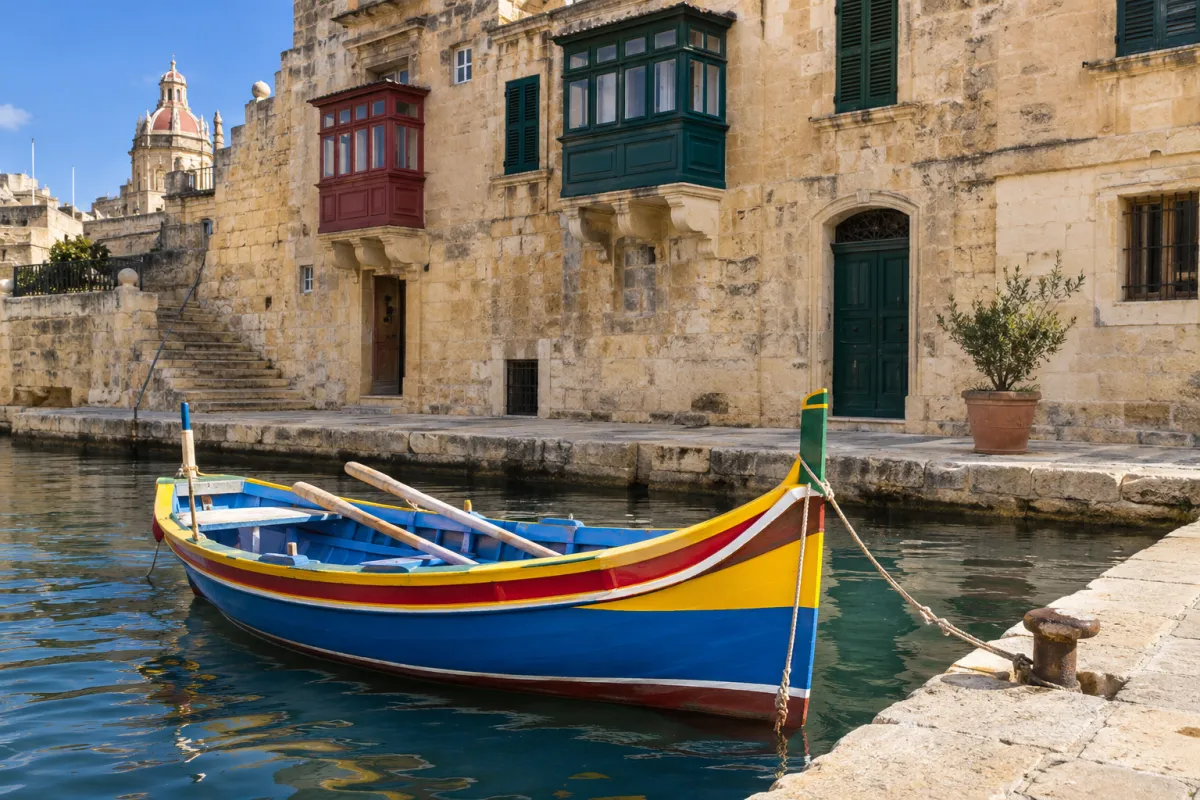
Before the ferry, there was the dgħajsa: the colourful, gondola-like wooden boat that has carried passengers across the Grand Harbour for centuries. Licensed boatmen still offer crossings between the Valletta waterfront and Birgu, usually when enough passengers are waiting or on request.
It is slower and costs more than a ferry ticket, and prices are agreed with the boatman, so ask before you step in. But on a calm day, with a visitor who has never seen Malta from the water, it is one of the most memorable short trips on the island.
What to do when you get off the ferry
The landing puts you right on the Cospicua and Birgu waterfront, so the Three Cities are on your doorstep the moment you step off:
- Birgu (Vittoriosa). Walk along the marina towards Fort St Angelo, then turn into the narrow streets of the old town, where the knights first settled before Valletta was built.
- Senglea (Isla). Cross the creek and walk to the tip of Senglea, where the small garden with its stone lookout gives one of the best views back to Valletta.
- Cospicua (Bormla). The most residential of the three, with its large parish church and quieter streets, and a good sense of everyday Maltese life.
- The waterfront. In the evening the marina fills with diners, and in summer the late ferries make it easy to stay for dinner and still get back to Valletta.
A simple first visit: cross in the late morning, walk Birgu for an hour, have lunch by the water, walk to Senglea’s viewpoint in the afternoon and catch a ferry back before sunset. It is an easy half-day with no car and almost no planning.
Practical tips for the crossing
- Arrive a few minutes early in summer, when visitors fill the boats at popular times.
- Keep your ticket or card handy for the return trip.
- On windy winter days, the harbour can be choppy; services may change in bad weather, so check before you go.
- If you have a pram or bicycle, ask the crew where to put it before boarding.
Other ways to reach the Three Cities
- By bus: several routes link Valletta with Cospicua, Birgu and Senglea. Journeys can be slow at rush hour, when the ferry usually wins.
- By taxi or ride-hailing: quick in the evening, but traffic around the harbour can be heavy during the day.
- By car: parking in Birgu and Senglea is limited, especially during events and in summer.
- On foot from Birgu: once you are across, the Three Cities are compact and best explored walking.
For the bigger picture of how buses, ferries and taxis fit together, see our public transport in Malta guide.
Using the ferry as a resident
Newcomers often treat the Three Cities ferry as a sightseeing trip. Residents use it differently:
- Commuting. If you live in Birgu, Cospicua or Senglea and work in Valletta, the ferry plus the lift can be faster than any bus.
- Living in the Three Cities. The ferry is one reason the area appeals to people who want a quieter, historic base close to the capital. Our guide to living in Birgu and the Three Cities covers rents and daily life.
- Evenings out. The waterfront restaurants in Birgu are a short hop from Valletta, and summer crossings run late.
- Weekend walks. Cross in the morning, walk the bastions of Senglea and the streets of Birgu, have lunch and ferry back.
- Hosting visitors. The crossing, the lift and the Upper Barrakka Gardens make an easy half-day for friends and family.
A harbour crossing also makes a good low-pressure plan with new people: a fixed meeting point, a short trip, and a coffee or dinner on the other side. If you live in Valletta, it is the easiest outing you can suggest.
Want to turn this into an actual plan? Open MeetNow and see the plans in Malta. It is free and works in your browser: a host posts a plan at a public place, says who pays (host pays, split, pay your own or free) and picks who joins from the short notes people send. MeetNow is live on the web, starting in Malta.
Frequently asked questions (FAQ)
Where does the Three Cities ferry leave from in Valletta?
From Lascaris Wharf on the Grand Harbour, below the bastions. The easiest way down from the city centre is the Upper Barrakka Lift next to the Upper Barrakka Gardens.
How much is the ferry from Valletta to the Three Cities?
Valletta Ferry Services lists a day adult single at €3.00 and a return at €5.00. Night fares from 19:30 are €3.50 single and €5.20 return, and child fares are lower.
Is the Three Cities ferry free with a tallinja card?
Malta Public Transport says personalised tallinja card holders travel free on the Valletta Ferry Services crossings. Eligibility for free travel changes for some non-EU residents from 2027, so check the current rules.
What time is the last ferry from Valletta to the Three Cities?
In summer, crossings run until about 01:30. In winter, weekday service ends around 22:30, with later crossings at weekends, and Sunday and public holiday service ends around 18:15.
How long does the crossing take?
Only a few minutes across the Grand Harbour, which is why many residents of Birgu and Cospicua use it to commute to Valletta.