Short answer: living in Valletta means waking up in a UNESCO World Heritage city, walking everywhere, catching ferries to Sliema and the Three Cities and having the island’s main bus terminus at the city gate. It also means stairs, old stone flats that can be damp in winter, few large supermarkets, the Controlled Vehicular Access (CVA) charge and limited parking, and occasional crowds and fireworks from events and festas. Renovated flats rent in the same band as the harbour towns, while older unrenovated places can be cheaper. Valletta suits people who work in or near the capital, love historic buildings and do not need a car. Last checked October 2026.
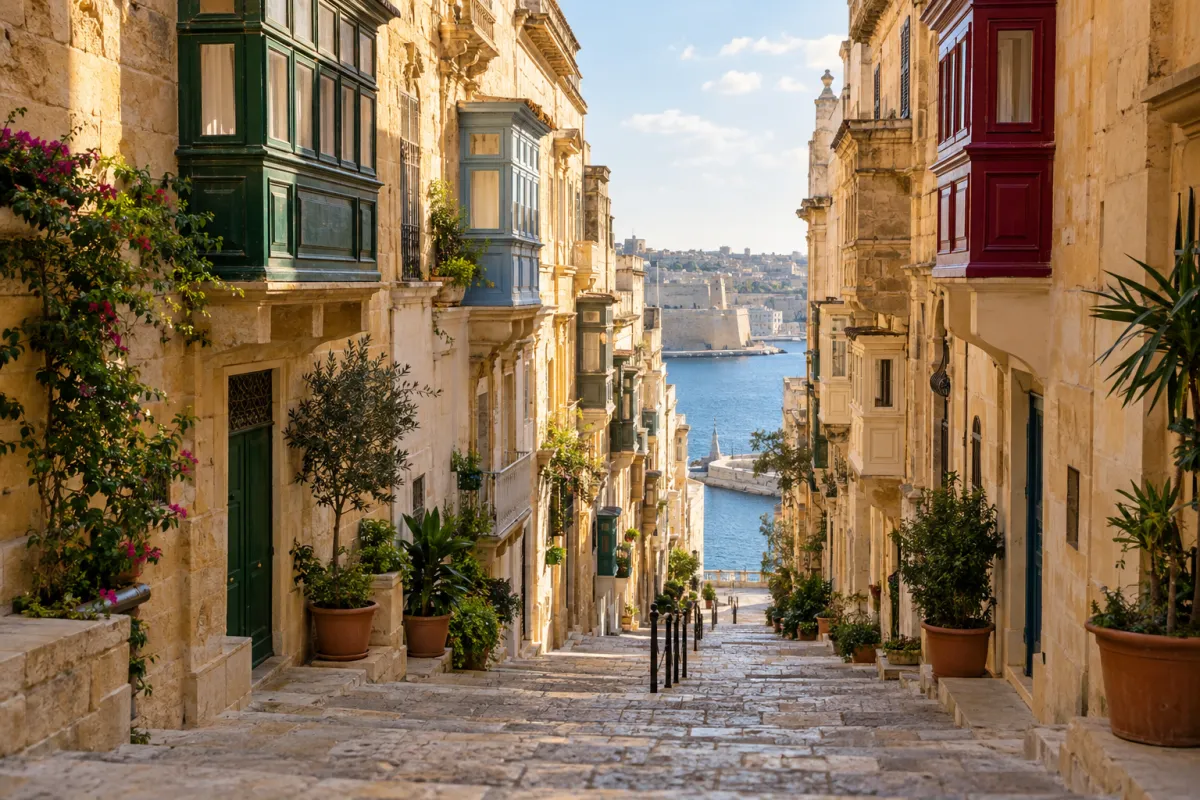
I lived in Valletta for a winter and still miss the evenings: the city empties after the offices close, the streets go quiet, and you can walk to the bastions to watch the sun set over Marsamxett Harbour without meeting a car. I do not miss carrying a week’s shopping up four flights of stairs. Both are typical. Valletta rewards people who plan around its quirks: a flat on a lower floor or with a lift, a weekly delivery for heavy shopping, and a few regular places where people know your name. Here is the full picture, from rents and damp to parking rules, events and the neighbourhoods just outside the walls.
Valletta at a glance
| What | Detail |
|---|---|
| What it is | Malta’s capital and a UNESCO World Heritage city on a peninsula between two harbours |
| Feel | Busy with offices and visitors by day, calm and residential at night |
| Housing | Historic townhouses and apartments, many converted; lifts are rare in older buildings |
| Transport | Main bus terminus; Valletta Ferry to Sliema and the Three Cities; Upper Barrakka Lift |
| Driving | CVA charge on weekdays for non-residents; residents exempt; parking scarce |
| Best for | People working in Valletta or Floriana, lovers of history and quiet evenings, car-free living |
Rents and housing in Valletta
Valletta’s housing is mostly historic. That shapes both price and daily life:
| Type | What to expect | Price guide |
|---|---|---|
| Renovated apartment in a converted townhouse | Character, high ceilings, sometimes a roof terrace; may lack a lift | Similar band to the harbour towns |
| Older unrenovated flat | Cheaper, but check damp, electrics, windows and water pressure | Below renovated flats |
| Room in a shared flat | Common among young professionals | About €550 to €700 a month (University of Malta harbour-area estimate) |
| Short let | Many apartments are let to visitors | Higher per night; competes with long lets |
For comparison, Housing Authority data for new leases in the first half of 2025 put the median two-bedroom rent at €1,500 a month in St Julian’s and €850 in St Paul’s Bay. Last checked October 2026; check current listings and registered-lease data.
What older Valletta flats are really like
- Stairs: third and fourth floors without a lift are common. Think about shopping, furniture and visitors.
- Damp: thick limestone walls keep summer heat out but hold moisture in winter. A dehumidifier is standard kit.
- Light: narrow streets mean some flats get little direct sun; top floors and corner flats are brighter.
- Roof terraces: a shared or private roof is one of the joys of the city, with harbour views and space to dry laundry.
- Utilities: check the water pressure on upper floors and make sure you are registered on the utility account so you pay residential electricity rates.

Making an old Valletta flat comfortable
A few habits make a big difference in historic buildings. Run a dehumidifier from November to April and empty it daily; open windows on dry, sunny days to air the rooms; keep furniture a few centimetres away from outside walls so air can circulate; and use reverse-cycle air conditioners for heating if the flat has them, since they are usually cheaper to run than electric heaters. In summer, keep shutters closed during the hottest hours and open everything up in the evening breeze. Ask the landlord who is responsible for treating damp patches and repainting, and photograph any existing marks when you move in, so the deposit conversation at the end is straightforward.
Parking and the CVA charge
Valletta uses a Controlled Vehicular Access system with number-plate cameras. According to the CVA tariffs and FAQ on cva.gov.mt (checked October 2026):
- the first 30 minutes inside the charging zone are free;
- longer stays are charged per hour on weekdays between 08:00 and 18:00, up to a daily cap (the published rate was €0.82 an hour, capped at €6.52);
- entries after 14:00 on weekdays, weekends and public holidays are free;
- residents are exempt, with residency detected automatically when a vehicle is inside the zone overnight on at least 15 nights a month;
- electric vehicles, motorcycles and public transport are among the other automatic exemptions.
Even with the exemption, street parking for residents is scarce. Most people who live in Valletta do not keep a car, or rent a garage space if they do.
Noise, events and the seasons
Valletta is quieter at night than Sliema or St Julian’s, but it is also Malta’s stage:
- Strait Street and nearby lanes have bars that stay lively into the night, especially at weekends.
- National celebrations, concerts and festivals bring crowds, road closures and fireworks to the squares and bastions.
- Parish feasts in Valletta, such as the feast of St Paul’s Shipwreck in February, mean decorations, bands and processions.
- Cruise ship days fill the main streets with visitors in the morning and early afternoon.
- Restoration and building works happen too, though usually on a smaller scale than the construction in the harbour towns.
Before you sign, visit the street on a weekday morning and on a Friday or Saturday night. Two streets apart can be a different world.
Daily life: shopping, services and getting around
Shopping
Valletta has grocers, small supermarkets, bakeries, pharmacies and the food hall at Is-Suq tal-Belt, but few large supermarkets. Many residents do a big shop by bus or delivery once a week and use local shops in between. Our guide to supermarkets in Malta covers the chains and delivery options.
Transport
- Buses: the main terminus at the city gate connects to most of the island; free on day and night routes with a personalised tallinja card. See our Malta bus routes guide.
- Ferries: the Valletta Ferry runs to Sliema and to the Three Cities and is free with a personalised tallinja card, according to Malta Public Transport. A circular bus route links the ferry quays with the centre.
- Upper Barrakka Lift: connects the Upper Barrakka Gardens with the Grand Harbour waterfront; free with a personalised tallinja card.
- On foot: the city is compact, but steep. Comfortable shoes are not optional.
Work
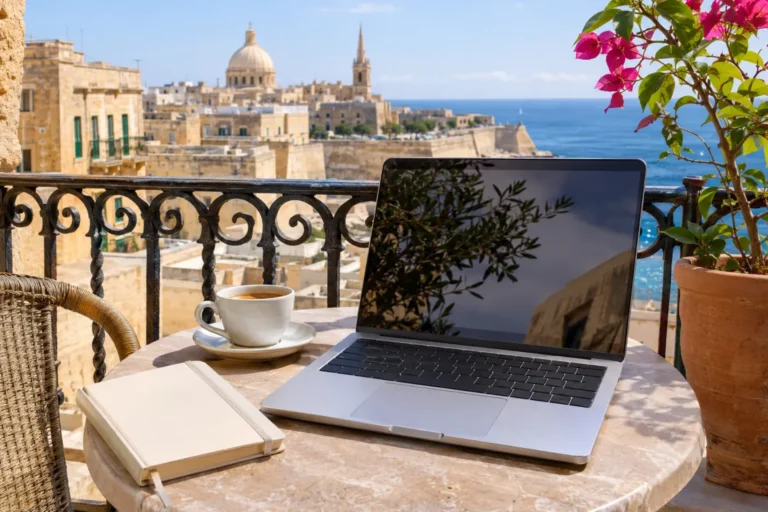
Government ministries, banks, law firms and many offices are in or near Valletta and Floriana, so living here can mean a five-minute walk to work. Remote workers have coworking options in the city; our coworking space Malta guide lists them with prices.

Pros and cons of living in Valletta
| Pros | Cons |
|---|---|
| Beautiful historic city, harbour views from many streets | Stairs and few lifts in older buildings |
| Quiet evenings in most residential streets | Damp and cold flats in winter if poorly maintained |
| Main bus terminus and ferries in every direction | Few large supermarkets |
| Walk to work if you are in Valletta or Floriana | CVA charge for visitors, scarce parking |
| Culture on your doorstep: theatre, museums, concerts | Event noise and crowds on festival nights and cruise days |
| Less construction than the harbour towns | Fewer gyms and big-box services than Sliema |
Who Valletta suits
- Great for: people working in the capital, culture lovers, couples and singles who do not need a car, anyone who values quiet evenings over nightlife.
- Think twice if: you have mobility issues, young children and a pushchair, a big car, or you hate stairs.
- Nearby alternatives: Floriana (next door, greener), the Three Cities (a ferry ride away, quieter and often cheaper), and Sliema across the water; see our guide to living in Sliema for the busier, more social option.
Valletta vs Floriana and the Three Cities
| Area | Compared with Valletta | Getting to Valletta |
|---|---|---|
| Floriana | Next door, greener with gardens and wide squares, more residential, a little more parking | A short walk through the city gate area |
| The Three Cities (Birgu, Senglea, Cospicua) | Historic, quieter, waterfront, often more space for the money | Valletta Ferry to Cospicua, plus the Upper Barrakka Lift |
| Sliema | Modern, busier, more shops and gyms, more construction | Valletta Ferry, direct |
| Msida and Ta’ Xbiex | Practical, near the university and hospital, marinas | Bus, a few minutes outside rush hour |
My comparison from living around the harbour, last checked October 2026.
Many people who love Valletta’s atmosphere but not its stairs end up in Floriana or the Three Cities, where they get similar history and harbour views with a little more space and calm, and still reach Valletta in minutes. If you work in the capital, both are worth a viewing day before you commit.
Social life in Valletta
Valletta’s social life is quieter and more grown-up than the harbour towns. Evenings tend to be dinners, a drink on Strait Street, a concert or a play rather than clubs. Many residents meet friends across the water in Sliema or St Julian’s, which is easy thanks to the ferry. The trick in Valletta is the same as anywhere: a couple of regular fixtures, such as a weekly class, a choir, a running route along the bastions or a standing Sunday walk, plus small plans with a clear time and place. For the wider picture of how friendships form here, see our honest guide to expat life in Malta.

A week living in Valletta
| Day | Plan | Cost |
|---|---|---|
| Monday | Walk to the office; lunch in the Upper Barrakka Gardens | €0 plus lunch |
| Wednesday | Ferry to Sliema for a gym class or a swim, ferry back | €0 with a personalised tallinja card |
| Friday | Small dinner with friends, everyone pays their own | €15 to €30 |
| Saturday | Market and errands; lift down to the Grand Harbour, ferry to the Three Cities | €0 with a personalised tallinja card |
| Sunday | Sunset on the bastions; cook at home with flatmates | €0 |
Costs are my planning ranges, not quoted prices.
Before you sign a lease in Valletta: checklist
- Count the stairs and ask whether there is a lift.
- Check walls and corners for damp, and ask how the flat stays warm in January.
- Test water pressure on upper floors.
- Visit on a weekday morning and on a Friday night.
- Ask about events and festas in your street and nearby squares.
- Confirm the lease will be registered with the Housing Authority and agree the deposit in writing.
- If you have a car, plan where you will park.
- Find your nearest grocer, pharmacy and bus stop.
Our step-by-step guide to moving to Malta covers leases, deposits and the rest of your first month.
A realistic first month in Valletta
Use your first few weeks to learn the city’s rhythm. Find your nearest grocer and bakery, check which streets are quiet at night and which host events, and learn the bus and ferry connections you will use most. Walk the bastions at different times of day, and join one weekly activity, a class, a choir or a running group, so the city quickly fills with familiar faces. Valletta is small enough that within a month you will start recognising people on the street.
Living in Valletta: FAQ
Is Valletta a good place to live?
For people who love historic architecture, walkability and good transport links, yes. Valletta is compact, quiet at night outside the main event areas, and has ferries to Sliema and the Three Cities plus the island’s main bus terminus. The downsides are stairs, damp older flats, limited big supermarkets, parking and occasional event noise.
How much is rent in Valletta?
Rents vary widely between renovated apartments and older unrenovated flats. Renovated flats are priced in the same band as the harbour towns, where Housing Authority data put the median new two-bedroom lease at €1,500 in St Julian’s in the first half of 2025, while a room in a shared flat typically costs €550 to €700. Check registered-lease data and current listings.
Do you have to pay to drive into Valletta?
Under the Controlled Vehicular Access (CVA) system, the first 30 minutes are free and longer stays are charged on weekdays between 08:00 and 18:00, capped per day; entries after 14:00, weekends and public holidays are free. Residents are exempt, and residency is detected automatically from overnight parking patterns. Check cva.gov.mt for current tariffs.
Is Valletta noisy?
Most residential streets are quiet at night, but areas near Strait Street bars, main squares and event venues can be lively, and festas, concerts and national celebrations bring crowds and fireworks. Visit the street on a Friday night before signing.
How do you get around from Valletta?
Valletta has the island’s main bus terminus at the city gate, ferries to Sliema and to the Three Cities (free with a personalised tallinja card), the Upper Barrakka Lift down to the Grand Harbour, and a circular bus route connecting the ferry quays with the centre.
Is Valletta good for families?
Possible but challenging: flats are often up several flights of stairs, outdoor play space is limited and parking is scarce. Many families prefer Floriana or towns a short bus ride away and enjoy Valletta on weekends.
Want to turn this into an actual plan? MeetNow is a free app for meeting people in person: a host posts a plan at a public place, says who pays (host pays, split, pay your own or free) and picks who joins. It works in your browser and on Android through Google Play, starting in Malta; the iPhone app is not in the App Store yet. Open MeetNow and see the plans in Valletta, Sliema and St Julian’s.
Rents, tariffs and rules change; check current listings, cva.gov.mt and Malta Public Transport. We may mention products we are connected with; see the affiliate and product disclosure page linked in the site footer.