Short answer: expat life in Malta is sunny, sociable and easy to start in English, but it asks you to make peace with high rents in the harbour towns, slow paperwork, summer heat, traffic and a social circle that keeps changing as people come and go. Most newcomers settle into a rhythm of work, sea and small plans with friends within a few months. This guide describes a normal week, what is genuinely easy, what is hard, how social life really works, how the seasons change the island, what it costs and a first-30-days checklist. Figures were last checked in October 2026.
I have lived here long enough to have seen several “generations” of friends arrive, fall in love with the place, complain about the buses and, sometimes, leave. What follows is the version I wish someone had told me before I landed: not a brochure, not a warning, just how expat life in Malta actually feels from week to week.
A normal week as an expat in Malta
Here is what an ordinary week looks like for most of the newcomers I know who work office hours in the harbour area:
| When | What usually happens | What to know |
|---|---|---|
| Monday to Friday, morning | Bus, walk or scooter to work; coffee on the way | Traffic peaks roughly 7:30 to 9:00; living close to work matters more than distance |
| Weekday lunch | Pastizzi, a ftira or a salad near the office | Cheap local snacks are part of daily life |
| Weekday evening | Gym, swim (May to October), promenade walk, a class or a drink with colleagues | The seafront promenade from Gżira to St Julian’s is everyone’s free “living room” |
| Friday evening | Dinner or drinks in small groups | Plans are often last-minute; people with a fixed weekly plan make friends faster |
| Saturday | Errands, beach or hike, a village festa in summer | Supermarkets and local shops are busy in the morning |
| Sunday | Long lunch, Gozo day trip, walk in Valletta or Mdina | Maltese families keep Sunday for family; expats often use it for group trips |
Two things surprise people. First, how much of life happens outside: on the promenade, at the rocks, in squares and on rooftops. Second, how small the island is. Your colleague’s flatmate will turn out to be your gym partner’s ex, and you will bump into the same faces at the same bus stop. That is either cosy or claustrophobic, depending on the week.
What is easy about expat life in Malta
English everywhere
Maltese and English are both official languages. You can sign a lease, open a bank account, see a doctor and deal with almost every office in English. That makes the first month far easier than in most European countries.
The sea and the weather
Almost everyone lives within a short walk or bus ride of the sea, and swimming season runs for a good half of the year. Winters are mild compared with northern Europe, though houses can feel cold and damp because few are built for heating. Our Malta weather by month guide covers what each month actually feels like and what to pack.
A small, walkable scale
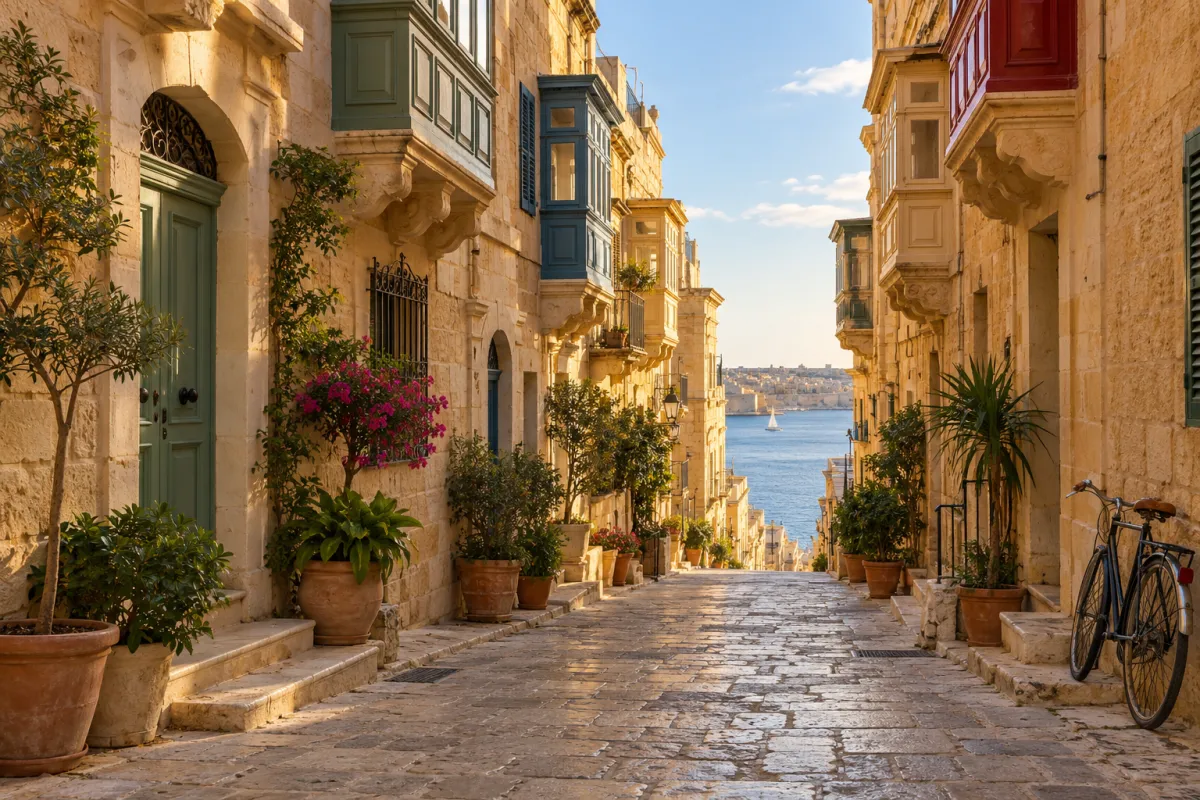
In the harbour towns you can walk to the shop, the gym and the seafront. Valletta is a ferry ride from Sliema. Few trips across the main island take more than an hour, traffic permitting.
Free buses with a residents’ card
With a personalised tallinja card (€25 registration for an adult), bus travel is free for residents. The network is busy and not always punctual, but it covers almost every town. Our guide to Malta bus routes lists the lines newcomers use most.
A big newcomer community
Because so many people move here for work and study, you are rarely the only new person in a room. Language schools, iGaming and finance companies, coworking spaces and sports clubs are full of people who also arrived recently and want company.

What is hard (and how people cope)
| The hard part | What it looks like | What helps |
|---|---|---|
| Rent | Popular areas are expensive relative to local salaries | Share for the first year; look a few bus stops inland |
| Traffic | Short distances, long journeys at rush hour | Live near work, walk, use the ferry, shift your hours |
| Construction | Building sites and noise in many towns | Ask neighbours about planned works before signing a lease |
| Bureaucracy | Appointments, documents, waiting for cards | Book early, bring copies, keep every receipt and email |
| Summer heat | July and August are hot and humid; air conditioning bills rise | Swim early or late, budget for electricity, slow down |
| Friend turnover | Expat friends leave after a contract or a course | Mix expat and Maltese friends; keep a weekly routine |
None of these is unique to Malta, but the small scale makes them feel concentrated. Rent is the one that decides how the rest feels. If you are still at the planning stage, our cost of living in Malta guide has dated rent, food and bill figures, and our step-by-step moving guide covers areas, leases and paperwork.
Social life: how it really works
This is the part of expat life in Malta that decides whether people stay. The good news: starting conversations is easy. The honest news: turning acquaintances into friends takes the same patience it takes anywhere.
Expat circles form fast and change fast
In your first weeks you will be invited to welcome drinks, language-exchange evenings and work socials. Enjoy them, but notice who you keep seeing. The friendships that last usually grow from repeated contact: the same class every Tuesday, the same swim group every Saturday, the same three colleagues at Friday lunch.
Maltese friendships take longer, and they are worth it
Maltese social life centres on family, school friends and the town or village people grew up in. That can make locals seem reserved at first, but once you are invited to a family lunch or a festa, you are in. Sports clubs, volunteering, band clubs and workplaces are where expats and Maltese people most naturally mix.
Small plans beat big events
Big networking events are good for meeting many people once. Small plans, like a coffee for three, a hike for five or a dinner for four, are where you actually get to know someone. They also make money easier: everyone knows up front whether it is “pay your own” or “split”. If you like the idea of hosting a small plan at a public place and choosing who joins, that is exactly what MeetNow is being built for.
For a structured approach, our 30-day plan for making friends in Malta breaks it into weekly steps, and the guide to the expat community in Malta lists groups, forums and clubs that exist.
The seasons change everything
Malta has two social seasons, and newcomers who arrive in one are often surprised by the other.
| Season | What daily life feels like | Social rhythm |
|---|---|---|
| Late spring and summer (May to September) | Long days, sea swims, heat in July and August, busy beaches and roads | Village festas most weekends, open-air events, lots of visitors and short-stay friends |
| Autumn (October and November) | Still warm, sea still swimmable early on, first storms | People settle back into routines; the best time to join classes and clubs |
| Winter (December to February) | Mild days, chilly damp houses, quieter streets | Christmas traditions, smaller indoor plans, a slower and friendlier pace |
| Early spring (March and April) | Green countryside, wild flowers, good hiking weather | Easter traditions and the first beach days |
The summer festa season is one of the best windows into Maltese life: towns and villages decorate their streets, brass bands play and fireworks go off in honour of the parish saint. Go with a Maltese colleague if you can; it is a different experience when someone explains what is happening.

Work and work culture
Most expats here work in English-speaking offices: online gaming, financial services, tech, aviation, healthcare, hospitality and language schools. A few patterns are worth knowing before your first day:
- Hours: office days often start between 8:00 and 9:00. Some employers offer summer hours or flexible schedules, but do not assume it.
- Hierarchy: smaller Maltese companies can feel more family-run and personal than international ones; titles and seniority matter, and relationships smooth a lot of things.
- Colleagues as friends: in international companies, colleagues are often your first social circle. Say yes to the after-work drink in your first month, then build friendships beyond the office so your social life does not depend on one employer.
- Job hopping: the market is busy, and moving between companies is common in iGaming and tech. That also means colleagues leave, which is part of the friend-turnover pattern above.
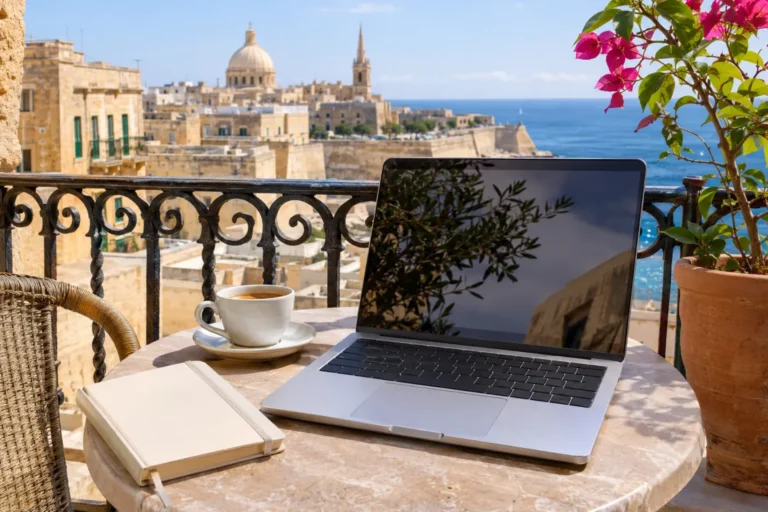
- Remote and hybrid work: plenty of people work from home part of the week. If you do, plan where you will see people, because a flat-and-laptop routine gets lonely quickly on a small island.
Check whether a Wage Regulation Order applies to your sector and read your contract for probation, notice period and leave. If your pay sounds low for your rent, run the numbers before you sign rather than after.
Costs at a glance
Expat budgets in Malta are mostly a rent question. These are the figures I use when friends ask what to plan for, all last checked in October 2026:
| Item | Typical figure | Source / note |
|---|---|---|
| Room in a shared flat, harbour area | €550 to €700 a month | University of Malta planning estimate |
| Two-bedroom flat, St Julian’s (median new lease) | €1,500 a month | Housing Authority, first half of 2025 |
| Two-bedroom flat, St Paul’s Bay (median new lease) | €850 a month | Housing Authority, first half of 2025 |
| Food and drink at home | about €450 a month | University of Malta estimate per person |
| Bus travel | Free with a personalised tallinja card (€25 one-off) | Malta Public Transport |
| Average monthly basic salary | €2,282 gross (Q2 2026) | NSO Labour Force Survey; pre-Budget 2027 |
The salary line matters as much as the rent line. Our average salary in Malta guide works through gross-to-net examples and how far a typical salary goes once rent is paid.
Practical life: the small stuff that adds up
- Shopping: supermarkets, local grocers and weekly markets coexist. Many local shops close for a few hours in the afternoon; larger supermarkets open long hours.
- Driving: traffic drives on the left. Many expats never buy a car and use buses, ferries, scooters and ride-hailing instead.
- Housing quirks: stone houses stay cool in summer and feel cold and damp in winter. A dehumidifier is a common first purchase.
- Water and electricity: make sure you are registered on the utility account so you pay the cheaper residential rate.
- Healthcare: pharmacies are everywhere and pharmacists are a good first stop for minor problems. Check what your residence status entitles you to in the public system and consider insurance while you sort it out.
- Paperwork: expect appointments, document copies and some waiting. Start residence and tax registration early.

Who thrives here, and who struggles
After years of watching people arrive, I see a pattern. People who thrive in Malta tend to:
- enjoy being outdoors and by the sea, even in winter;
- take initiative socially, inviting rather than waiting to be invited;
- accept a bit of chaos in traffic, timetables and paperwork;
- keep rent well below a third of their take-home pay.
People who struggle often moved for a job without visiting first, chose a flat they cannot comfortably afford, or relied entirely on one group of expat friends who then left. If that sounds like a risk for you, plan your social life with the same care as your lease.
When it stops feeling temporary
Many people arrive with a one- or two-year plan. Somewhere around the second winter, expat life in Malta stops feeling like an extended holiday and starts feeling like ordinary life. You know which bus is always late, which bakery has the best ftira, which beach is quiet in June, and which friends will still be around next year. That shift is worth planning for.
- Put down a few roots: a club membership, a regular volunteering slot, a Maltese class or a choir gives you a community that does not leave when a contract ends.
- Invest in your home: a lease you can afford, a dehumidifier, a decent heater for winter and a balcony chair change how you feel about staying.
- Get your paperwork in order: residence, tax, social security and health entitlements are easier to sort calmly than in a rush when something goes wrong.
- Make Maltese friends: they are the people who will still be here in five years, and they open doors to family lunches, festas and parts of the island you would never find alone.
- Give back to newcomers: host the welcome coffee you wish someone had hosted for you. It is the quickest way to keep your own social life fresh.
Your first 30 days: a social checklist
- Week 1: get a local SIM, a personalised tallinja card application and a map of your neighbourhood. Walk the promenade or your local square at the same time each day.
- Week 1: say yes to every reasonable invitation from colleagues or classmates.
- Week 2: join one weekly activity: a sports club, a class, a language exchange or a hiking group.
- Week 2: introduce yourself to your neighbours and the people at your local café or shop.
- Week 3: host something small: coffee for three, a beach swim, a board-game evening. Say up front who pays.
- Week 3: try one Maltese experience: a festa, a village market, a Sunday walk in Mdina or a ferry to Gozo.
- Week 4: repeat what worked. Message the two or three people you clicked with and suggest a regular plan.
- Week 4: check in with yourself. If you feel lonely, that is normal at this stage; it is a signal to add one more routine, not to give up.
A sample weekly plan that builds friendships
| Day | Plan | Approximate cost |
|---|---|---|
| Tuesday | Weekly class or team training | Club or course fee |
| Thursday | After-work coffee or walk with a colleague | €0 to €5 |
| Friday | Small dinner, everyone pays their own | €15 to €30 |
| Saturday | Morning swim or hike with the same group | €0 (free buses with a tallinja card) |
| Sunday | Long lunch or a day trip with whoever is free | Varies |
Costs are my planning ranges, not quoted prices. Last checked October 2026.
Three or four fixed points a week are enough. The point is repetition: you see the same people often enough that conversation moves past “where are you from?”
Expat life in Malta: FAQ
Is expat life in Malta good?
For most people, yes, with caveats. English is an official language, the island is small and safe, the sea is close to almost everywhere and the job market is busy. The trade-offs are high rents in the harbour towns, traffic, construction noise and a social circle that changes as other expats leave.
Do you need to speak Maltese to live in Malta?
No. Maltese and English are both official languages, and you can work, rent, bank and deal with most government services in English. Learning a few Maltese phrases is still appreciated and helps with neighbours and older locals.
Is it easy to make friends in Malta as an expat?
Making first acquaintances is easy because there are many newcomers and most things happen in English. Building close friendships takes longer: Maltese social life centres on family and long-standing friends, and many expats leave after a few years. Small, repeated plans work better than big one-off events.
What is the best area for expats in Malta?
Sliema, Gżira, St Julian’s and Swieqi are the most popular because they are walkable, well connected by bus and close to many offices, but they are also the most expensive. St Paul’s Bay, Msida and the towns around Birkirkara are cheaper. Gozo suits people who want quiet and can handle the ferry.
How much money do you need to live in Malta as an expat?
A single person sharing a flat in the harbour area typically needs about €1,300 to €1,600 a month including rent, food, bills and a modest social budget. Living alone in Sliema or St Julian’s costs considerably more because rent alone can exceed €1,000.
What is the hardest part of expat life in Malta?
Most long-term expats name the same things: rent in popular areas, traffic and construction noise, slow bureaucracy, the heat in July and August, and saying goodbye to friends who move on. None is a deal-breaker, but it helps to expect them.
Is Malta quiet in winter?
Quieter, not empty. Village festas and beach life wind down after September, tourist crowds thin out and some seasonal businesses close or shorten hours. Winter is mild and many expats find it the best time to build a routine and friendships.
Want to turn this into an actual plan? MeetNow is a free app for meeting people in person: a host posts a plan at a public place, says who pays (host pays, split, pay your own or free) and picks who joins. It works in your browser and on Android through Google Play, starting in Malta; the iPhone app is not in the App Store yet. Open MeetNow and see the plans in Valletta, Sliema and St Julian’s.
This guide is general information based on living in Malta, not legal, tax or medical advice. We may mention products we are connected with; see the affiliate and product disclosure page linked in the site footer.