Short answer: Malta has hot, dry, sunny summers and mild, wetter winters. Using the climate norms the Malta Meteorological Office quotes in its monthly bulletins, the average air temperature runs from about 12.6°C in February to about 27°C in July and August, and the sea from about 15°C in March to about 26.7°C in August. Most rain falls between October and February. For newcomers, the practical story is simple: summer means heat, humidity and air-conditioning bills; winter means damp homes without central heating, even though the days are often sunny. Below is a month-by-month table, what each season is like to live through, and what to pack.
I arrived in October thinking winter would be easy. It was, outside. Inside my stone flat, I spent January in a jumper with a dehumidifier humming. Malta’s weather is lovely, but it is lived differently from how it looks in holiday photos.
Malta weather by month: the table
These are the climate norms the Malta Meteorological Office cites when it compares each month with “normal”. Where a bulletin gave the difference rather than the norm, I have worked the norm out and marked it as approximate. Bulletins from different years can quote slightly different norms, so treat the figures as a guide rather than exact.
| Month | Average air temperature (norm) | Average sea temperature (norm) | Other norms quoted |
|---|---|---|---|
| January | about 12.9°C | not quoted | Rain about 79 mm; sunshine about 170 hours |
| February | 12.6°C | not quoted | Rain about 69 mm; sunshine about 187 hours |
| March | about 14°C | 15.0°C | Rain about 40 mm |
| April | 16.1°C | 16.1°C | |
| May | about 20°C | 18.0°C | |
| June | about 24°C | 21.5 to 22.0°C | |
| July | 26.9°C | 25.2°C | Average daily maximum 31.7°C; very little rain |
| August | 27.2°C | 26.7°C | Sunshine 335.3 hours |
| September | 24.9°C | not quoted | Sunshine 254.1 hours |
| October | 21.5°C | 23.5°C | Rain 77.6 mm |
| November | about 17.6°C | 21.0°C | |
| December | 14.5°C | about 18.3°C |
Source: climate norms quoted in the Malta Meteorological Office’s monthly weather bulletins on maltametoffice.com (and as reported in the local press), checked October 2026. “About” marks values I calculated from a bulletin’s stated difference from the norm. Recent years have often run warmer than these norms.
What the numbers mean
- Swimming season: with the sea at around 22°C or more from June to November, many people swim comfortably for half the year, and hardy swimmers all year.
- Rainy season: October to February brings most of the rain, often in short, heavy bursts rather than days of drizzle.
- Heat: in July and August the average daily maximum is above 30°C, and heatwaves push well beyond that. Recent summers have set records.
- Sunshine: even winter months get plenty of sun, which makes the island feel brighter than northern Europe in the dark months.
Month by month in brief
The table gives the averages; this is how each month tends to feel if you live here rather than visit for a week.
January: the coolest stretch of the year, and one of the wettest. Sunny, calm days of around 15 to 16°C are common between fronts, but nights are chilly and homes feel damp. This is when you find out whether your flat was a good choice.
February: statistically the coldest month by average temperature, though it rarely feels harsh outside. Almond blossom and the first green fields appear, and carnival brings crowds to Valletta and Nadur in Gozo. Keep a waterproof handy.
March: days lengthen and warm up, but the wind can still bite on exposed coasts. The sea is at its coolest, around 15°C. A good month for long countryside walks before the heat.
April: often lovely, with comfortable temperatures and the countryside at its greenest. Easter processions take place in many towns. Evenings remain cool enough for a light jacket.
May: warm and settled, with average temperatures around 20°C. The first proper beach days arrive and the island starts to fill with visitors. If you are flat-hunting, this is a good month to check how a place copes with sun and heat.
June: summer arrives properly. The sea reaches swimming temperature for most people, and outdoor life takes over. Air conditioners go on in the afternoon and stay on.
July: hot, dry and bright, with average daily maximums above 30°C and almost no rain. Village festas fill the weekends with fireworks and band marches. Plan errands for early morning.
August: the hottest month on average and the most humid-feeling. Many locals take holidays and some smaller businesses close for a week or two. Nights stay warm, so a cool bedroom matters more than anything.
September: still summer in all but name, with a warm sea and long evenings. Late in the month, the first big thunderstorm often signals the change of season.
October: warm days, very warm sea and the start of the rainy season. Storms are short and sometimes intense. Many newcomers arrive in October and find it an easy introduction.
November: noticeably cooler evenings and more frequent rain, but the sea can stay swimmable into the month for the hardy. Time to buy a heater and dehumidifier if you have not already.
December: mild, often sunny days and cool nights, with Christmas lights in towns and cribs (presepji) on display. Indoors, the damp starts to build again.

What life is like in each season
Spring (March to May)
The island is green, wild flowers cover the fields and the temperature climbs from mild to warm. It is the best time for hiking and outdoor plans. The sea is still cool in March and April, so most people wait until late May or June to swim. Evenings can still be fresh; keep a light jacket.
Summer (June to September)
Long, hot, sunny days and warm nights. Life moves outdoors and towards the sea: early-morning swims, beach afternoons, late dinners. Humidity can make the heat feel heavier, and air conditioning becomes essential for many people, which shows up on electricity bills. Our cost of living guide explains how Malta’s electricity bands work. Plan strenuous activity for early morning or evening.
Autumn (October to November)
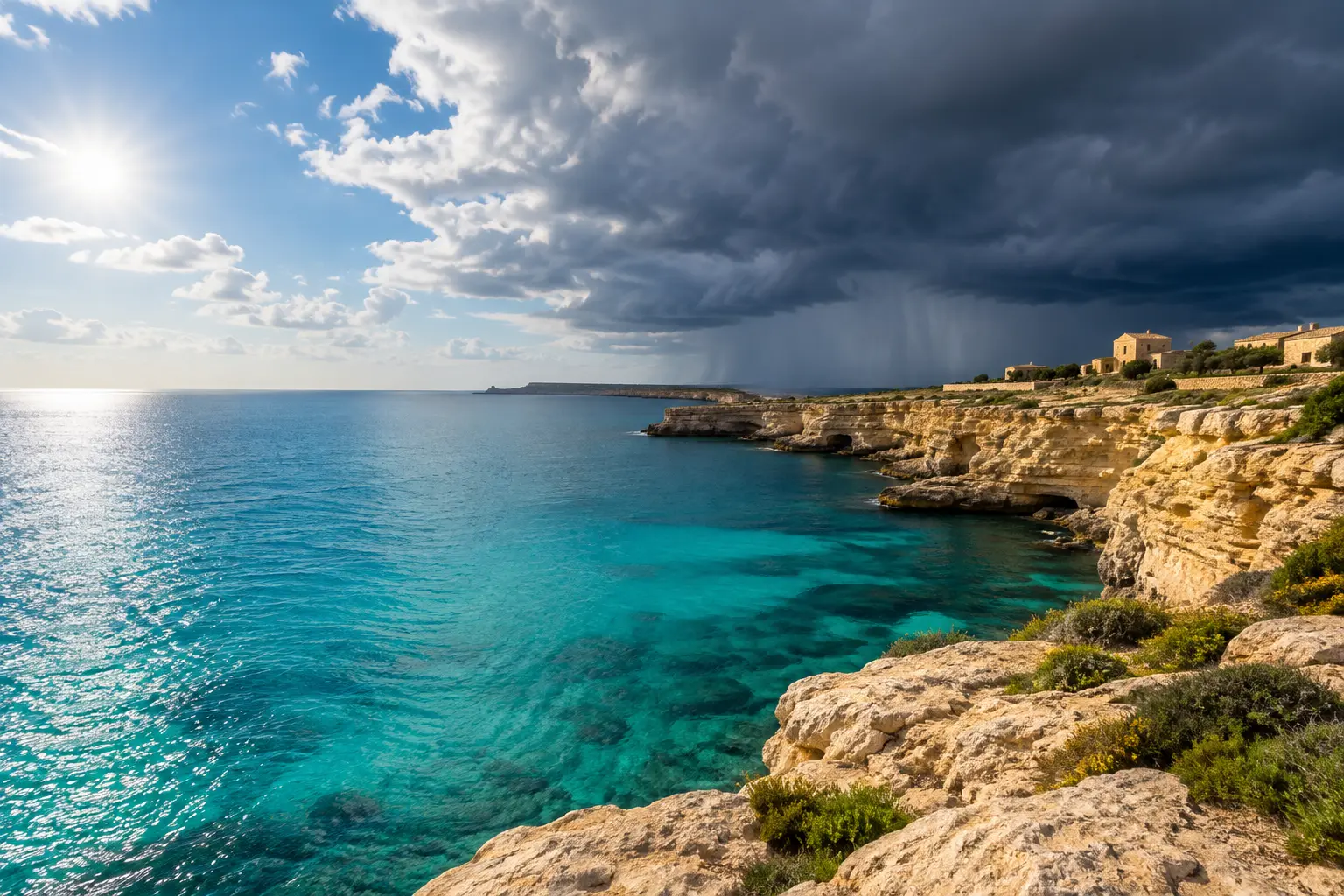
Many residents’ favourite season. The sea stays warm, the crowds thin out, and the first autumn storms arrive, sometimes with dramatic thunderstorms and sudden heavy rain. Low-lying streets can flood briefly during downpours.
Winter (December to February)
Mild by northern European standards and often sunny, but windy and damp at times. The real challenge is indoors: many Maltese homes are built for heat, with stone walls, tiled floors and no central heating. Rooms can feel cold and damp, and mould is a common problem. Heaters, dehumidifiers and warm bedding are standard winter purchases.

Wind, humidity and heat: the parts the averages hide
Average temperatures make Malta look gentler than it sometimes feels. Three things are worth knowing.
Wind
Malta is small, flat in places and surrounded by sea, so wind shapes daily life more than visitors expect. Locals name the winds by direction. The majjistral (north-westerly) is the most common and keeps summer days a little fresher. The gregale (north-easterly) brings rough seas to bays that face north-east, especially in winter. The xlokk (south-easterly, the sirocco) is warm, humid and sometimes carries dust from North Africa. When people say “it’s xlokk”, they mean sticky, hazy and tiring. Strong winds can also disrupt sea crossings, which matters if you plan trips to Gozo or Comino.
Humidity
Humidity is high for much of the year. In summer, it makes 30°C feel closer to 35°C, and it slows the cooling of the evening. In winter, it is what makes stone houses feel cold and causes mould on walls, in wardrobes and on shoes. Ventilating your home on dry, sunny days and running a dehumidifier are the two habits that make the biggest difference.
Heat and heatwaves
Summer heatwaves happen most years, with temperatures well above the averages for several days. The Malta Meteorological Office issues weather warnings on its website, and the health authorities publish heatwave advice. The basics: drink water through the day, avoid the midday sun, keep blinds closed in the afternoon, and check on older neighbours. Walking long distances at midday in July and August is a mistake almost every newcomer makes once.
Safety box: weather and outdoor plans
- Check the Met Office forecast and warnings before boat trips, hikes and coastal swims.
- Swim at beaches where others are around, and respect flags and warning signs. Rough seas after a gregale can be dangerous even on sunny days.
- Carry water and sun protection on summer walks, and start early.
- When meeting new people for an outdoor plan, pick a public, well-known spot, tell a friend where you are going and keep your own way home.
- Avoid flooded roads and valleys during heavy rain; water can rise quickly.
What to pack when moving to Malta
| Item | Why |
|---|---|
| Light, breathable summer clothes | June to September are hot and humid |
| A warm jumper, cardigan and slippers | Homes can be cold in winter |
| A light waterproof jacket | Short, heavy autumn and winter showers |
| Sun protection: hat, sunglasses, high-factor sunscreen | Strong sun for much of the year |
| Swimwear and water shoes | Many swimming spots are rocky |
| Comfortable walking shoes | Hills, steps and uneven pavements |
| A modest outfit for churches | Shoulders and knees covered |
Things you can buy locally: fans, heaters, dehumidifiers and bedding. If you are arriving in autumn, a dehumidifier is one of the best purchases you will make.
Weather and your choice of home
Climate should shape where and what you rent. When you view a flat, check:
- whether the air conditioners also heat;
- signs of damp or mould, especially on north-facing walls and in bathrooms;
- how much sun the flat gets in winter (a sunny flat is warmer and drier);
- whether a ground-floor flat sits below street level, where heavy rain can be a problem;
- shade and ventilation for summer.
Our guide to where to live in Malta covers areas, and our moving to Malta guide has a viewing and moving-in checklist.
How the weather shapes social life
The seasons change how people meet. From May to October, social life is outdoors: swims, beach days, sunset walks, festas and long dinners outside. From November to March, it moves indoors: cafés, classes, games nights and Sunday lunches, with sunny winter weekends perfect for hikes. A good habit for newcomers is to keep one indoor and one outdoor weekly plan, so your social life does not collapse when the season turns. Winter is also the best time for Gozo walks; our Gozo ferry guide explains how to get there.

Weather mistakes newcomers make
- Packing only summer clothes and spending January cold indoors.
- Renting a flat without checking for damp or heating.
- Underestimating the summer sun on long walks or boat trips.
- Driving or walking through flooded streets during a downpour.
- Assuming the fast ferry or boat trips run in all weather.
Best time to move to Malta
If you can choose, autumn (September to November) and spring (March to May) are the easiest times to arrive. The weather is pleasant for flat-hunting and errands, and you settle in before the extremes of summer or the damp of midwinter. Moving in July or August means doing paperwork and viewings in the heat; moving in January means discovering your flat’s winter weaknesses straight away, which is useful, if uncomfortable.
Frequently asked questions
What is the weather like in Malta by month?
Average air temperatures run from about 12.6°C in February to about 27°C in July and August, according to the climate norms quoted by the Malta Meteorological Office. Summers are hot and dry, winters mild and wetter, with most rain between October and February.
When is the sea warm enough to swim in Malta?
The sea averages about 22°C in June and reaches around 26.7°C in August, staying above 21°C into November, based on Met Office norms. Many people swim comfortably from June to November.
Does it get cold in Malta in winter?
Outside, rarely by northern standards: the average air temperature in December to February is around 13 to 15°C. Inside, homes without central heating can feel cold and damp, so heaters and dehumidifiers are common.
What is the rainiest month in Malta?
Most rain falls between October and February. Met Office norms quoted in its bulletins put October at about 77.6 mm and January at about 79 mm, with rain often arriving in short, heavy bursts.
What should I pack when moving to Malta?
Light summer clothes, sun protection and swimwear, plus warm layers and slippers for winter indoors, a light waterproof and comfortable walking shoes. Fans, heaters and dehumidifiers are easy to buy locally.
What is the best month to move to Malta?
Spring and autumn are easiest: pleasant temperatures for viewings and errands, and time to settle before the summer heat or winter damp.
Want to turn this into an actual plan? MeetNow is a free app for meeting people in person: a host posts a plan at a public place, says who pays (host pays, split, pay your own or free) and picks who joins. It works in your browser and on Android through Google Play, starting in Malta; the iPhone app is not in the App Store yet. Open MeetNow and see the plans in Valletta, Sliema and St Julian’s.
We may mention products we are connected with; see our affiliate and product disclosure.