Short answer: making friends in Malta over 40 works when you stop waiting for the settings that did the job at 25 and build two or three weekly ones of your own. The best bets are a class that runs all year, an active group such as a walking or swimming crowd, a role in something local (a band club, a parish group, volunteering) and small one-to-one plans where everyone knows who pays. Expect it to take a few months, not a few weeks, and expect your friends to be a mix of ages and nationalities. Information last checked late October 2026.
Why making friends in Malta over 40 is different
Picture a common story: someone moves to Malta in their mid-40s for a senior role. Within a month they have a good flat, a team they like and nobody to call on a Saturday. Colleagues are friendly but have their own lives, the expat events they try are full of people in their twenties, and the Maltese neighbours are kind but busy with grandchildren. They are good at their job and simply out of practice at making friends.
That is the honest picture for many newcomers over 40. It is not that Malta is unfriendly; it is that the structures that used to create friendships without effort are mostly gone:
- Fewer default settings. There is no university, no shared flat and no new-graduate cohort. The workplace still helps, but colleagues over 40 usually have full lives outside the office.
- Family timetables. If you have children, your week is shaped by school runs and activities. If you do not, many people your age do, which makes spontaneous plans harder.
- Established local networks. Maltese people in their 40s and 50s often have friendships going back to school, plus large extended families. You can join those circles, but it happens through repeated contact over months.
- A younger expat scene. Much of what is advertised as “expat social life” is aimed at people in their 20s and early 30s. It is not wrong to go, but it is rarely where your people are.
The good news is that people over 40 tend to be reliable once a plan is in the diary. They turn up, they follow through and they are often quietly looking for new friends too, especially other newcomers. Our guide to making friends in Malta in your 30s covers the decade before; much of the method carries over, but the starting points below are different.
Your situation decides your starting point
You moved for a job, with or without a partner
Work gives you a structure but can swallow everything else. Pick one evening and one weekend slot that work does not touch, and fill them with something that runs weekly. Accept the after-work invitations that do come, even when you are tired: they are how colleagues become friends.
You moved as the partner of someone else’s job
This is often the hardest position. Your partner has a team and a reason to leave the house; you may have neither. Treat building your own circle as a real project with real hours, rather than something that will sort itself out. Classes, volunteering and part-time or freelance work all help, and so does saying out loud at home that you need your partner’s support to protect that time.
You have school-age children
The school gate is your biggest asset: the same parents, twice a day, all year. Join the class chat, say yes to birthday parties and suggest a coffee after drop-off. Our guide for expat mums in Malta goes deeper on parent groups, and much of it applies to dads too.
Your children have left home, or you do not have children
You have more time than most people your age, which is a real advantage if you use it. Daytime classes, weekday walks and volunteering are full of people who also have flexible hours.
You are starting again after a separation
Moving after a break-up, or going through one here, can take away your home and your shared friends at the same time. Be kind to yourself about the pace. One or two steady weekly commitments will do more than a busy calendar you cannot keep up, and it is worth getting professional support early if the move and the separation are hitting together.
Settings that suit people over 40
What works best after 40 is anything that brings the same people together every week, with something to do so the conversation does not have to carry everything. Here are the settings that work well in Malta.
Adult classes that run all year
Malta’s government runs a large programme of lifelong learning courses for adults, from languages and IT to crafts and cookery. Courses usually run from October to May, and applications for the 2026–27 year opened in July 2026; check lifelonglearning.gov.mt or call the government helpline 153 for late places and fees. Private language schools, art studios, cookery schools and dance studios also run evening and weekend classes. A class you go to every Tuesday for eight months is one of the most reliable friendship machines there is.
Learning Maltese deserves a special mention. Even a beginner’s level changes how people respond to you in shops, at the band club and at the school gate, and a Maltese class is full of other newcomers in exactly your position.
Walking, swimming and outdoor groups
Malta’s cliffs, coast paths and old fortification lines make for good group walks from October to May, and sea swimming groups keep going well into autumn. Look for groups on Meetup and Facebook and check that they have held events in the last month before you join; groups come and go. Walking side by side is easier than sitting across a table from a stranger, and it suits people who are not keen on drinks-based socialising.

Sport for adults
Padel, tennis, sailing, cycling, running and gym classes all have plenty of members over 40. Clubs with leagues or regular sessions are better than casual drop-ins, because you see the same faces. If you have not played a sport for years, beginner groups and coaching sessions are a gentle way back in.
Band clubs, parishes and village life
Almost every town and village in Malta has a parish church and one or more band clubs (każini), which are both music societies and social clubs with a bar. They are the backbone of the summer festa season and of local life all year. Newcomers who become regulars at their local club, help with the festa or join a parish group often find it is the fastest route into Maltese friendships. Go more than once, say hello to the same people and accept the invitations that follow. Our guide on how to meet Maltese people has more on village life.
Volunteering
Charities working with animals, the environment, heritage, food poverty and older people all need regular volunteers. Volunteering puts you next to people with shared values, gives you a reason to show up every week and uses the skills you have built over a career. A regular weekly slot works better than a one-off day.
Professional and community associations
Industry associations, national community groups and business networks hold talks and social evenings with a strong 40-plus crowd. They are useful for meeting peers, though the friendships that last usually move on to smaller plans away from the event.

An 8-week plan
This plan assumes a full-time job or a family timetable, so it asks for two fixed slots a week rather than every evening. Costs are per person and approximate.
| Week | Action | Where | Cost (EUR) |
|---|---|---|---|
| 1 | Choose one weekly class and one active group; sign up for both | Lifelong learning or a private school; a walking, swimming or sports group | Class fee varies; group walks often €0 |
| 2 | Go to both; learn three names | Your class and group | As week 1 |
| 3 | Visit your local band club or parish centre for a coffee | Your town or village | A coffee |
| 4 | Suggest one specific one-to-one plan: a coffee after class, a walk | A café near the class | Pay your own |
| 5 | Start a weekly volunteering slot or a community group | A charity or association | €0 |
| 6 | Host a small plan for three or four people | Your home, or a restaurant booked in advance | Host pays, or split; say which |
| 7 | Say yes to every invitation this week, however small | Wherever you are asked | Varies |
| 8 | Turn one plan into a standing one: a monthly dinner, a weekly walk | Same place, same time | Agreed in advance |
Last checked late October 2026. Costs are planning ranges, not quotes; check each class or club for current fees.
If you have tried something like this for a few months and still feel stuck, our guide to having no friends in Malta helps diagnose what is going wrong.
Copy-paste openers
After 40, most people are not short of conversation skills; they are short of practice at the first move. These messages are specific, low-pressure and say who pays.
After a class: “I’m going to grab a coffee before heading home, there’s a place round the corner. Each of us pays our own. Want to join?”
To someone from a walking group: “I enjoyed chatting on Sunday’s walk. I’m doing the coast path from Għajn Tuffieħa next Saturday at 9:00. Fancy coming? I can give you a lift.”
To a colleague: “A couple of us are trying the new place in Ta’ Xbiex for lunch on Thursday. We’re splitting the bill. You’re welcome to come along.”
To another parent: “Would you like to get a coffee after drop-off on Friday? My treat this time, you can get the next one.”
To a neighbour: “We’ve just moved in and don’t know many people yet. Would you like to come for drinks on Saturday at 18:00? Nothing fancy, we’ll host.”
When you meet someone new, keep the first meetings in public places, tell someone where you are going, have your own way home and leave if anything feels off. Common sense, but worth saying.
Turning an acquaintance into a friend
Most people over 40 have plenty of acquaintances: colleagues, other parents, the couple from the cooking class. The step that matters is moving one of them into friendship, and it usually takes three moves.
- See them outside the setting where you met. A coffee after the class, a walk after the school run. Even 30 minutes counts.
- Make it slightly personal. Share something real about your week and remember what they told you about theirs.
- Suggest the next plan before this one ends. “Same time next month?” is how standing plans start.
It also helps to be honest. Saying “we moved here last year and we’re still building a social life” is not needy. Most people relate to it, and many will tell you they feel the same. It gives them permission to say yes.
Couples should make friends both together and separately. A shared activity is good; one activity each is better, because it doubles the number of people you meet and gives the partner without a job a circle of their own.
Who pays, and why it matters more after 40
Incomes and commitments vary much more after 40. One person is paying school fees, another has just sold a house, a third is on a career break. That is exactly why saying who pays up front matters: it lets people with different budgets say yes without awkwardness.
| Plan | Who pays | Typical cost per person (EUR) |
|---|---|---|
| Coffee after a class | Pay your own | A few euros |
| Weekend coast walk | Free | €0, plus a coffee |
| Lunch with colleagues | Split the bill | Your share |
| Dinner at yours | Host pays; guests bring wine or dessert | A bottle |
| Day trip to Gozo | Pay your own | Ferry and lunch |
Planning ranges, not quotes. Last checked late October 2026.
Mistakes that slow things down
- Going only to events aimed at a younger crowd and concluding that Malta has nothing for you.
- Open invitations (“we should meet up”) instead of specific ones with a day, time and place.
- Taking a busy person’s “no” personally. Suggest another date once; most people say yes the second time.
- Only befriending other newcomers. They are easy to meet but often leave within a year or two. Mix in long-term residents and Maltese friends.
- Letting work absorb every evening. Protect two slots a week as if they were meetings.
- Waiting until you feel confident. Confidence comes after the first few plans, not before.
Turnover is part of expat life here, and in your 40s it often comes as contract endings and relocations. Keep your weekly activities going even once you have friends; they are where new people keep arriving. Our article on loneliness after moving to Malta has more on getting through the gaps.
When it is more than loneliness
A big move in midlife can collide with other things: a separation, ageing parents far away, a career change, menopause, or simply the strain of starting again. If low mood, poor sleep or drinking more than usual have lasted more than a couple of weeks, please talk to someone. All of these services work in English.
If you need help now
- 112: emergency. Call if you or someone else is in immediate danger.
- 1579: national mental health helpline, free, 24/7.
- 1770: Richmond Foundation helpline, Monday to Friday 08:00 to 20:00, Saturday until 16:00; also via OLLI.Chat.
- 179: Supportline, free 24-hour social welfare support line.
- Kellimni.com: free, anonymous online chat with professionals, 24/7.
Sources: Richmond Foundation, Get help now; Kellimni.com. Last checked late October 2026.
Our guide to mental health support for expats in Malta explains how to find a therapist in English and what your GP can do.
Making friends in Malta over 40: FAQ
Is it hard to make friends in Malta over 40?
It takes more deliberate effort than in your 20s, because there are fewer ready-made settings and people your age have busy family and work lives. With two or three weekly activities and a habit of suggesting specific plans, most people build a small circle within a few months.
Where do people over 40 meet friends in Malta?
Adult classes, walking and swimming groups, sports clubs, band clubs and parish groups, volunteering, professional associations and, for parents, the school gate.
Are there adult education classes in Malta for foreigners?
Yes. The government’s lifelong learning programme offers courses for adults, usually from October to May, with applications opening in summer. Private schools and studios also run evening and weekend classes in languages, art, cookery and dance.
Can expats join a band club in Malta?
Band clubs are local social clubs as well as music societies, and newcomers are generally welcome to visit the bar and get involved, especially around the festa. Going regularly and getting to know the regulars is the best way in.
How long does it take to make friends in Malta over 40?
Usually a few months of steady weekly contact before acquaintances turn into friends. The more often you see the same people, the faster it happens.
What if I feel lonely in Malta in my 40s or 50s?
It is common, especially in the first year. Add two weekly activities and suggest one small plan a week. If loneliness affects your mood, call 1579, the free 24/7 mental health helpline.
Want to turn this into an actual plan? MeetNow is a free app for meeting people in person: a host posts a plan at a public place, says who pays (host pays, split, pay your own or free) and picks who joins. It is live on the web, starting in Malta: open MeetNow and see the plans posted in Malta.
This guide is general information, not medical advice. In an emergency call 112.
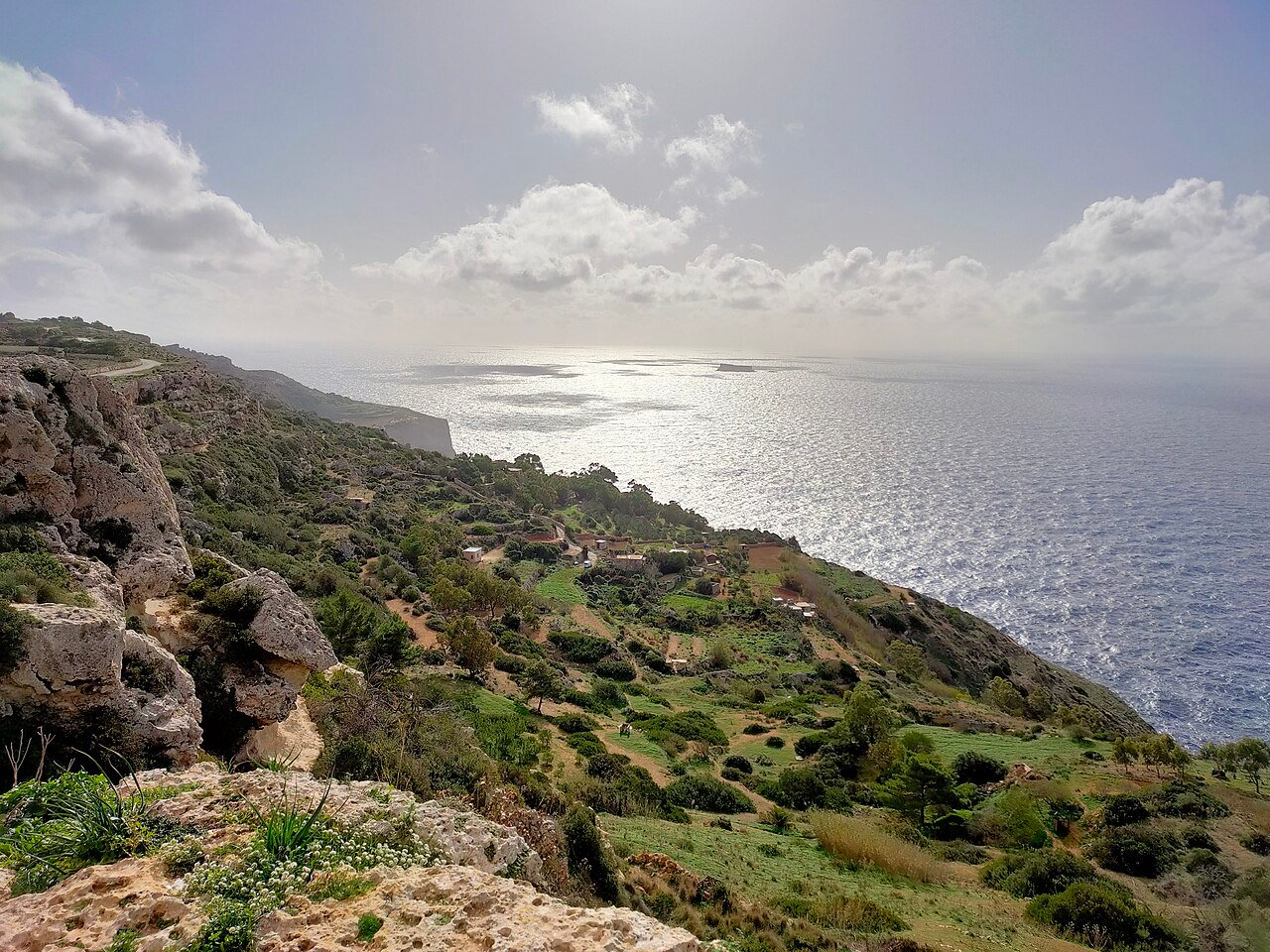
Featured photo: Dingli Cliffs, by Christian Formosa, CC BY-SA 4.0, via Wikimedia Commons.