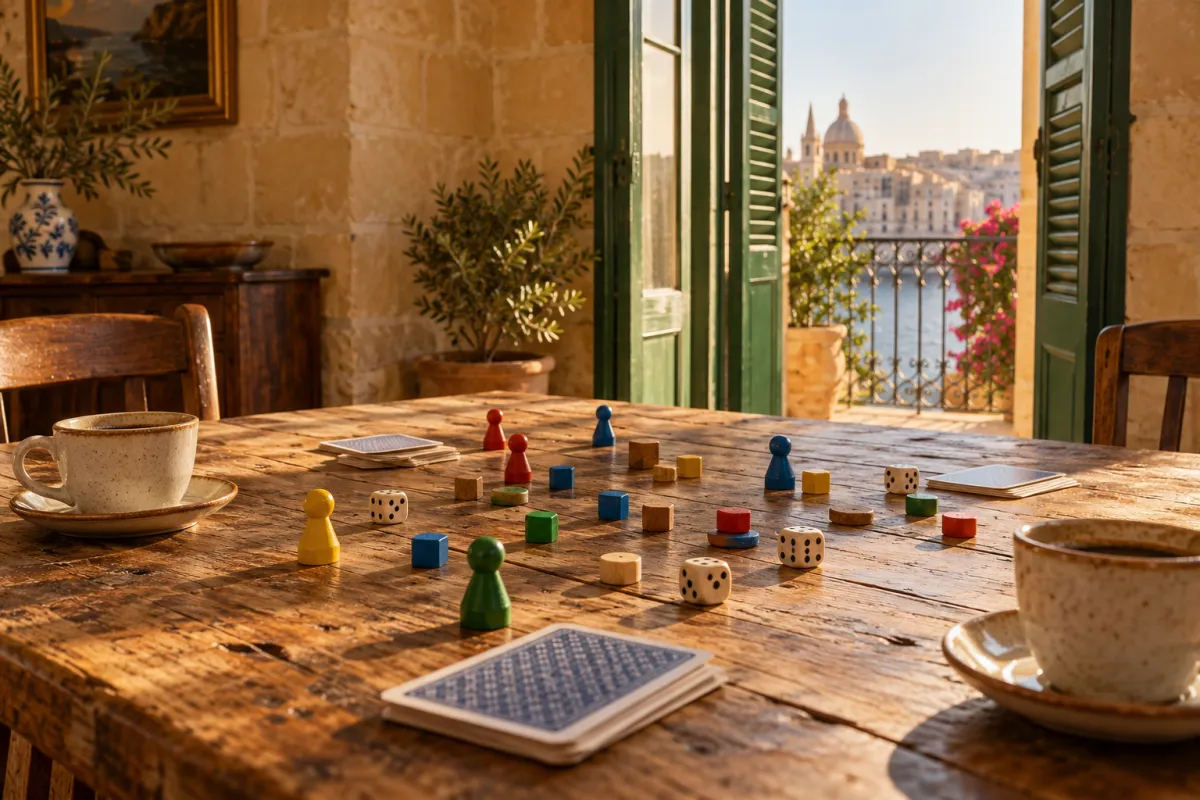
In Malta, one of the easiest tables to join is often covered in cards, dice and small wooden pieces. If you are new and wondering which board game groups Malta actually has, the picture is encouraging. There is an active tabletop scene where locals and expats sit at the same tables. Most of it runs on a simple rule: you turn up, say you are new, and someone teaches you a game.
After years here, I have seen more lasting friendships start over a half-finished strategy game than at any networking mixer. A game gives you a shared problem to solve and a reason to talk without forcing small talk. It also gives you a natural excuse to come back the following week for a rematch. If you moved alone, that repeat contact matters more than any single big event.
This guide covers the groups and venues that exist, what a first session feels like, three weekly plan examples, a first-30-days social checklist and some honest notes on safety. Schedules change often. Treat every group here as a starting point and check its latest post before you set off.
Board game groups in Malta include the Boardgames in Sliema community meetups, Pandamonium in Qormi, the non-profit W.A.R.S. club in Floriana, PlayUp Malta events, open sessions at the Valletta Design Cluster and public events at the University of Malta’s Institute of Digital Games. Most welcome beginners, and the Sliema meetups are typically free as long as you buy a drink or snack at the venue. Check each group’s latest announcement for dates before you go.
Why board games work so well for newcomers
Making friends as an adult in a new country comes down mostly to repetition. You need to see the same faces often enough that a hello turns into a coffee. Board games are unusually good at this. Groups meet on a regular rhythm, the same core players keep coming back, and the game itself fills the silences that make first meetings awkward.
Four things make tabletop groups especially useful for building a social life in Malta:
- The conversation has a script. Rules, turns and “whose go is it?” carry you through the first hour. By the time the game ends, you have already been chatting for a while without trying.
- Beginners are welcome, not a burden. Most regular players love teaching their favourite games. Saying “I have never played this” is an invitation, not an embarrassment.
- It suits introverts. You can be quiet and still be part of the group. Nobody expects you to work the room. You only have to take your turn.
- It builds in a reason to return. “Same time next session?” is the most natural follow-up line there is, and it is exactly what turns strangers into friends.
If you want a wider structure around this, our 30-day plan for making friends in Malta uses one regular hobby session a week as an anchor. Board games fit that slot well.
Prefer a smaller table? A full meetup can feel like a lot for a first outing. MeetNow, a free app that works in your browser and on Android through Google Play, starting in Malta (the iPhone app is not in the App Store yet), is built around small real plans. A host posts a game at a public café with a date, a time, a set number of seats and who pays. People ask to join with a short note, and the host picks who comes. Plans, not profiles.
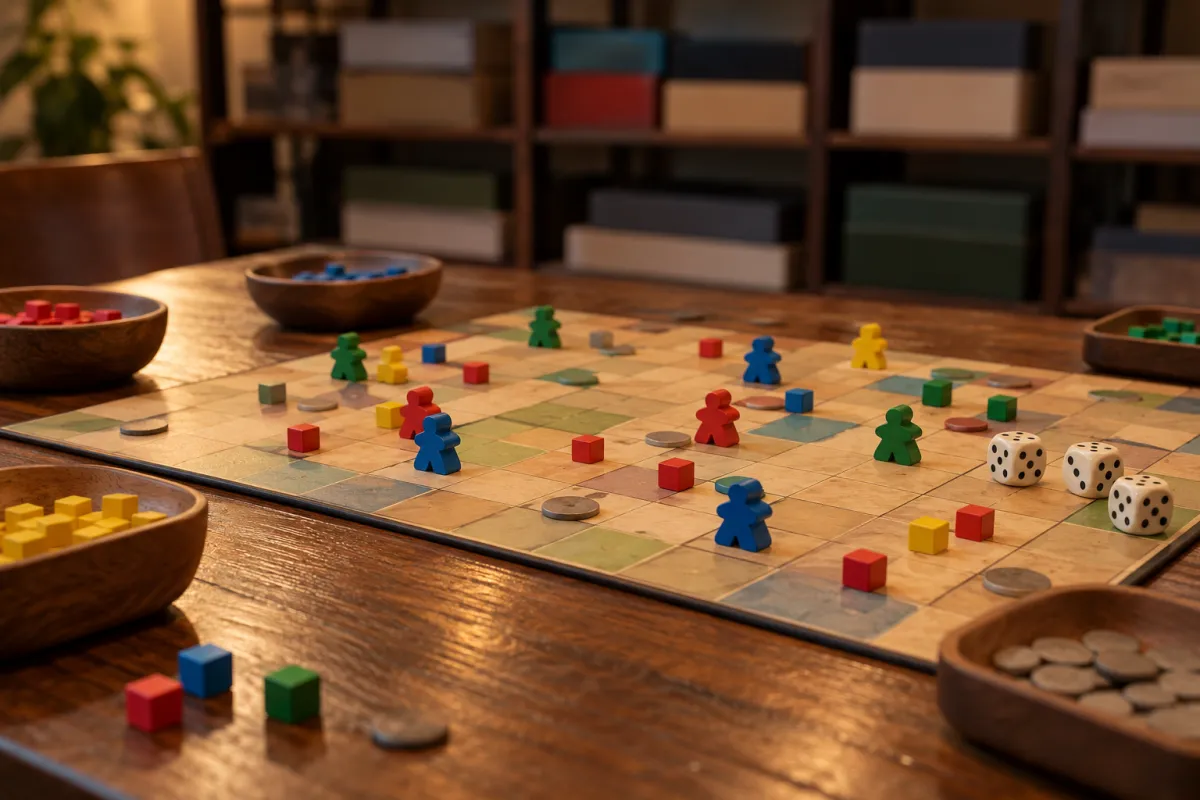
Board game groups Malta: who meets and where
There is no national register or governing body for informal board game groups in Malta. Everything below is a community, a club or a venue, not an official organisation. Most sessions are announced on Meetup, Reddit and the groups’ own social pages, so check dates there.
Boardgames in Sliema
Boardgames in Sliema is usually the first group newcomers hear about. It is described as a very active community where locals and expats gather to play tabletop games. It holds regular meetups where you can bring your own games or join whatever is already on the table. Joining is typically free, but you are expected to buy a drink or a snack from the host venue as a thank you. Many new arrivals rent in and around Sliema, so for a lot of people this is a walk rather than a bus ride.
Pandamonium, Qormi
Pandamonium is a dedicated board game shop and club space with tables set aside for playing. It regularly runs board game evenings, learn-to-play wargame sessions and Dungeons & Dragons adventures. If you have always wanted to try a roleplaying game but never had a group, a shop that runs beginner sessions is the least intimidating way in. Qormi is inland, so plan your bus home before you leave.
W.A.R.S., Floriana
W.A.R.S. is a long-standing non-profit club in Floriana. It centres on miniatures, wargames such as Warhammer, historical wargames and roleplaying games, and it has a physical board game library. It suits people who like deeper, longer games and a club where you see the same people regularly. Ask how membership works on your first visit rather than assuming, because non-profit clubs set their own arrangements. Floriana sits right next to Valletta, so it is easy to reach from the main bus hub.
University of Malta: Institute of Digital Games
On the Msida campus, the University of Malta’s Institute of Digital Games has a game library with both console and board games for students. It also hosts public gaming events and collaborative board game sessions. The institute’s circle has real tabletop credentials too: the Maltese studio Mighty Boards was founded by university faculty and alumni and has earned international recognition. Students should ask at the institute about upcoming events. Everyone else can watch for the public events.
PlayUp Malta
PlayUp Malta is a community organisation that runs casual board game events and tabletop RPG sessions. The focus is on relaxed, social play rather than competition. It makes a good second group once you are comfortable in one scene, because overlapping groups is how your circle grows.
Valletta Design Cluster
The Valletta Design Cluster is a public creative space that often hosts open-door public gaming events, such as its community Game On board game sessions. It is a cultural venue rather than a shop or members’ club. That makes it a comfortable first outing if you worry about walking into a room where everyone already knows each other.
For younger students: Junior College Board Game Club
The University of Malta’s Ġ.F. Abela Junior College has an official Board Game Club. It runs structured units on board game culture, mechanics, prototyping and game design. The club is only for enrolled JC students, not open to the public, but it shows how seriously tabletop games are taken here.
Which group fits you?
All of these are welcoming, but they feel quite different. Use this table to choose your first two. Two is the right number: one may not click, and a backup keeps you from giving up.
| Group | Area | What you will play | Best for | Where to check dates |
|---|---|---|---|---|
| Boardgames in Sliema | Sliema | Open tables, bring-your-own games | First outing, meeting locals and expats | Meetup, Reddit, group page |
| Pandamonium | Qormi | Board games, learn-to-play wargames, D&D | Trying RPGs, buying your first game | Shop’s own pages |
| W.A.R.S. | Floriana | Miniatures, wargames, RPGs, board game library | A deeper hobby and a regular club | Ask the club directly |
| Institute of Digital Games | Msida campus | Board and digital games, public events | Students, design-curious players | University event listings |
| PlayUp Malta | Varies | Casual board games, tabletop RPGs | Relaxed social play | Organisation’s announcements |
| Valletta Design Cluster | Valletta | Community Game On sessions | Nervous first-timers | Venue’s events listings |
My usual advice: if you live near Sliema or Valletta, start with the Sliema meetup or a Design Cluster session. Add Pandamonium or W.A.R.S. once you know whether you prefer light party games or longer strategy and roleplaying. If you are a student, the institute is the obvious first stop because the walk is short and you will already share something with the people there.
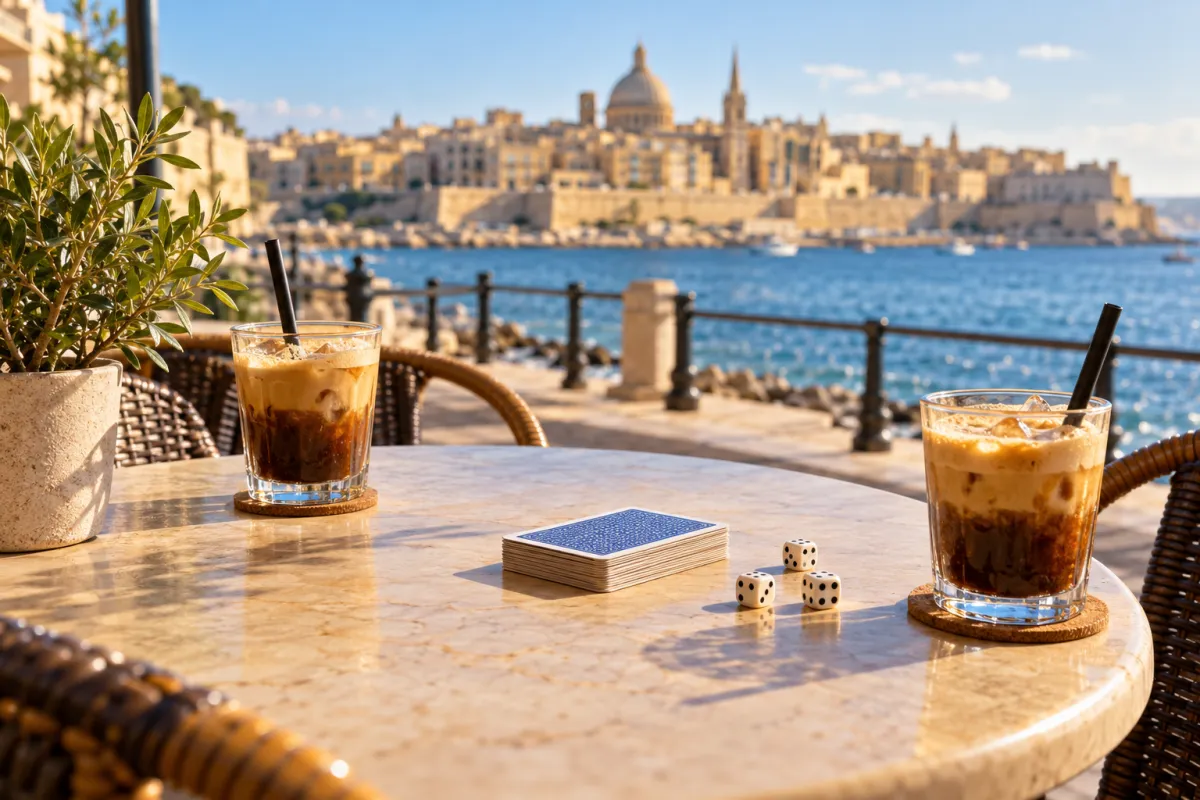
Your first session: what to expect and bring
The first visit is the hardest. After that you are a returning face. Here is what a typical first session looks like and how to make it easy on yourself.
What it feels like
It is quieter than a bar and more focused than a party. People are concentrating, and the chat comes in bursts during setup, between rounds and while packing away. Do not judge the group by the first twenty minutes of a game. Judge it by how people talk to you once it ends.
What to bring
- Nothing compulsory. Open groups have plenty of games on the table.
- Optionally, one light game you know well. Something quick to teach makes you useful straight away.
- A way to pay for a drink or snack. At venue-hosted meetups, buying something is the unwritten entry fee.
- Your route home. Check it in the Tallinja bus app before you leave, not when the session ends.
Etiquette that makes people want you back
- Say early that you are new and happy to be taught.
- Do not tell other players what to do on their turn unless they ask.
- Help pack the game away. It is the easiest way to start a conversation.
- Learn two or three names and use them when you say goodbye.
- Before you leave, ask “Are you coming next time?” It sets up your second visit.
Language: English is fine, a few Maltese words help
English is one of Malta’s two official languages, so mixed groups play in English. Even so, a few Maltese words go a long way with local players and show that you plan to stay a while. Start with Bonġu (good morning), Grazzi (thank you), Kif inti? (how are you?) and Saħħa (cheers, or goodbye). Our guide to learning Maltese with courses, apps and useful phrases goes further if you catch the bug.
Three weekly plan examples
These are personal templates, not group schedules. Replace the days with whenever your chosen groups actually meet. The structure is what matters: one anchor session, one small follow-up and one rest day.
Plan 1: Remote worker living in Sliema
- Monday: Check the latest Boardgames in Sliema post and RSVP if the group uses Meetup.
- Tuesday to Wednesday: Normal work days. Look up which game is popular in the group and watch a short rules video so you are not starting from zero.
- Session day: Go, stay until the last game finishes, and help pack away.
- Weekend: Suggest a daytime coffee or a seafront walk to the one person you got on with best. Keep it in a public place.
- Sunday: Rest. Do not try to fill every evening in your first weeks.
Plan 2: University student in Msida
- Early week: Check the Institute of Digital Games for public events or board game sessions and bring a classmate.
- Midweek: Suggest a quick card game in a campus common area or your residence lounge after lectures.
- Weekend: If a Game On session is on at the Valletta Design Cluster, go with someone from your course. Valletta is an easy trip from campus.
- End of week: Write down the names you learned and who you want to see again.
Plan 3: Introvert who would rather start small
- One event only: Pick a single public-venue session this week. Choose the Design Cluster or a shop like Pandamonium, where the space is designed for games.
- Arrive early: The room is quieter while tables are being set up, and it is easier to join one table before groups form.
- Give yourself permission to leave: Play one game. If you are tired, say thank you and go. That still counts.
- Follow up once: Send one message to one person afterwards. That is your whole social target for the week.
If you have not chosen where to rent yet, living close to one of these groups is a reasonable tiebreaker. Our guide to Malta’s areas, rents and bus links covers the commute side honestly, including the parts where the bus is slower than the map suggests.
First 30 days social checklist
Print this out or copy it into your notes. The aim is not to become a gamer. The aim is to leave your first month with a few familiar faces and at least one standing plan.
Week 1: Set up
- Pick two groups from the table above.
- Follow their pages on Meetup, Reddit or social media.
- Install the Tallinja app and save your route to each venue.
- Learn the four Maltese phrases above.
Week 2: First visit
- Attend your first session and tell people you are new.
- Buy a drink or snack if the group meets at a venue.
- Learn three names.
- Ask one person if they will be at the next session.
Week 3: Repeat
- Go back to the same group. The second visit is where recognition starts.
- Try your second group if the first did not click.
- Suggest one small daytime plan, such as a coffee or a walk, to someone you met.
Week 4: Widen the circle
- Offer to teach a game you know at your group.
- Invite two people to a small game at a public café.
- Join one non-gaming activity so your social life does not depend on a single hobby.
- Review the month: who do you want to see again, and when?
If the first weeks feel lonelier than you expected, that is normal, and it usually passes. Our first-month survival guide for moving to Malta alone covers the practical and emotional side of those early weeks.
Beyond the table: clubs, associations and volunteering
Board games are an excellent first door. Still, the strongest social lives I have seen in Malta rest on two or three overlapping circles, not one. When your gaming group is on a break, you want somewhere else to be.
Malta clubs and associations
Malta has a dense web of clubs and associations: sports clubs, hobby societies, the band clubs at the heart of village life, and expat networks. Our round-up of the expat community groups, forums and clubs that exist in Malta lists the ones we have checked. A good rule is to pair one expat-heavy group with one locally rooted one, so you are not only meeting people who might leave next year.
Volunteering in Malta for expats, the low-key version
Volunteering in Malta for expats does not have to mean a formal programme. In the tabletop world, the most valued volunteers are the people who teach games to newcomers, arrive early to set up tables and stay to pack away. Non-profit clubs like W.A.R.S. depend on members who help out, so ask what is needed. Being useful is one of the quickest routes from “the new person” to “one of us”.
Meeting Maltese players
Tabletop groups are one of the few places where locals and newcomers mix on equal terms, because everyone is learning the same rules. If you want more ways out of the expat bubble, read our guide on how to meet Maltese people beyond the expat crowd.
Meeting new people safely
Board game groups are generally relaxed and friendly. Still, any time you meet people you do not know yet, the same sensible habits apply:
- Meet in a public place. Shops, cafés, cultural spaces and club rooms are ideal. Leave home games until you know people.
- Tell a friend. Send someone the venue name and roughly when you expect to leave.
- Have your own way home. Check your bus in Tallinja beforehand, or keep a ride-hailing app ready, so you never depend on someone you have just met.
- Leave if you feel uncomfortable. You do not owe anyone an explanation. “I have to head off” is enough.
- Share personal details slowly. A first name and a messaging contact are plenty at the start.
None of this is meant to put you off. It simply lets you relax and enjoy the game, which is the whole point.
Once you have been back to the same table a few times, you will notice the shift. People save you a seat, ask how your week went, and suggest a game outside the regular session. That is when board games stop being a hobby and start being your social life in Malta.
Want to turn this into an actual plan? MeetNow is a free app for meeting people in person: a host posts a plan at a public place, says who pays (host pays, split, pay your own or free) and picks who joins. It is live on the web and works in your browser, starting in Malta. The Android app is on Google Play; the iPhone app is not in the App Store yet. Open MeetNow and see the plans posted in Malta.
Frequently asked questions
Are board game groups in Malta free to join?
Many are. The Boardgames in Sliema meetups are typically free, and buying a drink or snack from the host venue is the expected thank you. Shops and non-profit clubs such as Pandamonium and W.A.R.S. set their own arrangements, so ask about any costs or membership on your first visit.
Do I need to bring my own games?
No. Open groups usually have plenty of games on the table, and W.A.R.S. even keeps a physical board game library. Bringing one light game you know well is a nice bonus, though, because it gives you something to teach.
Are the sessions in English?
Mixed groups of locals and expats generally play in English, which is one of Malta’s two official languages. Learning a few Maltese words such as Bonġu, Grazzi and Saħħa is still a friendly touch that local players appreciate.
I am an introvert. Will a board game group work for me?
It is one of the best options for introverts, because the game gives structure to the conversation and nobody expects you to work the room. Arrive early when the room is quieter, play one game, and leave whenever you like. Going back a second time matters more than how long you stay.
Can I join University of Malta game events if I am not a student?
The Institute of Digital Games on the Msida campus has a game library for students and also hosts public gaming events and collaborative board game sessions. Check the university’s event listings to see which events are open to the public.
How do I find out when the next session is?
No central register covers informal board game groups in Malta. Sessions are announced on Meetup, Reddit and each group’s or venue’s own pages. Follow two groups and check their latest post before every visit, because dates and venues can change.