Sliema and St Julian’s sit side by side on the same stretch of Malta’s north-east coast. They share Balluta Bay as an informal border and many of the same buses, yet the two towns feel noticeably different once you live in them. If you are comparing Sliema vs St Julians for expats, rent is rarely the deciding factor, because both sit in the same top price bracket. What separates them is noise, hills, how close you are to Paceville and whether a harbour ferry to Valletta is part of your week.
This guide is for people choosing a first flat or room: remote workers, English-school students, new hires and couples arriving with a few suitcases. It covers sourced rent ranges, the neighbourhood pockets inside each town, transport, the paperwork that depends on your lease, daily costs and a viewing checklist you can keep on your phone while you walk around.
If you are still deciding whether Malta itself is right for you, start with our step-by-step guide to moving to Malta. Come back here when your shortlist is down to these two towns.
Sliema vs St Julians for expats: the short version
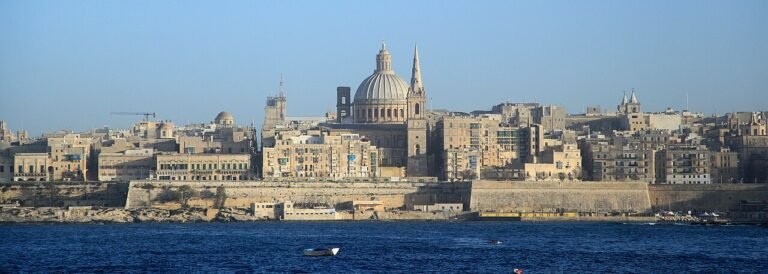
Think of the two towns as one continuous coastal strip with different characters along it. Sliema is the more residential of the pair: a long promenade, shopping streets, older townhouses squeezed between newer blocks, and a harbour front facing Valletta. St Julian’s is a mix of small bays, hotels, offices and the Paceville entertainment district, with quieter residential streets climbing up towards Swieqi.
| Factor | Sliema | St Julian’s |
|---|---|---|
| Overall feel | Busy residential town with a seafront promenade and shopping streets | Bays, hotels, offices and the Paceville district, plus quieter upper streets |
| Evening noise | Steady traffic on the front; most side streets calm | Calm pockets, but streets near Paceville and St George’s Bay can be loud late at weekends |
| Terrain | Flat along the front, steep streets inland | Hilly away from the bays, especially towards Swieqi |
| Getting to Valletta | Bus, or harbour ferry from the Ferries area | Bus, or walk or bus to Sliema for the ferry |
| Rent level | Top bracket nationally | Top bracket nationally |
| Often suits | Remote workers, couples, people who want walkable errands | People working locally, those who want bays and a livelier street life |
That last row is a tendency, not a rule. Plenty of quiet-loving professionals live happily in upper St Julian’s, and plenty of students share flats on noisy Sliema streets. The building and the street matter more than the town name on the lease.

Neighbourhood pockets compared
Landlords and agents advertise “Sliema” and “St Julian’s” loosely. A flat listed as St Julian’s might be a two-minute walk from Paceville or a quiet street near the Swieqi border. Learn the pockets before you book viewings.
| Town | Vibe | Rent position | Bus and ferry links | |
|---|---|---|---|---|
| The Strand and Sliema Ferries | Sliema | Harbour-facing front, shops, views across to Valletta | Upper end of the cluster for harbour views | Many buses along the front; the Valletta ferry leaves from here |
| Tower Road seafront | Sliema | Promenade, joggers, sea air, constant traffic | Upper end, especially sea-facing units | Frequent buses along the coast road |
| Inland Sliema | Sliema | Residential, older townhouses and blocks, steep streets | Often lower than seafront equivalents | Walk down to the front for most buses |
| Balluta Bay | Border of both | Small bay, cafés, central for both towns | Upper end for sea-facing units | Coast-road buses; short walk to Spinola Bay |
| Spinola Bay | St Julian’s | Fishing boats, restaurants, busy promenade | Upper end | Coast-road buses |
| Paceville and St George’s Bay | St Julian’s | Entertainment district, hotels, a sandy bay; loud at weekends | Varies widely; short lets are common | Several routes; Tallinja on Demand operates locally |
| Upper St Julian’s towards Swieqi | St Julian’s | Quieter residential streets, steep roads | Often better value per room, though premium villas exist | Fewer stops; on-demand service is useful |
Rent positions are relative, based on listing portals, last checked May 2026.
For the wider picture, including Gżira, Msida, Swieqi and areas further north, see our guide to where to live in Malta.
Rent in Sliema and St Julian’s: what the figures say
Both towns, together with neighbouring Gżira and Msida, form the core of the Northern Harbour region, which has the highest density of rental contracts in Malta (Housing Authority). In practice this means more choice than anywhere else on the island, but also more competition for good flats and very little reason for landlords to drop prices.
| Property type | Typical monthly range (Sliema and St Julian’s) | Source |
|---|---|---|
| 1-bedroom apartment | €1,100 to €1,600+ | Housing Authority |
| 2-bedroom apartment | €1,500 to €2,400+ | Housing Authority |
Last checked May 2026. Ranges are benchmarks, not quotes; individual listings vary.
At the top end, contracts above €2,000 a month are mostly concentrated in Sliema, St Julian’s and Swieqi (Housing Authority). If your budget is at that level, you will have the best choice here. If it is well below the ranges above, a room in a shared flat is the realistic route, and our guide to shared apartments in Malta covers room prices, leases and common scams.
How to compare two flats fairly
- Price per bedroom, not headline rent. A slightly pricier two-bed shared with a flatmate can beat a cramped one-bed.
- What is included. Ask whether utilities, internet and building maintenance are in the rent or billed separately.
- Air conditioning. Count the units and ask who pays for servicing. Summer comfort and winter heating both depend on them.
- Lift and stairs. Older Sliema blocks often have no lift. Fine with a backpack, less fine with a weekly shop.
- Sea view premium. A view is lovely, but you pay for it every month. Decide how much it is worth to you before viewing.
Deposits
Get the deposit amount, what it covers and the conditions for returning it written into the lease. Never transfer money for a flat you have not viewed in person or by a live video call with the actual landlord or agent, and be wary of anyone who pushes you to pay a deposit before a contract exists. Photograph every room, every appliance and any existing damage on move-in day, and email the photos to the landlord so the date is on record.
What daily life feels like in each town
Living in Sliema
Sliema works well for people who like to walk everywhere. Pharmacies, small grocers, banks, gyms, phone shops and cafés are rarely more than a few minutes away, and the promenade gives you a flat route for running or evening walks. The harbour side has views across to Valletta, and the ferry makes a trip to the capital feel like part of the day rather than a commute.
The trade-offs are traffic, a lot of construction, and parking that ranges from difficult to impossible. Inland streets get steep quickly, and older buildings can be damp in winter. Our full guide to living in Sliema goes deeper into daily life, pros and cons.
Living in St Julian’s
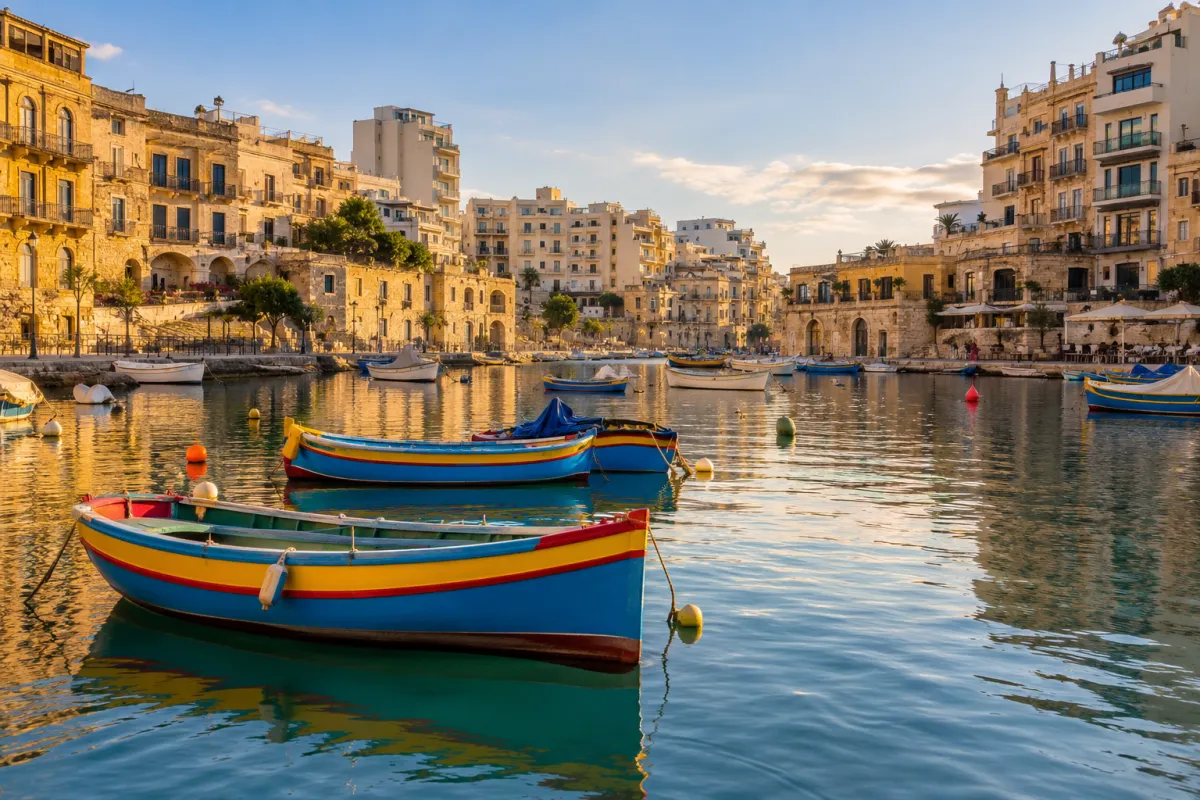
St Julian’s is really several places sharing one name. Around Balluta and Spinola Bay it feels like a seaside town, with fishing boats, restaurants and a promenade that links straight into Sliema. Around Paceville and St George’s Bay it is hotels, a sandy beach and an entertainment district that is busy late at weekends. Higher up, towards Swieqi, it becomes quiet and residential, with steep roads and more modern apartment blocks.
Many offices are based in and around St Julian’s, so a lot of newcomers choose it to walk to work. The catch is that the same street can feel peaceful on a Tuesday and very different on a Saturday, depending on how close it is to Paceville.
Buses, ferries and getting around
Neither town requires a car, and in both you will often be quicker on foot than in traffic. Both are served by the Malta Public Transport bus network and the app-based Tallinja on Demand service, which frequently operates in Sliema, St Julian’s, San Ġwann and Swieqi (Malta Public Transport). The coast road carries many routes, so a seafront address usually gives you more bus options than an inland one.
Sliema’s clear advantage is the harbour ferry across Marsamxett Harbour to Valletta. If you work, study or spend weekends in the capital, it is a calm alternative to sitting in traffic. From St Julian’s you can walk along the promenade to the Sliema ferry landing, which is a pleasant way to start a Valletta day.
Transport tips for newcomers
- Check routes and timetables on the official Malta Public Transport website or app rather than relying on old screenshots in expat groups.
- Before signing a lease, walk from the flat to your nearest stop and time it, including any hill.
- Buses on the coast road can fill up in summer. Allow extra time for anything with a fixed start.
- Ride-hailing apps are widely used for late returns and airport runs.
- If you plan to drive, ask about parking before you sign, not after.
Noise, construction and other practicalities
Construction is the noise most newcomers underestimate. Both towns are being rebuilt block by block, and a quiet street can gain a building site next door within months. Look up and down the street on viewing day: empty old townhouses and hoardings are a hint of what is coming.
Evening noise is more predictable. In Sliema the main sources are traffic on the front and the occasional restaurant terrace. In St Julian’s, streets close to Paceville and St George’s Bay can be loud late at weekends, especially in summer. If a flat you like is near there, go back on a Friday or Saturday evening before you commit.
Damp is the other practical issue. Older, ground-floor and inland flats in both towns can suffer in winter, when humidity is high and most homes have no central heating. Look for mould in wardrobe corners, behind furniture and around window frames, and ask whether a dehumidifier is provided.
Lease registration and residency paperwork
This is where the choice of flat can affect much more than your rent. Under the Private Residential Leases Act, private residential leases in places like Sliema and St Julian’s must be registered digitally with the Housing Authority within 10 days of the lease starting (Cap. 604, Laws of Malta). Registration is the landlord’s responsibility, but you should ask for confirmation once it is done.
It matters because, for expats, digital nomads and third-country nationals, a registered lease is typically a prerequisite for registering an address or applying for a residence card (Housing Authority). A landlord who refuses to register, or offers a lower rent “without a contract”, can leave you unable to complete residency steps.
Single permit Malta for non-EU nationals
If you are a non-EU national coming to work, you will probably hear about the single permit, which combines work and residence authorisation. Rules, required documents and processing details change, so this guide does not give legal or visa advice. Check current requirements on the official Identity Malta website or through servizz.gov.mt, and ask your employer what they handle. Keep in mind that your address paperwork usually depends on that registered lease, so sort housing early.
Paperwork checklist for your lease
- Written lease with both parties’ names, the rent, the deposit and the duration
- Confirmation the landlord has registered the lease with the Housing Authority
- A copy of the signed lease saved as a PDF and backed up online
- An inventory with dated photos
- Clarity on how utility bills are paid and in whose name the account is
Grocery prices and everyday costs
Grocery prices in Malta catch many newcomers off guard, because a lot of food is imported and small neighbourhood shops in central areas tend to charge more than larger supermarkets. In both Sliema and St Julian’s, convenience is expensive: the corner shop is perfect for milk and bread, but a weekly shop at a bigger supermarket usually works out cheaper. Many residents do one larger shop by bus or with a friend’s car and top up locally.
The same pattern applies to eating out. Seafront cafés and restaurants price for tourists, while places a street or two inland are often better value. Electricity is another variable, and air conditioning use in summer and for heating in winter can change your bills a lot. For full, dated figures on food, bills and transport, see our cost of living in Malta guide.
Which town fits which newcomer
Remote workers
Sliema usually wins for remote workers. Its errands are walkable, the promenade gives you a break from the laptop, and the ferry makes Valletta easy. Ask landlords about internet speed and whether you can choose your own provider.
New hires working in St Julian’s
If your office is in St Julian’s, living within walking distance saves a lot of traffic time. Upper St Julian’s or the Balluta side usually gives you a quieter home without a long walk.
English-school students
Many language schools are in or near these two towns, so both work. A shared flat in inland Sliema or upper St Julian’s tends to be more affordable than a seafront studio. Light sleepers should avoid streets right next to Paceville.
Couples and people arriving with a partner
Couples often prefer Sliema or the Balluta and Spinola Bay side of St Julian’s, where a two-bedroom flat gives room for a home office. Compare a few two-bed flats against the benchmark ranges above before deciding.
People who want peace and quiet above all
Honestly, neither town is truly quiet. If silence matters most, look at Swieqi, other areas further from the coast, or Gozo, which our area guide compares in detail.
Viewing checklist and what to pack
Before you sign: viewing checklist
- Walk the street at different times, including a weekend evening
- Look for building sites, hoardings or empty townhouses next door
- Check for damp and mould in corners, wardrobes and bathrooms
- Run the taps and shower to test water pressure and hot water
- Count the air conditioning units and test each one
- Ask about internet, the provider and whether it is included
- Confirm the lease will be registered with the Housing Authority
- Agree the deposit, its conditions and the notice period in writing
- Time the walk to your nearest bus stop, and to the ferry if you are in Sliema
- Check whether there is a lift if you are above the first floor
- Ask how bins and recycling are collected in the building
What to pack moving to Malta
What to pack moving to Malta depends on the season, but a few items help in both towns. Bring light, breathable clothes for a long, hot summer, plus a proper warm layer and indoor slippers, because stone flats without central heating feel cold in winter. Malta uses the same three-pin plugs as the UK, so bring adapters if your devices use a different type. Pack sun protection, comfortable walking shoes for hills and uneven pavements, and original copies of key documents such as your passport, contracts and certificates, with scans saved online. Larger items such as a dehumidifier or fan are easy to buy locally. Our guide to Malta weather by month helps you pack for your arrival season.
Settling in and meeting people
The upside of living in either town is that you are rarely far from other newcomers. Language schools, coworking spaces, gyms, sports clubs and volunteering groups give you natural places to meet people, and the promenade between the two towns is where many friendships start, on walks, runs and swims.
Arriving alone is common here, and it is normal to feel lonely in the first weeks. Saying yes to a coffee, a walk or a sports session in the first month makes a big difference. When you meet someone new, keep it simple and safe: choose a public place, tell a friend where you are going, arrange your own way home, and leave if anything feels uncomfortable.
Want to turn this into an actual plan? MeetNow is a free app for meeting people in person: a host posts a plan at a public place, says who pays (host pays, split, pay your own or free) and picks who joins. It is live on the web and works in your browser, starting in Malta. The Android app is on Google Play; the iPhone app is not in the App Store yet. Open MeetNow and see the plans posted in Malta.
Whichever town you choose, give yourself a few weeks before judging it. Many people who start in Sliema move to St Julian’s for work, or the other way round, once they know which streets suit them. It is a short walk either way.
Frequently asked questions
Is Sliema or St Julian’s cheaper to rent in?
Neither is consistently cheaper. The Housing Authority places both in the same top rent bracket, so price differences come down to the street, the building, sea views and condition. Inland Sliema and upper St Julian’s often offer better value than seafront flats in either town.
Which is quieter, Sliema or St Julian’s?
Most side streets in Sliema are calmer in the evening, although the seafront has constant traffic. St Julian’s has quiet residential pockets, especially towards Swieqi, but streets near Paceville and St George’s Bay can be loud late at weekends. Visit any shortlisted flat on a weekend evening before signing.
Do I need a registered lease to get a residence card in Malta?
For expats, digital nomads and third-country nationals, a lease registered with the Housing Authority is typically a prerequisite for address registration and residence card applications. Landlords must register private residential leases within 10 days of the start date, so ask for confirmation and check current requirements with Identity Malta.
Can I live in Sliema or St Julian’s without a car?
Yes. Both towns are walkable and served by Malta Public Transport buses and Tallinja on Demand, and Sliema has a harbour ferry to Valletta. Parking is difficult in both, so many residents never own a car here.
Where can non-EU nationals find single permit information?
Check the official Identity Malta website or servizz.gov.mt for current single permit requirements, and ask your employer which steps they handle. This guide does not give visa or legal advice, because rules and documents change.
What should I pack when moving to Sliema or St Julian’s?
Pack light summer clothes, a warm layer and slippers for cold stone flats in winter, sun protection, walking shoes for hills, plug adapters if your devices do not use UK-style three-pin plugs, and originals plus scans of key documents. Bulky items like fans and dehumidifiers are easy to buy locally.