Most newcomers who have a rough first few months in Malta did not forget anything dramatic. They did things in the wrong order. They signed a lease before checking which bus reached the office, or they flew in without the original documents a residence application asks for. This moving to Malta checklist puts every step in sequence, from the paperwork you gather at home to the admin you finish in your first month on the island.
I have watched flatmates, colleagues and friends make the move many times, and the pattern barely changes. The island is small and the bureaucracy is manageable. Appointments, bank accounts and decent flats still take longer than people expect. Build in slack, keep copies of everything and treat the official portals as the final word on any rule.
This is a practical organiser, not legal or immigration advice. For your right to live or work in Malta, rely on the government sources linked below. Rules can change between the day you plan and the day you land.
How to use this moving to Malta checklist
Treat the move as four stages, not one giant to-do list. Each stage has a clear finish line. Try not to rush into the next stage until the previous one is mostly closed. Our step-by-step guide to moving to Malta covers the background to each step in more depth. This page is the condensed moving to Malta checklist you can print in your head and tick off.
| Stage | When | Main tasks | You are done when |
|---|---|---|---|
| Stage one | Before you book flights | Permit route, original documents, police conduct certificate | You know which permit or registration applies to you and the originals are in one folder |
| Stage two | The month before you fly | Temporary stay, budget, money access, packing | You have a bed for your first weeks and funds for a deposit |
| Stage three | First week in Malta | SIM card, bus card, flat viewings, neighbourhood walks | You have a local number and a shortlist of areas |
| Stage four | First month in Malta | Residence application, bank account, healthcare, licence, lease registration | Your paperwork is submitted and your lease is registered |
Keep one physical folder and one cloud folder with the same contents. Officials, landlords, banks and employers often ask for the same document in slightly different forms: an original, a copy or a certified copy. When everything sits in one place, a ten-minute request does not turn into a lost afternoon.

Stage one: documents and permits before you go
Your permit situation decides almost everything else. It affects how fast you can start work, what your landlord needs to see and which office you deal with. Work out which group you belong to before you commit to flights or a lease.
EU and EEA citizens
You can move freely, but if you stay for longer than 3 months you are legally required to register your residence and get a residence document from Identità (gov.mt). For that you will usually need proof of address in Malta, proof of what you are doing here (a job, self-employment, studies or your own means) and your national ID or passport. The exact list depends on your situation, so check the current requirements on identitymalta.com before you start the application. Proof of address is the step people underestimate. A short holiday let rarely works as proof of address, so finding a proper flat comes early in this moving to Malta checklist.
Non-EU nationals moving for a job
Most third-country nationals relocating for standard employment need a Single Permit. This is one card issued by Identità that combines work and residence authorisation, as the government portal explains. The employer normally starts the process. Ask HR early which documents they need from you, in what format, and whether anything must be legalised or translated. Do not start work, or sign a long lease, on the assumption that approval is a formality.
Non-EU remote workers
If you work remotely for an employer or clients outside Malta, the Nomad Residence Permit is the usual route. Applicants need a minimum gross yearly income of €42,000 and pay a non-refundable application fee of €300 per person (Residency Malta Agency). Renewals depend on proving physical presence in Malta for a cumulative period of at least 5 months over the preceding 12 months (Residency Malta Agency). Keep flight records, rental receipts and utility bills from the start. Figures in this section were last checked May 2026; confirm them on the official site before you apply.
Your document checklist
- Passport or national ID with plenty of validity left, plus clear scans of every page with stamps.
- Birth certificate, and a marriage or partnership certificate if family is joining you.
- Degree and professional certificates, which employers and some regulated professions ask to see.
- Police conduct certificate from your home country, if your route needs one. Certificates submitted to the Maltese authorities are typically required to be less than 6 months old (gov.mt), so do not order yours too early.
- Employment contract, offer letter or proof of income, depending on your route.
- Health insurance documents, or your European Health Insurance Card if you are an EU citizen.
- Recent bank statements, useful for permits, landlords and banks.
- Passport-style photos, a small stack. Several offices still ask for them.
- Driving licence and, if you plan to exchange it, any extra papers your licensing authority issues.
Practical tip: ask the issuing authority at home whether your documents need an apostille or certified translation for use abroad. Sorting this from Malta usually means couriers, embassy appointments and weeks of waiting.
Stage two: the month before you fly
This stage is about landing softly. You want somewhere to sleep, access to your money and a realistic budget. You do not need the perfect flat yet.
- Book temporary accommodation for a few weeks. A short let or guesthouse gives you time to view flats in person. Signing a long lease from abroad, unseen, is the most common expensive mistake I see.
- Build a first-month budget. Plan for a deposit, the first month’s rent, possibly an agency fee, groceries, transport and setup costs such as bedding and kitchen basics. Our cost of living in Malta guide breaks down rent, food and bills with dated figures.
- Make sure you can reach your money. Opening a Maltese bank account can take a while, so bring a card that works abroad with low fees and a backup card kept separately.
- Tell your home bank and tax office that you are moving. Ask how your tax residence changes. A Malta-based adviser can help once you arrive.
- Pack for the climate and the plugs. Malta uses the same three-pin plugs as the UK. Summers are hot and humid, and older flats can feel damp and cold in winter, so pack layers.
- Bring prescriptions and a doctor’s letter for any regular medication, with the generic names written out.
- Decide whether you will drive. Many people manage with buses, ferries and walking at first. If you need a car for work, read the licence section below before you sell anything at home.
Choosing an area before you sign a lease
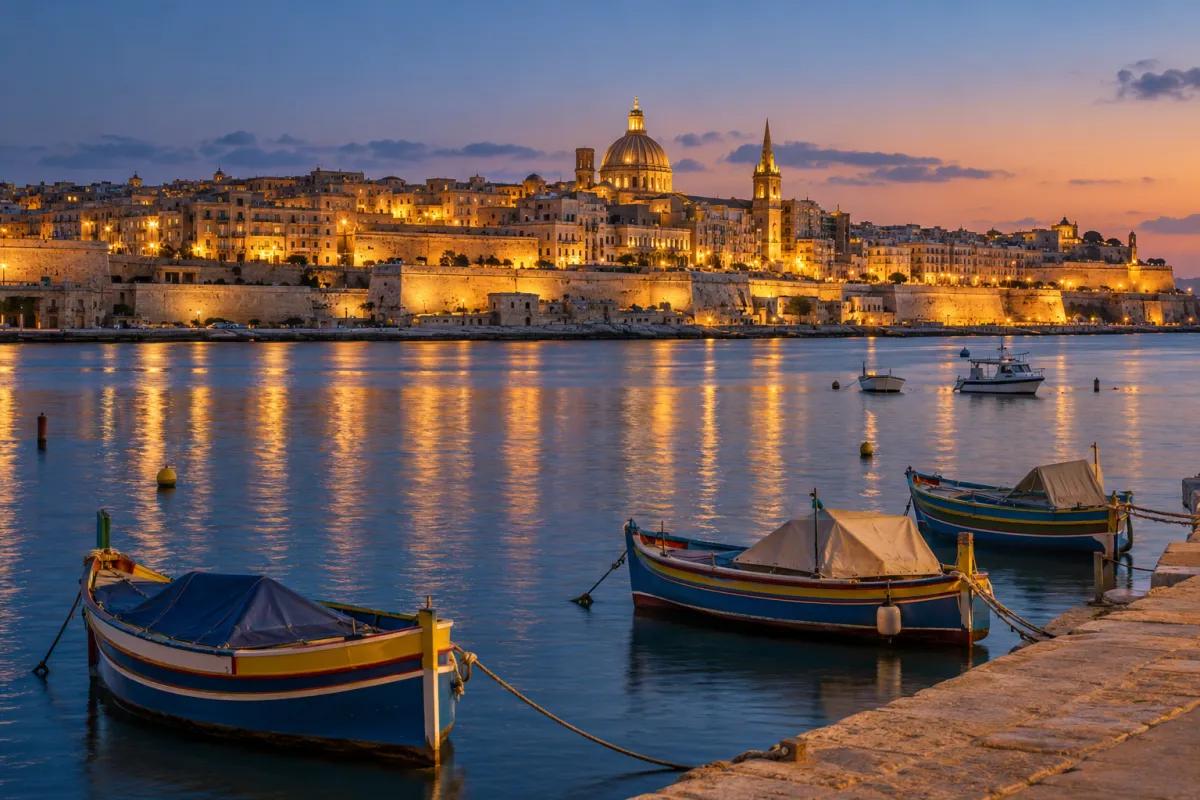
Area choice shapes your daily life here more than almost anything else. It decides your commute, your noise level and how easy it is to meet people. Base the choice on where you will work or study and which bus routes serve it, not on photos of the sea. The table below gives a qualitative overview. For dated rent ranges, see our guide to where to live in Malta and compare current listings on the main property portals.
| Area | Relative rent level | Vibe | Bus and ferry links |
|---|---|---|---|
| Sliema | Higher | Seafront promenade, shops and cafés, busy, construction noise on some streets | Frequent buses along the coast and inland; ferry to Valletta |
| Gżira | Mid, usually a step below Sliema | Practical and residential, walkable to Sliema and the Ta’ Xbiex marina | On main routes into Valletta and along the coast |
| St Julian’s | Higher | Lively, with hotels and offices; check street noise near the entertainment district | Good coastal connections towards Sliema and Valletta |
| Swieqi | Mid to higher | Quieter, residential, hilly, popular with professionals | Fewer direct routes; many people walk down to St Julian’s |
| Msida | Mid | Student-heavy, near the University of Malta and Mater Dei Hospital | Many routes pass through; heavy traffic around the main junctions |
| Valletta | Higher, limited stock | Historic, quieter in the evening, lots of steps, older buildings | Main bus terminus; ferries to Sliema and the Three Cities |
| St Paul’s Bay, Buġibba, Qawra | Lower | Seaside, mixed community, busy in summer, calmer in winter | Direct routes to Valletta and the central coast; long rides at peak times |
| Marsaskala | Lower | Quiet bay in the south-east with a local, residential feel | Routes to Valletta; fewer direct links to the Sliema and St Julian’s business area |
| Gozo | Typically lowest | Rural, slower pace, small close-knit communities | Ferry to Malta plus a bus on each side |
Living in St Paul’s Bay
Living in St Paul’s Bay suits newcomers who want more space for their money and do not mind a longer commute. The area takes in Buġibba and Qawra and has a seafront, supermarkets and a large international community. In summer it gets crowded. Out of season it can feel very quiet. Before you sign, do the commute at the time you would really travel. A route that looks direct on a map can be slow when traffic builds up on the main roads. If you work remotely or in the north of the island, the trade-off often works well.
Living in Marsaskala
Living in Marsaskala appeals to people who want a calmer, more Maltese neighbourhood by the water, away from the Sliema and St Julian’s bustle. You will hear more Maltese in the shops, the promenade is good for walking and running, and the pace is noticeably slower. The catch is transport. If your office is in the central business areas, check the bus journey carefully, or budget for a car. It is a strong option for remote workers and for anyone working in the south or in Valletta.
Stage three: your first week on the island
The first week is for getting connected and seeing places in person. Resist signing anything big on day two because you feel pressure to settle.
- Get a local SIM card. GO, Epic and Melita all sell prepaid and contract plans. A local number makes landlords, employers and delivery drivers far more responsive.
- Sort your bus card. Get a tallinja card from Malta Public Transport. Residents can apply for a personalised card, which gives free travel on scheduled routes; check the current terms when you apply. Download the official journey planner as well.
- View flats in person in your shortlisted areas. Visit at different times: weekday mornings, evenings and weekends tell you a lot about noise, parking and construction.
- Walk your commute. Take the bus to your office or campus at the hour you would really travel.
- Find your nearest pharmacy, health centre and supermarket. Small errands are easier when you already know where things are.
- Start the bank account conversation. Ask your chosen bank exactly which documents they need. Many ask for proof of address and proof of employment or income, which you may only have later.
- Expect some culture shock. Shops may close for a long lunch in some towns, queues can feel informal and paperwork sometimes still needs a physical visit. None of this is a crisis; it is part of the adjustment.
Stage four: admin to finish in your first month
Once you have a proper address, the remaining items on your moving to Malta checklist start to unlock one another. A registered lease supports your residence application. Your residence document helps with banking. Banking makes salary payments and bills simpler.
- Submit your residence registration or permit application through Identità. Use identitymalta.com and servizz.gov.mt for current forms, fees and appointment booking.
- Confirm your employment registration and tax number. Employers usually handle the formal registration of your job. Ask HR to confirm it is done and to tell you your tax and social security details.
- Open your bank account once you have the documents the bank asked for.
- Register with a GP or understand your healthcare cover. Our guide to healthcare in Malta for expats explains public health centres, Mater Dei Hospital and private insurance.
- Set up utilities if they are not included in your rent, and check whether the account is in your name or the landlord’s.
- Make sure your lease is registered. Private residential leases must be registered with the Housing Authority. Ask your landlord for confirmation.
How to exchange a foreign driving licence in Malta
If you plan to exchange a foreign driving licence in Malta, how you do it depends on where your licence was issued. Licences from EU and EEA countries are generally recognised. Licences from other countries may need to be exchanged, and whether a direct exchange is possible depends on the issuing country. Transport Malta handles licensing. Before your appointment, check their current list of eligible countries, required documents and fees. Usually you bring your original licence, your ID or residence document and a photo, and sometimes extra items such as a medical certificate. Read our guide to driving in Malta for licence conversion, parking and running costs. Do not let your home licence lapse while you wait.
Rental scams and deposits: the checks that protect you
Rental scams in Malta follow predictable scripts. Newcomers searching from abroad, under time pressure, are the usual targets. Most scams fall apart once you insist on seeing the flat and the paperwork in person.
- Never pay a deposit for a flat you have not seen, either in person or on a live video call with someone physically inside the property.
- Be wary of prices that look much lower than similar listings in the same street. That gap is often the hook.
- Watch for “I’m abroad, send the money and I’ll post the keys” stories, and for pressure to pay through money-transfer services.
- Ask who the landlord is and make sure the person signing has the right to rent the property out.
- Get a written lease that states the rent, deposit, notice period and who pays which bills, and confirm that it will be registered.
- Do an inventory with photos and video on move-in day, and email it to the landlord so there is a dated record.
- Always get a receipt for the deposit and every rent payment. Bank transfers leave the clearest trail.
If you are starting in a shared flat, read our guide to shared apartments in Malta. It covers room leases, flatmate agreements and the scams that target room-seekers.
Building a social life from scratch
Plenty of people move here alone, and the admin can make the first weeks feel isolating. Put social contact on the same list as your bank account, because it matters just as much for settling in. Join a sports club, a language exchange, a volunteering group or a coworking space. Say yes to colleagues’ lunch invitations. Go to the same café often enough that people recognise you. Malta is small, so one good connection often leads to several more.
When you meet someone new, stick to simple safety habits. Meet in a public place. Tell a friend where you are going and who you are meeting. Plan your own way home. Leave if anything feels uncomfortable. These habits cost nothing and let you stay open to new people without taking needless risks.
Want to turn this into an actual plan? MeetNow is a free app for meeting people in person: a host posts a plan at a public place, says who pays (host pays, split, pay your own or free) and picks who joins. It is live on the web and works in your browser, starting in Malta. The Android app is on Google Play; the iPhone app is not in the App Store yet. Open MeetNow and see the plans posted in Malta.
Frequently asked questions
What should be on a moving to Malta checklist?
A complete checklist covers four stages. First, confirm your permit or registration route and gather original documents. Second, arrange temporary housing, a budget and access to money before you fly. Third, get a SIM card, a bus card and flat viewings sorted in your first week. Fourth, finish your residence application, bank account, healthcare, licence exchange and lease registration in your first month.
Do EU citizens need to register when moving to Malta?
Yes. EU and EEA citizens who stay beyond the initial period set by law must register their residence and get a residence document from Identità. Check the current requirements on gov.mt and identitymalta.com, because you will usually need proof of address and proof of what you are doing in Malta.
How long should I book temporary accommodation for?
Book enough time to view flats in person without pressure, usually a few weeks rather than a few days. That gives you room to compare areas, check commutes at real travel times and avoid signing a long lease unseen.
Can I exchange a foreign driving licence in Malta?
It depends on where your licence was issued. EU and EEA licences are generally recognised, while licences from other countries may need to be exchanged, and only some countries qualify for a direct exchange. Transport Malta handles licensing, so check its current list of eligible countries and required documents before you book an appointment.
Is living in St Paul’s Bay a good idea for newcomers?
It can be, especially if you want more space for your money and you work remotely or in the north. The area has a seafront, shops and a large international community. Test the bus commute at peak times before you sign, because journeys to the central business areas can be long.
What is living in Marsaskala like for expats?
Marsaskala is a quieter, more local bay in the south-east with a slower pace and a pleasant promenade. It suits remote workers and people working in the south or in Valletta. If your job is in Sliema or St Julian’s, check the bus connections carefully or budget for a car.