Short answer: rent prices in Malta in 2026 depend far more on the locality than on anything else. The latest registered-lease figures from the Housing Authority put the median two-bedroom rent at €1,500 a month in St Julian’s and €850 in St Paul’s Bay, with parts of Gozo around €800 (first half of 2025, the most recent release available when I checked in November 2026). A room in a shared flat is the realistic starting point for many newcomers: about a third of new shared contracts were €200 to €299 per tenant a month. Rents rose only 1.7% in 2025, below the EU average, but the gap between the harbour towns and everywhere else is wide. Below you will find the figures by area, what moves a price up or down, how rent compares with take-home pay, and what Budget 2027 does (and does not) change.
I have rented in three Maltese localities and helped more friends flat-hunt than I can count. The pattern never changes: people arrive with a number from a listing site in their head, discover that the seafront flats are a different market, and then work out that two streets inland, or one bus stop further, changes the budget completely. This guide is the rent-only companion to our full cost of living in Malta breakdown.
Rent prices in Malta 2026 at a glance
The table below gathers the registered-lease figures the Housing Authority has published, with the period each one covers. I have kept the period on every row on purpose: Malta does not yet publish a single, monthly, official rent index by town, and mixing years without saying so is how rent articles end up misleading people.
| Area | Property | Figure | Type of figure | Period |
|---|---|---|---|---|
| St Julian’s | 2-bedroom flat | €1,500 a month (middle half €1,200 to €1,800) | Median, registered leases | H1 2025 |
| St Paul’s Bay (incl. Buġibba, Qawra) | 2-bedroom flat | €850 a month (middle half €700 to €1,000) | Median, registered leases | H1 2025 |
| Gozo: Żebbuġ (incl. Marsalforn) and Munxar (incl. Xlendi) | 2-bedroom flat | €800 a month | Median, registered leases | H1 2025 |
| St Paul’s Bay | 1-bedroom flat | €650 a month | Median, registered leases | H1 2024 |
| St Paul’s Bay | 3-bedroom flat | €900 a month | Median, registered leases | H1 2024 |
| Sliema, Gżira, San Ġwann, Swieqi, Ta’ Xbiex | 2-bedroom flat | above €1,000 a month | Average, registered leases | H1 2024 |
| Birżebbuġa, Marsa | 2-bedroom flat | about €700 a month | Average, registered leases | H1 2024 |
| Shared flats (all Malta) | Room, per tenant | about a third of new contracts at €200 to €299 a month | Distribution of new contracts | H1 2025 |
Last checked November 2026. Sources: Housing Authority rent calculator and dashboard as reported by Business Now for the first half of 2025 and the first half of 2024. Medians and averages are not the same thing; a median is the middle lease, an average can be pulled up by a few expensive ones.
Two things jump out. First, the St Julian’s median is close to double the St Paul’s Bay one for the same flat size, even though both are on the same island-wide bus network. Second, the spread inside a single town is large: in St Julian’s, a quarter of new two-bedroom leases were at €1,200 or less and a quarter at €1,800 or more. Which street, which floor and whether you can see the sea matters as much as the town name.
Where the figures come from (and why listings look higher)
Every private residential lease in Malta has to be registered with the Housing Authority, and the Authority publishes what those leases say through its rent calculator and dashboard, which it updates roughly every six months. That makes it the most useful public source: it shows what tenants actually signed for, not what landlords hoped to get.
Some context from the same releases helps you read the numbers:
- 70,589 active rental contracts were registered at the end of June 2025, 7.5% more than a year earlier.
- Most new contracts run for one year, and nearly a fifth of active contracts run for three years or more.
- More than 90% of renewals in the first half of 2025 kept the same rent. If you are already in a flat and get on with your landlord, a renewal is often cheaper than moving.
- Shared-space contracts make up about 13% of active leases.
- A Housing Authority survey found that about 90% of tenants are foreign-born, which is why the rental market feels so international.
- St Paul’s Bay has the most active contracts (over 10,000), followed by Sliema, Msida, Marsaskala, St Julian’s, Gżira and Birkirkara.
Why asking prices on portals are higher
Listing sites show what is on the market this week, and the flats that sit unlet longest are often the overpriced ones, so they stay visible. Registered figures also include older leases renewed at the same rent and flats let quietly to friends of friends. In practice, expect advertised prices for a decent flat in the harbour towns to sit above the medians in the table. Use the registered figures to judge whether an ad is reasonable, and use the ads to see what is available now.
Why a 2025 figure is still the right one to use
Rents in Malta rose 1.7% in 2025, against an EU average of 3.1%, according to Euronews figures reported by Business Now on 15 April 2026. With growth at that pace, a first-half-2025 median is still a fair anchor in late 2026, as long as you add a little and remember that the best-located flats can move faster than the average.
Rent by area: harbour, north, south and Gozo
For newcomers, Malta’s rental market splits into four broad zones. The registered-lease figures above, plus years of watching friends’ leases, give a fair picture of each.
| Zone | Typical localities | Where rents sit | Trade-off |
|---|---|---|---|
| Harbour towns | St Julian’s, Sliema, Gżira, Swieqi, Ta’ Xbiex, San Ġwann | Highest on the island; 2-bed averages above €1,000 in H1 2024, St Julian’s median €1,500 in H1 2025 | Walkable, most offices, cafés and promenades; traffic, construction noise and summer crowds |
| Central and university belt | Msida, Birkirkara, Mosta, Naxxar | Usually below the harbour towns | Close to the university and Mater Dei; less sea, more traffic |
| North | St Paul’s Bay, Buġibba, Qawra, Mellieħa | St Paul’s Bay 2-bed median €850 (H1 2025) | More space for the money, beaches; longer commute to the harbour |
| South | Birżebbuġa, Marsa, Marsaskala, Żabbar | Some of the lowest: Birżebbuġa and Marsa around €700 for a 2-bed (H1 2024) | Quieter, more Maltese; fewer English-speaking social options nearby |
| Gozo | Victoria (Rabat), Xagħra, Nadur, Marsalforn, Xlendi | Żebbuġ and Munxar 2-bed median €800 (H1 2025) | Slower pace and space; the ferry shapes your week |
Last checked November 2026. Locality figures from the Housing Authority via Business Now; “where rents sit” for central localities is a relative description, not a published figure.
If you want the vibe, the bus links and who each area suits, our guide on where to live in Malta by area covers each town in detail. This page sticks to the money.
The harbour towns
Sliema, St Julian’s and Gżira are where most newcomers want to live and where most of them start. They have the offices, the promenade, the ferries to Valletta and the highest density of other people who have just arrived. That convenience is priced in. St Julian’s had the highest two-bedroom average in the first-half-2024 figures (€1,350), and its median rose to €1,500 in the 2025 release. Swieqi and San Ġwann, a short walk uphill, can offer more space for similar money.
The north
St Paul’s Bay is the single biggest rental market in Malta, with more than 10,000 active contracts. That supply keeps rents lower than in the harbour towns: a median of €850 for a two-bedroom flat in the 2025 figures. Many people who work in Sliema or St Julian’s live here and take the bus; budget for a longer commute in summer traffic.
The south
Birżebbuġa and Marsa recorded some of the lowest two-bedroom averages in Malta, around €700 a month in the first half of 2024, and several other southern and inland localities averaged around €800. These are more Maltese places to live, with fewer English-language groups on the doorstep, which matters if you are arriving alone.
Rooms in shared flats
For a single newcomer on an ordinary salary, a room in a shared flat is the most common first home. In the first half of 2025, about a third of newly registered shared-space contracts were in the €200 to €299 per tenant bracket. That bracket is the cheapest common one, not the typical price for a nice room in Sliema: better-located rooms, larger rooms, private bathrooms and short stays all cost more.
Things that change the price of a room:
- Bills included or not. A room advertised at a higher price with bills included can work out cheaper than a lower rent plus a share of summer electricity.
- Number of flatmates. A three-bedroom flat shared by three is a very different life from a large house shared by eight.
- Contract type. Since 1 September 2024 the law no longer treats long-term and shared-space contracts as separate categories, but you should still get a written contract registered with the Housing Authority in your name.
- Location. The same room is cheaper in Msida or Birkirkara than in Sliema.
Room listings are also where most rental scams happen. Before you send money for a room, read our guide to finding a shared apartment in Malta safely, which covers deposits, viewings and the red flags.
What pushes rent up or down
Within any one town, these are the factors that move the number you will actually pay:
- Seafront and views. A sea view or a front-line building is a separate market from the same-size flat two streets back. If you can live without the view, walk inland before you sign.
- Floor and lift. Higher floors with a lift and a terrace cost more; ground-floor flats (often called maisonettes) can be cheaper but darker and damper in winter.
- Season. Demand rises before the academic year starts and through the summer. Winter is usually a calmer time to negotiate.
- Lease length. Short lets cost more per month than a one-year lease. Offering a longer lease can be a bargaining point.
- Furnishing and air conditioning. Most rentals come furnished. Check that the air conditioners work, whether they also heat, and the energy label of the fridge; they all show up in your bill.
- Bills arrangements. Ask whether you will be registered on the ARMS electricity and water account, which affects which tariff you pay. Being registered on the account usually means the cheaper residential rate.
- Agency or direct. Some agents charge the tenant a fee, often linked to the monthly rent. Ask what it is before the viewing, not after you have fallen for the flat.
- Pets and parking. Both can narrow your options and lift the price, especially in the harbour towns where parking is scarce.
Before you sign: a five-point rent check
- Compare the asking rent with the registered median for that town and flat size.
- Ask what the summer and winter electricity bills were for the previous tenant.
- Get the deposit amount, and how and when it is returned, in writing.
- Confirm the lease will be registered with the Housing Authority.
- Photograph every room and appliance on the day you move in.
Cheaper alternatives: inland, south and Gozo
If the harbour medians are out of reach, you have three realistic options before you start compromising on safety or contracts:
Go one town inland
Msida, Birkirkara, San Ġwann and Swieqi are all a short bus ride or walk from the Sliema and St Julian’s offices. They have less sea and more traffic, but often more space for the money. Many people I know started in a Sliema room and moved one town inland for a whole flat at a similar total cost.
Go north or south
St Paul’s Bay, Buġibba and Qawra have the largest rental supply on the island. The south (Birżebbuġa, Marsaskala, Żabbar) is cheaper again, but think honestly about the commute and about how you will meet people if most of your social life will be in the harbour area.
Consider Gozo
The registered two-bedroom median in the Żebbuġ and Munxar localities of Gozo was €800 in the first half of 2025. Gozo suits remote workers and people who want a slower pace; it suits daily commuters to the harbour less well. Our guide to living in Gozo as an expat covers the ferry, the costs and what daily life is like.

Rent vs salary: how much of your pay goes on rent
Rent only makes sense next to what you take home. Here is a worked example using the 2026 single tax rates and the Class 1 social security cap, for a full-time employee earning €30,000 a year, a common offer for office roles:
- Income tax on single rates (0% up to €12,000, 15% from €12,001 to €16,000, 25% from €16,001 to €60,000): about €4,100.
- Class 1 social security at 10%, capped at €55.93 a week in 2026: about €2,908.
- Take-home pay: about €22,990 a year, or roughly €1,916 a month.
| Housing choice | Rent (registered figure) | Share of €1,916 net a month |
|---|---|---|
| Room in a shared flat, cheapest common bracket | €200 to €299 | about 10% to 16% |
| 2-bed flat in St Paul’s Bay, median | €850 | about 44% |
| 2-bed flat in Gozo (Żebbuġ/Munxar), median | €800 | about 42% |
| 2-bed flat in St Julian’s, median | €1,500 | about 78% |
Worked example, last checked November 2026: 2026 single tax rates and Class 1 social security cap; rents from the Housing Authority (H1 2025). Not tax advice; bills, food and transport come on top.
The rule I give friends is simple: keep rent at or below about a third of take-home pay. On €1,916 a month, that is roughly €640, which in practice means a room in the harbour area or a whole flat further out, and sharing a two-bedroom flat with a partner or a friend if you want St Julian’s. For sector-by-sector pay, see our guide to the average salary in Malta.
What about the minimum wage?
The 2026 adult minimum wage is €229.44 a week, about €994 a month gross. Against the figures above, a full-time minimum-wage worker can realistically afford a room in a shared flat and little else, which is why so many people on lower wages share larger houses or live outside the harbour towns. Budget 2027 raises the minimum wage by €10.41 a week from January, including the cost-of-living adjustment.
2027 outlook and Budget 2027
Malta’s Budget for 2027 was presented on 26 October 2026. On housing, KPMG Malta’s summary of the measures says existing housing and property incentive schemes are renewed for 2027; it lists no new rent controls, tenant subsidies or lease-law changes. The measures that do touch a renter’s monthly budget are elsewhere:
- Cost-of-living adjustment (COLA) of €6.41 a week added to wages from January 2027.
- Energy subsidies retained, with around €400 million set aside to stabilise fuel and energy prices, so electricity tariffs should not jump because of the budget.
- Transport: free public transport is kept for Maltese citizens, EU citizens resident in Malta and long-term residents, while third-country nationals no longer benefit from free transport. If you are a non-EU newcomer, add bus costs to your rent maths when you compare a cheaper town with a long commute.
Source: KPMG Malta, Budget 2027 highlights, October 2026. Measures apply once enacted; last checked November 2026.
What does that mean for rents next year? Nobody publishes a reliable forecast, and I will not invent one. What the data does show is that growth was modest in 2025 (1.7%), that most renewals keep the same rent, and that the harbour towns remain the most expensive. If you are planning a 2027 move, budget from the registered medians, add a margin for the best-located flats, and check the Housing Authority’s next six-monthly release before you sign.
Where you live shapes your social life
This is the part rent tables leave out. When you choose a town in Malta, you are also choosing how easy it will be to see people. In the harbour towns you can walk to a café, a gym, the promenade or a language exchange; a cheaper flat in the far north or south can mean that every evening plan starts with a long bus ride, and many newcomers quietly stop going.
That does not mean you must pay St Julian’s prices. It means you should factor the social cost into the rent maths:
- Share at first. A flat-share is the cheapest housing and the fastest way to have someone to eat with in your first month. Flatmates introduce you to their friends.
- Live near your routine. Pick a town on the same bus line as your office, gym or class, so after-work plans are easy.
- Meet your street. Say hello to neighbours, use the local grocer and the same café; in Maltese towns that familiarity builds faster than you would expect.
- Make one plan a week. A coffee, a swim or a shared dinner, with who pays agreed in advance, keeps social life affordable. Our step-by-step guide to moving to Malta puts finding a flat and building a routine in the same first month for that reason.
When you meet someone new, keep the first plan in a public place, tell a friend where you are going, make your own way home and leave if anything feels off.

Frequently asked questions (FAQ)
What is the average rent in Malta in 2026?
The most recent registered-lease figures (first half of 2025) put the median two-bedroom rent at €1,500 a month in St Julian’s, €850 in St Paul’s Bay and €800 in parts of Gozo. Rents grew 1.7% in 2025, so these remain a fair guide in 2026. Asking prices on listing sites are usually higher.
How much is a room in a shared flat in Malta?
About a third of newly registered shared contracts in the first half of 2025 were €200 to €299 per tenant a month. Rooms in Sliema or St Julian’s, larger rooms and rooms with a private bathroom cost more, so check whether bills are included when you compare.
Which is the most expensive area to rent in Malta?
St Julian’s has the highest registered two-bedroom rents on the main island, with a median of €1,500 a month in the first half of 2025. Sliema, Gżira, Swieqi, San Ġwann and Ta’ Xbiex also averaged above €1,000 for a two-bedroom flat in the first half of 2024.
Where is the cheapest rent in Malta?
Registered figures for the first half of 2024 showed Birżebbuġa and Marsa among the lowest, at around €700 a month for a two-bedroom flat, with several other southern and inland localities around €800. St Paul’s Bay and parts of Gozo are also well below the harbour towns.
Are rents in Malta still rising?
Slowly. Rents in Malta rose 1.7% in 2025, below the EU average of 3.1%, and more than 90% of lease renewals in the first half of 2025 kept the same rent. The best-located flats still move faster than the average.
How much of my salary should go on rent in Malta?
Aim for no more than about a third of take-home pay. On a €30,000 salary taxed at single rates, take-home pay is roughly €1,916 a month, so about €640 for rent: a room in the harbour area or a flat further out.
Did Budget 2027 change anything for renters?
Budget 2027, presented on 26 October 2026, renewed existing housing schemes but, according to KPMG Malta’s summary, introduced no new rent or tenant measures. Renters feel it through the €6.41 weekly COLA, retained energy subsidies and the change to free transport for third-country nationals.
Do I have to register my lease in Malta?
Private residential leases must be registered with the Housing Authority. Ask your landlord or agent for proof of registration, and make sure your name is on the contract. It also helps with residence and utility paperwork.
Want to turn this into an actual plan? MeetNow is a free app for meeting people in person: a host posts a plan at a public place, says who pays (host pays, split, pay your own or free) and picks who joins. It is live on the web and works in your browser, starting in Malta: open MeetNow and see the plans posted in Malta.
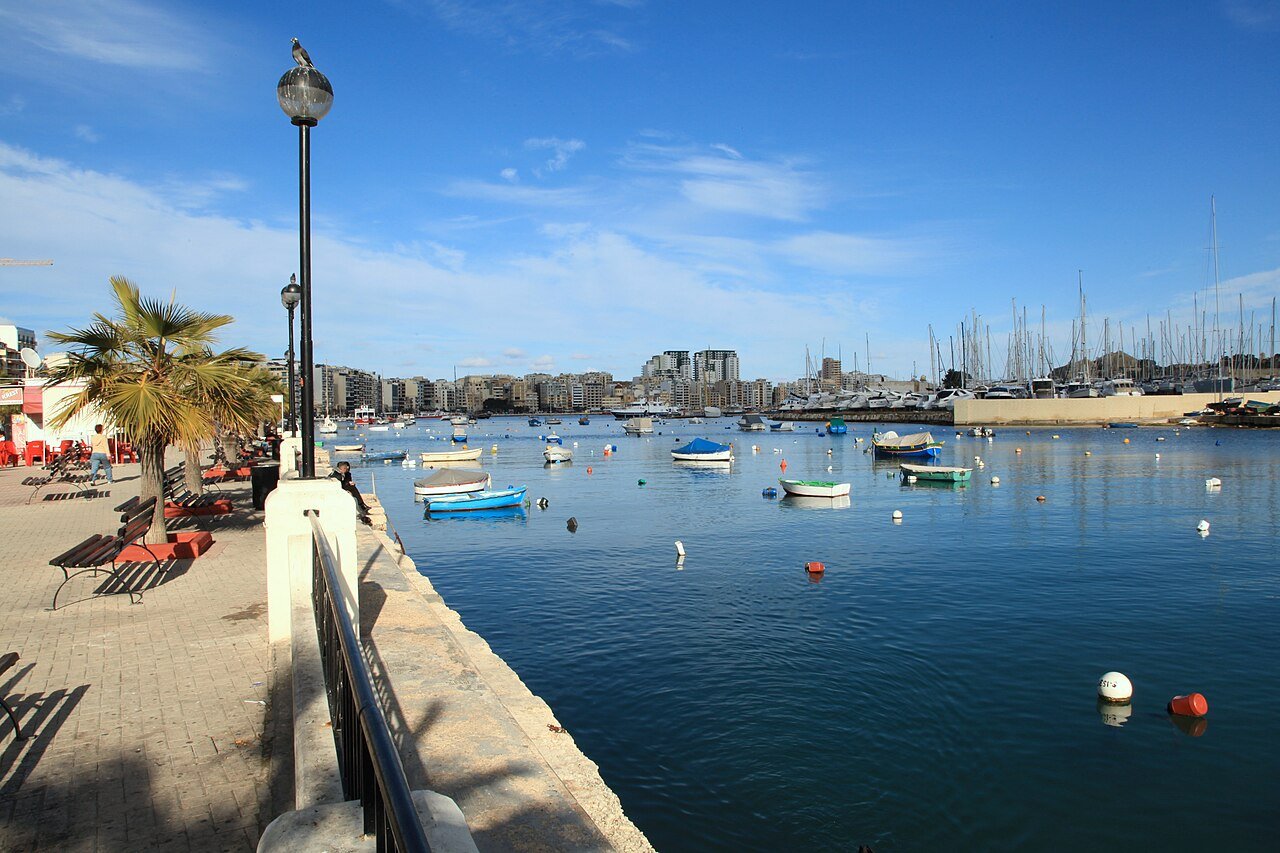
Featured photo: Triq ix-Xatt seafront in Gżira, by Frank Vincentz, CC BY-SA 3.0, via Wikimedia Commons.