Asking how much money do I need to move to Malta gets you three answers, not one. The first is what you spend before you have a key in your hand. The second is what one normal month costs you. The third is how many months you can cover before income arrives. Most newcomers who struggle in their first season did not underestimate the rent. They underestimated the gap between paying a deposit and receiving a first salary.
I have watched friends arrive with a suitcase and a spreadsheet, and others arrive with a vague figure from a forum thread. The spreadsheet people sleep better. This guide gives you that spreadsheet. It lists every cost line you should expect, when each one hits your bank account, and where to find a current figure. Prices on the islands move fast, so a number copied from a two-year-old post can mislead you badly.
One note before you start. I only quote figures that come from official or primary sources, and each one is linked in the same sentence. For rent, groceries and bills, I show you how to build your own current number rather than repeat a guess.
How much money do I need to move to Malta: the three-bucket method
Forget the single magic number. Split your move into three buckets and price each one separately. You will end up with a figure that fits your situation, not a stranger’s.
- Bucket one: arrival costs. These are one-off payments: travel, a temporary room, the rental deposit, the first month’s rent, and the kettle, bedding and pans you will need in week one.
- Bucket two: monthly run-rate. This is what an ordinary month costs once you are settled: rent, utilities, food, transport, phone, insurance and a modest social budget.
- Bucket three: buffer months. This is the run-rate multiplied by the number of months you might be without income. Add a separate emergency line on top.
Your total is bucket one, plus bucket two multiplied by the months in bucket three, plus your emergency line. If you arrive with a signed job contract, bucket three shrinks. If you arrive to job-hunt, freelance or study, it grows. If you need a residence permit, the official rules may set a minimum that overrides your own sums. The nomad and student sections below cover those.
For a wider view of what life here costs once the boxes are unpacked, my cost of living in Malta breakdown goes line by line through food, bills and transport. The step-by-step moving to Malta checklist covers the order in which to tackle admin.
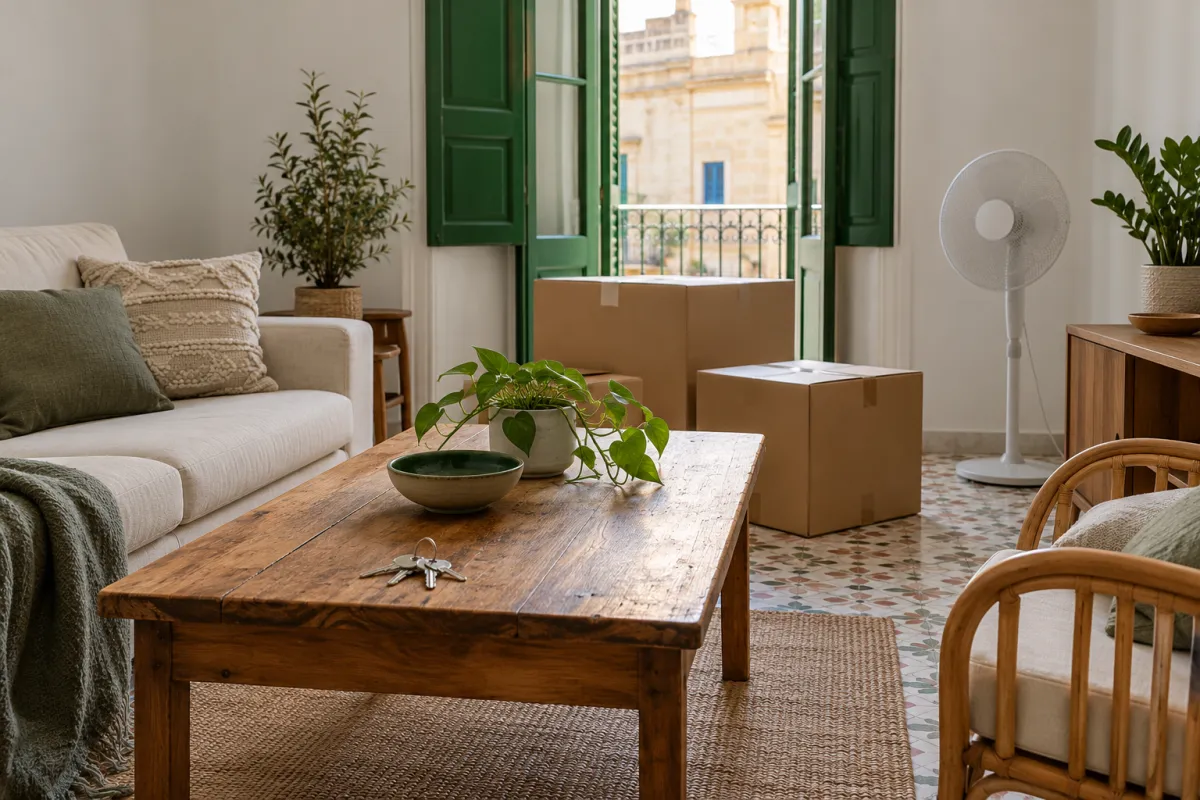
Bucket one: one-off arrival costs
This is the bucket people under-budget most. Nearly everything in it is due before you earn a cent locally. Use the table as a worksheet: fill in your own figure for each line from current quotes, not from memory.
| Cost item | When you pay it | How to price it accurately |
|---|---|---|
| Flight and extra baggage | Weeks before arrival | Price your actual baggage needs. Shipping boxes separately is sometimes cheaper than extra bags. |
| Temporary accommodation | On arrival, for the first weeks | Budget for longer than you think. Flat-hunting in person usually takes a few weeks. |
| Rental deposit | At lease signing | Ask the landlord or agent for the exact deposit in writing before viewing day. |
| First month’s rent | At lease signing | Lands at the same time as the deposit, so count both together. |
| Agency fee (if charged) | At lease signing | Ask upfront whether a fee applies and who pays it. Get the answer in writing. |
| Household setup | First week | Furnished flats still often lack bedding, towels, a decent pan or a fan for summer. |
| Phone SIM and top-up | First days | Compare local operators’ prepaid and contract offers on their own websites. |
| Public transport card | First week | Check current options with the public transport operator before you buy single fares for weeks. |
| Documents and admin | Before and after arrival | Photos, certified copies and translations add up. Check the official requirements for your route. |
| Health cover | Before or on arrival | Depends on your status. See the official guidance for your permit or entitlement. |
A practical tip from experience: deposit and first month’s rent land on the same day. They also land in the same week as setup costs and often a final payment on your temporary stay. That cluster is the moment your bank balance looks most frightening. Plan for it, and keep that money in an account you can reach instantly without international transfer delays.
Deposits and scams: protect the biggest cheque you will write
The deposit is usually the largest single payment of the move, which is why scammers target it. My rules, learned the hard way by people I know:
- Never pay a deposit for a flat you or someone you trust has not seen in person.
- Pay by traceable bank transfer to a named person or company, never in cash without a signed receipt.
- Insist on a written lease. Ask whether it will be registered with the Housing Authority, as private residential leases are required to be.
- Photograph every room, appliance and existing mark on move-in day, and email the photos to the landlord so they carry a date.
- Walk away from anyone who pressures you to pay before viewing because “other people are interested”.
If you are sharing, my guide to shared apartments in Malta, room prices, leases and scams goes deeper into what to check before you transfer anything.
Rent prices Malta 2026: how to get a real number
Rent is the line that decides your whole budget, so get it right. I am deliberately not quoting a rent figure here. Asking prices change with the season, the exact street and whether a flat has air conditioning, and I will not repeat numbers I cannot source. Instead, here is the method I give every friend who moves over.
- Pick two or three areas that match your commute, using the table below as a starting point.
- Track listings for two weeks on the main property portals. Note the asking price, size, furnishing, air conditioning and whether bills are included.
- Separate room prices from whole-flat prices. They are different markets, and mixing them will skew your average.
- Use the middle of your list, not the cheapest. The cheapest listings are often gone, misdescribed or not real.
- Add the cost of bills if they are not included. Ask how electricity and water will be charged before you sign.
| Area | Relative rent level | Vibe | Bus links |
|---|---|---|---|
| Sliema | Higher | Seafront promenade, busy, very walkable | Frequent buses and ferry to Valletta |
| St Julian’s | Higher | Lively, hotel and office district | Frequent buses along the coast road |
| Gżira | Mid | Residential, close to Sliema, marina views | On main routes towards Valletta and Sliema |
| Swieqi | Mid | Quieter residential streets, uphill from St Julian’s | Fewer routes. Check your exact street. |
| Msida | Mid to lower | Practical, student-heavy, near the university and hospital | Well served on routes to Valletta |
| Valletta | Higher | Historic capital, quiet after office hours | Main bus terminus |
| St Paul’s Bay | Lower | Seaside, mixed, longer commute | Direct but longer rides to the centre |
| Gozo | Lower | Slower pace, rural and coastal | Local buses plus ferry to Malta |
Relative levels reflect my general experience of the market and are a guide only; verify with current listings (last checked May 2026). For area-by-area detail, read where to live in Malta, with areas, rents and bus links.
Living in Msida: the practical middle ground
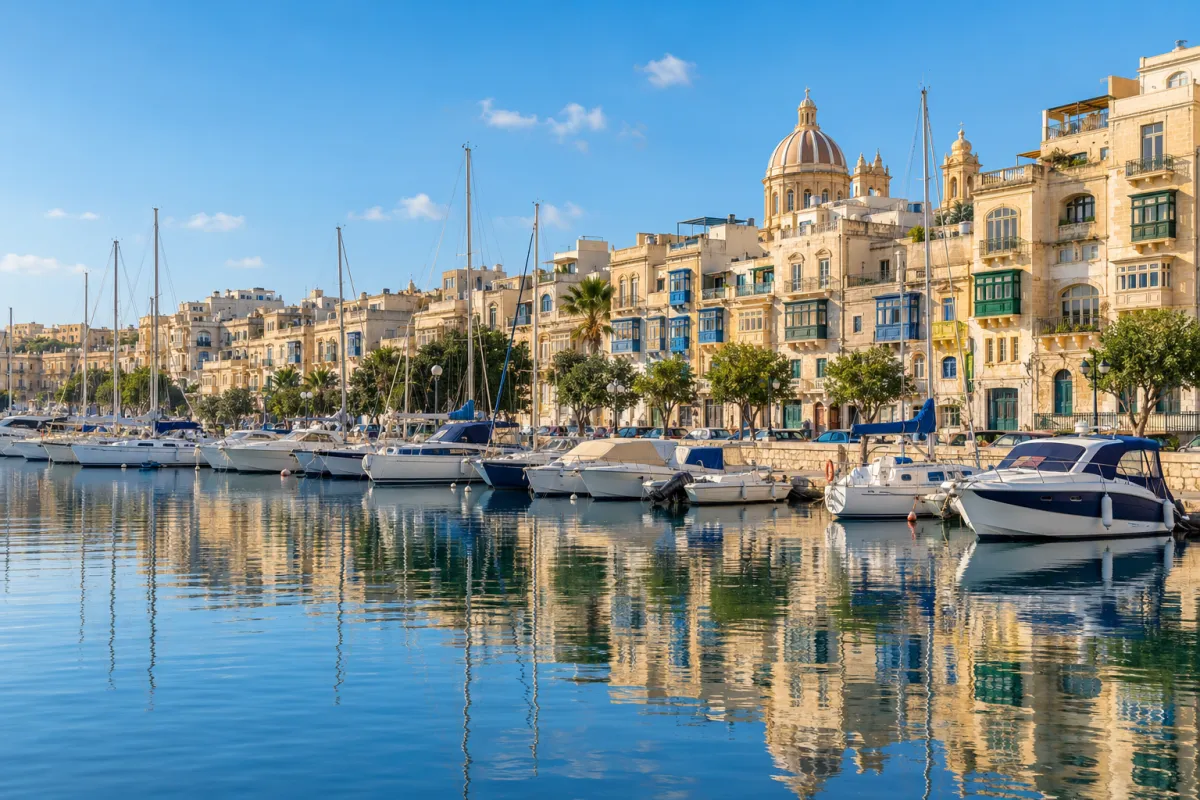
Living in Msida rarely appears on Instagram, and that is partly why it appeals to newcomers on a budget. It sits between the university, Mater Dei Hospital and Valletta, so commutes for students and healthcare workers can be short. The marina gives it a pleasant edge, and it has the everyday shops you need without the seafront premium of Sliema. The trade-offs: some streets are busy with traffic, and parts of the area can feel more functional than charming. If your job or course is nearby, price Msida listings alongside Gżira before you default to the famous names.
Bucket two: your monthly run-rate
Once you have a realistic rent figure, build the rest of the month around it. Be specific and be honest about your habits. A person who cooks most evenings and walks everywhere has a very different month from one who eats out and takes taxis.
- Rent from your two-week listing research.
- Electricity and water. Ask whether bills are in your name at the residential tariff or recharged by the landlord, and how. Summer air conditioning can swing this line noticeably.
- Internet, if not included in the rent.
- Groceries. Do one real shop at a supermarket near your flat in your first week and use the receipt as your baseline.
- Transport. Bus, the occasional ride-hailing trip, or car costs if you plan to drive.
- Phone plan.
- Health insurance or medical costs that apply to your status.
- Social and personal spending: coffee, a gym, a dive course, the odd dinner out. Budget for it. Pretending you will spend nothing is how budgets break.
- Irregular costs spread monthly: a flight home, a winter jacket, replacing the laptop charger you forgot.
Write this as one monthly figure. It is the number you will multiply in bucket three, so a small error here grows quickly.
The paperwork gap: your e-residence card appointment
Admin rarely costs a fortune in fees, but it can cost you time, and time without income is money. Many newcomers need to book an Identity Malta e-residence card appointment once their eligibility and documents are in order. Depending on demand, the wait between applying, attending and receiving your card can stretch longer than you expect. During that period, some practical steps such as certain banking or employment formalities may move slowly.
I do not give visa or legal advice, and the rules depend on your nationality and route. Check the current requirements, fees and booking process directly with Identità (Identity Malta), and use servizz.gov.mt for related government services. For budgeting, the takeaway is simple: do not plan your money as if the paperwork will be finished in your first week. Add a margin of weeks, and if you can, book your appointment as early as your eligibility allows.
Digital nomads: the income threshold
If you plan to live here on the Nomad Residence Permit, your budget has an official minimum. The Residency Malta Agency sets a gross yearly income threshold of €42,000, which works out to at least €3,500 gross per month (Residency Malta Agency).
| Requirement | What it means | Source (last checked May 2026) |
|---|---|---|
| Minimum gross income | €42,000 a year, €3,500 a month | residencymalta.gov.mt |
| Source of income | Remote work for employers or clients outside Malta | PwC |
The type of income matters as much as the amount. PwC’s summary of the scheme states that “income must be derived from remote work through telecommunications” (PwC). In practice that means employment with an overseas company, a remote shareholding or freelance work for non-Maltese clients, rather than a local job or passive income. Always confirm the current rules, documents and fees on the official site before you commit to a flight.
Remember that the threshold is an eligibility rule, not a budget. You still need bucket one in cash before your first month. My digital nomad Malta guide covers coworking and day-to-day costs for remote workers.
Students: proof of funds and tuition
Students from outside the EU usually have to show they can support themselves while they study. The required living funds depend on factors such as how long you stay and whether your accommodation is arranged and paid through your school or found privately. Check the current calculation with Identità’s Central Visa Unit and your school, as agency summaries can lag behind the official rules.
One point catches people out every year: tuition and living money are counted separately. The University of Malta’s guidance states that the daily living expense requirement “is exclusive of tuition fees” and that you must prove you have enough to cover both (University of Malta). Do not count money already earmarked for your course as living funds.
For students, housing choice affects both your proof-of-funds paperwork and your monthly run-rate. Compare residences, homestays and flatshares in my student accommodation Malta guide before you book.
Bucket three: the buffer
The buffer is what lets you say no. You can turn down a bad flat, a bad job offer or a flatmate situation that feels wrong, because you are not desperate. Here is how I size it.
If you arrive with a signed contract
Ask your employer when your first salary will actually be paid. If you start mid-month, your first payslip may be partial, or the payroll date may fall weeks after you start. Cover your run-rate until that date, plus a safety margin.
If you arrive to job-hunt or freelance
Be conservative. Interviews, notice periods at the new company and onboarding all take time. Cover several months of run-rate without assuming any income. If you find work quickly, the leftover money becomes your emergency fund rather than disappearing.
The emergency line
Keep a separate amount that you do not count in your monthly plan. It covers a last-minute flight home, a medical bill, a laptop repair or a deposit dispute when you move flats. Many people forget that the move-out deposit refund can take time. Meanwhile, the next landlord wants their deposit up front.
Moving budget checklist
Print this, or copy it into a spreadsheet, and fill in every line with a current figure from a real quote or listing.
- Flight and baggage, priced for your actual luggage
- Temporary accommodation for the first few weeks
- Rental deposit, confirmed in writing
- First month’s rent
- Agency fee, if any, confirmed in writing
- Household setup: bedding, towels, kitchen basics, fan or heater
- SIM card and first month of phone
- Transport card or first weeks of fares
- Documents: photos, certified copies, translations
- Permit or card fees from the official source for your route
- Health cover appropriate to your status
- Monthly run-rate, multiplied by your buffer months
- Separate emergency line
- For nomads: income evidence meeting the official threshold
- For students: proof of living funds plus tuition, counted separately
Cutting costs without cutting corners
There are sensible ways to make the move cheaper. None of them involves skipping the deposit checks.
- Share for the first lease. A room in a shared flat lowers both your deposit and your monthly rent while you learn the island.
- Look one area over. Gżira instead of Sliema, or Msida instead of St Julian’s, can lower rent while keeping a short commute.
- Do not buy a car in month one. Try the buses and walking first, then decide.
- Buy household basics second-hand. Departing expats regularly sell kitchen kits, fans and furniture cheaply.
- Build a social life that is not all restaurants. Sea swims, coastal walks, free cultural events and cooking at a friend’s flat are how many of us made friends without a big bill.
Meeting people when you arrive alone is part of settling in, and it does not have to be expensive. Plans where it is clear up front who pays make that easier, which is the idea behind MeetNow that works in your browser, starting in Malta (the Android app is on Google Play; the iPhone app is not in the App Store yet). Whatever route you use, follow the basics: meet in a public place, tell a friend where you are going, arrange your own way home, and leave if anything feels uncomfortable.
So, how much money do I need to move to Malta? Enough to cover bucket one in full, bucket two for your buffer months, and an emergency line you never plan to touch. Price each line from current sources and you will arrive calmer than most.
Want to turn this into an actual plan? MeetNow is a free app for meeting people in person: a host posts a plan at a public place, says who pays (host pays, split, pay your own or free) and picks who joins. It is live on the web and works in your browser, starting in Malta. The Android app is on Google Play; the iPhone app is not in the App Store yet. Open MeetNow and see the plans posted in Malta.
Frequently asked questions
How much money do I need to move to Malta as a single person?
There is no reliable single figure, because rent, habits and your income situation vary so much. Add your one-off arrival costs (temporary stay, deposit, first month’s rent, setup), then your monthly run-rate multiplied by the months you might go without income, plus a separate emergency fund. Price every line from current listings and quotes.
What income do I need for the Malta Nomad Residence Permit?
The Residency Malta Agency sets a gross yearly income threshold of €42,000, or at least €3,500 gross per month (Residency Malta Agency). The income must come from remote work for employers or clients outside Malta. Confirm the current rules on the official site before applying.
Do student living funds include tuition fees?
No. University of Malta guidance states that the daily living expense requirement is exclusive of tuition fees, so you must show enough money for both. Check the current living-funds calculation with Identità’s Central Visa Unit and your school.
When should I book my Identity Malta e-residence card appointment?
Book as soon as your eligibility and documents allow, and check the current process and fees on identitymalta.com. Appointment availability and card processing can take longer than newcomers expect, so budget for a few weeks in which some admin moves slowly.
Is living in Msida cheaper than living in Sliema?
Msida generally has a more practical, less premium feel than seafront Sliema. It is popular with students and hospital staff because of its location. Prices depend on the specific flat, so compare current listings in both areas over a couple of weeks before deciding.
How can I avoid losing my deposit to a rental scam?
Never pay for a property nobody you trust has viewed in person. Pay by traceable bank transfer, get a written lease and ask whether it will be registered with the Housing Authority. Photograph the flat on move-in day and email the photos to the landlord so they carry a date.