If you hold an EU, EEA or Swiss passport, you do not need a visa to move to Malta, but you do need paperwork once you stay beyond three months. The residence permit Malta for EU citizens process is really a registration. You tell the state that you live here, under which EU Treaty right and at which address, and Identità issues you an e-Residence document. It is free and it is done online. The part that trips most newcomers up is not the form at all. It is the lease.
I have watched friends sort this out in a relaxed couple of weeks, and others stay stuck for months because their landlord would not register the contract. This guide follows the order that actually works. First you secure a registered address. Then you gather documents for your route, apply through the portal and deal with what comes after, from moving flats to changing jobs.
A note before we start: this is a practical guide, not legal advice. Rules and forms change, so treat the official pages of Identità and gov.mt as the final word, and check them on the day you apply.
Permit or certificate: what EU citizens actually get
Most people search for a “residence permit”, and that is fine as shorthand. Strictly speaking, EU nationals do not apply for permission to live in Malta the way non-EU nationals do. Your right to live here comes from EU free movement law. The Maltese document records and confirms that right. Official wording calls it a registration certificate or e-Residence document, and in daily life everyone just calls it “the ID card” or “the e-Residence”.
The distinction matters for two reasons. First, you do not need a job offer approved by the state, a quota slot or a sponsor. You need to show that you fit one of the recognised EU categories. Second, the authority is not assessing whether it wants you here. It is checking that your situation matches the category you claimed. That is why clear, consistent documents matter more than anything else.
The competent authority is Identità, the government agency formerly known as Identity Malta. It issues residence documents, processes identity documents and oversees expatriate status (Identità). If you read older expat forums that mention “Identity Malta”, they mean the same body under its previous name.
Why you want the card even if nobody asks
Plenty of newcomers drift for months on their passport alone. It works until it does not. Employers, banks, utility accounts, some phone contracts and many official processes run more smoothly once you have a Maltese residence document. It also becomes your everyday ID, so you stop carrying your passport around a beach town. If you are still planning the wider move, our step-by-step guide to moving to Malta puts the residence card in context alongside banking, healthcare and tax registration.
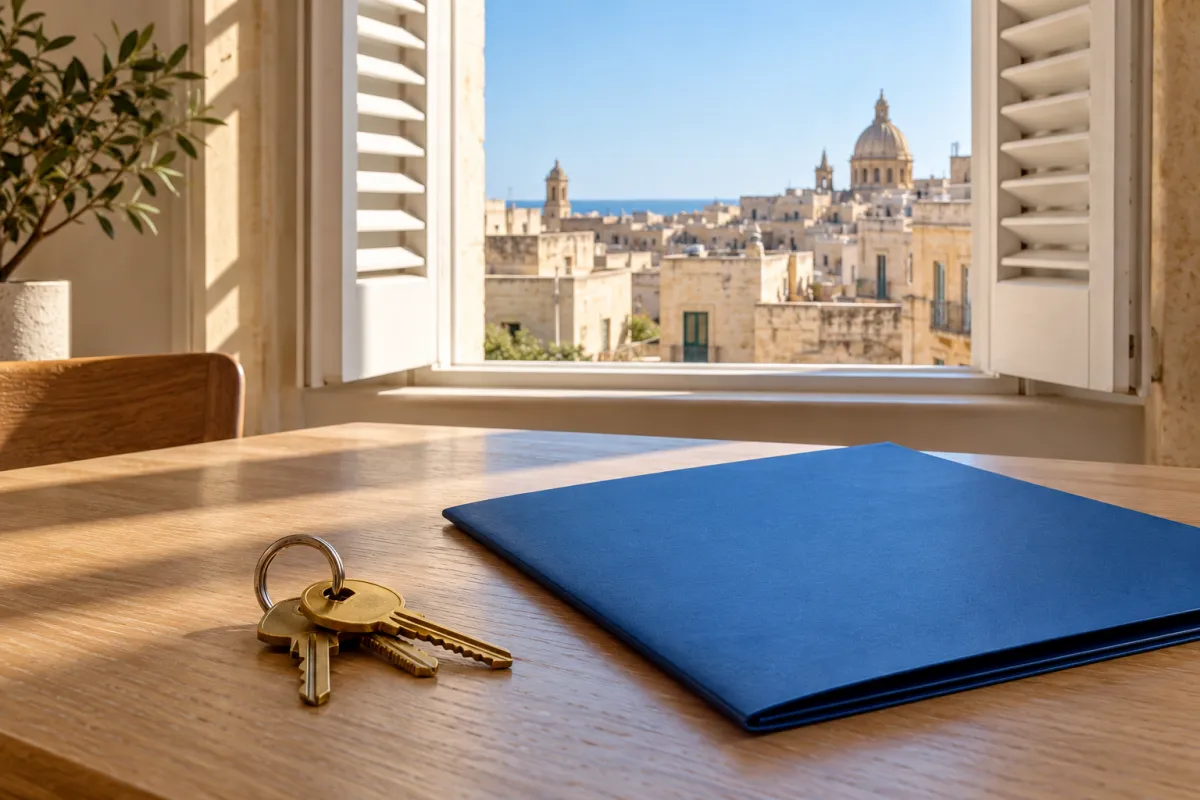
The three-month rule and when to apply
The core rule is simple. EU, EEA and Swiss nationals who intend to reside in Malta for more than three months, under a Treaty right such as employment, self-employment, study or economic self-sufficiency, are legally required to register their presence and apply for a registration certificate, under rules implementing EU Directive 2004/38/EC (gov.mt).
Note the word “intend”. If you arrive on a permanent contract or a full academic year, your intention is clear from day one. There is no reason to wait until week eleven. If you came for a short English course and then decided to stay, the trigger is the moment your plans change.
In practice, the clock that matters is your housing search, not the calendar. You cannot submit a solid application without a registered address. Start the flat hunt immediately, and build in time for the landlord to register the lease.
| Timing | What to do | Why |
|---|---|---|
| Before arrival | Scan your passport or ID card, gather your work contract or university or school enrolment letter, and arrange health cover if your route needs it | Clear scans save time when you upload documents to the portal |
| Weeks 1–3 | Find a longer-term rental, read the lease and confirm it will be registered with the Housing Authority | A registered lease is the document most often missing |
| Once the lease is registered | Create your account on the Identità Expatriates Portal and submit the application for your route | Applying with complete documents avoids back-and-forth requests |
| After submission | Watch your email, answer any requests quickly and follow the instructions for receiving your card | Missed emails are the main cause of delays |
| Before the three-month mark | Make sure the application is in, not just planned | The obligation applies once you intend to stay longer than three months |
Rules last checked against Identità and gov.mt guidance in 2026.
Which route applies to you
To live in Malta beyond three months, you must exercise your EU Treaty rights under one recognised category. Pick the one that describes your main situation. If two seem to apply, for example a student who also works part-time, ask Identità which route it expects rather than guessing.
| Route | Who it usually fits | What you will broadly need to show |
|---|---|---|
| Employment | Anyone with a job at a Malta-based employer, including iGaming, finance, hospitality and healthcare staff | Evidence of your employment, such as your contract |
| Self-employment | Freelancers and business owners operating in Malta | Evidence that you are carrying out a genuine self-employed activity |
| Studies | University students and students at recognised schools, including some English language schools | Enrolment at a recognised educational establishment, plus the means and health cover the form asks for |
| Economic self-sufficiency | Retirees, people living on savings and some remote workers with income from abroad | Sufficient resources not to become an unreasonable burden on Malta’s social assistance system, plus health cover |
| Family members | Partners, children and certain relatives accompanying or joining a qualifying EU national | Proof of the family relationship and of the EU national’s own right of residence |
The categories come from official Maltese guidance (gov.mt). The right-hand column is a plain-English summary, not a full list, and Identità’s current form is the definitive checklist. Two practical notes from experience:
- Remote workers with a foreign employer often fall under self-sufficiency rather than employment, because the employer is not in Malta. Read the route descriptions carefully. If your situation is unusual, ask Identità before you submit.
- Non-EU family members follow a different card process from the EU national they are joining. If your partner holds a non-EU passport, check their route separately on the Identità site. Do not assume your approval covers them.
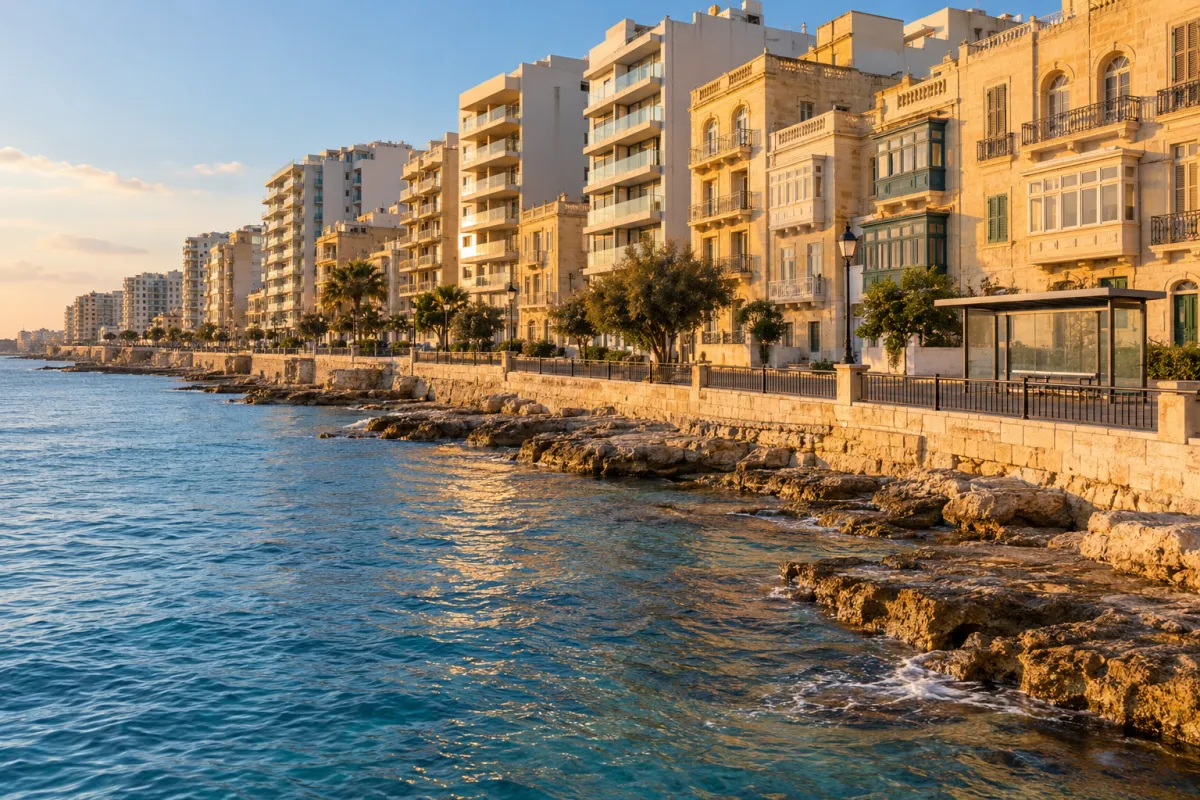
Your address comes first: how to rent an apartment in Malta
Identità asks for a property rental agreement or purchase deed that has been officially registered with the Malta Housing Authority (Identità). Under Malta’s Private Residential Leases Act, rental agreements used as proof of address must be registered. This one requirement shapes how you should rent.
How to rent an apartment in Malta without paperwork problems
- Decide on area before you browse. Commute, bus links and noise matter more than a sea view. Our guide on where to live in Malta, with areas, rents and bus links, compares the main neighbourhoods.
- Budget realistically. Rent is the biggest monthly cost for most newcomers. Check current dated figures in our cost of living in Malta breakdown before you commit to a price range.
- View in person, or send someone you trust. Do not sign or pay for a flat you have only seen in photos.
- Ask early: “Will this lease be registered with the Housing Authority, and will I get proof?” Hesitation at this question tells you a lot.
- Check that your name is on the contract. A lease in someone else’s name does not prove your address.
- Read the whole lease. Check the duration, notice period, who pays which bills, the deposit terms and what happens if you leave early.
- Keep the registered copy safe. Store a PDF in two places. You will upload it to the portal and may need it again for banks or employers.
Malta apartment deposit rules: what to insist on
Malta apartment deposit rules are set out in the tenancy framework and in your contract, and the contract is where most disputes start or end. I will not quote specific limits or deadlines here, because you should read them in the current law and your own lease. These habits protect you on any rental:
- The deposit amount and the conditions for returning it are written in the lease, not agreed verbally.
- You get a receipt for every payment, including the deposit, the first month’s rent and any agency fee.
- You make an inventory on moving-in day, with dated photos of walls, appliances, mattresses and any existing damage, and share it with the landlord by email.
- You pay by traceable bank transfer where possible, not in cash handed over at a café.
- You give notice exactly as the lease requires when you leave, and in writing.
Red flags before you pay anything
- The landlord refuses to register the lease or offers a “cheaper unregistered price”.
- You are asked for a deposit before a viewing, often with a story about being abroad.
- The rent is well below similar flats in the same area.
- There is pressure to decide on the spot because “five other people are interested”.
If you are looking at a room rather than a whole flat, read our guide to shared apartments in Malta: room prices, leases and scams. Shared flats are where registration problems happen most often.
Residence permit Malta for EU citizens: documents checklist
Prepare these before you open the portal. Clear colour scans, every page that matters, and file names that make sense will save you from follow-up requests.
- ☐ Valid passport or national ID card (clear scan of the photo page or both sides)
- ☐ Registered rental agreement or purchase deed, with proof of Housing Authority registration
- ☐ The correct EU residence application form for your route (download the current version from the portal)
- ☐ The GDPR declaration that accompanies the application
- ☐ Route evidence: employment contract, proof of self-employed activity, enrolment letter, or evidence of sufficient resources
- ☐ Health insurance documents if your route requires them
- ☐ For family members: proof of relationship and the EU national’s own residence details
- ☐ A recent passport-style photo if the form asks for one
- ☐ An email address you actually check, as correspondence arrives by email
Identità uses dedicated EU residence document forms that vary by route and family status, so the form for a family member is not the same as the one for a worker. Always download the form from the portal on the day you apply. Do not use a copy a friend sent you last year.
Applying through the Identità portal, step by step
Applications go through the official Identità Expatriates Portal. The order below is how it tends to flow in practice. Menus and wording change, so follow what the portal shows you.
- Create an account on the Expatriates Portal with your personal details and email.
- Choose the EU residence application and select the route that matches your situation.
- Complete the form carefully. Your name, date of birth and document number must match your passport or ID card exactly.
- Upload your documents: ID, registered lease, route evidence and the GDPR declaration.
- Review before submitting. Check that every upload is legible and that it is the right file. A blurry lease is the classic reason for a request for more information.
- Submit and save your confirmation. Screenshot or download whatever reference the portal gives you.
- Respond to any requests promptly. If Identità asks for something extra, reply through the channel it specifies.
- Follow the instructions for your card. Identità will tell you about any next steps, such as appointments or collection.
What it costs: For EU/EEA nationals, the initial application and issuance of the residence card are free of charge (Identità). If someone offers to “file your residence permit” for a fee, you are paying for convenience, not access. The application itself is designed for you to do alone.
After you apply: card, changes and moving house
Getting the card is the start of your Maltese paper trail, not the end. A few things tend to catch people out in their first year.
Moving flats
Expats in Malta move often. Leases end, rents rise and flatmates leave. When your address changes, your records should change too. Get the new lease registered, then check the Identità portal for how to update your details. Do not wait until something official arrives at an address you left six months ago.
Changing your route
A common path is arriving as an English-language student, finding a job, then moving into employment. Another is moving from a local job to freelancing. Your situation is now different from the one you registered under. Check with Identità whether you need to update or re-apply, and keep evidence of the change, such as a new contract or proof of business activity.
Other admin that follows
Once you have your card, other tasks get easier. These include bank accounts, healthcare registration and, for some, a driving licence conversion. For the healthcare side, our guide to healthcare in Malta for expats explains GPs, Mater Dei Hospital and when private insurance makes sense.
Is Malta a good place to live? The first months in practice
People ask “is Malta a good place to live” as if there were one answer. Mine, after years here: it is very good for some lives and frustrating for others. The admin is manageable once you know the order. For EU citizens the residence card is one of the easier pieces. The harder parts are rent relative to salaries, traffic and bus reliability, construction noise and summer heat. The upsides are real too: English is an official language, it is safe, the sea is everywhere and it is easy to build a social life.
For an even-handed take, read our honest pros and cons of living in Malta. Where you live will shape your experience more than almost anything else, so here is a quick qualitative comparison of the areas newcomers usually consider.
| Area | Rent level (relative) | Vibe | Bus links |
|---|---|---|---|
| Sliema | High | Busy seafront, cafés, very international | Frequent buses and a ferry to Valletta; traffic at peak hours |
| Gżira | Mid to high | Next to Sliema, a little more local, waterfront promenade | Same corridor as Sliema, easy connections |
| St Julian’s | High | Lively, close to many offices and hotels | Well served but often congested |
| Swieqi | Mid | Residential and quieter, uphill from St Julian’s | Connections via St Julian’s; hilly walks |
| Msida | Mid | Practical base near the University and Mater Dei | Good links to Valletta and the university area |
| Valletta | High | Historic capital, beautiful, quieter in the evenings | Main hub of the bus network |
| St Paul’s Bay | Lower | Northern coastal town with a large, mixed expat community | Longer rides to the central areas |
| Gozo | Lower | Slow pace, rural, close-knit | Ferry plus bus; plan your week around the crossing |
Rent levels are relative and change constantly. For current figures with dates and sources, use the area and cost guides linked above rather than old forum posts.
Common mistakes to avoid
- Waiting for the deadline. The three-month mark is a limit, not a target. Apply as soon as your lease is registered.
- Accepting an unregistered lease “for now”. It rarely becomes registered later, and you cannot use it as proof of address.
- Choosing the wrong route. Remote workers and working students are the groups most likely to pick a category that does not match their evidence.
- Uploading poor scans. A cropped page or glare on a photo can mean a request for documents and a longer wait.
- Using an old form. Download the current one from the portal every time.
- Forgetting family members. A non-EU partner needs their own application under the family member rules.
- Ignoring email. Check your spam folder while the application is open.
- Paying for help you do not need. The initial application is free, and the portal is built for individuals.
Admin done, flat sorted, and now you know nobody? That is the part of moving alone that no form covers. Want to turn this into an actual plan? MeetNow is a free app for meeting people in person: a host posts a plan at a public place, says who pays (host pays, split, pay your own or free) and picks who joins. It works in your browser and on Android through Google Play, starting in Malta; the iPhone app is not in the App Store yet. Open MeetNow and see the plans posted in Malta.
Whenever you meet someone new, the basics still apply: choose a public place, tell a friend where you are going, arrange your own way home, and leave if anything feels off.
Residence permit Malta for EU citizens: FAQ
Do EU citizens need a residence permit to live in Malta?
Not a visa or a permit in the non-EU sense, but if you intend to stay longer than three months you must register and apply for a residence document, often called the e-Residence card, with Identità. Check the current requirements on the official Identità website before you apply.
How much does the EU residence card cost in Malta?
For EU/EEA nationals, the initial application and issuance of the residence card are free of charge, according to Identità. You can complete the application yourself on the Expatriates Portal, so be cautious about paying anyone simply to submit it for you.
Can I apply without a registered rental contract?
Identità asks for a rental agreement or purchase deed that is officially registered with the Housing Authority as proof of address. If a landlord refuses to register the lease, treat it as a serious red flag and keep looking rather than paying a deposit.
Can I apply if I live in a shared apartment?
Yes, as long as you can show a registered address that covers you. In shared flats, check before signing that your name will be on the registered lease. If your situation is unusual, for example subletting from a flatmate, ask Identità what it accepts before you move in.
What happens if I stay longer than three months without registering?
The legal obligation to register applies once you intend to live in Malta for more than three months, so do not leave it late. For the consequences in your specific case, rely on Identità and gov.mt rather than forum guesses. In practice, being unregistered also makes banks, employers and other admin harder.
What should a Malta apartment deposit agreement include?
The deposit amount and the conditions for returning it should be written in the lease. Get a receipt for every payment, pay by bank transfer where possible and make a dated photo inventory on moving-in day. Never pay a deposit before you have viewed the flat and read the contract.