Short answer: Malta in winter for digital nomads means mild, often sunny days, a quieter island and easier housing, but cold, damp flats and a thinner social scene. Average air temperatures sit around 13 to 15°C from December to February, and the trick is a warm, dry home plus a weekly routine that gets you out of it.
This guide covers what Malta’s winter (roughly November to March) is like for remote work: weather and indoor comfort, where to stay, coworking and community in the low season, a weekly social routine, and the permit and Schengen basics, with official sources. Figures were last checked on 31 October 2026.
My first Maltese winter surprised me twice. Outside, it was better than I expected: blue skies in January, lunch in the sun on a sheltered terrace, a coastal walk most weekends. Inside, it was worse: a stone flat that never quite warmed up and a social life that shrank when half the summer crowd went home. Both problems are fixable if you plan for them.
Is Malta good for digital nomads in winter?
For most remote workers from northern Europe, yes, with caveats. Here is the honest balance.
| Winter upside | Winter downside |
|---|---|
| Mild days: average air temperature around 13 to 15°C from December to February (Met Office norms) | Homes are built for summer: stone walls, tiled floors, rarely any central heating |
| Plenty of sunshine: about 170 hours in January and 187 in February | Most of the year’s rain falls between October and February, often in short, heavy bursts |
| Fewer tourists, quieter streets, easier restaurant tables | Fewer short-stay nomads, so the social scene is smaller |
| English-speaking, EU time zone (CET, one hour ahead of the UK) | Early sunsets in December, before 5pm |
| Good walking weather for coastal paths and the countryside | Sea too cold for most people to swim comfortably until late spring |
Weather figures: Malta Meteorological Office climate norms, as summarised in our guide to Malta’s weather by month. Last checked 31 October 2026.
If you are deciding between Malta and other Mediterranean winter bases, the deciding factors are usually the same three: how warm your home will be, how easy it is to meet people, and whether your residence status allows a long stay. The rest of this guide takes them one by one.
Weather and indoor comfort: the real winter challenge
Outdoors, Malta’s winter is gentle. The Malta Meteorological Office’s climate norms put the average air temperature at about 14.5°C in December, about 12.9°C in January and 12.6°C in February, the coolest month. January averages about 79 mm of rain, February about 69 mm. Sunny, calm days of 15 to 16°C between weather fronts are common.
Indoors is another matter. Humidity stays high, and older stone flats hold the cold. Expect:
- Damp. Mould on north-facing walls, in wardrobes and on shoes is a common winter complaint. A dehumidifier is the single most useful thing you can buy.
- No central heating. Most people heat one room at a time with reverse-cycle air conditioners (which heat as well as cool), oil-filled radiators or gas heaters.
- Cold floors. Tiled floors are lovely in August and unforgiving in January. Rugs and slippers help more than you would think.
- Higher electricity use. Heating and a dehumidifier running all day add up; our guide to electricity bills in Malta explains the tariff bands.
What to check in a flat before a winter stay
- Do the air conditioners have a heating mode, and is there one in the room you will work in?
- Any signs of damp or mould, especially in bedrooms and the bathroom?
- How much sun does the flat get in winter? South-facing and higher floors are warmer and drier.
- Is there a dehumidifier, or room and budget to buy one?
- Is the internet fibre, and where is the router? Thick stone walls can block Wi-Fi.
- Is electricity included in the price, and is there a cap?
Remote workers who get this right enjoy the Maltese winter. Those who rent a ground-floor flat in an old townhouse in December often spend January working in cafés just to be warm.

Working hours, daylight and internet
Malta runs on Central European Time, one hour ahead of the UK and six hours ahead of New York in winter, which suits anyone working with European clients and makes late calls with the US manageable; our guide to the Malta time zone and overlap hours has the full table. The catch in winter is daylight. With sunset before 5pm in December, a nine-to-six day at the laptop can mean you barely see the sun. Many remote workers here shift their day: an outdoor lunch or a walk at midday when it is warmest, and the deep-focus block in the late afternoon. Internet is rarely the problem in the harbour towns, where fibre is widely available, but in an older building the router may sit behind thick limestone walls. Test the connection in the room you will actually work in during the first day, not just the speed quoted in the listing, and have a mobile data plan as a backup for stormy days when power or lines can drop briefly.
Where to stay in winter: rents and short-term options
Winter is the low season for tourism, which usually works in your favour. Holiday lets and serviced apartments that are packed in summer have more availability from November to March, and many hosts offer monthly discounts. I have not found an official index of winter versus summer short-let prices, so compare the same property’s price for a winter month and a summer month on the booking platform before you commit: the gap tells you what you are saving.
Long leases follow a different logic. Under the Private Residential Leases Act, a long lease runs for at least a year, so the season you sign in matters less than the area. If you plan to stay through the summer as well, a registered lease will cost less per month than stringing together short lets.
| Option | Good for | Winter notes |
|---|---|---|
| Holiday let or serviced apartment | 1 to 3 months | More choice than in summer; check heating and damp; bills included |
| Coliving | 1 to 3 months, if you want people around | Fewer residents in the low season; ask how many are booked for your dates |
| Room in a shared flat | 3 months and longer | University of Malta budgets €550 to €700 a month; ask how bills are split in winter |
| Long lease | A year or more | Registered with the Housing Authority; you set up utilities yourself |
Sources: University of Malta living costs, Housing Authority. Last checked 31 October 2026.
Which area in winter?
- Sliema and Gżira: the most practical winter base. Cafés, gyms, coworking and the seafront promenade are walkable, and the Sliema ferry takes you to Valletta.
- St Julian’s: busy all year thanks to offices and hotels, but Paceville is quieter midweek in winter.
- Valletta: beautiful and calm in winter, with buildings that can be especially cold and damp; check the flat carefully.
- Gozo: peaceful and cheaper, but very quiet in winter, and the fast ferry can be cancelled in rough weather. Good for focus, harder for social life.
Coworking and community in the low season
In summer, meeting other remote workers in Malta is almost accidental. In winter, it takes a little more intent. Many summer nomads leave in October, so coworking spaces and meet-ups are smaller, but the people who stay through winter tend to be longer-term residents, which makes it easier to build real friendships rather than one-week acquaintances.
Practical ways in:
- Pick one coworking space and go on the same days. A fixed desk two or three days a week does more for your social life than a different café every day. Our guides to coworking in Sliema and Valletta compare day passes, monthly prices and community.
- Check events pages, not memories of last summer. Coworking spaces and community groups change their programmes in the low season. Look at what is listed for the coming weeks before you plan around it.
- Join something with a weekly rhythm. A running club, a climbing gym, a language exchange or a choir keeps going through winter and mixes you with locals and long-term expats.
- Use the nomad network. Our guide to the digital nomad community in Malta lists where remote workers meet year-round.
Winter also has its own social calendar: Christmas lights and cribs in December, and carnival in February with crowds in Valletta and Nadur in Gozo. These are easy reasons to suggest a plan to someone you met at a coworking space.

A weekly social routine for winter
The biggest winter risk for remote workers in Malta is not the weather. It is drift: working from a cold flat, eating at the desk, and realising on Friday that you have not spoken to anyone in person all week. A fixed routine fixes that. Here is one that works from November to March:
| Day | Plan | Where | Who pays |
|---|---|---|---|
| Monday | Coworking day, lunch with whoever is in | A coworking space in Sliema, St Julian’s or Valletta | Pay your own |
| Tuesday | Weekday lunch with one or two other remote workers | A café or pastizzeria near your base | Split |
| Wednesday | After-work seafront walk, then hot chocolate | Sliema promenade to St Julian’s | Pay your own |
| Thursday | Game night or quiz | A bar or someone’s flat | Host pays for snacks, or split |
| Friday | Early dinner | Valletta or Birgu | Split |
| Saturday or Sunday | Coastal or countryside walk on a sunny day | Dingli Cliffs, the north-west coast, or Gozo if the ferry is running | Free |
Our guide to hobbies and activities in Malta for newcomers has more ideas that work in winter, from indoor classes to games nights. When you meet people you do not know yet, stick to public places, tell a friend where you are going, keep your own way home and leave if anything feels off. On winter walks, check the Met Office forecast and stay away from cliff edges and rough seas.

Permit and Schengen basics for a Malta winter
How long you can stay depends on your passport. This is a summary of official sources, not legal advice.
| You are | What applies | Official source |
|---|---|---|
| An EU, EEA or Swiss citizen | Free movement: you can live in Malta; register your residence if you stay longer than three months | Identità (Expatriates Unit) |
| A non-EU visitor (visa-free or with a Schengen visa) | Malta is in the Schengen area: short stays of up to 90 days in any 180-day period across the whole area | European Commission, Schengen rules |
| A non-EU remote worker staying longer | Nomad Residence Permit: one year, renewable at Residency Malta’s discretion; minimum gross income €42,000 a year; rental or purchase agreement, health insurance and background checks required | Residency Malta Agency |
Last checked 31 October 2026. Rules change; check the official pages before you book.
Two practical points for winter nomads. First, the 90/180 rule counts all your days in Schengen countries, so a December in Malta after an autumn in Portugal may use up more of your allowance than you think. Second, if you want a whole winter and beyond, apply for the permit early; our guide to the Malta Nomad Residence Permit walks through the documents and steps.
Malta in winter for digital nomads: a checklist
- Check your Schengen days or permit status before booking.
- Choose a flat with heating in the room you work in, winter sun and no damp.
- Budget for a dehumidifier and higher electricity use.
- Pack warm layers, slippers and a light waterproof.
- Pick one coworking space and fixed days.
- Join one weekly activity with locals or long-term expats.
- Plan one sunny-day walk each weekend.
- Check the ferry before any Gozo day trip in rough weather.
Common winter mistakes
- Packing only summer clothes because “it’s the Mediterranean”.
- Booking a ground-floor flat in an old townhouse without asking about damp.
- Assuming summer meet-ups still run in January.
- Forgetting that December sunsets come before 5pm, then never leaving the flat after work.
Frequently asked questions (FAQ): Malta in winter for digital nomads
Is Malta warm in winter?
Mild rather than warm. Met Office climate norms put the average air temperature at about 14.5°C in December, 12.9°C in January and 12.6°C in February, with many sunny days around 15 to 16°C. Homes without central heating can feel colder than outdoors.
Is Malta a good place for digital nomads in winter?
Yes, for most people from northern Europe: mild weather, lots of sunshine, English spoken and fewer tourists. The downsides are damp, cold flats and a smaller social scene, so choose your flat carefully and build a weekly routine.
Does it rain a lot in Malta in winter?
Most of Malta’s rain falls between October and February, often in short, heavy bursts. January averages about 79 mm and February about 69 mm, so a light waterproof is enough for most days.
Can I swim in Malta in winter?
Some hardy locals swim all year, but the sea is at its coolest in late winter, around 15°C in March. Most people wait until late May or June.
How long can I stay in Malta in winter without a permit?
EU, EEA and Swiss citizens can stay and should register after three months. Non-EU visitors can stay up to 90 days in any 180-day period across the Schengen area. For longer remote-work stays, non-EU citizens can apply for the Nomad Residence Permit.
Is it easy to meet other remote workers in Malta in winter?
It is easier in summer, but the people who stay through winter are often long-term residents. A regular coworking space, one weekly activity and a few small plans a week are enough to build a circle.
Want to turn this into an actual plan? MeetNow is a free app for meeting people in person: a host posts a plan at a public place, says who pays (host pays, split, pay your own or free) and picks who joins. It is live on the web and works in your browser, starting in Malta: open MeetNow and see the plans posted in Malta.
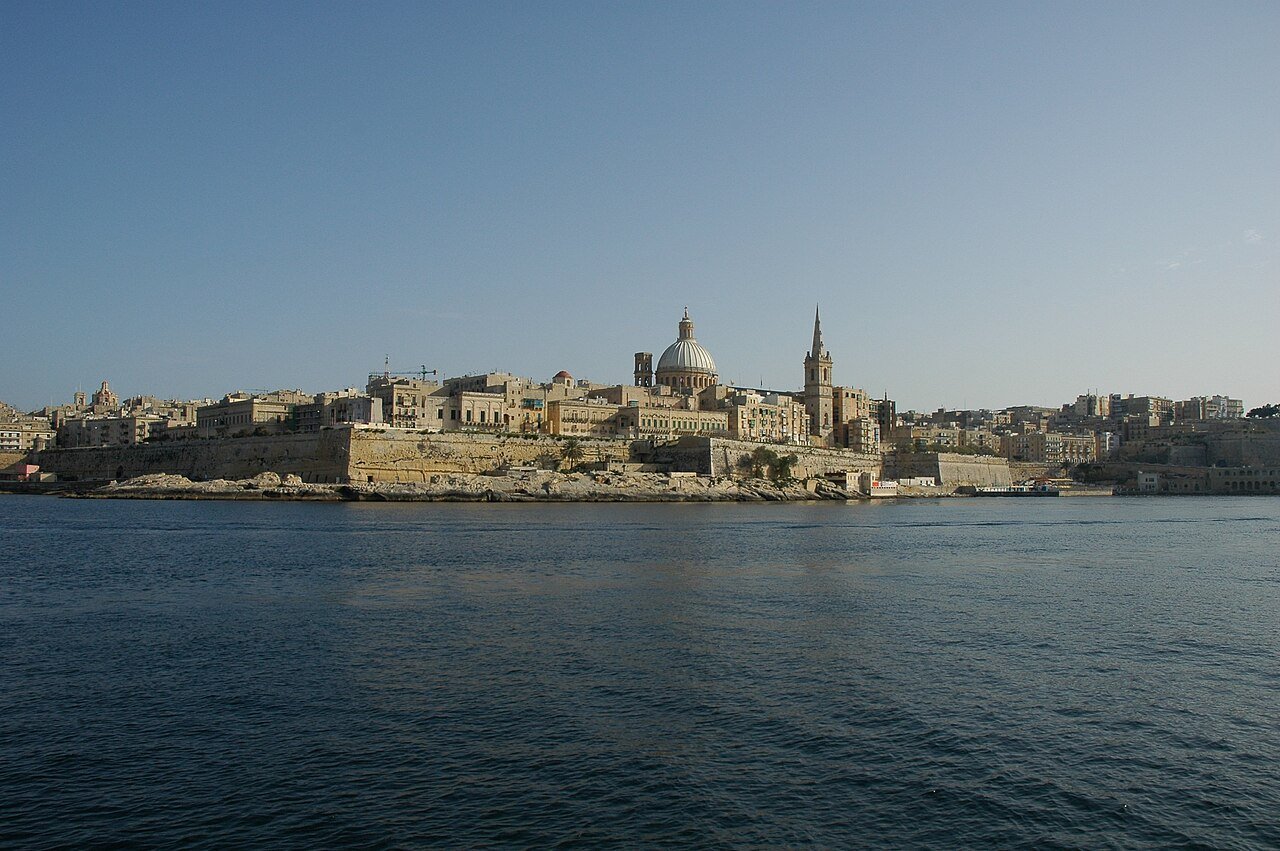
Featured photo: Valletta from Marsamxett Harbour, by Rolf Krahl (Rotkraut), CC BY 4.0, via Wikimedia Commons.