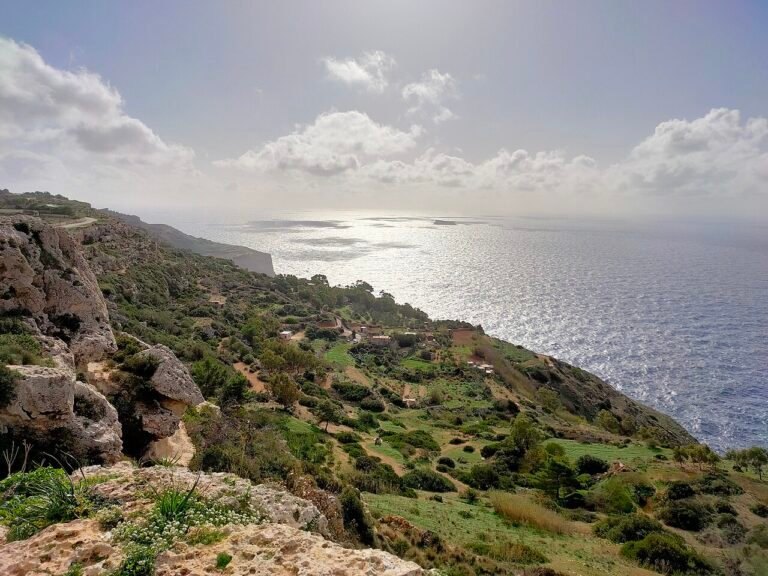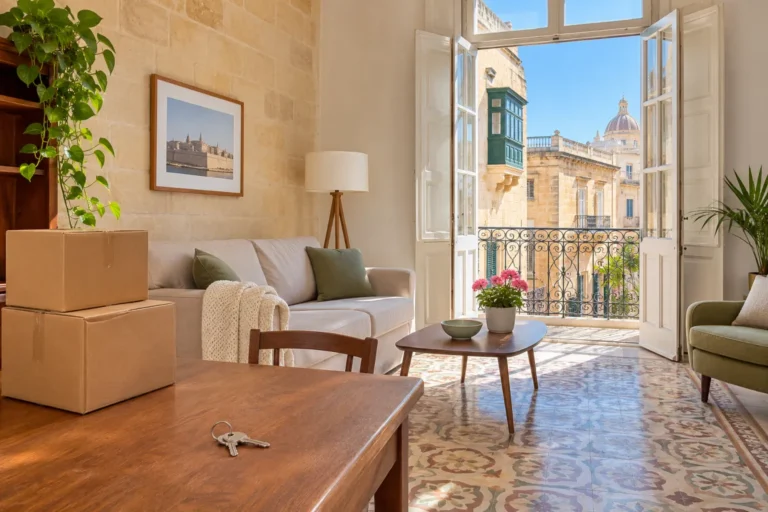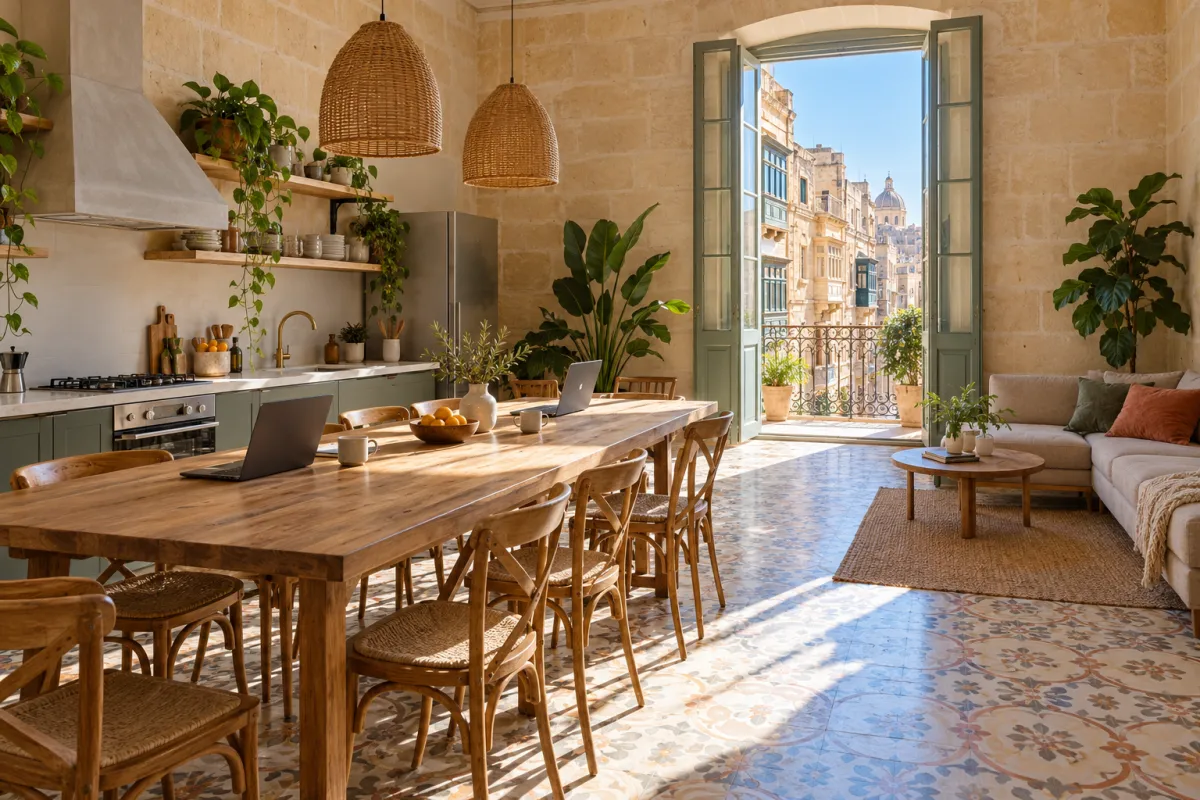
Short answer: coliving in Malta is a small market. The best-known dedicated coliving home is Evolve, a villa in San Ġwann with private rooms, a coworking room, a pool and a one-month minimum stay; listing sites show monthly prices from roughly USD 1,140 there and about USD 1,450 for a second listing in Pembroke.
A room in an ordinary shared flat costs less (the University of Malta budgets €550 to €700 a month), and a long lease costs less again once you add up bills, but neither comes with a ready-made group of other remote workers. This guide compares coliving in Malta with flat-shares, short lets and long leases, explains what the community side really looks like and what it means for the Nomad Residence Permit. Figures were last checked on 31 October 2026.
I have watched a lot of remote workers arrive in Malta over the years. The ones who struggle are rarely struggling with rent or Wi-Fi. They struggle with week three, when the novelty is gone, the laptop is open on the kitchen table all day and nobody knows their name. Coliving is one answer to that problem. It is not the only one, and it is not always the cheapest, so here is an honest look at it.
What coliving means in Malta (and how it differs from a flat-share)
Coliving is a managed house or building where you rent a private bedroom, share the kitchen and living areas, and pay one monthly price that usually covers bills, internet and cleaning of the shared spaces. What makes it different from a normal flat-share is the operator: someone chooses the residents, runs the house, sets the house rules and, in the better places, organises some kind of shared life. Most residents are remote workers or freelancers staying for one to three months.
A flat-share is different. You rent a room from a landlord or from the main tenant, your flatmates may be nurses, students, iGaming staff or anyone else, and nobody is responsible for whether you ever eat a meal together. Our guide to renting a room in a shared apartment in Malta covers that route in detail, including lease registration and scams.
Three things set coliving apart in practice:
- One bill. Rent, electricity, water, internet and shared-area cleaning are usually in one price, so there is no arguing over the summer air-conditioning bill.
- Short stays. A month is a normal stay. Long leases in Malta run for at least a year, which is a big commitment if you are not sure you want to stay.
- People like you. The other residents are mostly working remotely too, which means someone is around at lunchtime on a Tuesday.
The trade-off is price per square metre and privacy. You are paying for convenience and for the people, not for space.
Coliving Malta prices: spaces and monthly costs (2026)
Coliving in Malta is concentrated in the central urban belt around St Julian’s, where most coworking spaces, cafés and remote-work meet-ups are. The table below lists only places I could verify on an operator site or on a coliving listing platform. Operators change prices by season and length of stay, so treat the figures as a starting point and ask for a written quote.
| Space | Area | Room type | Monthly price | Minimum stay | Shared facilities and community |
|---|---|---|---|---|---|
| Evolve Coliving & Coworking | San Ġwann (villa off Triq il-Venew) | 12 private rooms and 4 suites | Not published on its own site (pricing calculator, cheaper for longer stays); listed from about USD 1,140 on Coliving.com | 1 month | About 1,260 m² of shared space: coworking room, pool, rooftop jacuzzi, small gym, kitchen, lounge, bar and BBQ area; residents’ WhatsApp group; drinks, games and meals together |
| Coliving.com listing, Triq Alamein | Pembroke | Private rooms | From about USD 1,450 | Ask the operator | Check the listing for shared areas and events |
| For comparison: room in a shared flat | Sliema, Gżira, St Julian’s, Msida | Private room, shared kitchen and bathroom | €550 to €700 (University of Malta estimate), harbour towns at the top of the range or above | Usually a registered lease | None organised; depends on your flatmates |
Sources: Evolve Coliving, Coliving.com Malta listings (shown in US dollars), University of Malta living costs. Last checked 31 October 2026. Prices change by season and length of stay.
Search for “coliving Malta” and you will also see the word used loosely for serviced rooms, hostels with a coworking corner, and landlords renting rooms by the month. Some of these are fine; some are just flat-shares with a new label. Ask the questions in the checklist further down before you pay.

What the price usually includes
From Evolve’s own FAQ, a monthly stay there includes a private bedroom, cleaning of shared spaces, high-speed internet, the coworking spaces, pool and jacuzzi access, the gym, a shared kitchen and a residents’ WhatsApp group. That is a fair template for what to expect anywhere. Things to check separately: whether your own room is cleaned, whether linen is changed, whether there is air conditioning in your room (it matters from June to September), and whether a deposit is taken.
Why Malta has so few coliving spaces
Two reasons. Property is expensive in the harbour area, so big houses with gardens are rare; and the rental market is busy enough that landlords can fill rooms without any community programme. The practical result for you: coliving rooms can book up, especially from spring to early autumn, so enquire early if you have dates in mind.
Coliving vs flat-share vs short let vs long lease: costs and rules
The four realistic options for a remote worker look like this:
| Option | Typical length | Cost (rough guide) | Bills and internet | Contract | Social side |
|---|---|---|---|---|---|
| Coliving | 1 to 3 months | Highest per room; one all-in price | Included | Operator’s stay agreement | Built in: other remote workers on site |
| Room in a flat-share | Months to years | €550 to €700 plus, often plus bills | Often split between flatmates | Private residential lease, registered with the Housing Authority | Depends entirely on flatmates |
| Short let (holiday rental) | Days to weeks | High per night, especially in summer | Included | Booking platform terms; licensed by the Malta Tourism Authority | None |
| Long lease on a whole flat | At least 1 year | Lowest per month once settled | You set up ARMS (electricity and water) and internet | Long private residential lease, registered | You build it yourself |
Rough guide only; see the sources in the price table above. Last checked 31 October 2026.
The rules in plain English
- Long leases under Malta’s Private Residential Leases Act (Chapter 604) run for at least one year and must be registered with the Housing Authority.
- Short private residential leases (up to six months) exist only for specific situations, so a landlord offering a “six-month lease” should be able to tell you which one applies.
- Holiday lets to tourists fall outside that Act and are licensed by the Malta Tourism Authority instead.
Where coliving sits depends on how the operator contracts with you, so ask for the agreement in writing before you pay. This is a summary, not legal advice.
The honest maths
If you are staying one or two months, coliving is often good value once you count what you would otherwise pay for a short let plus a coworking membership. If you are staying a year, a shared flat or your own lease is almost always cheaper, and you can buy community separately: a coworking desk, a sports club, a weekly plan with people you meet. A common pattern among remote workers here is one or two months in coliving to learn the island, then a lease in the area they liked.
The community side: what actually happens
Coliving operators sell community, so it is worth being precise about what that means. Evolve describes it in modest terms: residents gather for drinks, games or meals, “with many people doing their own thing too”, and its blog mentions rooftop fitness classes such as yoga. That is a realistic picture. You get people around, a group chat and some shared evenings; you do not get a full social calendar handed to you.
What makes the community work in practice:
- Shared working hours. If several people use the coworking room, lunch together happens naturally.
- Turnover. With one-month stays, people leave all the time. That keeps things fresh but means you rebuild your circle every few weeks.
- You. The residents who get the most from coliving are the ones who suggest things: a swim before dinner, a Saturday ferry to Gozo, a market on Sunday morning.
The real risk with coliving is the bubble. You can spend two months on the island and only meet other remote workers from the same house. To meet people beyond it, look at coworking spaces and the wider nomad scene; our guide to the digital nomad community in Malta lists where remote workers actually meet, and coworking spaces in Sliema are a short bus ride from San Ġwann and Pembroke.

Coliving and the Nomad Residence Permit
If you are a non-EU citizen applying for Malta’s Nomad Residence Permit, housing matters for your application. According to the Residency Malta Agency’s eligibility page (checked 31 October 2026), applicants must:
- prove they can work remotely for an employer, their own company or clients registered abroad;
- earn at least €42,000 gross a year;
- hold “a valid property rental or purchase agreement” in Malta;
- have health insurance covering risks in the EU (including Malta), plus a valid travel document, a police conduct certificate and a background check.
The permit is issued for one year and can be renewed at Residency Malta’s discretion. What the official page does not say is whether a coliving stay agreement counts as a “valid property rental agreement”. Do not assume it does: ask Residency Malta directly (the agency lists (+356) 22034000 and clientrelations.residencymalta@gov.mt) before you rely on a coliving contract for your application. The safer route is to use coliving for your first weeks and sign a registered lease for the permit itself.
For the full process, fees and documents, see our guide to the Malta Nomad Residence Permit. EU citizens do not need this permit, but should still register their address once they settle. This is general information, not legal advice.
A sample weekly social routine for coliving residents
Coliving makes the first week easy. Weeks three to eight are where a routine helps, so that your social life does not depend on whoever happens to be in the kitchen. Here is a routine that works for most remote workers in Malta, inside the house and beyond it:
| Day | Plan | Who with | Who pays |
|---|---|---|---|
| Monday | Shared house dinner: everyone cooks one dish | Coliving residents | Each brings their dish |
| Tuesday | Day pass at a coworking space in Sliema or St Julian’s, lunch with whoever is there | Coworkers you have not met | Pay your own |
| Wednesday | After-work swim (May to October) or a seafront walk (winter) | Two or three housemates | Free |
| Thursday | A class or club outside the house: running, climbing, language exchange | Locals and long-term expats | Pay your own |
| Friday | Early dinner in Valletta or Birgu | Housemates plus one person from outside the house | Split |
| Weekend | Ferry to Gozo, a coastal walk or a village festa in summer | Whoever is free | Pay your own |
Our guide to hobbies and activities in Malta for newcomers has more weekday ideas, with typical costs. When you meet people from outside the house, keep the usual sense: meet in a public place, tell someone where you are going, have your own way home and leave if it does not feel right.
Coliving Malta checklist: how to choose a space
- Location against your week. Map the bus routes from the house to the coworking spaces, the seafront and the places you will actually go. San Ġwann and Pembroke are quieter than Sliema and St Julian’s, with more space but longer walks.
- What is included. Bills, internet speed, room cleaning, linen, air conditioning, a desk in your room.
- The contract. Get the stay agreement in writing: dates, price, deposit, notice and refund terms.
- Who lives there now. Ask how many residents there are, typical length of stay, and whether people work from the house during the day.
- House rules. Guests, quiet hours, kitchen use, calls in shared areas.
- Community, specifically. Ask what happened in the house last week, not what “usually” happens.
- Permit needs. If you need a rental agreement for the Nomad Residence Permit, ask the operator what document they issue and check it with Residency Malta.
- Exit plan. If you like Malta, where will you move after coliving? Visit a couple of areas while you are there.
Common mistakes
- Choosing coliving only for the photos of the pool, then finding the house is a 25-minute bus ride from everything you do.
- Booking three months up front before you have spent a week in the house.
- Assuming a coliving contract will satisfy the permit’s rental requirement without checking.
- Never leaving the coliving bubble, then feeling isolated when your housemates rotate out.
Frequently asked questions (FAQ): coliving Malta
How much does coliving in Malta cost per month?
Dedicated coliving is the priciest way to rent a room. Evolve in San Ġwann does not publish prices on its own site but appears on Coliving.com from about USD 1,140 a month, and a Pembroke listing starts around USD 1,450. A room in a normal shared flat is roughly €550 to €700 a month according to the University of Malta. Last checked 31 October 2026.
What is the minimum stay for coliving in Malta?
Usually one month. Evolve states a one-month minimum and says longer stays cost less per month. Other operators set their own terms, so ask before you book.
Is coliving in Malta worth it for digital nomads?
For a first stay of one to three months, often yes: one bill, a desk, and people around from day one. For a stay of a year or more, a shared flat or your own lease is cheaper, and you can build community through coworking spaces, clubs and small plans.
Can I use a coliving address for the Malta Nomad Residence Permit?
The permit requires “a valid property rental or purchase agreement”. The official page does not say whether a coliving agreement qualifies, so check with Residency Malta before you rely on one. A registered lease is the safer route for the application.
Where is coliving in Malta located?
The verified listings are in the central belt around St Julian’s: San Ġwann and Pembroke. This area is close to Sliema, Paceville and most coworking spaces, with buses to Valletta.
Are bills included in coliving prices in Malta?
Usually yes. Coliving prices normally include electricity, water, internet and cleaning of shared spaces. Check whether your room is cleaned, whether there is a cap on air conditioning use and whether a deposit is required.
Want to turn this into an actual plan? MeetNow is a free app for meeting people in person: a host posts a plan at a public place, says who pays (host pays, split, pay your own or free) and picks who joins. It is live on the web and works in your browser, starting in Malta: open MeetNow and see the plans posted in Malta.