The Malta nomad residence permit processing time is shorter than many European residence routes, but the clock starts later than most applicants assume. The official window only begins once Residency Malta’s Finance Department has issued a receipt for your application fee, not on the day you upload your passport scan. It also ends with an approval, not with a residence card in your hand.
That gap between “I applied” and “I’m actually settled” is where most of the stress happens. I have watched friends book one-way flights around a single date, then spend weeks in a short-let refreshing their inbox and talking to nobody except their laptop. This guide splits the process into stages and shows which parts you control and which you don’t. It then covers what is worth doing while you wait: finding housing, sizing up your budget, checking your internet and building a weekday social life before isolation sets in.
Everything about the permit below comes from the official Residency Malta page and is dated. It is a practical overview, not legal, immigration or tax advice. Rules and procedures change, so check the source before you commit to flights or a lease.
How the Malta nomad residence permit processing time is counted
The official wording is precise, and it is worth reading slowly. Residency Malta says the 30-working-day processing period “starts from the issuance of the receipt of funds for the application fee by the Finance Department, during which background verifications are conducted” (Residency Malta, Nomad Residence Permit). Three details in that sentence change how you should plan.
- It counts working days, not calendar days. Weekends fall outside the count, and so do Maltese public holidays. In calendar terms the window is noticeably longer than a month. An application running through late December or around Easter will feel slower even if nothing goes wrong.
- It starts at the fee receipt, not at submission. You first submit your documents digitally and they go through an initial verification. Only then is the fee invoiced. After you pay, the receipt of funds is issued, and only that moment starts the official clock.
- Background and due diligence checks happen inside the window. The processing period is not dead time on a desk. It is when the agency verifies you, which is why a clean, consistent file matters more than chasing anyone by email.
The fee step is where many people lose days without noticing. According to Residency Malta, an invoice is issued for a €300 non-refundable administrative fee per applicant, which must be paid by bank transfer directly from the main applicant’s account (Residency Malta). International transfers are not always instant, and the receipt can only be issued once the money has actually arrived. Pay promptly, from the right account, and keep the transfer confirmation.
The official processing window also does not cover entry visa processing if your nationality needs one to travel to Malta. If that applies to you, treat the visa as its own separate stage with its own timing.
The full timeline, stage by stage
When newcomers ask me “how long does it take?”, they usually mean “when can I live normally in Malta?” That depends on the full chain below, not just the processing period. The table separates the stages you control from the ones you don’t.
| Stage | What happens | Who sets the pace | Official timing (last checked May 2026) |
|---|---|---|---|
| Preparing documents | You gather your passport, employment or business evidence, income proof and dependents’ documents | You | No official timing: entirely in your hands |
| Digital submission and initial verification | The agency checks that the file is complete before invoicing the fee | Residency Malta, helped by a complete file | Not specified on the official page |
| Fee invoice and payment | You pay the administrative fee by bank transfer from the main applicant’s account | You and your bank | Depends on how fast your transfer arrives |
| Processing and background checks | Due diligence and verification after the receipt of funds is issued | Residency Malta | 30 working days from the receipt of funds (Residency Malta) |
| Entry visa, if required | A separate travel visa for nationalities that need one | The visa process | Not included in the permit processing period |
| Biometrics in Malta | In-person submission of biometrics after approval | You and appointment availability | Not specified on the official page |
| Physical residence card | The card is produced and issued | Residency Malta | Typically an additional 3 to 4 weeks after approval and biometrics (Residency Malta) |
The practical reading: the quickest way to shorten the whole journey is to finish the stages you control well, such as documents and payment, so the official clock starts as early as possible. After that, plan your life around the full chain rather than a single date. For the document checklist and step-by-step requirements, see our Malta Nomad Residence Permit requirements and steps guide.
From experience: the weeks between approval and card collection are when many new arrivals feel most alone. They are in Malta, working from a rented flat and not yet part of anything. Small, fixed weekday plans help more than waiting for a big weekend event. MeetNow, a free app for meeting people in person that works in your browser and on Android through Google Play, starting in Malta (the iPhone app is not in the App Store yet), is built around exactly that: a host posts a plan at a public place with a time, seats and who pays. More on that further down.
What usually slows an application down
Most delays I hear about are not mysterious. They come from a handful of predictable places, and most of them happen before the official clock even starts.
- Incomplete or inconsistent documents. If the initial verification finds gaps, the fee invoice isn’t issued yet and the processing period hasn’t begun. Make sure names, dates and figures match across your contract, payslips or invoices, and bank statements.
- Paying from the wrong account. The official page specifies payment directly from the main applicant’s account. A transfer from a partner’s account or a company account is an avoidable complication.
- Slow international transfers. Your bank, not Malta, decides how long the money takes to arrive. Some banks hold international payments for checks of their own.
- Eligibility grey areas. The official page is clear that persons contracted by a foreign company to provide services directly to a Maltese subsidiary are explicitly ineligible (Residency Malta). If any part of your work touches a Maltese entity, get that clarified before you apply, not during processing.
- Dependents. Including family members raises the income requirement and adds documents per person. Each one is another place for a mismatch.
- Holiday periods. Because the count uses working days, public holidays stretch the calendar time.
- The entry visa. If you need one, it runs on its own track and can become the slowest part of the whole process.
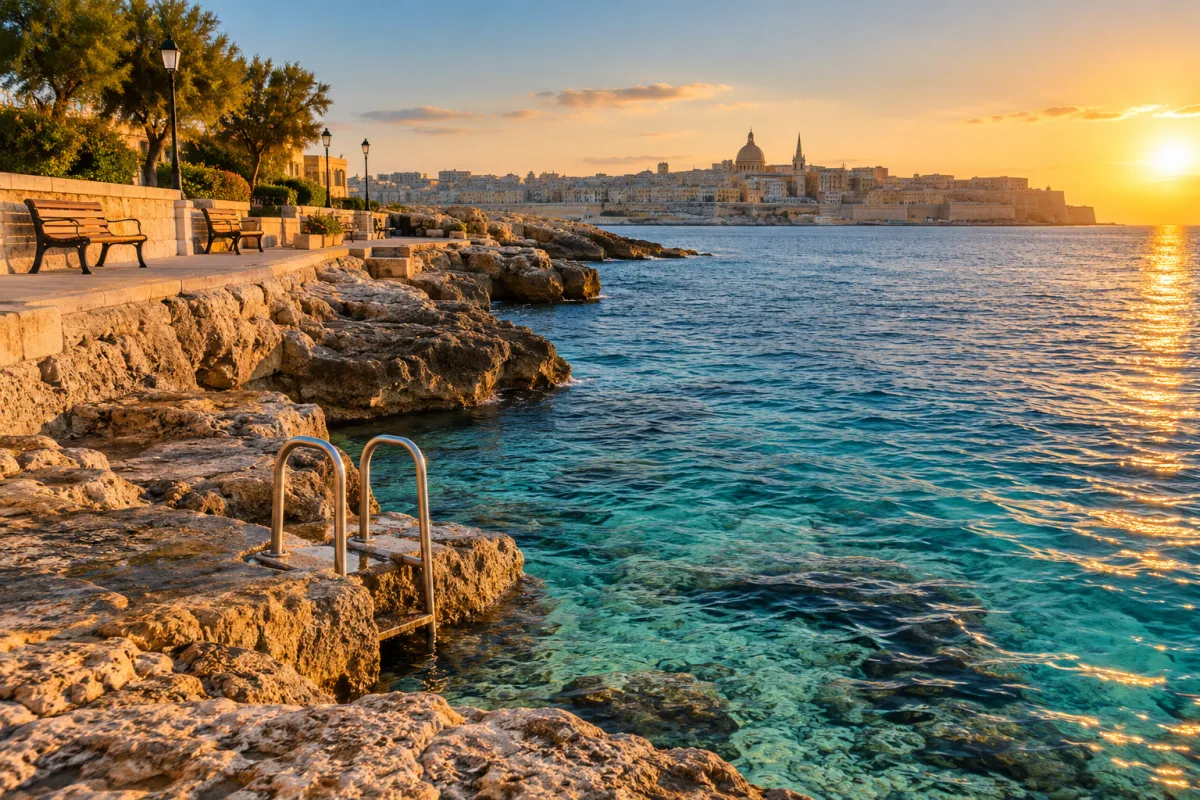
Permit facts at a glance (official source, dated)
Processing time only makes sense next to the basic rules. Here is what the official page says, in plain terms. Treat this as a summary to check against the source, not advice on your individual case.
| Topic | What the official page says | Source | Last checked |
|---|---|---|---|
| Who can apply | Third-country nationals (non-EU, non-EEA, non-Swiss) who work remotely using telecommunications, as an employee of a foreign company, a partner or shareholder in a foreign-registered company, or a freelancer or consultant with foreign clients | Residency Malta | May 2026 |
| Who cannot | Persons contracted by a foreign company to provide services directly to a Maltese subsidiary | Residency Malta | May 2026 |
| Income | Main applicants must meet a gross yearly income threshold of €42,000, with an additional requirement for any family dependents included (Residency Malta) | Residency Malta | May 2026 |
| Validity and renewal | The permit is generally issued for one year and can be renewed on application at Residency Malta’s discretion, provided you still meet all eligibility requirements (Residency Malta) | Residency Malta | May 2026 |
| Fee | Non-refundable administrative fee per applicant, invoiced after initial verification and paid by bank transfer | Residency Malta | May 2026 |
| Processing | Counted in working days from the receipt of funds for the fee; excludes entry visa processing | Residency Malta | May 2026 |
Renewal matters for planning. Because the permit runs for a limited term and renewal is discretionary, keep your income evidence and contracts organised from the start rather than rebuilding the file later. For tax treatment, go to the tax authority itself, the Commissioner for Revenue, and read our summary of what the Nomad Residence Permit tax rules say. If your situation is at all unusual, a qualified adviser is worth the fee.
What to sort while you wait: housing, budget, internet
The processing period is useful time. It is when you can make decisions that are expensive to get wrong in a hurry.
Long term rental Malta for remote workers
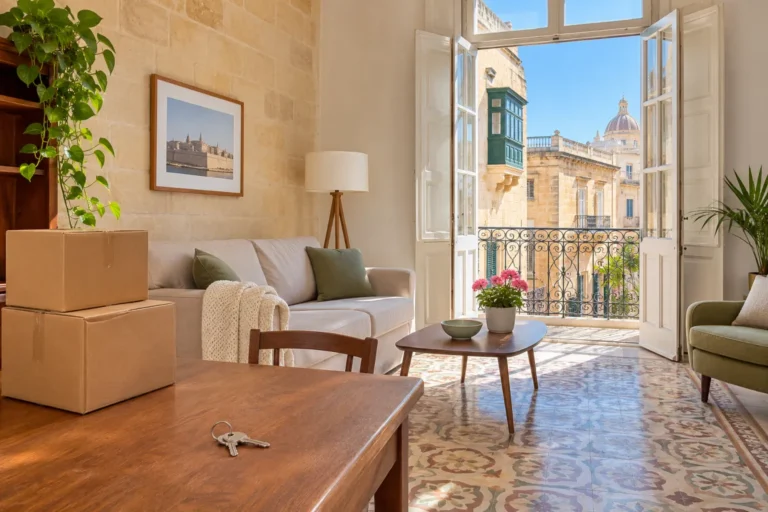
Unless you already know the island, I would not sign a long lease from abroad on the strength of photos. A better sequence for a long term rental in Malta for remote workers is to start in a furnished short-let or a coliving room. View flats in person, then commit once your approval and plans are clear.
When you view a flat, judge it as an office as well as a home:
- The desk situation. Is there a real table near natural light, or will you be working from the sofa for a year?
- Noise. Building work is common in many areas. Ask what is happening on the street and next door, and visit during working hours.
- Seasons. Summers are hot and humid, and many older flats are cold and damp in winter because central heating is rare. Check for air conditioning units in the rooms you will actually use, and look for signs of damp.
- Bills. Ask which utilities are included, how they are billed and who the internet contract is with.
Area choice shapes your social life as much as your rent. Sliema, Gżira and St Julian’s are walkable and full of other newcomers. Msida sits close to the university. Valletta has character and a working-day buzz. Our guide to where to live in Malta, with areas, rents and bus links goes through the trade-offs.
Cost of living Malta for digital nomads
The income threshold is an eligibility test, not a budget. The cost of living in Malta for digital nomads depends mostly on where you live and how you work. A simple monthly sheet with six lines tells you more than any average online: rent, utilities, food, transport, workspace and social life.
- Rent is usually the biggest line by far, and the seafront areas cost more.
- Utilities rise in summer if you run air conditioning all day while working from home.
- Transport can be cheap if you live near good bus routes and walk a lot. It gets more expensive if you rely on ride-hailing.
- Workspace is a real choice: a coworking membership, occasional day passes or a home desk. Each changes both your costs and how many people you meet.
- Social life is worth budgeting on purpose. Plans where everyone pays their own or splits the bill are easy to say yes to every week.
Internet speed in Malta for remote work (and time zones)
Internet speed in Malta for remote work is generally fine for video calls, but it varies by building and contract. Don’t assume, test. During a viewing, ask to join the flat’s wifi and run a speed test on your phone. Look at upload speed as well as download, because upload is what your colleagues see on calls. Ask which provider serves the building and whether fibre reaches the flat itself.
Always keep a backup: a mobile data plan you can hotspot from, plus a nearby coworking space you can use for important calls. Malta runs on Central European Time with summer time, which suits UK and European teams well. If your clients are in the Americas, expect meetings to drift into your evenings. If they are in Asia or Australia, they will drift into your mornings. Plan your social anchors around the slots your work leaves free.
Don’t wait for the card to start a social life
The pattern I see most often goes like this. Someone arrives, sorts the flat, works long hours from home while the paperwork finishes, and realises a few weeks later that they haven’t had a proper conversation with anyone in Malta. Remote work removes the colleagues who would normally fill that gap. Waiting for the residence card gives you a convenient excuse to put off building a life here.
Malta works in your favour once you start. It is small, so faces repeat: the person from the coworking kitchen turns up on the promenade, then at the same lunch spot. The trick is fixed weekday anchors: the same coworking day, the same walk, the same lunch, each week. Weekend events are fine, but they rarely turn acquaintances into friends on their own.
Good starting points are a regular coworking day (see our guides to coworking in Sliema and coworking in Valletta) and the groups and meetups in our digital nomad community guide. Mix those with at least one thing that has nothing to do with remote work, such as a class, a sport or a language exchange. That way your circle isn’t made only of people who might leave next season.
A sample weekly social routine for remote workers
This is an example of the kind of week that works, not a schedule to copy exactly. Adjust it to your time zone and your client calls. The point is that every day has one small, low-effort chance to see people.
| Day | Plan | Typical place | Who pays |
|---|---|---|---|
| Monday | Coworking day, and ask one person from the space to lunch | A coworking space in Sliema or Valletta | Pay your own |
| Tuesday | After-work walk with someone you met on Monday | The Sliema to St Julian’s seafront | Free |
| Wednesday | A weekly class, sport session or language exchange | Wherever your club or course meets | Pay your own |
| Thursday | Host a weekday lunch for other remote workers | A busy café in a central public area | Split |
| Friday | After-work swim in the warm months, or a sunset walk when it’s cooler | A popular public swimming spot such as St George’s Bay, or the Upper Barrakka Gardens in Valletta | Free |
| Saturday | Day trip to Gozo with people from the week | Ferry from Ċirkewwa, then explore | Pay your own |
| Sunday | Rest and admin: permit paperwork, budget check, next week’s plans | Home | None |
Two things make a routine like this stick. First, the plan has a place and a time, not “we should grab coffee sometime”. Second, everyone knows who pays before they arrive, which removes the awkward moment at the till and makes it easy to say yes again next week.
When you are meeting people you don’t know yet, keep the basics in place:
- Meet in a busy public place, especially the first time.
- Tell a friend where you are going and who you are meeting.
- Arrange your own way home, whether that’s a bus you’ve checked or a ride you’ve booked yourself.
- Leave if anything feels off. You don’t owe anyone an explanation.
- Keep personal details, like your exact address, to yourself until you know someone.
Want to turn this into an actual plan? MeetNow is a free app for meeting people in person: a host posts a plan at a public place, says who pays (host pays, split, pay your own or free) and picks who joins. It is live on the web and works in your browser, starting in Malta. The Android app is on Google Play; the iPhone app is not in the App Store yet. Open MeetNow and see the plans posted in Malta.
Frequently asked questions
How long does the Malta Nomad Residence Permit take to process?
Residency Malta states a processing period of 30 working days, counted from the issuance of the receipt of funds for the application fee (Residency Malta). Document preparation, initial verification, any entry visa and the production of the card afterwards all sit outside that window.
When does the processing clock actually start?
Not when you upload your documents. It starts when the Finance Department issues the receipt of funds for the non-refundable administrative fee. That fee is invoiced after initial verification and must be paid by bank transfer from the main applicant’s account.
Does the processing time include an entry visa?
No. The official processing period does not cover entry visa processing. If your nationality needs a visa to travel to Malta, plan for it as a separate stage with its own timing.
How long until I get the physical residence card?
After approval and in-person biometrics in Malta, Residency Malta says physical residence cards typically take an additional 3 to 4 weeks to be issued (Residency Malta).
Should I sign a long-term rental before my permit is approved?
Many remote workers start in a flexible short-let or coliving room, view long-term flats in person, test the internet and the noise, and commit once their approval and plans are clear. This is a practical suggestion from experience, not legal advice.
How can I avoid feeling isolated while I wait?
Set fixed weekday anchors rather than waiting for weekend events: a regular coworking day, a weekly walk or swim, a shared lunch and one activity outside remote work. Meet new people in public places, tell a friend where you are going and arrange your own way home.