Most students ask one question soon after their Malta acceptance letter arrives: can I pick up shifts to cover the rent? On malta student visa work rights, the answer depends mostly on your passport, and after that on the type and length of your course. An Erasmus student from Italy and a Colombian on an English course can sit in the same classroom in Sliema and face completely different rules about working.
This guide explains how the system works in 2026 without guessing at figures that change. It covers who needs a visa, who needs a permit to work, what employers have to do, and how your school level, university application and choice of area fit around a part-time job. Where exact hours, fees or thresholds matter, we name the official office that sets them. Those details get revised, so get them from the source rather than a group chat.
The main point is this: in Malta, being allowed to study and being allowed to work are two separate permissions. Most problems we see start with students treating them as one.
Malta student visa work rights: the short version
Malta sorts students into two groups. Your rights to study and to work follow from the group you are in.
- EU, EEA and Swiss citizens: free movement applies. You do not need a student visa, and you can work, but you still register your residence if you stay beyond the short-stay period.
- Third-country nationals (everyone else): you need permission to enter for study and, for longer courses, a residence permit for study purposes. That permission does not on its own let you work. A separate employment permit is needed, and the employer applies for it.
Two offices matter most. Identità is the government agency that handles residence permits, ID cards and work permits for foreign nationals. Jobsplus is the public employment service; employers notify it when they hire someone. Your school or university’s international office is the third useful contact, because it usually knows the latest student-specific rules before they reach forums.
Rule of thumb: if someone offers you work “until the paperwork comes through”, say no. Working without the right permit can put your residence permit and any future applications at risk, and it leaves you with no payslip, no social security record and no protection if you are not paid.
EU, EEA and Swiss students
If you hold an EU, EEA or Swiss passport, the process is light. You can enrol, find a room and look for work on the same footing as a local job seeker. The practical steps are mostly administrative:
- Register your residence with Identità if you are staying longer than the short-stay period. You will usually need proof of address, proof of enrolment or employment, health cover and your passport or national ID.
- Get a tax number and social security number. Your employer needs both to pay you through payroll. Many employers help with the forms.
- Bring your European Health Insurance Card for medically necessary care, and consider private cover for anything beyond that.
Erasmus students often assume their exchange status limits them. It does not change your basic right to work as an EU citizen, but your home university may have attendance or credit rules that make a heavy work schedule unwise. Check those before you commit to shifts.
Non-EU students: visa, permit and work
Short courses
If your English course or programme is short, you may enter on a short-stay Schengen visa or, depending on your nationality, visa-free. Either way, a short stay gives you no right to work. Treat a short course as study and holiday only.
Longer courses
For longer courses, the usual route is a national visa followed by a residence permit for study, issued by Identità once you are in Malta. Your school or university provides the enrolment letter. You also need to show accommodation, health insurance and enough funds to support yourself. The exact documents, processing steps and minimum course lengths are set by Identità and Maltese consulates, and they have changed in recent years, so use the current official checklist instead of a friend’s from two years ago.
Working on a study permit
Non-EU students on a valid study residence permit can generally work part-time, but only with an approved employment permit. The key points:
- The employer applies, not you. You provide your documents, but the application goes to Identità from the employer’s side.
- There is an hours cap during term and there may be a waiting period after you arrive before you can work. Identità sets both the cap and any waiting period, and they can differ between English-language students and higher-education students.
- The permit is tied to that job. If you change employer, a new application is normally needed.
- Study comes first. Schools track attendance, and attendance matters when your study permit is renewed. A job that makes you miss classes can cost you the permit you need to stay.
For the types of jobs students actually get, typical pay structures and the current official rules, see our guide to part-time jobs Malta students can take.
What legal part-time work looks like
Legal work in Malta leaves a paper trail, and you want that trail. If your job is above board, you should see these things:
- A written contract or written terms of employment that state your hours and hourly or monthly rate.
- Regular payslips showing tax (FSS) and social security deductions.
- Your employer notifying Jobsplus of your engagement.
- An annual statement of earnings (the FS3) at the end of the tax year, which you will want if you ever apply for a longer permit.
Student jobs in Malta tend to be in hospitality, retail, call centres, tutoring and some online or iGaming support roles. Hospitality around Sliema and St Julian’s hires constantly, but the shifts are often evenings and weekends. Plan them around your timetable, not the other way round.
Red flags: pay only in cash, no contract, a “trial week” without pay that keeps getting extended, or an employer who asks you to keep your passport with them. None of these are normal, and you can say no.
Malta English school levels and why they matter
Most licensed language schools place you on the Common European Framework (CEFR) scale, from A1 (beginner) to C2 (near-native). On your first day you will usually take a placement test, often with a short speaking check, and join a class at your level. You move up when your teacher and the school’s testing say you are ready, not on a fixed schedule.
Malta English school levels matter for work in two practical ways:
- Customer-facing jobs need usable English. Many employers in cafés, shops and hotels expect you to handle orders and complaints comfortably, which in practice means at least a solid intermediate level.
- Course length and type affect your permit. The rules for non-EU English-language students have been tied to course length and attendance, so pick a course that meets the current Identità requirements, not just the cheapest option.
Only choose a school licensed by the ELT Council, the regulator for English language teaching in Malta. Our comparison of licensed English schools in Malta sticks to accreditation and verifiable facts rather than invented rankings.
How to apply to University of Malta
If you want a degree rather than a language course, the steps for how to apply to University of Malta as an international student look roughly like this:
- Choose your course on the university website and read its specific entry requirements. Some courses have extra conditions beyond general admission.
- Check that your qualifications are recognised. Foreign school-leaving certificates and degrees are assessed against Maltese standards; the Malta Qualifications Recognition Information Centre (MQRIC) handles formal recognition.
- Prove your English. Teaching is in English, so you will usually need an accepted English test result unless you are exempt.
- Apply online through the university’s admissions portal before the deadline for your intake. Deadlines differ for EU and non-EU applicants and by course.
- After an offer, non-EU students start the visa and residence permit process using the acceptance letter. Allow plenty of time, as this is usually the slowest part.
Fees, deadlines and campus life are covered in our guide to the University of Malta for international students. A practical tip: university students usually have more predictable timetables than language students, which makes part-time shifts easier to plan once the permit is in place.
St Julian’s vs Sliema for English students
Many language schools sit along the stretch from Gżira through Sliema to St Julian’s, so most English students end up choosing between the two. They are next to each other and you can walk along the seafront between them, so the choice is about how you want to live day to day.
| Factor | Sliema | St Julian’s |
|---|---|---|
| Feel | Busy town with a long promenade, shops and cafés | Mix of quiet residential streets and the Paceville entertainment zone |
| Noise | Traffic and construction in places; generally calmer at night | Can be loud near Paceville, especially at weekends |
| Transport | Ferry to Valletta plus many bus routes | Many bus routes; walkable to Sliema |
| Part-time work | Retail, cafés, language-school roles | Hotels, restaurants, hospitality |
| Best for | Students who want a balance of study and city life | Students who want hospitality jobs close by and do not mind noise |
On St Julian’s vs Sliema for English students, our view is simple. If you are working evening shifts, live close to the job so the walk home is short. If you need sleep before morning classes, avoid flats right next to Paceville. Gżira, Msida and Swieqi are worth considering too. Compare them in our guide to where to live in Malta.
Accommodation types compared
Where you live decides how much you need to earn. These are the three main options for students:
| Type | Good for | Watch out for | Work flexibility |
|---|---|---|---|
| Student residence | First few weeks, meeting people quickly, bills usually included | Shared rooms, house rules, less privacy | Good; easy to come and go around shifts |
| Homestay | Younger students, practising English, meals included | Curfews or quiet hours, distance from school | Limited if your shifts end late |
| Shared flat | Longer stays, independence, cooking your own food | Deposits, contracts, bills on top of rent, finding flatmates | Best, once you have a stable lease |
Ask for a written lease, check what is included and keep proof of payment. A registered lease also helps when Identità asks for proof of address. For dated prices and more detail, read our student accommodation in Malta guide.
Monthly budget planner
We are not quoting prices here because they move quickly and should come from your school, landlord and provider. Use this planner to build your own numbers in EUR before you count on any job income. Non-EU students in particular should plan to cover their costs without work at first, because permits take time and are not guaranteed.
| Cost line (EUR per month) | What drives it | How to keep it down | Where to check |
|---|---|---|---|
| Rent | Area, room type, season, bills included or not | Share a flat, look beyond Sliema and St Julian’s | School housing office, written lease |
| Utilities and internet | Air conditioning in summer, heating in winter | Agree how bills are split before signing | Lease terms, previous bills from landlord |
| Course fees (spread monthly) | Course length, intensity, school | Longer bookings, check exactly what is included | School’s official price list |
| Food | Cooking at home versus eating out | Shop at supermarkets and weekly markets | Your own receipts after the first month |
| Transport | Bus card type, distance to school and work | Personalised Tallinja card, walking | Malta Public Transport |
| Health insurance | Policy type, length, cover | Compare student policies | Insurer, Identità requirements |
| Phone | Data plan | Prepaid student or youth plans | Mobile providers |
| Social and leisure | How often you go out | Student discounts, free beaches and walks | Your own spending log |
| Buffer | Deposits, emergencies, permit fees | Keep a separate savings pot | Identità fee list, lease deposit terms |
Planner structure reviewed 2026; figures intentionally left to you because they vary by school, area and season.
Savings on transport, culture and gyms are listed in our student discounts in Malta guide.
Checklists
Before you arrive
- Confirm whether you are EU/EEA/Swiss or a third-country national, and which visa or permit route applies.
- Get your enrolment or acceptance letter and keep digital and paper copies.
- Arrange health insurance that meets the official requirements.
- Book your first weeks of accommodation with a written agreement.
- Have proof of funds ready, and do not plan your budget around a job you do not have yet.
First month in Malta
- Start your residence registration or residence permit application with Identità.
- Get a local SIM and open a bank account if you can (some banks are slow with newcomers).
- Apply for a personalised bus card.
- Take your placement test and settle into your class level.
- Save copies of your lease, school attendance records and insurance.
Before you accept a job
- Check you are actually eligible now, including any waiting period and hours cap.
- For non-EU students: confirm the employer has applied for your permit and wait for approval.
- Get written terms that state hours, pay and contract length.
- Make sure you have a tax number and social security number.
- Check the shifts do not clash with classes.
After your course ends
EU students can stay, look for full-time work or move on, as long as their residence registration is kept up to date. For non-EU students, the study permit is linked to the course. When the course ends, you need to leave before the permit expires, enrol in another eligible course, or switch legally to another permit, such as a work permit for a full-time job where the employer applies. Do not overstay while you wait for something to come through. Ask Identità or your school’s international office well before your end date, not in the final week.
Keep your FS3 statements, payslips and attendance records. They show you followed the rules, which helps with future applications in Malta and elsewhere.
Meeting people without spending a fortune
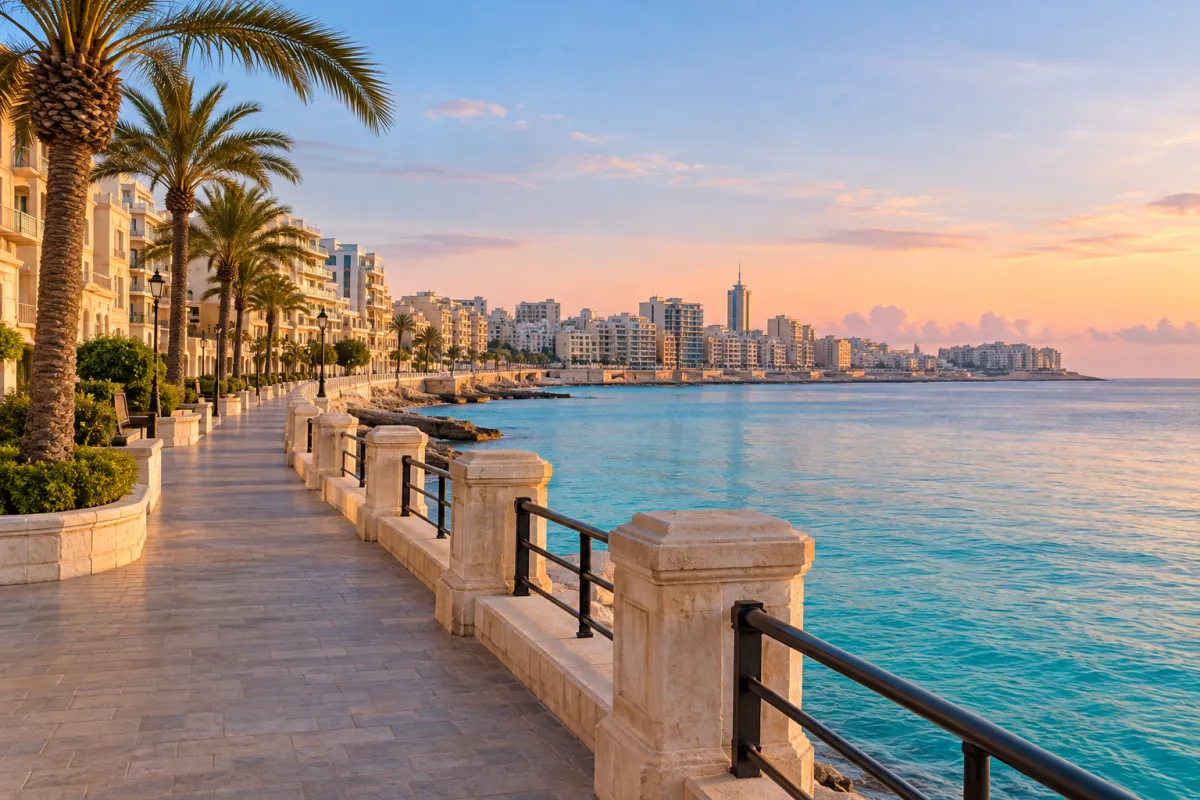
Most students arrive alone, and between classes, shifts and paperwork, it is easy to end up spending weekends by yourself. The cheapest fixes are simple: a coffee after class, a swim at a public beach, a walk along the Sliema promenade, a shared dinner where everyone pays their own. When you meet someone new, pick a public place, tell a friend where you are going, arrange your own way home and leave if anything feels wrong.
Want to turn this into an actual plan? MeetNow is a free app for meeting people in person: a host posts a plan at a public place, says who pays (host pays, split, pay your own or free) and picks who joins. It is live on the web and works in your browser, starting in Malta. The Android app is on Google Play; the iPhone app is not in the App Store yet. Open MeetNow and see the plans posted in Malta.
FAQ
Can I work in Malta on a student visa?
It depends on your nationality and permit. EU, EEA and Swiss students can work without a work permit. Non-EU students on a residence permit for study can usually work part-time only after the employer gets an approved permit from Identità, within the hours limits and any waiting period Identità sets. A short-stay Schengen visa gives no right to work.
Do EU students need a work permit in Malta?
No. EU, EEA and Swiss citizens can work in Malta under free movement rules. You still need to register your residence with Identità if you stay beyond the short-stay period, and you need a tax number and social security number so your employer can pay you through payroll.
Can English language students work in Malta?
EU English language students can. Non-EU English language students may be able to work part-time under conditions linked to course length, attendance, a possible waiting period and an hours cap, and only with an approved employment permit. These rules have changed in recent years, so check the current Identità guidance and ask your school before accepting any job.
Who applies for the work permit, me or the employer?
For non-EU students, the employer submits the work permit application to Identità, and you provide your documents. The permit is tied to that job, so changing employer normally means a new application. Do not start working until the permit is approved.
Is St Julian’s or Sliema better for English students?
Sliema usually suits students who want a balance of study, shops and the ferry to Valletta, and it is generally calmer at night. St Julian’s suits students who want hospitality jobs nearby and do not mind noise, especially near Paceville. They are next to each other, so you can easily study in one and live in the other.
How do I apply to the University of Malta as an international student?
Choose your course and read its entry requirements, get your qualifications recognised, prove your English level and apply online through the university’s admissions portal before the deadline for your intake. After an offer, non-EU students use the acceptance letter to start the visa and residence permit process, which usually takes the longest.