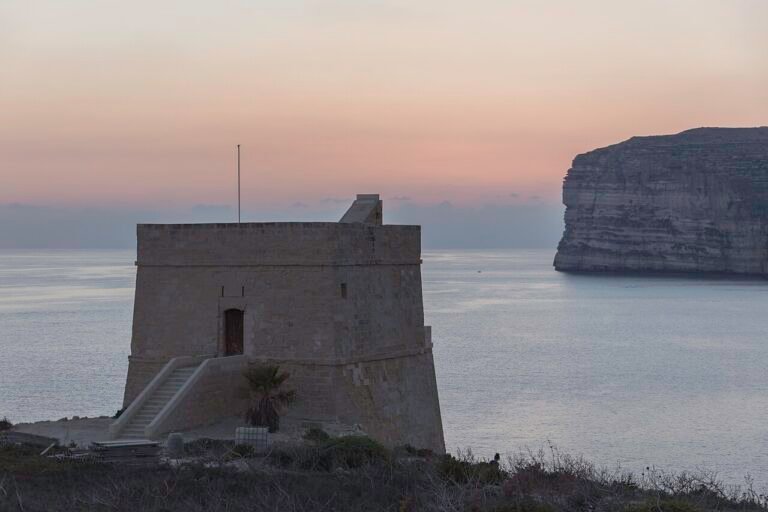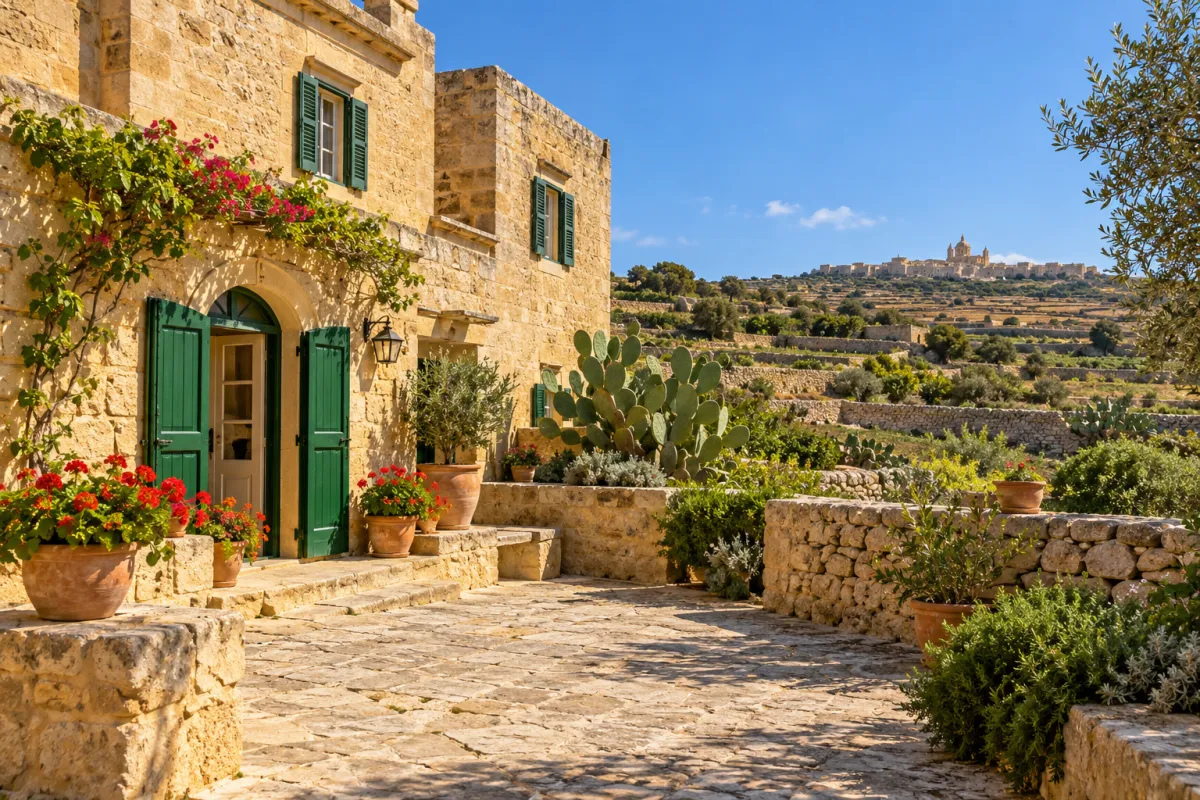
If you are looking for an English school in Gozo for students, the name you will keep finding is BELS Gozo. It teaches in a restored traditional farmhouse in Kerċem, a quiet village next to Victoria, and it is built for adults who want to study without the traffic, construction noise and crowds of the Sliema and St Julian’s area.
Choosing Gozo is a real trade-off. You get smaller classes, a slower pace and a lot of countryside within walking distance. You also get fewer buses, a ferry crossing every time you want to go to the main island, and a smaller pool of other students to socialise with. Neither side is a deal-breaker, but it helps to know about both before you pay a deposit.
Below are the verified course facts, the weekly fee tiers, residence room prices and a dated four-week budget, followed by honest notes on the pros and cons, how to check the University of Malta’s English requirements, and what people usually do once their course ends.
Is an English school in Gozo for students the right fit?
Gozo works best for a specific kind of learner. If you are in your late twenties or thirties, working remotely part of the day, or simply tired of studying in a city, the island’s quiet is a genuine advantage. You will spend less time commuting, fewer evenings being dragged into plans you did not want, and more time actually practising English with your teacher, classmates and neighbours.
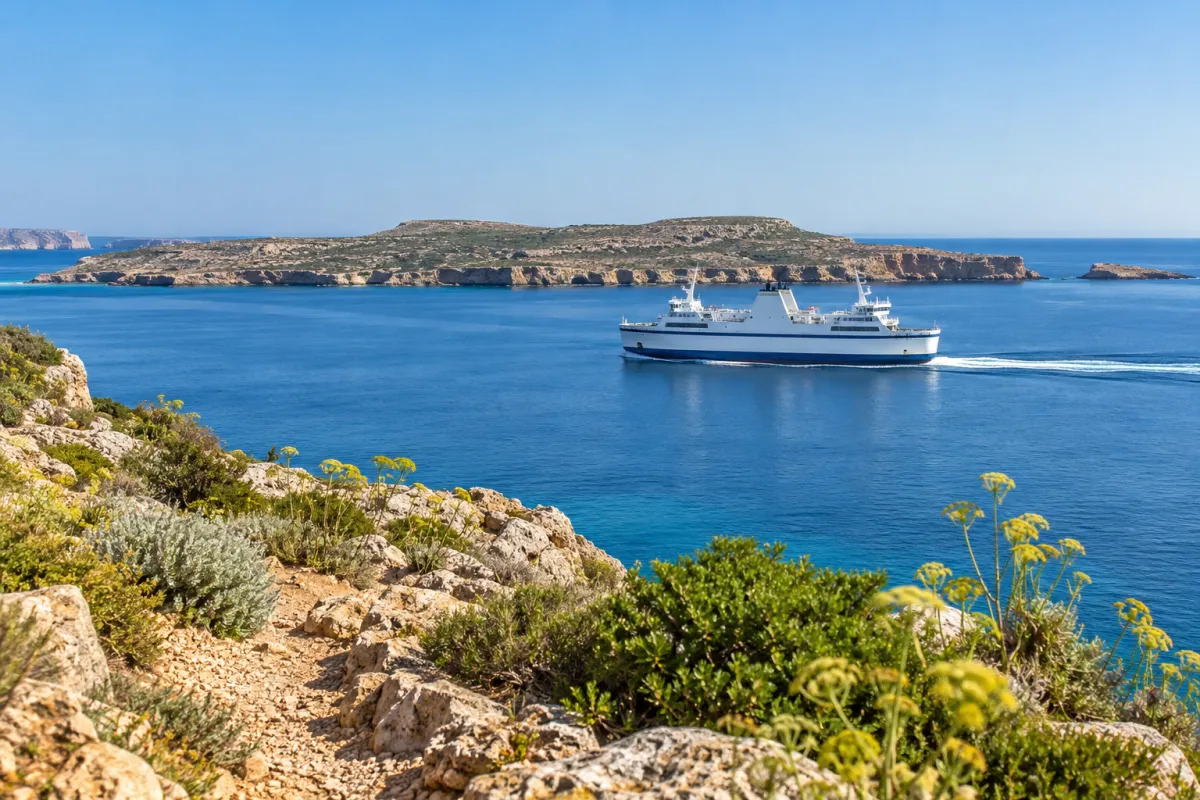
It works less well if you want a big campus feel, a large international crowd every afternoon, or regular trips to Valletta, Sliema and the university area. Every one of those trips involves a bus to Mġarr harbour, a ferry and then onward transport on the main island. Plenty of students do it at weekends, but it shapes your week.
Ask yourself three questions before choosing an English school in Gozo for students:
- Do I want quiet or variety? Gozo gives you quiet. The mainland gives you far more schools, classmates and things to do.
- Will I need the main island often? A job interview, a university appointment or visa paperwork can mean a full day out.
- Am I comfortable with a slower bus network? Gozo has buses, but routes and frequency are thinner than around Sliema, so living close to school matters more.
If you are still comparing options across both islands, our overview of licensed English schools in Malta compared is a good place to see the mainland alternatives side by side.
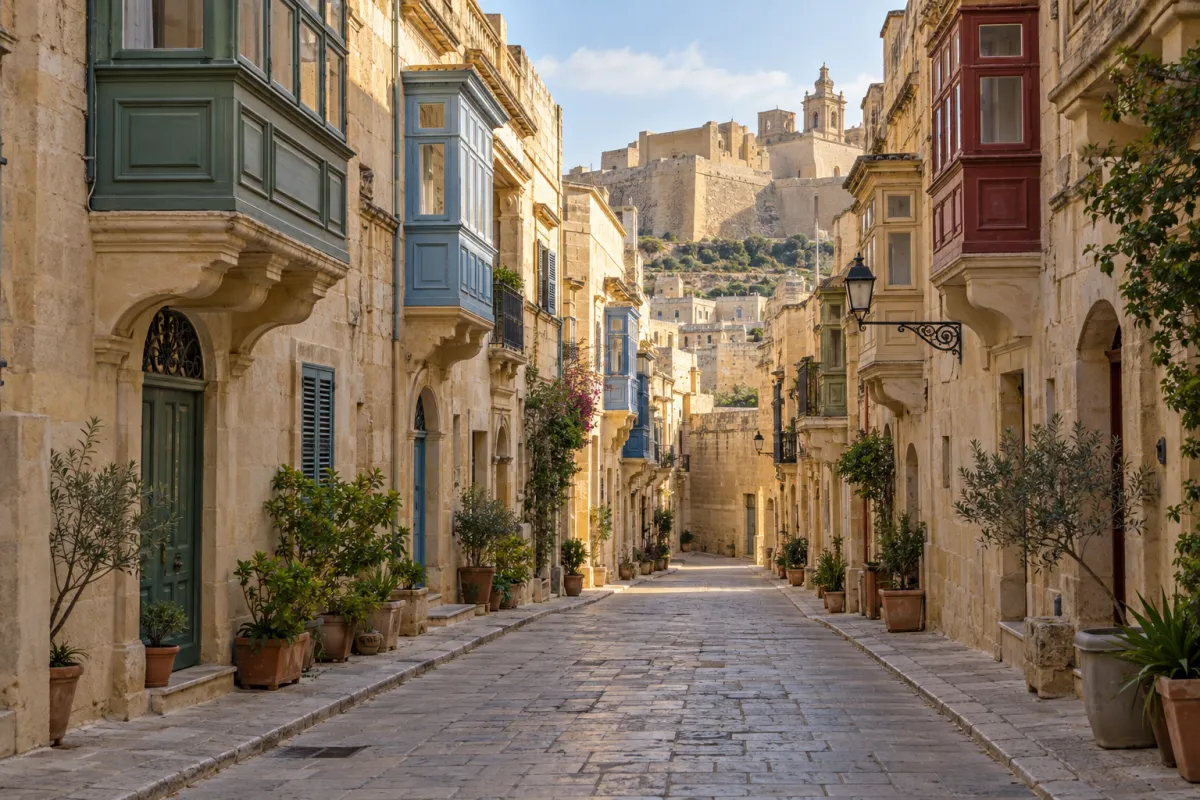
The school: BELS Gozo in Kerċem
BELS Gozo is an adult school with a minimum age of 18, and its Standard General English course runs at 20 lessons (15 hours) a week with a maximum of 12 students per class (BELS Malta). That combination of adult-only groups and capped class size is the main reason people pick it over a busy mainland school.
The building itself is part of the appeal: a restored farmhouse on Triq Ta’ Doti in Kerċem, with a rural setting rather than a high street. In practice that means a calmer classroom and more space, but also that you should check how you will get there from wherever you sleep. Ask the school which bus routes or walking routes current students use from Victoria, and whether any transport is included for the first day.
Check the licence, not the marketing
In Malta, English language schools are licensed by the ELT Council. Rather than relying on rankings or review scores, ask the school to confirm its current licence and check it against the Council’s published list before paying. This is the same check we recommend for any school on either island, and it is the only objective quality marker worth relying on.
Questions worth asking in writing
- Is there a registration or enrolment fee on top of weekly tuition?
- Are course books and materials included or charged separately?
- What happens to lessons that fall on Maltese public holidays?
- Can I extend my course once I arrive, and at which weekly rate?
- Is there a placement test, and can I move class if the level is wrong?
Course fees and how the tiers work
General English tuition at BELS Gozo is tiered by length: around €250 a week for 1–7 weeks, around €225 a week for 8–11 weeks and around €200 a week for 12 weeks or more (BELS Malta). These are published guide prices, so always confirm the exact figure in a written quote for your dates.
The tiers matter more than they first appear. If you are unsure between a short and a medium stay, the weekly saving from crossing into the next band can partly offset the cost of the extra weeks. The flip side is commitment: a longer booking locks in more money up front, so read the cancellation and refund terms before you choose the cheaper rate.
A sensible approach for a first-timer is to book the length you are confident about, then ask in writing whether extending on arrival moves your whole booking into the lower tier or only the added weeks. Schools handle this differently, and the answer changes your total. For a wider look at how tuition, materials and extras add up across Maltese schools, see our guide to English course costs in Malta.
Accommodation in Gozo compared
Single adult arrivals in Gozo usually choose between a school-arranged residence, a homestay or finding their own room in a shared flat. The residence is the easiest to organise from abroad; the shared flat gives the most independence but the most admin.
| Option | Weekly price | Best for | Watch out for |
|---|---|---|---|
| Superior Residence, Victoria, twin room | About €250 | Budget-minded students happy to share a room | Shared space; ask about kitchen and bathroom set-up |
| Superior Residence, Victoria, single room | About €330 | Privacy, remote work, light sleepers | Higher cost; confirm Wi-Fi quality for calls |
| Homestay | Ask the school for a quote | Daily English practice and local tips | House rules, meal times, distance to Kerċem |
| Room in a shared flat | Not quoted here; varies by landlord | Longer stays and independence | Contract terms, deposit, bills, short-let pricing |
Victoria is a practical base: it is the island’s capital, it is the hub for Gozo’s buses, and it is close to Kerċem. Living there means groceries, pharmacies and cafés are on foot, which matters on an island where you may not have a car.
A homestay is underrated for Gozo in particular. With fewer students around, living with a local family gives you daily conversation practice that you might not otherwise get. A shared flat makes more sense if you are staying several months, but read the contract carefully and ask who pays utilities. Our main guide to student accommodation in Malta: residence, homestay or flat covers contracts and deposits in more detail.
Four-week student budget table
The table below is an illustrative four-week example built from the school’s published rates, not a quote. Lines without a verified figure are left open on purpose: food, phone and ferry spending depend heavily on your habits, so log them for your first week and adjust. The eco-tax line is the environmental contribution charged to adult students staying in tourist or school-provided accommodation.
| Item | Four-week cost (EUR) | How it is worked out |
|---|---|---|
| Standard General English tuition | About €1,000 | Four weeks at the short-stay rate of about €250 a week |
| Residence, twin room | About €1,000 | Four weeks at about €250 a week |
| Residence, single room (alternative) | About €1,320 | Four weeks at about €330 a week |
| Eco-tax | €5 maximum | €0.50 a night, capped at €5 per continuous stay |
| Food and groceries | Track your own | Log week one, then multiply |
| Ferry trips to the main island | Track your own | Depends on how often you cross |
| Phone and mobile data | Track your own | Compare local SIM offers on arrival |
| Registration, materials, insurance | Ask the school | Get these in your written quote |
| Core fixed costs, twin room | About €2,005 | Tuition + twin room + eco-tax |
| Core fixed costs, single room | About €2,325 | Tuition + single room + eco-tax |
Two practical notes. First, the core fixed costs are your floor, not your total; add a realistic food and transport figure before deciding whether you can afford a single room. Second, if you plan to cross to Malta most weekends, check fares and crossing options in our Gozo ferry timetable and fares guide and budget for them as a weekly line, not an afterthought.
Studying English in Malta: pros and cons from Gozo
Most lists of studying English in Malta pros and cons are written from Sliema. From Gozo, the picture shifts.
Pros
- Small, adult groups. Capped classes and an adult-only school make it easier to speak up and get corrections.
- Fewer distractions. You are less likely to drift into speaking your own language all day with a large group from home.
- Walkable countryside and coast. Free weekend activities are on your doorstep.
- Real local contact. In a homestay or a village café, you will speak English with residents, not only other students.
- Calmer pace. Good for remote workers combining study with a job in another time zone.
Cons
- Fewer schools to choose from. If the course does not suit you, switching means moving to the main island.
- Thinner bus network. Where you live relative to Kerċem matters a lot.
- The ferry factor. Mainland errands, university visits and social plans take more time.
- Smaller student scene. Making friends takes a little more initiative.
- Seasonality. Gozo feels very different in high summer and in the quiet winter months, so think about when you go.
IELTS requirements at the University of Malta
Many students use an English course as a step towards a degree, so it is worth checking the IELTS requirements at the University of Malta early. The University sets English language entry requirements by course and publishes which certificates and scores it accepts. Those requirements can differ between undergraduate and postgraduate programmes and can change between intakes, so always check the admissions information for your specific course and year rather than relying on forum posts.
Three things to confirm before you build your plan around a Gozo course:
- Which tests are accepted for your course, and the minimum overall and section scores.
- Whether a language school certificate counts. Do not assume it does; universities generally ask for recognised test results.
- Where and when the test runs. If sessions are on the main island, factor in a ferry trip and an early start on test day.
It is also worth asking the school whether it offers exam preparation classes and at which levels. For fees, applications and campus life once you are accepted, see our guide for University of Malta international students.
What to do after English school in Malta
The question of what to do after English school in Malta usually comes up around the halfway mark of a course. The main routes are:
- Extend your course. If you are progressing well, extending may move you into a cheaper weekly tier. Ask how extensions are priced before your last week.
- Move on to further study. Apply to the University of Malta or another institution once your English test score meets the entry requirement for your course.
- Look for work. Whether you can work, and how many hours, depends on your nationality and permit. EU citizens and non-EU students face different rules, which are set by Identità and Jobsplus. Our guide to part-time jobs Malta students can take walks through the official rules.
- Relocate to the main island. Some students use Gozo as a quiet first month, then move closer to work or university.
- Go home with a plan to keep practising. Ask your teacher for a realistic self-study plan and swap contacts with classmates for online conversation practice.
Whichever route you take, start the paperwork early. Residence documents, university applications and job searches all move more slowly than students expect, and doing them from Gozo adds travel time.
Checklists: before you book and your first week
Before you book
- Confirm the school’s current ELT Council licence.
- Get a written quote covering tuition, registration, materials, accommodation and eco-tax.
- Read the cancellation, refund and extension terms.
- Check how you will get from your accommodation to Kerċem each morning.
- Arrange health or travel insurance that covers your whole stay.
- If you are a non-EU national, check visa and permit requirements well before travel.
- If a degree is the goal, check your course’s English entry requirements now.
Your first week
- Do a test run of your route to school before the first lesson.
- Get a local SIM or eSIM and save your school’s contact number.
- Sort out a bus card so you are not paying per journey all month.
- Log every euro you spend on food and transport for seven days.
- Bookmark ferry times for your first trip to the main island.
- Find your nearest pharmacy and grocery shop on foot.
- Ask classmates what they did at the weekend; it is the quickest way to find plans.
Meeting people on a small island
With a smaller student population, friendships in Gozo tend to start in the classroom. Small groups help: you will know everyone’s name within days. Suggest something simple and specific, such as a coffee in Victoria after class, a coastal walk at the weekend or a shared ferry trip to explore the main island.
When you meet someone new, keep the basics in mind:
- Meet in a public place, such as a café or a busy square.
- Tell a friend, flatmate or host family where you are going and with whom.
- Have your own way home, and check bus or ferry times in advance.
- Leave if anything feels uncomfortable; you do not owe anyone an explanation.
Want to turn this into an actual plan? MeetNow is a free app for meeting people in person: a host posts a plan at a public place, says who pays (host pays, split, pay your own or free) and picks who joins. It is live on the web and works in your browser, starting in Malta. The Android app is on Google Play; the iPhone app is not in the App Store yet. Open MeetNow and see the plans posted in Malta.
FAQ
Is there an English school in Gozo for students?
Yes. BELS Gozo in Kerċem, near Victoria, is the established adult English school on the island and teaches General English in small groups in a restored farmhouse. As with any school in Malta, confirm its current ELT Council licence before you pay.
Can under-18s study English in Gozo?
BELS Gozo is an adult-only school, so younger students cannot join its courses. Teenagers and families usually look at mainland schools that run junior programmes.
Is studying English in Gozo cheaper than on the main island?
Not automatically. Compare full written quotes covering tuition, accommodation, materials, eco-tax and transport, including ferry trips if you plan to visit the main island often. Longer bookings usually lower the weekly tuition rate.
Where do English school students live in Gozo?
Most single arrivals choose a student residence in Victoria, a homestay arranged by the school or a room in a shared flat. The residence is the easiest to book from abroad, while a homestay gives the most daily English practice.
Does an English course meet the IELTS requirements of the University of Malta?
Not automatically. The University publishes accepted English tests and minimum scores for each course, and a language school certificate may not count. Check the admissions information for your course and intake, then plan your test date around it.
What can I do after English school in Malta?
Common options are extending your course, applying for further study, looking for work if your permit allows it, or moving to the main island. Work rights depend on your nationality and permit, so check the official rules from Identità and Jobsplus first.