Short answer: grocery prices in Malta in 2026 are moderate for staples and high for imported brands. A basket of 16 everyday items (fresh Maltese milk, local eggs, bread, pasta, rice, potatoes, tomato paste, sugar, flour, olive oil, cheese, ġbejniet, coffee, yoghurt and water) cost €39.54 at Scotts’ online shop when I checked on 2 November 2026. Food prices were 2.5% higher than a year earlier in September 2026, according to NSO figures, slightly above overall inflation of 2.4%. Local products (Benna milk, ftira, ġbejniet, kunserva) are usually the cheapest way to fill a trolley, and markets and vegetable vans beat supermarkets on seasonal produce. Below you will find the full basket, how to build a monthly budget, the habits that save the most, and how sharing food costs in a flat works in practice.
I have done a weekly shop in Malta for years, in three different towns, and the first month always goes the same way: newcomers fill a trolley with the brands they know from home, pay import prices for them, and decide Malta is expensive. Then they discover the local dairy, the bakery round the corner and the man with the vegetable van, and the weekly bill drops. This guide is the food line of our full cost of living in Malta guide.
Grocery prices in Malta: a 16-item basket
Malta does not publish an official supermarket price basket, so I built one from a chain that lists its prices online. These are shelf prices from Scotts Supermarket’s online shop, checked on 2 November 2026. Fresh fruit, vegetables and meat are left out on purpose: they are sold by weight or by piece and change week to week, so a single number would mislead you.
| Item | Product checked | Price |
|---|---|---|
| Fresh milk, 1 litre | Benna fresh whole milk 3.5% | €1.37 |
| Eggs, 6 | Local eggs, box of 6 | €1.68 |
| Sliced bread | Golden Harvest family white loaf | €1.30 |
| Ftira (Maltese flatbread) | Large ftira | €0.75 |
| Pasta, 500 g | Barilla spaghetti no. 5 | €1.15 |
| Rice, 1 kg | Tilda long grain | €3.39 |
| Potatoes, 2 kg | Bagged potatoes | €2.99 |
| Tomato paste (kunserva), 400 g | Valle Dorata kunserva | €1.39 |
| Sugar, 1 kg | Sundale granulated | €1.00 |
| Flour, 1 kg | Lamb flour 00 | €1.35 |
| Olive oil, 750 ml | Borges olive oil | €9.99 |
| Cheddar slices, 150 g | Kerrygold mild | €3.45 |
| Ġbejniet (Maltese cheeselet) | Benna ġbejniet, single | €0.83 |
| Ground coffee, 250 g | Lavazza Qualità Rossa | €6.75 |
| Greek yoghurt, 150 g | Kolios 2% | €1.40 |
| Sparkling water, 1.5 litres | Elan | €0.75 |
| Total | €39.54 |
Last checked November 2026 (2 November) on Scotts Supermarket’s online shop. Prices change with offers and stock; other chains will differ, sometimes a lot, on the same items.
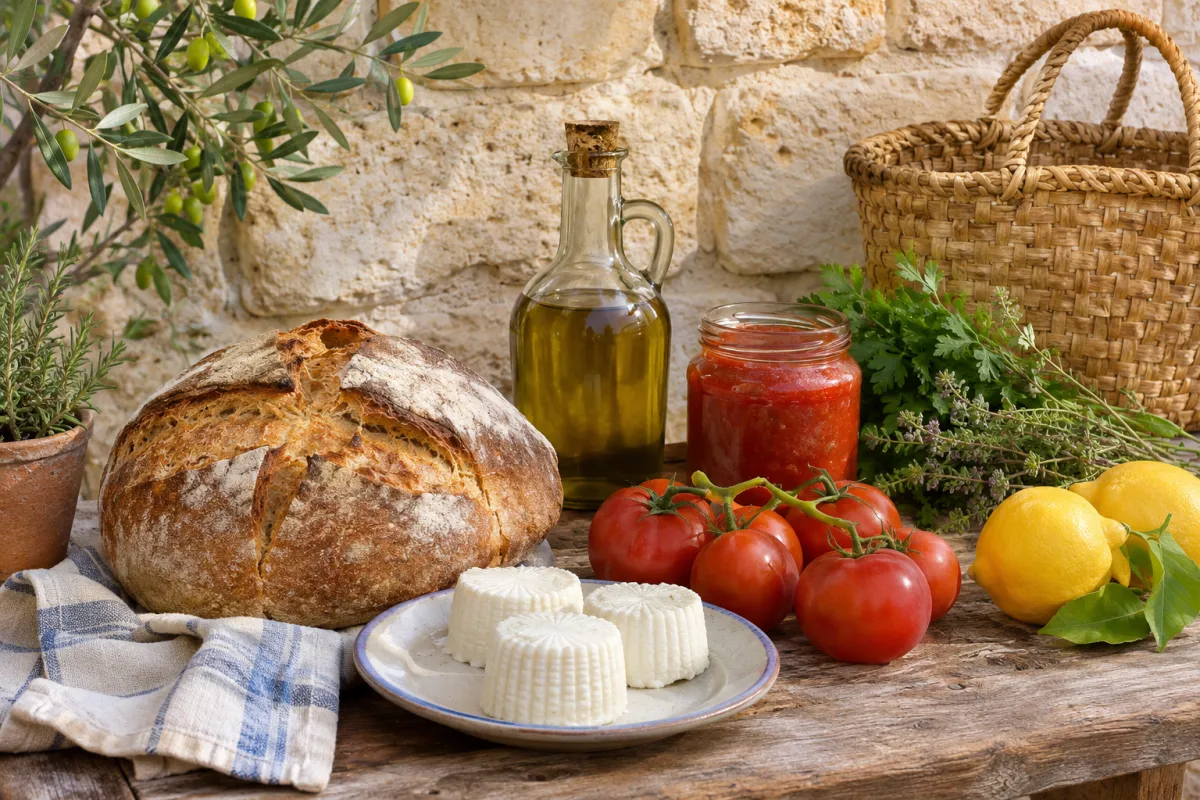
Two things stand out. The cheapest lines are the Maltese ones: a litre of Benna fresh milk at €1.37, a large ftira at 75 cents, a ġbejna at 83 cents. The most expensive lines are imported oils, coffee and branded cheese, which together make up more than half the basket. That pattern holds in every supermarket I have used here.
Local vs imported: where the money goes
Malta imports most of its food, so anything shipped in, refrigerated or branded carries that cost. Products made on the island usually do not. A practical way to read any Maltese supermarket shelf:
- Usually good value: fresh Maltese milk and yoghurt, ġbejniet, ricotta (irkotta), bread and ftira from local bakeries, kunserva, local eggs, seasonal local vegetables, and bottled water and soft drinks made in Malta.
- Usually expensive: British and northern European brands, specialist cheeses, breakfast cereals, imported meat cuts, nuts and anything labelled organic or free-from.
- Somewhere in between: Italian pasta, rice and tinned goods, which are widely stocked and often on promotion.
If you are used to a big UK or German discount supermarket, the brands you know will cost more here. The fix is not to stop eating them, it is to swap the everyday ones for local equivalents and keep the imports as treats.

Supermarket chains and where to shop
The weekly shop in Malta is split between a few types of shop. Our guide to supermarkets in Malta covers the chains, locations and opening hours in detail; here is how they compare on price in broad terms:
| Where | Examples | Price level | Best for |
|---|---|---|---|
| Discount supermarket | Lidl | Usually the lowest on own-label staples | Weekly basics, household goods |
| Large Maltese supermarkets | Pavi and Pama, Welbee’s, Greens, Scotts | Mid-range; frequent offers | Range, local brands, British and Italian imports |
| Corner shop (tal-ħwienet) | Neighbourhood grocers | Higher per item | Top-ups, bread, milk |
| Vegetable vans and markets | Vans parked in most towns; Marsaxlokk Sunday market; farmers’ markets | Often the cheapest for seasonal produce | Fruit, vegetables, fish |
| Bakeries | Village bakeries | Low | Ħobż, ftira, pastizzi |
Price levels are a general guide from shopping at each, not a published comparison; check current offers before a big shop. Last checked November 2026.
Most people end up with a hybrid: one big shop at a supermarket, bread from the bakery, fruit and vegetables from the van that parks on their street, and the corner shop when they run out of milk.
Monthly grocery budget for one person and a couple
There is no official grocery budget for Malta, so the figures below are worked examples, not averages. They start from the basket above and add fresh food at typical van and market quantities. Treat them as a starting point and adjust after your first month of receipts.
One person, cooking most meals
- Staples: most basket items last two to four weeks for one person; milk, bread, eggs and yoghurt are weekly.
- Fresh food: fruit, vegetables, chicken or fish and some meat each week.
- Household: cleaning products, toilet paper, toiletries.
- Typical result: in my experience a single person cooking at home, buying local where possible, spends somewhere around €250 to €350 a month on groceries. If you buy mainly imported brands, expect more.
Couple
A couple does not spend double: staples, oil, coffee and household products are shared, so most couples I know spend roughly one and a half to one and three-quarter times a single person’s grocery bill.
What the basket stretches to
To make the basket concrete, here is roughly how far those 16 items go for one person who cooks most evenings. The pasta, kunserva and olive oil cover several pasta dinners; the rice and potatoes are the base for another few meals with whatever fresh vegetables and protein you add from the van or the butcher. The eggs, bread, ftira, ġbejniet and cheese cover breakfasts and packed lunches for most of a week, and the coffee, sugar and flour last well beyond that. In other words, the €39.54 is not one week’s food: it is a starter cupboard plus a week of breakfasts and lunches, and the weekly spend after that is mostly fresh food, milk and bread.
That is also why your first month will look more expensive than the months after it. Oil, coffee, flour, spices and cleaning products are one-off purchases in month one and occasional top-ups afterwards, so judge your grocery budget on months two and three, not on your first big shop.
How to build your own number
- Keep every receipt for four weeks, including the van and bakery.
- Split them into staples, fresh food, household and treats.
- Look at the treats line first: imported snacks and drinks are usually where the money leaks.
- Set a weekly cash or card limit for the fresh-food line and stick to it for a month.
Compare the result with your take-home pay; our guide to the average salary in Malta has net-pay examples by sector so you can see what share food takes.

Food inflation and Budget 2027
Malta’s annual inflation rate rose to 2.4% in September 2026, from 2.0% in August, according to NSO data reported by Trading Economics. Food and non-alcoholic beverages were up 2.5% year on year (1.6% in August), and restaurants and hotels 3.5%. In plain terms: the weekly shop is creeping up a little faster than prices in general, and eating out faster again.
Budget 2027, presented on 26 October 2026, did not announce a food price measure. According to KPMG Malta’s Budget 2027 highlights, guidance on the VAT exemption for food, particularly ready-to-eat retail food, is being developed, and energy and fuel subsidies are retained, which keeps transport and electricity costs (and indirectly food distribution) stable. Employees get a cost-of-living adjustment of €6.41 a week from January 2027.
| Measure | Figure | Period / date |
|---|---|---|
| Annual inflation (HICP) | 2.4% | September 2026 |
| Food and non-alcoholic beverages | +2.5% year on year | September 2026 |
| Restaurants and hotels | +3.5% year on year | September 2026 |
| Cost-of-living adjustment for wages | €6.41 a week | From January 2027 (Budget 2027) |
Sources: NSO via Trading Economics (released 16 October 2026); KPMG Malta Budget 2027 highlights. Last checked November 2026.
Saving tips that actually work
- Buy local dairy and bread. Fresh Maltese milk, ġbejniet, irkotta and bakery bread are cheaper than imported equivalents and taste better.
- Use the vegetable van. Vans park in most towns on set days; seasonal Maltese produce (tomatoes and melons in summer, cauliflower, oranges and strawberries later in the year) is often cheaper than the supermarket.
- Return your bottles and cans. Malta’s beverage container refund scheme (BCRS) adds a refundable deposit to drinks containers; take them back to a reverse vending machine to get it back. Some online shop prices are listed excluding the deposit, so check.
- Shop the offers, not the brands. Italian pasta, rice and tinned tomatoes rotate through promotions constantly. Stock up when they are on offer.
- Cook in batches. A big pot of minestra or a tray of baked pasta (imqarrun) covers several meals for very little.
- Avoid the corner shop for the big shop. It is perfect for milk and bread, but the per-item mark-up adds up.
- Drink tap water filtered, if you are comfortable with it. Many residents buy bottled water for drinking; a filter jug cuts that cost.
Cooking vs eating out
Eating out is where food budgets in Malta really move. With restaurant and hotel prices up 3.5% in a year, a few dinners out a week can cost more than the whole weekly shop. That does not mean never going out; it means choosing:
- Cheap and local: pastizzi and a tea at a pastizzerija, a ftira from a bakery, or a takeaway Maltese bread with tuna, tomatoes and capers (ħobż biż-żejt) are some of the best-value meals on the island.
- Lunch over dinner: many restaurants run lunch menus that cost less than the same food in the evening.
- Cook and invite: a dinner at home for four costs a fraction of a restaurant meal for two.
Sharing groceries and food costs
Most newcomers start in a shared flat, and food is where flat-shares either work or fall apart. Our guide to sharing an apartment in Malta covers the lease side; here is what works for the kitchen:
- Share the basics, not everything. A shared kitty for oil, salt, coffee, toilet paper and cleaning products, topped up equally each month, avoids most arguments. Keep personal food separate.
- Use a simple split app or a shared note. Whatever you use, write down who paid for what and settle up monthly.
- Agree who pays before the shop. “I’ll buy, we split” and “everyone buys their own” both work. The problems come when nobody said which.
- Cook together once a week. A shared Sunday dinner or a potluck is cheaper than eating out and is how flatmates become friends.
Potlucks and food plans with new people
A potluck, where everyone brings one dish, is one of the easiest social plans for newcomers: low cost, clear who pays (everyone brings something), and no one has to host a full dinner. The same goes for a picnic on the rocks or a market morning followed by coffee. Our 30-day plan for making friends in Malta uses exactly these low-cost plans. If you meet people you do not know yet, keep the first plan in a public place, tell a friend where you are going, make your own way home and leave if anything feels off.
For the bigger picture of your first month, including the shopping you will need to set up a flat, see our step-by-step guide to moving to Malta.

Frequently asked questions (FAQ)
Are groceries expensive in Malta?
Staples are moderate and imported brands are expensive. A 16-item basket of everyday products cost €39.54 at Scotts’ online shop on 2 November 2026, with local items such as Benna milk (€1.37 a litre) and ftira (€0.75) among the cheapest lines and imported olive oil and coffee among the most expensive.
How much is a litre of milk in Malta?
A litre of Benna fresh whole milk cost €1.37 at Scotts’ online shop in November 2026, with semi-skimmed at €1.32 and skimmed at €1.20. Long-life imported milk usually costs more.
How much should I budget for groceries in Malta per month?
There is no official figure. As a worked example, one person cooking most meals and buying local products where possible might spend around €250 to €350 a month; a couple usually spends one and a half to one and three-quarter times that. Track four weeks of receipts to find your own number.
Which supermarket is cheapest in Malta?
Discount supermarkets such as Lidl are usually cheapest on own-label staples, while the larger Maltese chains run frequent offers. For seasonal fruit and vegetables, the vegetable vans and markets are often cheaper than any supermarket.
Is food inflation high in Malta?
Food and non-alcoholic beverage prices were 2.5% higher in September 2026 than a year earlier, according to NSO data, slightly above overall inflation of 2.4%. Restaurant and hotel prices rose 3.5%.
Did Budget 2027 do anything about food prices?
Budget 2027 did not announce a direct food price measure. KPMG Malta’s summary notes guidance on the VAT exemption for food is being developed, energy and fuel subsidies are retained, and wages get a €6.41 weekly cost-of-living adjustment from January 2027.
What is the BCRS deposit in Malta?
The beverage container refund scheme adds a refundable deposit to drinks bottles and cans. You get it back by returning empty containers to a reverse vending machine. Check whether a shelf or online price includes the deposit.
Want to turn this into an actual plan? MeetNow is a free app for meeting people in person: a host posts a plan at a public place, says who pays (host pays, split, pay your own or free) and picks who joins. It is live on the web and works in your browser, starting in Malta: open MeetNow and see the plans posted in Malta.