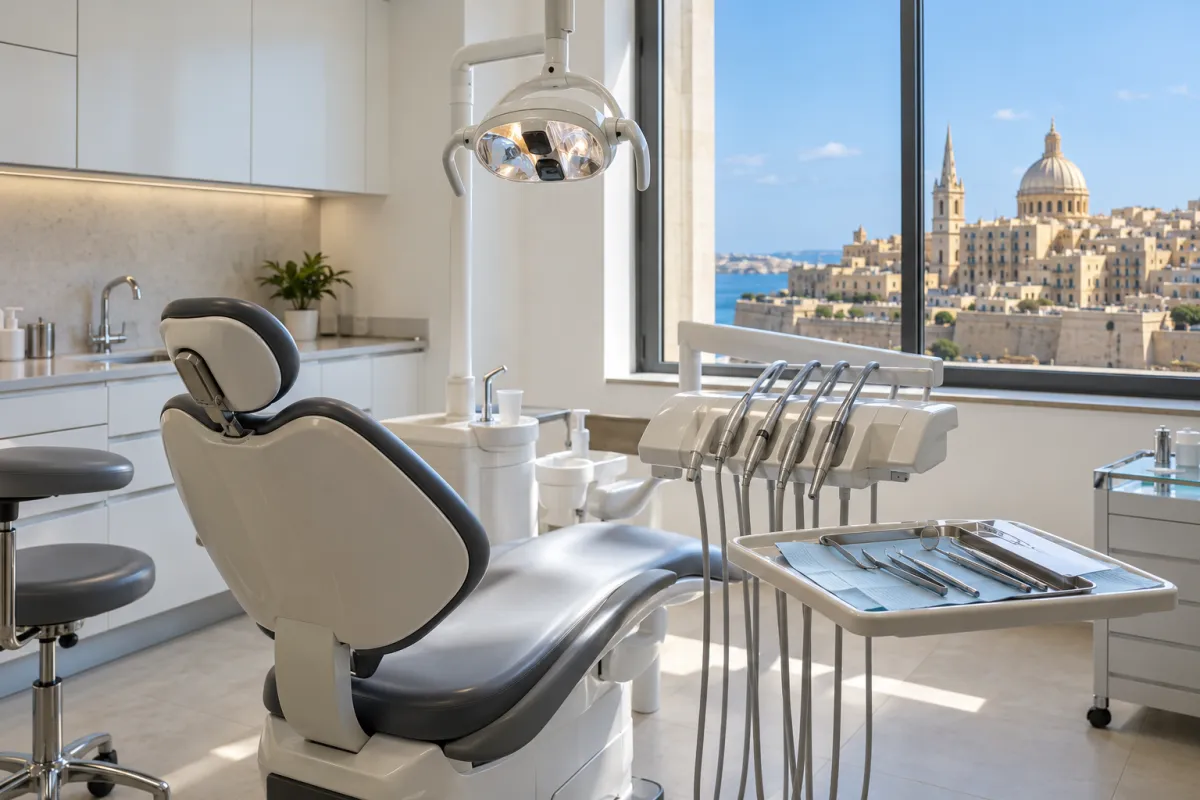
Short answer: most expats who need a dentist Malta-wide go private, because free public dental care is limited. The public Dental Department at Mater Dei Hospital serves Maltese citizens and residents with a residence permit, but free treatments such as fillings and dentures are restricted to certain groups and non-emergency care is means-tested. Private clinics are easy to find in every town, speak English and usually give appointments within days. Few clinics publish price lists; directory listings show fillings from about €35, and consultation fees vary, so ask for the price when you book and get a written estimate. Information last checked October 2026; this is general information, not medical advice.
The first time I cracked a tooth here, I spent an afternoon trying to work out whether I was “entitled” to anything before giving up and calling a private clinic down the road. It was fine, quick and cheaper than I feared. Here is what I wish I had known that day, so you can sort out a dentist before you need one.
Public vs private dentist in Malta
| Public (government) dental services | Private dentist | |
|---|---|---|
| Who can use it | Maltese citizens and residents with a residence permit; free treatment for specific groups only | Anyone who pays |
| Cost | Free for eligible groups and some services; others means-tested | You pay per treatment; insurance may reimburse |
| Waiting | Can be long for non-urgent care | Usually days, sometimes the same week |
| Where | Dental Department at Mater Dei Hospital and government health centres | Clinics in every town |
| Best for | Eligible patients, children’s orthodontics, specific entitlements | Check-ups, cleaning, fillings, cosmetic work, quick access |
What the public service covers
According to Mater Dei Hospital’s Department of Dental Surgery, Maltese citizens and residents with a residency permit can access its services. Fillings and dentures are provided free to people with the means-tested Schedule II (“pink form”) entitlement or with diabetes, and children under 16 can receive orthodontic treatment. The Council of European Dentists’ 2026 country report likewise describes free dental care in Malta as restricted to specific categories, with non-emergency care means-tested. In practice, a working expat without those entitlements will usually be pointed to a private dentist for routine care.

What a private dentist in Malta costs
Private clinics set their own prices, and few publish full price lists. These ranges come from clinics’ listings on dental directories (2025 to 2026) and from what friends have paid; treat them as a starting point, not a quote.
| Treatment | Typical range | What changes the price |
|---|---|---|
| Consultation / check-up | Varies by clinic; ask when booking | Whether X-rays are included |
| Cleaning (scale and polish) | From about €35; often more with a hygienist or deep clean | Hygienist or dentist; deep cleaning |
| Filling | From about €35; more for white composite and larger fillings | Material (white composite costs more), size, number of surfaces |
| Root canal, crowns, implants | Much higher; quoted per case | Tooth, materials, lab work, specialist involvement |
Price ranges from private clinics’ directory listings, checked October 2026. Ask every clinic for a written estimate before treatment.
Two tips. First, ask whether the check-up price includes X-rays, because that is the usual surprise. Second, for bigger work such as crowns or implants, get two quotes; prices vary widely between clinics. Dental costs belong in your first-year budget alongside rent and bills; our cost of living in Malta guide covers the rest of the monthly picture.
How to find and book a dentist
- Ask people who live here. Colleagues, neighbours and expat groups are the fastest way to a dentist with a good reputation near you.
- Search locally. Type “dentist Malta” plus your town into a map app: every town has clinics, so choose one within walking distance or a single bus ride.
- Check languages and services on the clinic’s website: most work in English and Maltese, and many list other languages.
- Call or book online. Many clinics take WhatsApp or online bookings. Say whether it is a routine check-up or pain, because that changes how quickly they fit you in.
- Ask about cost up front: consultation fee, X-rays and likely treatment costs.
- Keep receipts if you have insurance or a home-country scheme that may reimburse you.
Questions to ask at your first appointment
- What does this first visit cost, and are X-rays extra?
- If I need treatment, can I have a written plan with prices for each step?
- How do I reach the clinic out of hours if something goes wrong?
- Do you send reminders for check-ups, and by SMS, email or WhatsApp?
- Can you give me an itemised invoice for my insurer?
- Who covers for you when you are on holiday?
A good clinic will answer all of these without fuss. If you feel rushed into expensive treatment on the first visit, take the plan home and think about it; very few dental problems need a decision on the spot.
What to bring
- Your ID card, residence card or passport.
- A list of medicines you take and any allergies.
- Recent dental X-rays or records from home, if you have them.
- For the public service: any entitlement forms (such as the Schedule II pink form or Schedule V yellow form) and an appointment letter if you have one, as Mater Dei asks for these.
- Your insurance details.
Emergency dental care
Toothache rarely picks a convenient day. Your options, in the order I would try them:
- Call your own dentist or a nearby clinic. Many keep emergency slots and will see you the same day.
- Public emergency dental service. Mater Dei Hospital’s dental department lists an emergency service on Sundays and public holidays in the morning (9:00 to 12:00), with no appointment or referral needed. Check the hospital’s page before going, as arrangements can change.
- Pharmacist. For pain relief while you wait, a pharmacist can advise on over-the-counter options.
- Hospital emergency or 112. Go straight to hospital emergency or call 112 for facial swelling with fever, difficulty swallowing or breathing, heavy bleeding or a serious injury to the face or jaw.

Children, specialists and second opinions
Children
If you have moved with children, ask at your local health centre and school about the dental services available to children, and register with a family dentist early. Mater Dei’s dental department lists orthodontic treatment for children under 16 among its services. Our guide for expat families in Malta covers schools and weekends.
Specialists
For orthodontics, gum treatment, root canals, implants or wisdom teeth, your dentist will refer you to a specialist or treat you in-house if they are qualified. Ask who will actually do the work, what the full cost will be including follow-up visits, and what happens if a crown or filling fails within the first year.
Second opinions
For anything above a few hundred euros, a second opinion is normal and nobody will be offended. Bring your X-rays from the first clinic so you do not pay for them twice. If you are only here for a year or two, it can also make sense to plan major work around a trip home, as long as you are not putting off something urgent.
Insurance and home-country cover
- Private health insurance: many policies exclude routine dental care or offer it only as an add-on, while accidental injury to teeth may be covered. Read the dental section before you buy, especially if you are getting insurance for a residence permit.
- Employer schemes: some international employers include dental cover. Ask HR in your first week.
- EU visitors: the European Health Insurance Card covers necessary care during a temporary stay, but once you live here, your entitlement depends on your residence and social security status.
- Keep paperwork: itemised invoices with the dentist’s details make claims much easier.
Common dentist mistakes newcomers make
- Waiting for a dental emergency before finding a dentist.
- Assuming public dental care is free for everyone with a residence card.
- Agreeing to expensive treatment without a written estimate or a second opinion.
- Buying insurance for a permit without checking whether it covers any dental care at all.
- Throwing away receipts that a home-country insurer could have reimbursed.
Keeping your teeth happy in Malta
A few local habits are worth knowing. Many people here drink bottled or filtered water because of the taste of tap water, so mention your water habits at your first check-up and ask whether your dentist recommends anything extra. The long summer of iced coffees, granitas, ice cream and late dinners is fun and hard on teeth. Book a check-up and cleaning at the interval your dentist suggests, and put the next one in your calendar before you leave the clinic.
Where dental care fits in your first months
Healthcare tends to come after the urgent tasks: a flat, a job, a bank account and your residence card. Our step-by-step guide to moving to Malta puts those in order, and our Malta e-ID guide explains the residence card and online government login you will use for many health and admin services. If you work for a local employer, our guide to working in Malta explains contracts and benefits worth asking about.
And if a dental visit is the most social thing in your week, that is a sign to add something better. Even a short walk or a coffee with a colleague after work makes the admin months feel less lonely; our honest look at expat life in Malta covers how people build a routine here.
Finally, think about prevention as part of your budget. A check-up and hygiene clean once or twice a year usually costs far less than the fillings, root canals or crowns that neglected problems turn into. If you are on a tight budget, ask your clinic whether they offer package prices for a check-up plus cleaning, and book your next appointment before you leave so it does not slip.
Dentist Malta: FAQ
Is dental care free in Malta?
Only partly. The public Dental Department at Mater Dei Hospital offers services to Maltese citizens and residents with a residence permit, but free treatment such as fillings and dentures is limited to certain groups, and non-emergency care is means-tested. Most working expats use private dentists.
How much does a dentist cost in Malta?
Few clinics publish full price lists. Directory listings checked in October 2026 show fillings from about €35, and a check-up with cleaning can start at a similar amount; consultation fees, X-rays and materials vary by clinic, so ask for the price when you book and get a written estimate before treatment.
Where can I find an emergency dentist in Malta?
Many private clinics keep emergency slots, so call first. Mater Dei Hospital’s dental department lists an emergency dental service on Sundays and public holidays in the morning without an appointment. For facial swelling with fever, trouble breathing or serious injury, go to hospital emergency or call 112.
Do Maltese dentists speak English?
Yes. English is an official language and dentists routinely treat patients in English. Many clinics also list other languages spoken on their websites.
Does health insurance cover dentists in Malta?
Basic private health policies often exclude routine dental care or cover it only as an optional add-on, while accidental dental injury may be included. Check your policy’s dental section and claim process before treatment.
Want to turn this into an actual plan? MeetNow is a free app for meeting people in person: a host posts a plan at a public place, says who pays (host pays, split, pay your own or free) and picks who joins. It works in your browser and on Android through Google Play, starting in Malta; the iPhone app is not in the App Store yet. Open MeetNow and see the plans in Valletta, Sliema and St Julian’s.
This guide is general information, not medical advice. For urgent medical help call 112. We may mention products we are connected with; see the affiliate and product disclosure page linked in the site footer.