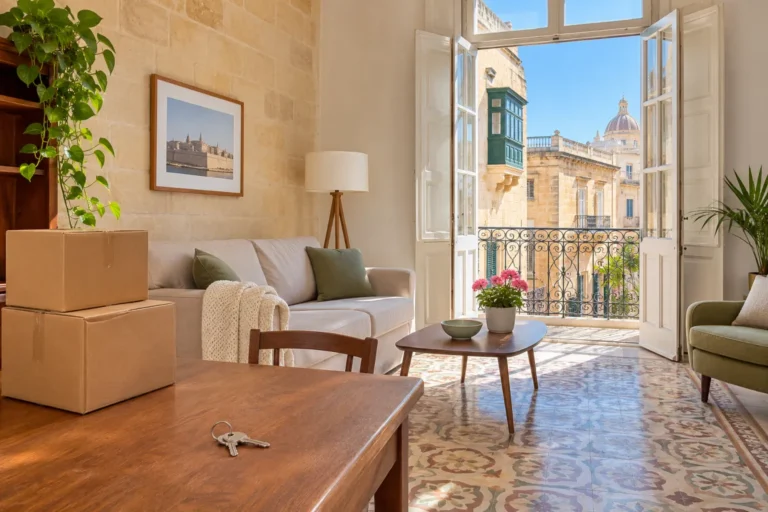
Being a trailing spouse in Malta means moving for your partner’s job and then working out a life of your own here. Whether you can work depends on your permit: family members of EU citizens can, family members of non-EU workers usually need their own authorisation, and partners on a Nomad Residence Permit cannot take local jobs. Beyond paperwork, the real task is building your own routine and friends.
This trailing spouse Malta guide covers both sides: what the rules allow, and how accompanying partners in Malta turn the first lonely months into a life that feels like theirs.
What being a trailing spouse in Malta looks like
“Trailing spouse” is an old-fashioned phrase, and many people prefer “accompanying partner”. Whatever you call it, the experience is familiar. Your partner starts work on day one with colleagues, a routine and a reason to get up. You start with an empty flat, a list of admin and nobody to call.
Malta makes some things easier than elsewhere: English is spoken everywhere, the island is small and safe, and there is a large international community. But the same expat-heavy, job-centred social life that helps your partner can leave you on the outside, especially in the first months.

Work rights by permit type
| Your situation | Can you work in Malta? |
|---|---|
| You are an EU, EEA or Swiss citizen | Yes, freely, like any EU citizen |
| Your partner is an EU citizen and you are not | Generally yes: family members of EU citizens with a right of residence can take up work |
| Your partner is a non-EU worker and you joined through family reunification | Not automatically: you usually need your own work authorisation |
| Your partner holds a Nomad Residence Permit and you are included as family | No local work; the permit is for remote work for employers or clients abroad |
Simplified overview; last checked November 2026. Rules change and individual cases differ, so check with Identità or Residency Malta Agency before you plan around a job.
Family reunification for non-EU workers has its own conditions, set out in Malta’s family reunification regulations on legislation.mt. They include a period of lawful residence by the sponsor, a reasonable prospect of long-term residence, sufficient stable income, suitable accommodation and health insurance. Plan the timing with your partner’s employer before you move, because it affects when you can join and what you can do on arrival.
The first-months slump
Many accompanying partners describe the same pattern: a busy, exciting first fortnight of setting up the flat, then a slump around weeks four to eight when the admin is done and the days feel empty. It is normal, and it usually passes once you have two or three regular commitments of your own.
Things that make the slump worse: waiting for your partner to come home to have any conversation, spending all day online with friends back home, and putting off plans until “you feel settled”. Things that help: getting out of the flat every morning, saying yes to small invitations and starting one regular activity in the first month, even before you feel ready. Our guide to being homesick in Malta covers this stage in more detail.
What you can do with your time
- Work, if your permit allows. Malta’s labour market is tight, and English-speaking professionals are in demand in many sectors. Our Malta careers guide shows where expats are hired.
- Remote work for clients abroad, if your status allows it. Check the rules for your permit first.
- Study. University, MCAST, lifelong learning evening courses or an English, Maltese or other language course give your week structure and new people. Our guide to learning Maltese is a good start.
- Volunteer. Charities, animal shelters and heritage groups welcome people with professional skills and time; see our guide to volunteering in Malta for expats.
- Start a project. Writing, photography, a fitness goal or a creative skill can become a social life of its own when you join a group around it.
Building friendships of your own
The single most important thing a trailing spouse can do in Malta is build friendships that do not depend on your partner’s workplace. Partner-work friendships are pleasant, but they disappear if the job changes, and they rarely meet your own interests.
Places where accompanying partners often find their people:
- Groups for expat women, men, mums and dads. Our guides to the expat community in Malta and expat families in Malta list active networks.
- Daytime activities. Walking groups, morning swims, yoga, art classes and coffee mornings are full of people with flexible schedules.
- School gates, if you have children: other parents are often in the same position.
- Other newcomers. More than one in four residents of Malta is foreign, so you are far from alone; our guide to expats living in Malta shows where they live and how they connect.
- Classes, where seeing the same people weekly builds familiarity quickly.
Then take the step that turns faces into friends: invite one person for a coffee or a walk. Many accompanying partners are waiting for someone else to suggest it.
Malta-specific tips for accompanying partners
- Use the mornings. Malta’s cafés, beaches and walking routes are at their best and quietest early in the day, which suits someone with a flexible schedule. A regular morning swim or walk is an easy anchor.
- Learn the bus network early. If your partner takes the car to work, the buses become your freedom. A personalised tallinja card and the journey planner app make the island feel much smaller.
- Look beyond Sliema and St Julian’s. Village festas in summer, markets, and towns such as Mdina, Marsaxlokk and Gozo give you a different side of Malta to explore on your own terms.
- Expect slow admin. Residence cards and appointments can take time. Keep copies of everything and try not to let waiting for paperwork stop you starting your social life.
- Plan for summer. Many groups slow down in July and August, when it is hot and people travel. Use the cooler months to build your circle so it carries you through the quiet season.
Looking after the relationship
Moves put pressure on couples, especially when one partner’s life is full and the other’s feels empty. A few habits help:
- Name the imbalance. Talk openly about how differently the move is going for each of you.
- Share the admin, rather than leaving it all to the partner at home.
- Protect your own plans. Your evening class matters as much as their after-work drinks.
- Plan something together each week that is new to both of you, so Malta becomes a shared adventure.
- Get support if you need it. Our guide to mental health support for expats in Malta lists where to turn.
A 90-day trailing spouse Malta plan
| When | Focus |
|---|---|
| Weeks 1 to 2 | Admin, neighbourhood walks, one daily reason to leave the flat |
| Weeks 3 to 4 | Try two activities: one with other expats, one with Maltese people |
| Month 2 | Commit to a weekly class, sport or volunteering role; check your work options |
| Month 3 | Host a small plan yourself: a coffee, a walk or a dinner for four |
By the end of three months, aim for three regular commitments that are yours alone. That is usually the point where Malta stops feeling like your partner’s posting and starts feeling like your home too.
Want to turn this into an actual plan? Open MeetNow and see the plans in Malta. It is free and works in your browser: a host posts a plan at a public place, says who pays (host pays, split, pay your own or free) and picks who joins from the short notes people send. MeetNow is live on the web, starting in Malta.
Frequently asked questions (FAQ)
Can a trailing spouse work in Malta?
It depends on the permit. EU citizens and family members of EU citizens can generally work. Family members of non-EU workers usually need their own work authorisation, and family members on a Nomad Residence Permit cannot take local jobs.
Can my partner join me in Malta on a Single Permit?
Possibly, through family reunification. Conditions include a period of lawful residence, a reasonable prospect of long-term residence, sufficient income, suitable accommodation and health insurance. Check the current rules with Identità.
How do trailing spouses make friends in Malta?
By joining weekly activities of their own, such as classes, walking groups, volunteering and expat networks, and by inviting people for coffee rather than waiting to be invited.
Is it normal to feel lonely as an accompanying partner?
Yes. Many accompanying partners feel a slump a month or two after arrival, once the admin is done. It usually eases once you have a few regular commitments and some friendships of your own.
Can family members on a Nomad Residence Permit work in Malta?
Not in the local job market. The Nomad Residence Permit is for remote work for employers or clients outside Malta, and family members who want a local job need their own work permit.