Remote work from Malta usually starts the same way. You rent a flat in Sliema, Gżira or Msida and work at the kitchen table, with sea light coming through the shutters. By Thursday you notice that the only person you’ve spoken to all week is whoever serves you at the pastizzi counter. The island makes the practical side fairly easy: English is an official language, the time zone sits in the middle of Europe, and most places remote workers live are a short walk or bus ride apart.
The harder part is building a week that doesn’t shrink to home, screen, supermarket, repeat. This guide covers both sides:
- the permit facts, as the official agency states them
- the best area in Malta for digital nomads, depending on how you work
- an honest list of pros and cons
- a Malta vs Portugal comparison
- a sample weekly routine built so that you actually meet people
It’s written for people who are deciding, or who have just landed. Nothing here is legal or tax advice. Where the rules matter, we point you to the official source.
What remote work from Malta actually looks like
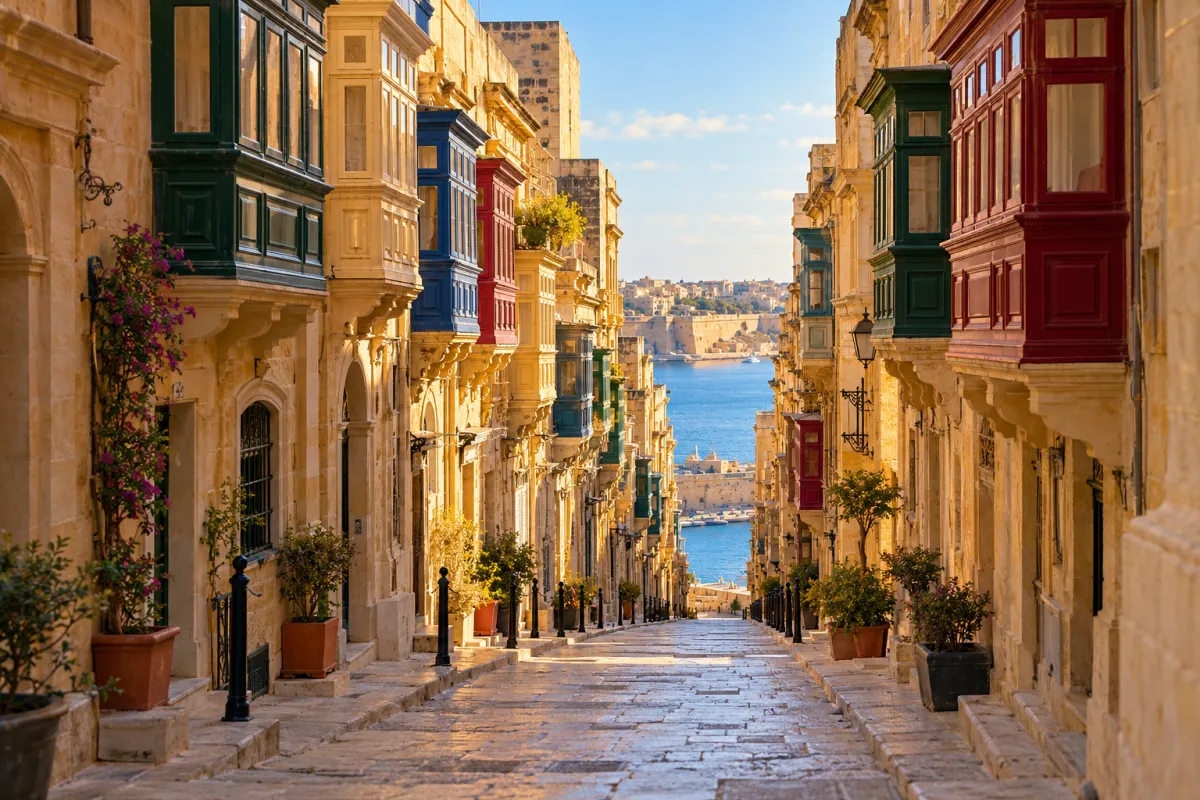
Most remote workers end up in the same strip of the island: Sliema, St Julian’s, Gżira, Ta’ Xbiex and Msida around the harbours, with Valletta just across the water. That cluster matters. Coworking spaces, gyms, supermarkets, swimming spots and other people working remotely are usually within walking distance, which is rare in many European cities.
The rhythm changes with the seasons:
- Late spring to early autumn: the heat pushes outdoor life to the early morning and the evening. Many people work indoors through the middle of the day and swim afterwards.
- Winter: it’s mild outside, but flats can feel cold and damp. Many older buildings were designed for summer, not for heating, so ask how a flat is heated before you sign.
Then there are the honest annoyances:
- Construction is everywhere. A building site next door can wreck both your concentration and your video calls.
- Buses are useful but slow at peak times, especially along the coast road.
- Bureaucracy runs on appointments, paperwork and patience.
None of this is a dealbreaker, but it shapes where you should live and how you plan your week.
The part nobody warns you about
Malta is sociable on the surface and harder to break into underneath. Maltese people often have close circles built over years of school, family and village life. The expat crowd, by contrast, is transient: people come for a season or a contract and then leave. Add working from home, and newcomers can find themselves three months in with plenty of acquaintances and no one to call on a Wednesday.
Our guide to the digital nomad community in Malta covers where remote workers actually meet. The rest of this article is about building that into a normal week.
A habit that helps: pick one weekday plan with a fixed place and time, and invite people to it instead of waiting to be invited. MeetNow, a free app launching in Malta, is built around exactly this kind of plan. There’s more about it near the end of this guide.
Digital nomad Malta pros and cons
Here is the honest list from someone who has lived here for years. Whether Malta suits you mostly comes down to how much you value convenience and English compared with space and variety.
Pros
- English everywhere. English is an official language alongside Maltese. Leases, doctors, banks and small talk are all manageable from your first week.
- A central time zone. Malta runs on Central European Time, the same as Rome, Berlin and Paris. European clients are easy, and you get reasonable overlap with both the Americas and Asia.
- Everything is close. In the harbour towns you can walk from your flat to a coworking space to the sea. Plenty of people live here without a car.
- The sea as a daily habit. In the warmer months, an after-work swim off the rocks becomes routine rather than a holiday treat.
- EU membership. You get the euro, EU consumer rules and easy flights to the rest of Europe.
- Social density. The remote-work scene is concentrated in a few towns, so you keep running into the same people. That repetition is how acquaintances become friends.
Cons
- Rent in the popular areas. Sliema and St Julian’s are where most remote workers want to live, and prices reflect it. Compare neighbouring areas before you commit.
- Construction and noise. Walk the street at different times and look for cranes and empty plots before signing a lease.
- Traffic and buses. Distances are short but journeys can be slow. Living near where you work and socialise matters more than the map suggests.
- Summer heat and crowds. High summer is humid and busy. For most people, air conditioning in the flat is not optional.
- Island fever. After several months the island can feel small. Regular trips to Gozo or abroad help.
- A transient crowd. Friends leave. A mix of nomads, long-term expats and Maltese people protects you from your whole circle moving on at once.
The verdict for most people: remote work from Malta is easy to set up and pleasant to live with. It rewards people who plan their social life on purpose. If you expect friendships to happen by themselves, the cons get louder.
Malta vs Portugal for digital nomads
Portugal is the comparison almost everyone makes. Both countries offer sun, sea, residence routes for remote workers and established nomad scenes. Day to day, though, they feel very different.
| Factor | Malta | Portugal |
|---|---|---|
| Language | English is official alongside Maltese | Portuguese; English is common in Lisbon, Porto and tourist areas |
| Size and variety | Compact; everything is close, but it can feel small | A full country of cities, coast, countryside and islands |
| Time zone | Central European Time | Western European Time on the mainland, the same as the UK |
| Remote-work permit | Nomad Residence Permit via Residency Malta Agency | Its own remote-worker residence route; check Portuguese official sources |
| Nomad scene | Concentrated in a few towns; easy to become a regular | Larger and more spread out across several cities and regions |
| Getting around | Buses, harbour ferries and the Gozo ferry; flights for anything further | Trains, long-distance buses and road trips within the country |
| Weather | Hot, dry summers and mild winters | Similar in the south; the north and the Atlantic coast are cooler and wetter |
Put simply:
- Choose Malta if you want English, short distances and a concentrated community where it’s easy to become a familiar face.
- Choose Portugal if you want more room, more variety between cities, and the option to move around within one country.
Many remote workers try both. If you’re comparing permits, read each country’s official requirements side by side instead of relying on summaries, because thresholds and document lists change.
Nomad Residence Permit: the facts that matter
The Nomad Residence Permit is Malta’s route for third-country nationals who want to live here while working remotely for employers or clients abroad. EU, EEA and Swiss citizens move under free movement rules and follow a separate registration process instead.
Everything in the table below comes from Residency Malta Agency. Details can change, so confirm them on the official Nomad Residence Permit pages before you apply.
| Requirement | What the official source says |
|---|---|
| Income | Applicants need a minimum gross yearly income of €42,000 (Residency Malta Agency). |
| Application fee | A non-refundable administrative fee of €300 per person applies (Residency Malta Agency). |
| Validity and renewal | The permit is typically issued for one year and can be renewed on re-application, subject to ongoing compliance (Residency Malta Agency). |
| Type of work | Applicants must work independently of location using telecommunications technologies and fit one of three categories: employed by a foreign-registered employer, partner or shareholder in a company registered abroad, or freelancer or consultant serving mainly foreign-established clients under active contracts (Residency Malta Agency). |
| Health insurance | Comprehensive health insurance covering all risks across the EU, including Malta. |
| Accommodation | A valid property rental or purchase agreement in Malta. |
What this means in practice
- Sort out accommodation early. The permit needs a valid rental or purchase agreement, so an informal arrangement won’t do. Many people start in a short let while they look. Check with the agency whether your specific agreement type is accepted.
- Read your insurance wording. Basic travel insurance with limited cover may not meet a requirement for comprehensive cover across the EU. Compare the policy against the official wording before you buy.
- Keep renewal paperwork from your first month. Renewal depends on ongoing compliance, so file contracts, invoices and payslips as you go instead of rebuilding them later.
- Budget per person. The fee applies per person. If family members are coming with you, the official pages explain who can be included and what they need.
For a step-by-step walkthrough, see our guide to the Malta Nomad Residence Permit requirements, fees and steps. Tax is a separate question. Our article on Nomad Residence Permit tax rules summarises what the official pages say, and the primary source is the Commissioner for Revenue.
Not legal or tax advice. This is a summary of public information from official sources. Your nationality, contract type and family situation can change what applies to you, so check with the agency and, where needed, a qualified adviser.
Best area in Malta for digital nomads
There is no single best area in Malta for digital nomads, only the best area for how you work. The table compares the main options by working style and social life rather than by rent, because rents move quickly. For rents and bus links, see our guide on where to live in Malta.
| Area | Best for | Work setup | Social side | Trade-offs |
|---|---|---|---|---|
| Sliema | First-timers who want everything walkable | Several coworking spaces and many laptop-friendly cafés | Promenade walks, swimming off the rocks, plenty of other remote workers | Busy, noisy in places, higher rents |
| St Julian’s | People who like a lively bay with restaurants and gyms | Coworking options and cafés around the bay | Easy to arrange dinners and after-work meet-ups | Weekend noise near the entertainment streets |
| Gżira and Ta’ Xbiex | People watching their budget who still want the Sliema side | Walking distance to Sliema coworking; quieter residential streets | Marina promenade for runs and walks | Fewer cafés to work from; some busy main roads |
| Msida | Tighter budgets and anyone linked to the university | Close to the University of Malta; a busy bus junction | Student crowd and the marina | Traffic on the main roads; less sea swimming |
| Valletta | People who want character and quieter evenings | Coworking spaces in the capital and atmospheric cafés | Cultural events, harbour views, the ferry to Sliema | Fewer flats, older buildings, steep streets |
| Gozo | Deep work, a slower pace and nature | Fewer coworking options; test the internet carefully | Smaller community, hiking and diving | You depend on the ferry for mainland plans and flights |
Coworking prices change often, so we keep them in dedicated guides that show the date each price was checked. See coworking in Sliema: day passes, monthly prices and community and coworking in Valletta and its after-work life.
A day pass is the cheapest way to test a space before you commit to a monthly plan. If the space runs community events, go on an event day: you’ll learn more about whether you’d fit in from one shared lunch than from a tour.
Three questions to decide
- How many days a week will you leave the flat to work? If it’s two or more, live within walking distance of the coworking space you like. A long bus ride each way quietly kills the habit.
- Do you want the sea as part of your routine? If so, Sliema, St Julian’s and the Gżira side make an after-work swim easy. Msida and inland towns make it a small expedition.
- Will you go out midweek without a car? If you want weekday dinners and activities without planning transport each time, the harbour towns win.
Internet, time zones and the workday
Internet
Fibre is common in newer flats and coworking spaces, but don’t assume a particular flat has a good connection. Here’s what to do:
- Ask the landlord what connection the flat has and who the contract is with.
- During the viewing, run a speed test and make a short video call from the room you’d work in. Thick limestone walls can weaken Wi-Fi between rooms.
- Keep a mobile data plan you can use as a hotspot as backup for calls that matter.
- Keep a charged power bank. Summer heatwaves have caused local power cuts in recent years, and knowing your nearest coworking space saves a stressful afternoon.
Time zones
Central European Time makes European teams effortless. US East Coast colleagues overlap with your afternoon and early evening, and Asia-Pacific clients fit into your morning. The real risk is not the time difference but letting calls take over your evenings. Protect at least two evenings a week from late calls, otherwise every social plan in this guide becomes impossible to keep.
Shaping the day
In summer, the classic Malta workday is this: an early swim or walk, focused work through the hot middle of the day, then outside again in the evening. In winter, bright mornings are the best time to get out of the flat.
Build some slack into anything that depends on a bus. Walking along the seafront between Sliema and St Julian’s is often as quick as the bus at peak times, and it’s a pleasant way to end a work session.
How to avoid isolation when you work from home
Loneliness is the most common complaint among remote workers here, and it rarely comes from a lack of people. It comes from a lack of repetition. These habits work, roughly in order of how much they help.
- Fixed out-of-flat days. Decide which two or three weekdays you work somewhere other than home and treat them like office days. Coworking is social infrastructure as much as a desk.
- Repeat instead of sampling. The same lunch spot, the same swim time, the same weekly class. People start greeting you by the third or fourth time, and that’s where friendships start.
- Go to the community events. If your coworking space runs lunches, talks or after-work drinks, the first one is awkward and the third is easy.
- Be the one who suggests the plan. “Want to grab lunch sometime?” goes nowhere. A specific place, a specific day and a clear “pay your own” or “let’s split” gets a yes.
- Mix your circles. Other nomads are great company but they leave. Long-term expats, neighbours, colleagues in a class and Maltese friends make your week sturdier. A few words of Maltese and turning up to local events go a long way.
- Use your body. Sea swimming in season, running along the promenades, a gym class, or coastal walks in the north and on Gozo. Shared activity takes the pressure off conversation.
A sample weekly social routine
This is a template, not a prescription. The idea is to have at least one social anchor most days, with only a couple of them needing much effort. Swap the swim for a gym class or a walk in winter.
| Day | Work setup | Social anchor | Why it helps |
|---|---|---|---|
| Monday | Home, focused work | Evening walk along the promenade, alone or with a neighbour | A low-effort reset after the weekend |
| Tuesday | Coworking space | Lunch with whoever is around, pay your own | Shared lunch is the easiest conversation you’ll have all week |
| Wednesday | Home | After-work swim or a sport class | Same time every week, so faces become familiar |
| Thursday | Coworking or a café | Small-group dinner or drink, bill split | Turns coworking acquaintances into friends |
| Friday | Shorter day if your job allows | A long lunch with someone you’ve met only once or twice | Converts a loose contact into a real one |
| Saturday | Off | A day trip: a Gozo ferry crossing, a coastal walk or a village festa | Fights island fever and gives you shared stories |
| Sunday | Off | A market, a slow brunch, or a family lunch if Maltese friends invite you | Rest, plus a window into local life |
How to host a plan people say yes to
The plans that work share four things: a public place people already know, a clear time, a small number of seats and an upfront answer to who pays. Two examples:
- “Weekday lunch near the coworking space, pay your own, a handful of seats.”
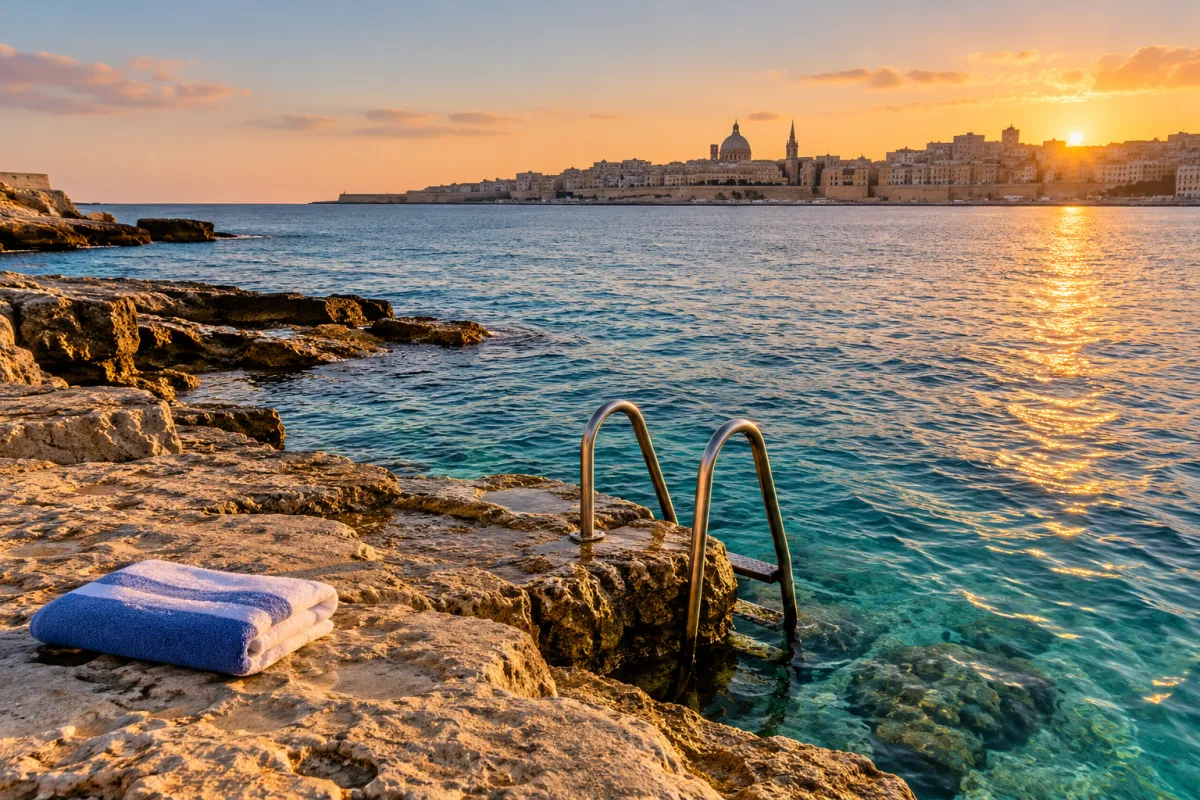
- “Swim off the Sliema rocks after work, free, bring a towel.”
Both are better than an open-ended group chat. Keep the first plans short, like a lunch or a swim, so saying yes is easy for people who don’t know you yet.
Meeting new people safely
Malta feels relaxed, and most newcomers are comfortable walking around. The usual common-sense rules still apply when you meet people you don’t know yet:
- Meet in a public place, such as a café, restaurant, beach or promenade, rather than someone’s flat.
- Tell a friend where you’re going and who you’re meeting.
- Have your own way home. Know your bus route or have a ride-hailing app set up so you’re not relying on someone you’ve just met.
- Leave if you feel uncomfortable. You don’t owe anyone an explanation.
- Keep personal details for later. Your home address can wait until you know someone.
Want to turn this into an actual plan? MeetNow is a free app for meeting people in person: a host posts a plan at a public place, says who pays (host pays, split, pay your own or free) and picks who joins. It is live on the web and works in your browser, starting in Malta. The Android app is on Google Play; the iPhone app is not in the App Store yet. Open MeetNow and see the plans posted in Malta.
Remote work from Malta: FAQ
Do I need a permit for remote work from Malta?
It depends on your nationality. EU, EEA and Swiss citizens live in Malta under free movement rules and follow a separate registration process. Third-country nationals who want to live here while working remotely for a foreign employer, their own foreign company or foreign clients typically look at the Nomad Residence Permit from Residency Malta Agency. Check the official pages for your own situation; this is general information, not legal advice.
What is the best area in Malta for digital nomads?
For a first stay, Sliema or Gżira is the easiest choice: coworking spaces, cafés, the sea and other remote workers are all within walking distance. Valletta suits people who want character and quieter evenings, Msida suits tighter budgets and anyone linked to the university, and Gozo suits deep work and a slower pace if you can live with the ferry.
Is Malta or Portugal better for digital nomads?
Neither is better across the board. Malta offers English as an official language, a central European time zone, short distances and a concentrated community where it is easy to become a regular. Portugal offers more space, more variety between cities and regions, and a larger, more spread-out nomad scene. Compare each country’s official permit requirements directly before deciding.
How do remote workers in Malta avoid getting isolated?
Treat your social week like your work week. Get out of the flat on fixed days, use a coworking space for its community events and lunches, repeat the same activities so faces become familiar, and suggest specific plans with a place, a time and who pays rather than waiting for invitations. Mixing with long-term expats and Maltese people, not only other nomads, keeps your circle stable when people leave.
Is the internet in Malta good enough for video calls?
In most harbour-area flats and coworking spaces it is, but quality varies by building. Ask the landlord what connection the flat has, test it during the viewing, keep a mobile data backup for calls that matter, and know your nearest coworking space in case of an outage.
How is Nomad Residence Permit income taxed in Malta?
Tax treatment is set by Malta’s Commissioner for Revenue, and it depends on your circumstances. Read the official guidance on the Commissioner for Revenue website and speak to a qualified tax adviser before relying on any assumption. We summarise what the official pages say in our separate article on the permit and tax, but we do not give individual tax advice.