In Malta, a bus will often sail past a stop if nobody signals the driver, and that small detail sums up why newcomers need more than a route map. This public transport in Malta guide covers how the buses, harbour ferries and lift actually work. It also covers what you pay before and after you get a personalised tallinja card, and when a taxi app or a rental car is the smarter choice.
The good news is that once you are a resident with the right card, most of your bus travel costs nothing. The less good news is that the network runs on Malta’s roads, which means traffic, crowded summer routes and the occasional bus that turns up already full. Plan for both and you will get around fine.
Everything here is written for people in their first months: students, remote workers and anyone who has just landed with a suitcase and no car. Fares and rules come from the official Malta Public Transport site, so check there before you rely on any figure.
Public transport in Malta is mainly the tallinja bus network, plus harbour ferries and the Barrakka Lift. Residents with a personalised tallinja card travel free on most routes across Malta and Gozo but must tap on every boarding. Everyone else pays a single fare on board by cash or contactless, and the express Tallinja Direct and On-Demand services need paid credit.
Public transport in Malta guide: how the system fits together
Think of the system in layers. Buses are the backbone and reach almost every town and village on both islands. Valletta’s bus terminus, just outside the city gate, is the main hub where many routes start and end. On top of that sit the harbour ferries linking Sliema and the Three Cities with Valletta, and the Barrakka Lift that carries you from the Grand Harbour waterfront up into the capital. Ride-hailing apps and taxis fill the gaps, and a car is optional for most people living in the central and northern towns.
There is no metro, tram or train. If you are coming from a city with rail, the adjustment is mostly mental: your journey time depends on the road, not on a fixed timetable, so you think in terms of windows rather than exact minutes.
Route types you will see
- Day routes: the standard numbered services you will use for commuting, shopping, and getting to school or work.
- Night routes (N): a smaller set of late services on selected corridors, priced separately from day routes for anyone paying a single fare.
- Special Services (S): routes the operator runs for particular needs, also priced separately.
- Tallinja Direct (TD): limited-stop express routes, including some airport links, that skip many stops and sit outside the free scheme.
- On-Demand: flexible services that work differently from fixed routes and are also outside the free scheme; check the official site for where they run.
What the buses are honestly like
Buses in Malta are cheap or free, reasonably frequent on the main corridors and slow when traffic builds. Routes through Msida, Birkirkara and the Sliema to St Julian’s strip can crawl at peak times, and in the busiest months a bus may pass your stop because it is already full. None of this is a reason to avoid them. It is a reason to leave a buffer before anything with a fixed start time, like a job interview, an exam or a government appointment.
Two habits make a big difference. Wave clearly at the driver as the bus approaches, even if you are standing right at the stop, and press the stop button in good time before you want to get off. Drivers will not assume you want their bus just because you are waiting there.

Step by step: getting around from your first week
-
Pay as you go on arrival. Before you have a personalised card, board at the front door and pay the driver by contactless card or cash. Keep the paper ticket, because standard tickets are valid for two hours, so you can change to a connecting bus within that window without paying again (Malta Public Transport fares page).
-
Install the tallinja app. Use it to plan journeys, find stops and see when the next bus is due. Live times are a guide rather than a promise, so treat a bus shown as arriving shortly as coming soon rather than to the minute. Our guide to key Malta bus routes and the tallinja app lists the lines most newcomers end up using and how to read the planner.
-
Sort your residence paperwork early. The personalised card is tied to you as a resident, and in practice the identity paperwork tends to be the slow part rather than the card itself. Book your Identity Malta appointment as soon as you know you are staying. Our Malta e-ID guide to activating it and booking appointments walks through the booking side.
-
Apply for a personalised tallinja card. This is the version that shows your name and photo, and it is the one that unlocks free travel. Eligibility rules and the documents needed are set out on the official site; our tallinja card application walkthrough covers the process from form to first tap.
-
Tap every single time. Free does not mean ticketless. You must tap your personalised card on the validator every time you board, and failing to validate a travel card or riding without proper documentation results in a €50 fine (publictransport.com.mt). Make it automatic, like locking your front door.
-
Keep some credit on the card. Tallinja Direct express routes and On-Demand services are not covered by the free scheme, so you need tallinja credit to use them. Top up well before an early airport run rather than discovering a zero balance at the bus door with a suitcase in hand.
-
Learn your local stops and a backup route. Find the nearest stop on each side of your street, because the stop for the outbound direction is often a short walk from the inbound one. Then find a second route that gets you close to work, school or the shops in case your usual bus is full or late.
-
Set up taxi apps as a fallback. Install Bolt and Uber, and consider eCabs, so you have a plan when the last bus has gone, the rain is heavy or a bus simply fails to show. Add a payment method and your home address before you need them.
Bus fares and costs in 2026
These are the fares and rules that matter for newcomers. Fares change, so treat the official page as the final word.
| Ticket or rule | Cost or detail | Notes | Source |
|---|---|---|---|
| Personalised tallinja card: day routes, night routes, selected Special Services | Free | Across Malta and Gozo; tap on every boarding | Malta Public Transport |
| Single fare, day routes (winter) | €2.00 | Cash or contactless on board | Malta Public Transport |
| Single fare, day routes (summer) | €2.50 | Cash or contactless on board | Malta Public Transport |
| Single fare, Night (N) and Special Services (S) | €3.00 | For passengers without a personalised card | Malta Public Transport |
| Tallinja Direct (TD) and On-Demand | Paid from tallinja credit | Not covered by the free scheme | Malta Public Transport |
| Standard ticket validity | Two hours | Free transfers within the window | Malta Public Transport |
| Riding without a valid, validated ticket or card | €50 fine | Applies even when your travel is free | Malta Public Transport |
| Marsamxetto harbour ferries and Barrakka Lift | Listed among included connections | Check current terms before travelling | Malta Public Transport |
The practical takeaway is simple. If you are staying beyond a short visit and qualify, the personalised card is the biggest saving available on everyday transport, because it turns a daily cost into nothing. Until it arrives, contactless is the easiest way to pay. Knowing that single fares change between winter and summer means the higher summer price will not catch you off guard.
Budget-wise, the costs that actually add up for most newcomers are not bus fares at all. They are the occasional express route, ride-hailing trips when buses do not fit your schedule, and, if you go that way, a car with fuel and parking. Keep those three in mind when you plan your monthly spending.
Harbour ferries, the Barrakka Lift and Gozo
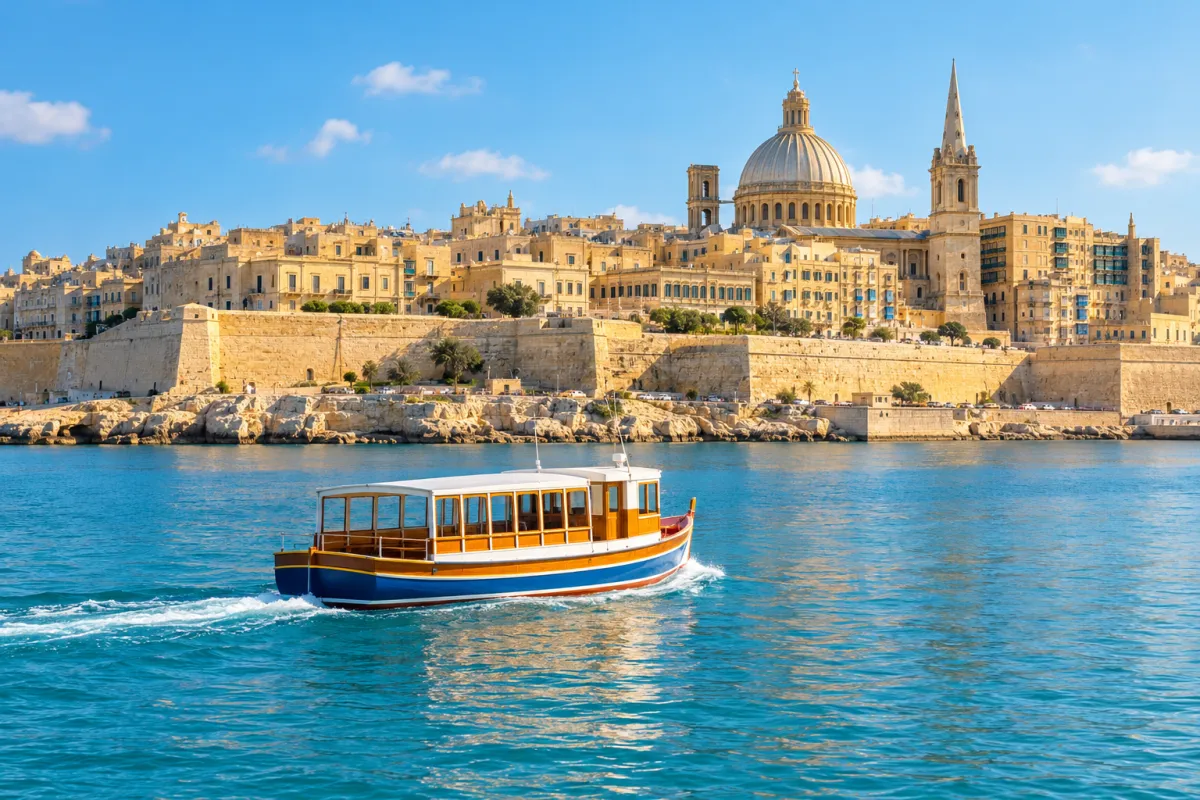
The harbour ferries are the most pleasant commute in Malta. The official fares page lists Marsamxetto Steamferry Services, which connect Sliema and the Three Cities with Valletta, and the Barrakka Lift among the connections linked to the personalised card (publictransport.com.mt). If you live in Sliema and work or study in Valletta, the ferry can beat the bus around the harbour, especially when traffic is heavy along the Msida creek road.
The same page also mentions Gozo Highspeed connections to and from Sliema and Buġibba. Read the current terms there before assuming a particular journey is free, because fast ferry arrangements and conditions can change, and you do not want to find out at the boarding gate.
The Barrakka Lift is worth knowing even if you never take the ferry. It saves a steep climb between the waterfront and Upper Barrakka Gardens, which is handy if you arrive by ferry from the Three Cities or have shopping bags to carry.
Getting to and around Gozo
Free travel on the personalised card applies across Malta and Gozo, so once you are on Gozo the island’s buses work the same way: tap on, ride, tap again on the next bus. Getting there is a separate matter. The car ferry between Ċirkewwa and Mġarr runs on its own schedule and ticketing, and the fast ferry from Valletta is another option if you are coming from the harbour area. Our Gozo ferry timetable and fares guide has the crossing details, including how the fast ferry compares with the car ferry.
If you are thinking of living on Gozo and working on Malta, test the full commute a few times before you sign a lease. Bus to the ferry, the crossing itself and the onward bus each add time, and the total is what matters.
Bolt vs Uber Malta, eCabs and white taxis
Malta has white taxis, the local operator eCabs, and the ride-hailing apps Bolt and Uber, and most residents end up using a mix. For early flights, heavy shopping, bad weather or the gap after buses stop running, a car ride usually wins over waiting at a stop. For daily commuting on a good bus corridor, the bus is hard to beat once your card is free.
Bolt vs Uber Malta: how to choose
There is no permanent winner. Prices on both apps move with demand, time of day and weather, so the only reliable method is to open both and compare the quote for the same trip before you book. Things worth checking each time:
- The upfront price for the exact pickup and drop-off points.
- The estimated pickup time, which can matter more than a small price gap.
- Whether the pickup pin sits somewhere a driver can actually stop, not halfway down a narrow one-way street.
- The payment method set on your account, so you are not caught without cash.
eCabs can be booked through its app or by phone and is worth comparing for planned journeys such as airport runs. White taxis wait at ranks and at the airport. For a full breakdown of how the options compare, see our comparison of Malta taxi prices across white taxis, Bolt, Uber and eCabs.
Riding alone
Check that the plate and driver name match the app before you get in, sit in the back, and use the in-app option to share your trip with a friend. These are small habits, and they become second nature quickly.
Car rental Malta for residents: when it is worth it
Car rental Malta for residents is less about the daily rate and more about where you live and when you need to move. If your home, job and school all sit on good bus corridors in the central towns, a car can cost you more in parking stress than it saves in time. It starts to make sense if you:
- Live in a village with sparse bus service or long walks to the nearest stop.
- Work shifts that start before the buses get going or end after they stop.
- Commute between Gozo and Malta and need flexibility at both ends.
- Regularly carry equipment, sports gear or a lot of shopping.
A few things to know before you sign anything:
- Malta drives on the left. Roads are narrow, roundabouts are frequent and parking is tight, particularly in Sliema, Gżira and St Julian’s.
- Parking is the real cost. Some localities reserve spaces for residents, so check the rules where you live and where you work before relying on a car.
- Ask about longer rentals. If you only need a car for a few weeks while you settle in, ask rental firms about weekly or monthly rates rather than paying daily prices.
- Read the insurance excess. Scratches and dents are common in tight streets, so understand what you would pay after a minor bump.
- Check your licence. Whether your foreign licence is accepted, and whether you need to convert it once you become a long-term resident, depends on where it was issued. Transport Malta is the official authority; our guide to driving in Malta, licence conversion and parking explains the basics.
A sensible approach for most newcomers is to spend the first weeks learning the bus routes from your front door, keep ride-hailing as a fallback, and only then decide whether a car would genuinely change your week.
The admin behind it: your Identity Malta appointment
Most transport admin leads back to identity documents. Your residence document and e-ID come through Identity Malta, and appointment slots can fill up in busy periods, so book as early as you can once you know you are staying. The personalised tallinja card, any licence conversion and many other everyday tasks become easier once that paperwork is in place.
For the appointment itself, bring the originals and copies of everything listed in your confirmation, keep digital scans on your phone, and arrive early. The bus buffer applies here more than anywhere: missing a slot because of traffic on the way can mean waiting for a new one. Once you have an activated e-ID, many government services move online, which saves repeat trips across the island.
This guide does not give legal, visa or tax advice. For anything about your residence status, eligibility or documents, go directly to Identity Malta and the relevant official pages.
Common mistakes newcomers make
Avoid these and you will save money, time and a few awkward moments:
- Not tapping because travel is free. The validator still needs to see your card on every boarding.
- Assuming express routes are free. Tallinja Direct and On-Demand need paid credit, even with a personalised card.
- Standing back at the stop. If you do not signal, the driver may drive past.
- Binning your paper ticket too soon. It covers transfers within its validity window, so keep it until you reach your destination.
- Booking appointments with no buffer. Traffic is the variable that wrecks plans; leave extra time for anything official.
- Checking only one ride app. Compare Bolt and Uber, and eCabs for planned trips, before you book.
- Committing to a long car rental too early. Learn the network first, then decide.
If you keep this public transport in Malta guide as a checklist for your first month, the system stops feeling random quite quickly. Most people find their own pattern of bus, ferry and the occasional ride within a few weeks.
Getting out and meeting people
Once the bus is free and you know your routes, getting across the island to meet someone new is the easy part.
Want to turn this into an actual plan? MeetNow is a free app for meeting people in person: a host posts a plan at a public place, says who pays (host pays, split, pay your own or free) and picks who joins. It is live on the web and works in your browser, starting in Malta. The Android app is on Google Play; the iPhone app is not in the App Store yet. Open MeetNow and see the plans posted in Malta.
Whenever you meet someone new, pick a public place, tell a friend where you are going, sort your own way home and leave if anything feels uncomfortable.
Frequently asked questions
Is public transport free in Malta?
It is free for holders of a personalised tallinja card, which shows your name and photo. They travel free across Malta and Gozo on day routes, night routes and selected Special Services. Tallinja Direct express routes and On-Demand services are not covered, and passengers without a personalised card pay a single fare on board.
Do I need to tap my tallinja card if my travel is free?
Yes. You must tap your personalised card on the validator every time you board. Riding without a validated card or ticket can lead to a fine, even if the journey itself would have cost you nothing.
Can I pay for the bus by card in Malta?
Yes. If you do not have a personalised tallinja card, you can pay the driver on board with cash or a contactless bank card. Keep the ticket, because it lets you change to a connecting bus within its validity window without paying again.
Does the free travel cover the harbour ferries?
The official fares page lists Marsamxetto Steamferry Services between Sliema, the Three Cities and Valletta, plus the Barrakka Lift, among the connections linked to the personalised card. Check the current terms on publictransport.com.mt before you travel, as ferry arrangements can change.
Bolt vs Uber in Malta: which is cheaper?
Neither is always cheaper. Both apps change prices with demand, time of day and weather, so open both and compare the quote for the same trip before booking. It is also worth checking eCabs, especially for planned airport runs.
Should I rent a car when I first move to Malta?
Usually not straight away. Spend your first weeks learning the bus routes from your home, then decide. A car makes more sense if you live somewhere with sparse bus service, work early shifts or commute from Gozo, and you should check licence rules with Transport Malta if you are staying long term.