Short answer: cycling in Malta can be a great way to get around, because distances are short and the weather is kind most of the year, but the main roads are busy, narrow and have few dedicated bike lanes. Most people who cycle here stick to quieter back roads, early mornings, countryside routes and Gozo, and combine the bike with buses and ferries. Malta Public Transport runs a bike-sharing scheme, tallinja Bike, and Gozo Channel carries bicycles on the ferry. Published sources disagree on the current helmet rule, so confirm it with Transport Malta and wear one regardless. Information last checked October 2026; this is general information, not legal advice.
I cycled to work in Malta for one summer and stopped in October, not because of the hills but because of a particular roundabout at rush hour. I still ride at weekends, early, and on Gozo, and it is one of my favourite ways to see the islands. The trick is choosing when and where. Here is how.
Cycling in Malta: the honest picture
| The good | The hard |
|---|---|
| Short distances between towns | Heavy traffic on main roads, especially at rush hour |
| Sunny, mild weather for much of the year | Hot summer afternoons; strong winds on exposed coasts |
| Beautiful countryside and coastal roads, especially early in the day | Few continuous bike lanes; many narrow roads without shoulders |
| Quieter roads on Gozo | Hills in many towns and up to inland villages |
| Bike sharing and bikes on the Gozo ferry | Uneven surfaces and roadworks in places |
If you are used to Dutch or Danish infrastructure, Malta will feel like a different sport. If you have commuted by bike in a busy southern European city, you will cope, as long as you pick your routes and times.
Bike sharing with tallinja Bike
Malta Public Transport runs tallinja Bike, a bike-sharing system it describes as an eco-friendly option for both visitors and daily commuters in Malta and Gozo. Stations include one at the Valletta terminus. According to Malta Public Transport, tallinja Bike services are available for a fare that depends on the card used; check the current pricing and station map in the tallinja app before you rely on it.

Buying or renting a bike
- Short-term rental: bike rental shops in tourist areas and on Gozo rent road, hybrid and e-bikes by the day or week. Ask about helmets, locks and repair kits.
- Buying new: bike shops in the larger towns sell city bikes, road bikes and e-bikes and offer servicing.
- Buying second-hand: expats leaving the island often sell bikes through community groups; check the frame, brakes and gears, and ask for proof of purchase.
- Storage: many flats have no bike storage and narrow stairs. A folding bike or a lightweight city bike is easier to carry up to a third-floor flat.
- Security: use a solid lock and bring the bike inside at night if you can.
Looking after a bike in Malta’s climate
Salt air, dust and summer heat are hard on bikes. Rinse off salt after coastal rides, keep the chain lubricated, check tyre pressure often because heat and rough roads take their toll, and store the bike out of direct sun so tyres and saddles do not crack. A yearly service at a local bike shop, ideally before spring, catches most problems. If you ride an e-bike, keep the battery out of hot cars and balconies in July and August, and charge it indoors in a cool room.
Rules: helmets, e-bikes and lights
Helmets
Published sources disagree about Malta’s current bicycle helmet rule: some guides say helmets are compulsory for every cyclist, others that the requirement was relaxed for adults, and I could not confirm the position on Transport Malta’s or the official legislation pages. So this guide does not state the rule. Ask Transport Malta before you ride, especially for children and for anyone on a power-assisted bike, and wear a helmet whatever the law says on the day: on Maltese roads it is the sensible choice.
E-bikes and e-scooters
Power-assisted bicycles (pedelecs) have been subject to registration with Transport Malta, and the rules for e-bikes and e-scooters have changed several times in recent years, including proposals on e-scooter helmets. Check Transport Malta’s current requirements on registration, insurance and minimum age before you buy or ride an electric bike or scooter.
Lights and visibility
Use a white front light and red rear light after dark and in poor visibility, wear something bright, and keep reflectors on the bike. Drivers here are not always expecting cyclists, so being seen early matters more than anywhere I have ridden.
Common cycling mistakes newcomers make
- Planning a commute along the main arterial roads at rush hour.
- Riding in the midday summer heat without water or shade.
- Buying a heavy bike for a fourth-floor flat with no lift.
- Assuming the rules on helmets and e-bikes are the same as at home.
- Riding without lights in the early winter evenings.
Bikes on buses and ferries
- Gozo Channel ferry: Gozo Channel lists a bicycle fare category for passengers with a bicycle. As with other tickets, validation happens in Gozo, on the return or start journey.
- Valletta Ferry and buses: rules on carrying bikes can differ by service and space; check with Malta Public Transport before planning a route that depends on it, or use tallinja Bike at both ends.
- Combining modes: many people ride to a ferry or bus hub and continue by public transport. Our Malta bus routes guide explains the network and free travel with a personalised tallinja card.
Routes and places that work
Rather than a list of “best routes” that may be dug up for roadworks next month, here are the types of riding that work well:
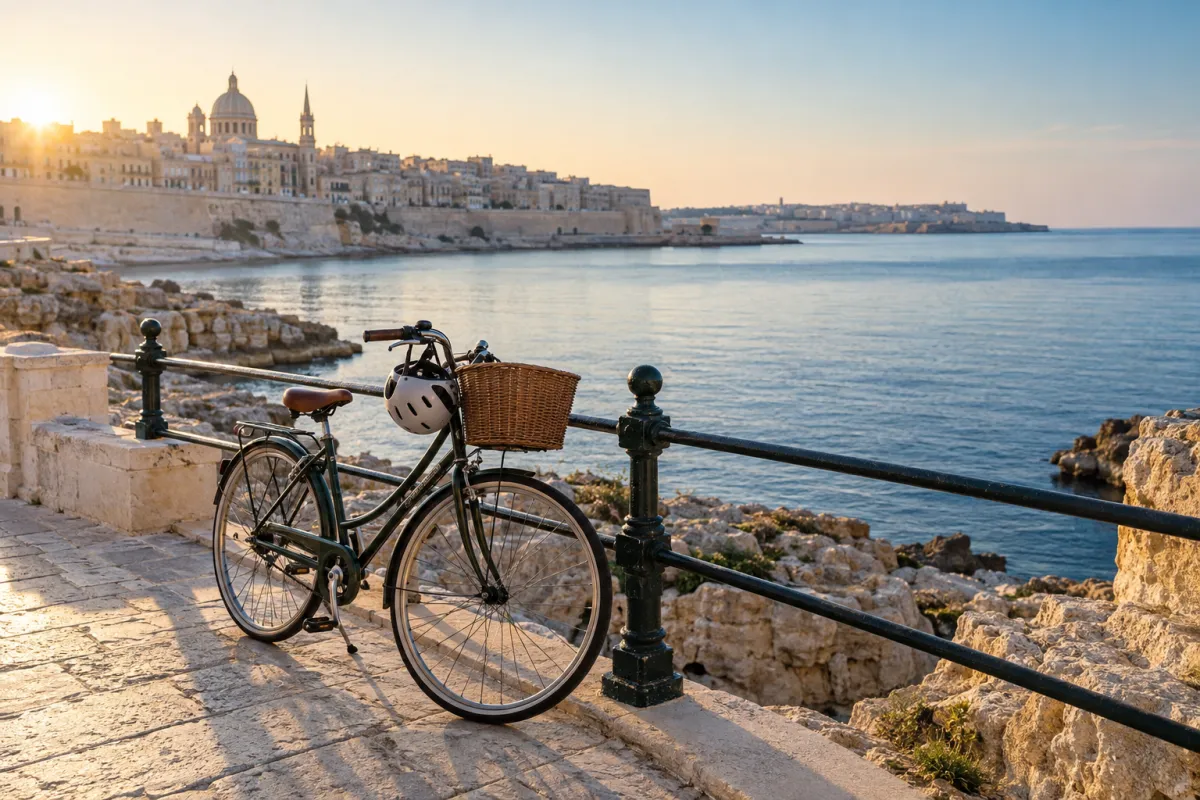
- Early-morning coastal rides on weekends, before traffic builds.
- Countryside back roads in the centre and north of Malta, around fields and small villages, where traffic is lighter.
- Gozo: quieter roads, countryside and coastal views make it the favourite weekend destination for many cyclists; take the bike on the ferry.
- Short urban hops between neighbouring towns in the harbour area, using side streets rather than main roads.
- Parks and open areas such as Ta’ Qali, used for walking, running and recreation.

Commuting by bike: a realistic plan
If you want to cycle to work, test the route before committing. Ride it on a Sunday morning to learn it, then once on a weekday at your actual commuting time. Look for parallel side streets that avoid the worst junctions, even if they add a few minutes. Ask your employer about bike storage and a shower, and keep a change of clothes at work for summer. Many people find a mixed approach works best: cycling on cooler days and outside rush hour, the bus or ferry on others. That flexibility is what makes cycling sustainable here rather than a summer experiment.
Seasons and weather
| Season | Cycling conditions | Tip |
|---|---|---|
| Autumn (October to November) | Warm, often the best riding weather | Watch for the first heavy rains and slippery roads |
| Winter (December to February) | Mild days, short daylight, occasional storms and strong winds | Lights, layers and a rain jacket |
| Spring (March to May) | Excellent: green countryside, comfortable temperatures | Peak season for longer weekend rides |
| Summer (June to September) | Very hot by late morning | Ride at dawn or in the evening; carry plenty of water |
Cycling vs bus, taxi and walking
For many newcomers, the bike is one tool among several rather than the only way to get around. The bus is free with a personalised tallinja card, taxis and ride-hailing cover late nights (see our Malta taxi prices guide), and walking is often fastest in the harbour towns. The bike shines for short trips outside rush hour and for weekend rides. If you are arriving by air, leave the bike for later: our guide from the Malta airport to Sliema by bus covers arrival day.
Group rides and meeting other cyclists
Riding with others is safer and a great way to make friends. Cycling clubs, informal weekend groups and charity rides exist across Malta and Gozo, and community events such as parish bicycle pilgrimages show how much local riders enjoy getting out together. Ask at bike shops, which often know the regular groups, and start with an easy-paced ride. If you prefer something smaller, suggest a sunrise ride for two or three people with a coffee stop at the end; it is one of the nicest ways to start a weekend here.

Safety checklist
- Plan routes on side streets and avoid main arterial roads at rush hour.
- Wear a helmet and bright clothing; use front and rear lights.
- Carry water, a phone and a basic repair kit.
- Expect cars to pull out and doors to open; ride away from parked cars.
- Take extra care on roundabouts and when roads are wet after the first autumn rains.
- Check Transport Malta’s rules for your type of bike.
- Consider third-party liability cover, especially for e-bikes.
Living in a town where cycling makes sense is part of the decision: our step-by-step guide to moving to Malta compares areas, and our guide to living in Gozo as an expat covers the island many cyclists love most.
If you are new to cycling here, start with short weekend rides on quieter roads and promenades before you try commuting. You will learn which routes are calm, where the hills are and how drivers behave, and you can build up from there at your own pace.
Cycling in Malta: FAQ
Is cycling in Malta safe?
It depends on where and when you ride. Main roads are busy, narrow and have few bike lanes, so many residents avoid them at rush hour. Quieter back roads, early mornings, countryside routes and Gozo are much more pleasant. Ride defensively, use lights and wear a helmet.
Is there bike sharing in Malta?
Yes. Malta Public Transport runs tallinja Bike, a bike-sharing system for residents and visitors in Malta and Gozo, with stations such as the one at the Valletta terminus. Fares depend on the card used.
Do you have to wear a helmet when cycling in Malta?
Published sources disagree on Malta’s current bicycle helmet rule, and I could not confirm it on Transport Malta’s or the official legislation pages, so this guide does not state it. Ask Transport Malta before you ride; whatever the rule, a helmet is strongly recommended on Maltese roads.
Can you take a bike on the Gozo ferry?
Yes. Gozo Channel lists a bicycle fare category for passengers travelling with a bicycle between Malta and Gozo. Tickets are validated in Gozo, on the return or start journey.
Do e-bikes need to be registered in Malta?
Power-assisted bicycles have been subject to registration with Transport Malta, and rules for e-bikes and e-scooters have changed several times. Check Transport Malta’s current requirements before buying or riding one.
Want to turn this into an actual plan? MeetNow is a free app for meeting people in person: a host posts a plan at a public place, says who pays (host pays, split, pay your own or free) and picks who joins. It works in your browser and on Android through Google Play, starting in Malta; the iPhone app is not in the App Store yet. Open MeetNow and see the plans in Valletta, Sliema and St Julian’s.
Rules on helmets, e-bikes and carrying bikes change; check Transport Malta, Malta Public Transport and Gozo Channel. We may mention products we are connected with; see the affiliate and product disclosure page linked in the site footer.