Most people who move to Malta alone sort out the flat, the bank account and the bus card within a few weeks. Then they notice that weekends are oddly quiet. Church communities in Malta for English speakers are one of the most overlooked fixes for that. You get a fixed time every week and the same faces each time. At some congregations, there is also tea and conversation afterwards that nobody has to organise.
You do not need to be devout for this to help, and nobody will quiz you at the door. What you do need is a realistic picture of three things: which congregations actually hold services in English, what happens after the final hymn, and how to turn a nod in the pew into someone you could message for a coffee. This guide covers all three. It also includes weekly plan examples and a first-30-days checklist you can copy.
A quick honesty note before we start. A congregation will not solve rent, traffic or the summer heat. It solves a narrower but very real problem: having somewhere to belong on a Sunday, when it feels as if the rest of the island is at a family lunch.
Is it hard to make friends in Malta? Why a congregation helps
Honestly, it can be. Malta is warm on the surface. People chat in queues, the bus driver nods back and the woman at the pastizzi counter remembers your order by the second week. But many Maltese social lives are built around family, school friends and the home village, and those circles were full long before you arrived.
The expat side has the opposite problem. People come and go on one- or two-year contracts, so the friend you made in spring may be living in another country by autumn. For the longer version of that picture, our guide to making friends in Malta with a 30-day plan goes through it step by step.
A church community quietly solves three of the usual problems:
- Repetition without effort. Friendships grow from seeing the same people again and again. A weekly service gives you that rhythm without you having to organise anything.
- Mixed ages and long roots. English-speaking congregations tend to mix retirees who have lived here for decades, young families, students and newly arrived professionals. The long-stayers know which pharmacy opens on Sundays, which landlords to avoid and which beaches stay quiet in August.
- A reason to talk that is not alcohol. A lot of expat socialising in Sliema and St Julian’s drifts towards bars. A tea urn in a church hall is a gentler start, especially if you do not drink or you are a bit of an introvert.
It also gives shape to the hardest weeks. If you have only just landed, our guide to moving to Malta alone in your first month explains why the second and third weekends are often the loneliest. A Sunday commitment fills exactly that gap.
It helps to know some local rhythms, too. Parish life in Malta is visible: bells, village feasts, processions and fireworks. Our list of things newcomers notice about Malta culture shock explains why the church sits so close to the centre of local life, even for Maltese people who rarely attend.
From faces to friends: a congregation gives you familiar faces, but turning one of them into a friend usually takes one small, specific plan. Think of a coffee after the service or a walk along the Strand next Saturday. MeetNow, a free app launching in Malta, is built around exactly that idea: plans at public places, not profiles.
Church communities in Malta for English speakers: where to go
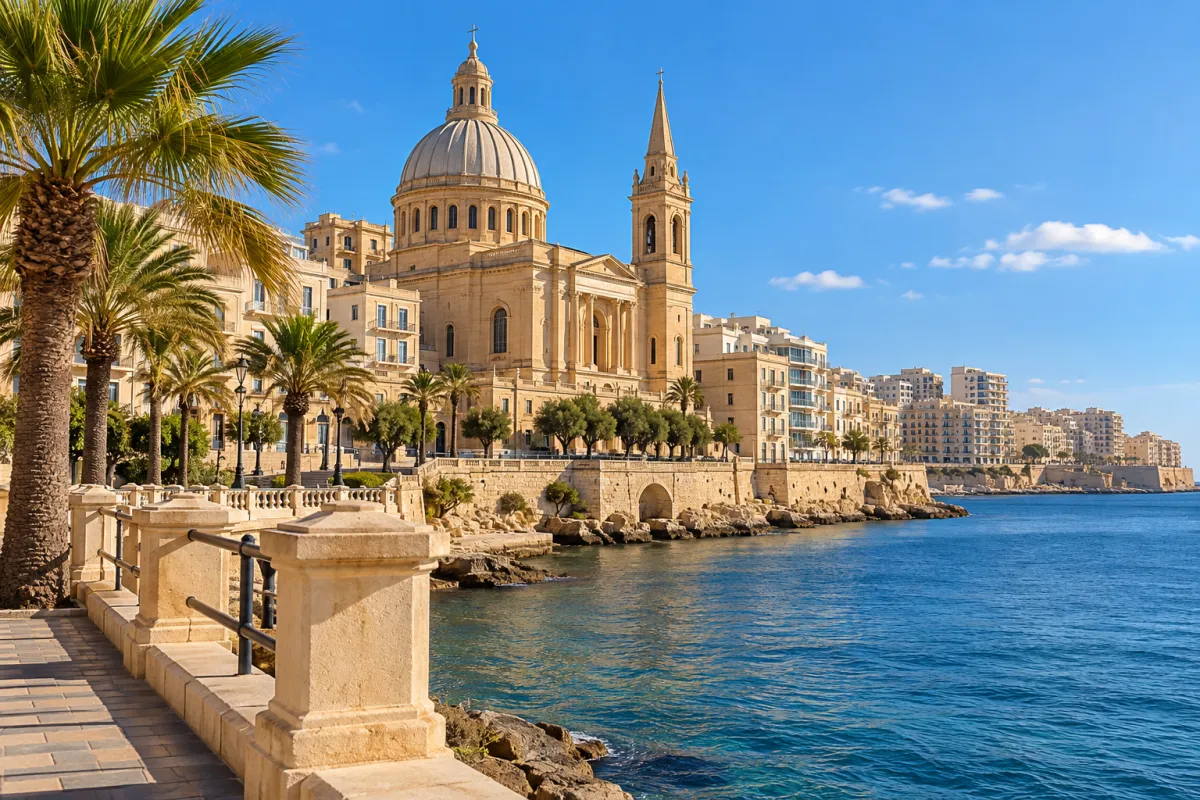
Most English-language services cluster in Sliema, St Julian’s and Valletta. That is handy, because these are also the areas where many newcomers rent and where many bus routes meet. Below are the congregations we could confirm on their own websites or official church websites.
Service details were last checked in May 2026. Times can change for feasts, holidays or parish reorganisations, so check the source before your first visit.
Catholic Mass in English in Sliema and St Julian’s
St Patrick’s Church in Sliema has the fullest English schedule we found. According to the St Patrick’s Church website, Sunday Masses are typically at 8:00 AM, 9:00 AM, 10:15 AM, 11:30 AM (Family Mass), 6:00 PM and 7:30 PM.
Having that many options matters more than it sounds. If you work weekend shifts, have a Saturday-night flight back from a trip or simply sleep late, there is still a slot that works. The choice also lets you test which crowd suits you. Early Masses tend to be quieter and older, while the Family Mass will be busier with children.
On the seafront, Jesus of Nazareth Parish Church on The Strand holds English Mass on Sundays and Feast Days at 11:30 AM, according to the Archdiocese of Malta. It is an easy option if you live around Gżira or the Sliema ferries and like to follow Mass with a walk along the promenade.
Further along the coast in St Julian’s, Our Lady of Mount Carmel, the Balluta parish church, holds an English Mass on Sundays at 11:00 AM (Archdiocese of Malta). Many English-language students and young professionals live within walking distance of Balluta Bay, so it is a practical choice if your weekday life is around Spinola, Paceville or St Julian’s.
Church of Scotland and Methodist: St Andrew’s Scots Church, Valletta
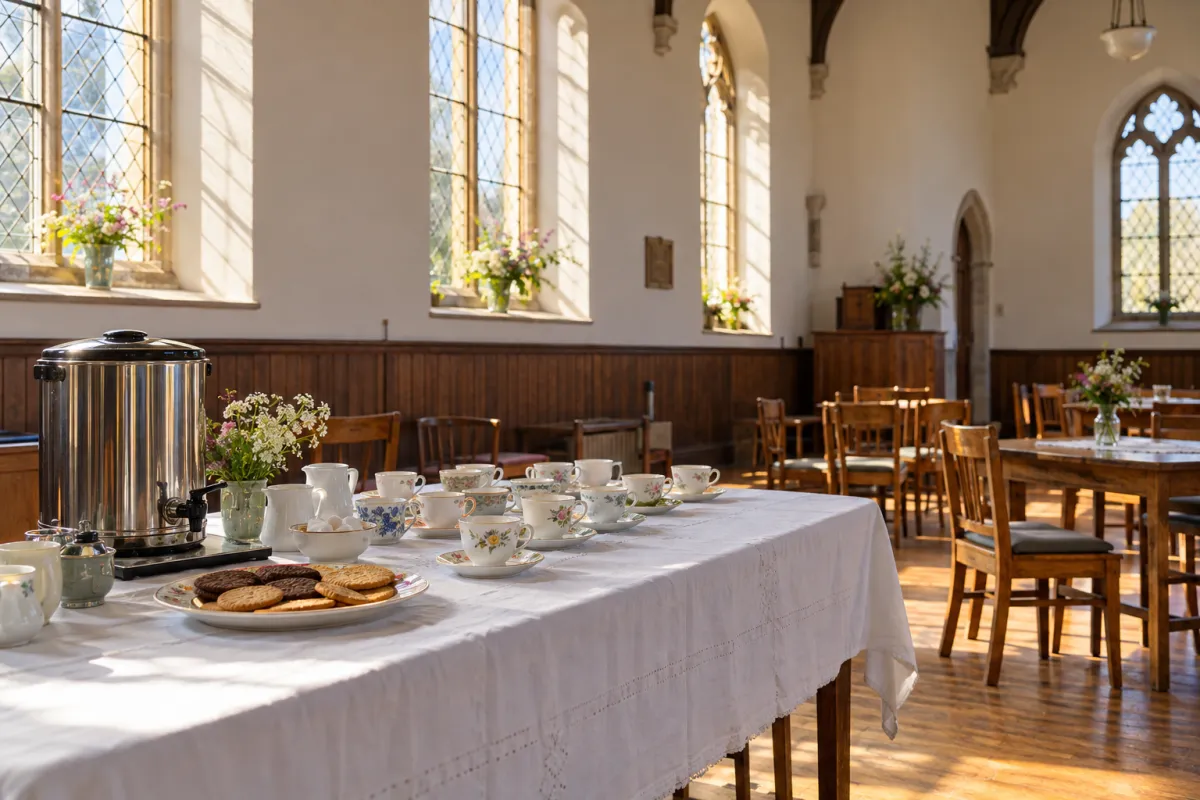
St Andrew’s Scots Church is a joint congregation of the Church of Scotland and the British Methodist Church. It meets for Sunday worship in English at 10:30 AM at 210 Old Bakery Street, Valletta, followed by tea, coffee and fellowship in the church hall (St Andrew’s Scots Church).
That last part is the most useful for newcomers. The socialising is built into the morning, so you do not have to engineer a conversation on the church steps. Just walk into the hall, take a cup and stand near the urn. Someone will usually ask where you are from.
Anglican: St Paul’s Pro-Cathedral, Valletta, and Holy Trinity, Sliema
St Paul’s Pro-Cathedral in Valletta and Holy Trinity Church in Sliema belong to the Church of England’s Diocese in Europe. Their listing on A Church Near You says that regular services are held principally in English, with traditional Anglican liturgies, a robed choir and weekly Sunday services.
If you sing, ask whether the choir welcomes new voices. Rehearsals give you a second weekly contact point with the same small group of people, and that is the fastest way to go from visitor to regular in any congregation.
Elsewhere in Valletta and beyond
Other Catholic churches in Valletta and the tourist areas also offer English Masses, but schedules shift more often than at the larger parishes. The safest approach is to check the Archdiocese of Malta’s own website or the notice board at the church door before you plan around a time.
This guide focuses on Christian congregations with English services. Other faith communities exist on the island too, and the same approach works there: pick one, go back four weeks in a row and stay for the conversation.
| Congregation | Tradition | Area | Especially good for |
|---|---|---|---|
| St Patrick’s Church | Catholic | Sliema | Flexible Sunday times, a Family Mass, evening options |
| Jesus of Nazareth Parish Church | Catholic | Sliema seafront (The Strand) | A late-morning Mass near the promenade |
| Our Lady of Mount Carmel (Balluta) | Catholic | St Julian’s | Students and workers living around St Julian’s |
| St Andrew’s Scots Church | Church of Scotland and Methodist | Valletta | Tea, coffee and fellowship built in after worship |
| St Paul’s Pro-Cathedral | Anglican | Valletta | Traditional liturgy and a robed choir |
| Holy Trinity Church | Anglican | Sliema | Anglican worship close to Sliema flats |
Details last checked May 2026. Always confirm on each church’s own website before your first visit.
What happens after the service, and how to stay for it
This is where most newcomers give up without realising it. They attend, enjoy the service and head for the door during the last hymn. Three Sundays later they have heard some lovely music but still know nobody.
What happens afterwards varies a lot by congregation. Smaller Protestant and Anglican congregations often have a social time built in, as St Andrew’s does in its church hall. At large Catholic Masses, people tend to leave quickly, because another Mass may be starting soon. In those parishes, the community lives in groups and activities rather than on the steps, so ask at the parish office whether there are English-speaking groups, volunteer rotas or newcomer events.
Small moves that make a big difference
- Arrive a few minutes early and sit somewhere other than the very back row. The people who greet newcomers usually sit near the middle.
- Stay for at least fifteen minutes after the service, even if it feels awkward. Awkwardness fades by the third week, but leaving early will not.
- Introduce yourself by name to whoever is at the door. Welcomers are often the best-connected people in the building.
- Ask one practical question. “Where do you do your food shopping?” or “Which bus do you take home?” is easier than small talk about the weather, and people like being useful.
- Write names down afterwards. It sounds clinical, but remembering someone’s name in week two is the single best way to be remembered yourself.
Simple openers that work
- “I’ve just moved to Malta. Is this your usual Sunday?”
- “How long have you been coming here?”
- “Is there anything newcomers usually help with?”
That last question is the one to keep. Saying yes to a small role, such as reading, welcoming, making tea, joining the choir or helping at a charity sale if the congregation runs one, changes your status from visitor to member far faster than attendance alone.
Weekly plan examples for your first months
None of these plans needs more than a few hours a week. The point is to put the church slot next to one or two other repeating activities, so you see some faces in more than one place.
Example 1: the remote worker renting in Sliema
- Monday to Friday: work from the flat or a coworking space, and take one lunchtime walk along the Strand instead of eating at the desk.
- Wednesday evening: one non-church activity that repeats weekly, such as a sports club, a language class or a volunteering slot.
- Saturday: errands and the beach, plus one message to someone you met last Sunday.
- Sunday: Mass at St Patrick’s or Jesus of Nazareth, then stay for fifteen minutes. From week three, suggest coffee nearby to one person.
Example 2: the English-language student in St Julian’s
- Weekdays: classes, plus one after-school activity with classmates that is not a bar crawl.
- Sunday morning: English Mass at Balluta, and bring a classmate if you can. Arriving with one person makes it much easier to start talking to a third.
- Sunday lunch: a simple meal with whoever came along, at a café on the bay. Each person pays their own, so nobody feels awkward.
- Why it works: your course will end, but a parish keeps going. Students who stay on for work often find that their church contacts last longer than their classmates, who fly home.
Example 3: the couple or young family
- Sunday: the Family Mass at St Patrick’s, where other parents are in the same situation as you and the children make conversation easier.
- Midweek: a school-gate chat or a playground meet-up with one family you recognise from Sunday.
- Once a month: invite one family for a picnic in a public park or on the promenade.
- Our guide for expat families in Malta on schools, weekends and making friends has more ideas for the weekday side.
Example 4: the introvert in Valletta
- Sunday: worship at St Andrew’s Scots Church or St Paul’s Pro-Cathedral, then one cup of tea and one conversation. After that you can leave with no guilt.
- Weekday evening: a quiet repeating activity, such as a choir rehearsal, a book club or a walking group.
- Goal: learn three names in a month. That is a perfectly good result.
Your first 30 days: a social checklist
Copy this list into your phone notes and tick items off as you go.
Week 1: choose and observe
- Pick one congregation that is close to home or on a direct bus route.
- Check the current service time on the church’s own website.
- Attend, notice who greets people and say hello to one person.
Week 2: be recognised
- Go to the same service again and sit in roughly the same area.
- Introduce yourself by name and ask one practical question about life in Malta.
- Add one weekly non-church activity to your calendar.
Week 3: stay longer
- Stay for the fellowship time, or ask at the parish office about groups.
- Ask, “Is there anything newcomers usually help with?”
- Write down the names you hear and use them the following week.
Week 4: make one plan
- Say yes to one small task, such as tea, welcoming or reading.
- Invite one person for a coffee at a public café near the church, with a clear day and time.
- Review the month: who was easy to talk to? Message them before next Sunday.
Church, Malta Facebook groups for expats and other circles
Malta Facebook groups for expats are excellent for logistics: flat hunting, second-hand furniture, finding a plumber or asking which office handles your residence paperwork. They are much weaker for friendship. Posts scroll past, threads turn into arguments and the person who offered to meet up often goes quiet.
The trick is to use online groups as noticeboards, not as your social life. Spot a repeating activity, then show up in person more than once. Our overview of the expat community in Malta, with groups, forums and clubs that exist lists the options we have checked.
Church also opens a door to Maltese life that expat groups rarely do. English-language congregations often include Maltese members, and parish events bring locals and foreigners together naturally. Feasts, charity events and choir concerts are all good examples. If meeting locals matters to you, pair your Sunday with the ideas in our guide on how to meet Maltese people beyond the expat bubble. Learning a few Maltese greetings to use at the church door goes a long way.
Why do expats leave Malta? Where community fits in
When people explain why they left Malta, the usual reasons are practical: rent, traffic and unreliable buses, summer heat, paperwork and limited career moves. Behind many of those stories, though, sits a quieter reason. They never built a circle that made the hassles feel worth it. A long bus ride feels very different when there is someone waiting for you at the other end.
A congregation will not lower your rent. What it can do is give you people who have handled the same problems before you. That might be the retiree who knows how to sort out a residence card renewal, or the family who can recommend a paediatrician. It also gives you a weekly anchor that does not depend on your job or your course.
Be realistic about turnover, too. English-speaking congregations lose members to job moves just like everywhere else in expat Malta. Keep widening your circle gently: one new name a month is enough to stay ahead of the departures.
Boundaries and safety when meeting people from church
Most people you meet through a congregation are exactly what they seem. Still, the usual sense applies when you move from a church hall to a one-to-one meeting:
- Meet in a public place for the first few times, such as a café, the promenade or a busy square, rather than someone’s home.
- Tell a friend where you are going and who you are meeting.
- Arrange your own way home so you never depend on a lift from someone you have only just met.
- Leave if you feel uncomfortable, without needing to explain. A polite “I need to head off” is enough.
- You owe no commitment. If you feel pressured to join groups, give money or change your beliefs, step back. A healthy community welcomes you whether or not you sign up for anything.
Want to turn this into an actual plan? MeetNow is a free app for meeting people in person: a host posts a plan at a public place, says who pays (host pays, split, pay your own or free) and picks who joins. It is live on the web and works in your browser, starting in Malta. The Android app is on Google Play; the iPhone app is not in the App Store yet. Open MeetNow and see the plans posted in Malta.
Frequently asked questions
Do I need to be religious to join a church community in Malta?
No. Anyone can attend a service, and nobody checks your beliefs at the door. Many newcomers start going for the sense of routine and community, then decide for themselves how involved they want to be. Be respectful during the service, and feel free to simply listen.
Which churches in Malta have services in English?
Catholic parishes in Sliema and St Julian’s, including St Patrick’s, Jesus of Nazareth on The Strand and Our Lady of Mount Carmel in Balluta, hold Sunday Masses in English. In Valletta, St Andrew’s Scots Church (Church of Scotland and Methodist) and St Paul’s Pro-Cathedral (Anglican) worship in English, and Holy Trinity in Sliema is also Anglican. Check each church’s own website for current times.
Is it hard to make friends in Malta as a newcomer?
It can take longer than people expect. Many Maltese social circles are built around family and school, and expat friends often leave after a year or two. Repetition is the fix: attend the same weekly activity, such as a church service, for at least a month and stay afterwards to talk.
Are there Protestant or Anglican services in English in Malta?
Yes. St Andrew’s Scots Church in Valletta is a joint Church of Scotland and British Methodist congregation, with tea, coffee and fellowship after Sunday worship. St Paul’s Pro-Cathedral in Valletta and Holy Trinity in Sliema are part of the Church of England’s Diocese in Europe and hold their regular services principally in English.
Are Malta Facebook groups for expats a good way to make friends?
They are better for practical help than for friendship. Use them to find flats, services and repeating activities, then show up in person more than once. Friendships in Malta tend to grow from seeing the same people regularly, not from online threads.
Why do expats leave Malta, and can a community help?
Common reasons include rent, traffic, heat, bureaucracy and limited career options, often combined with loneliness. A community will not fix costs, but having people who have handled the same problems, plus a weekly place to belong, makes the hard parts far easier to live with.