The quickest way I’ve seen newcomers go from knowing nobody to having people isn’t a networking evening or another app profile. It’s turning up at the same pitch, pool or court every week until the faces become names. Sports clubs in Malta for expats work because they give you what a lonely week lacks: a fixed time, a shared task and a reason to come back.
This guide is for people who already live here and feel stuck. Maybe your flatmates moved on, your colleagues head straight home to family after work, or your Sundays stretch out with nothing in them. It covers the realistic options, verified prices at public and private facilities, a 12-week plan, messages you can copy and paste, and what to do when a quiet Gozo winter or a Christmas on your own makes everything feel harder.
One honest note before we start: sport won’t fix loneliness on its own, and you don’t need to be good at anything. You need to be consistent. Most of what follows is about making consistency easy.
Why sport works when you feel stuck in Malta
Malta is small, friendly and surprisingly hard to break into. Three things work against newcomers. First, expat turnover: contracts end, students finish their courses, remote workers move on, and the friend group you built in your first months can thin out without warning. Second, Maltese social life runs on long-standing networks of family, village, parish and school friends. Those circles are warm, but on a weekday evening they’re already full. Third, the year has a rhythm. Summer is crowded, loud and full of visitors, while winter goes quiet and indoors, which is exactly when many people feel most alone.
Sport cuts across all three. A club has Maltese members and long-term residents, not just people passing through, so it’s one of the few places where the expat bubble and local life genuinely overlap. It meets on fixed days whether you feel sociable or not. And it gives you something to talk about that isn’t “So, how long are you staying?” If you want more routes into local circles, our guide on how to meet Maltese people beyond the expat bubble covers band clubs, volunteering and village life alongside sport.
The other advantage is lower pressure. You’re not there to “make friends”; you’re there to play. Friendships grow as a side effect of repetition: the same warm-up, the same jokes about the referee, the same coffee afterwards. For someone who finds small talk exhausting, that shared activity does a lot of the heavy lifting.
Sports clubs in Malta for expats: the main options
Think of your options as a ladder. At the bottom are solo routines where you simply become a regular. At the top are team sports where people expect you every week and notice when you’re missing. Most people do best starting low and climbing one rung at a time.
SportMalta’s public sports complexes
SportMalta, the national sports agency, runs several public complexes, including the National Pool Complex at Tal-Qroqq (between Msida and Gżira), the Marsa Sports Complex, the Cottonera Sports Complex and the Kirkop Sports Complex. Pay-per-session swimming is the easiest way in: no membership interview, no level test, no commitment. It’s less social by default, but regulars at the same time slot start to recognise each other, and many community clubs train at these venues, so it’s a good place to see what’s on.
That last point matters for your wallet. Registered sports organisations can use SportMalta premises and after-hours school sports facilities at rates subsidised by up to 75% of commercial rental values (SportMalta). This helps explain why small community clubs can often keep their fees modest, so a local volleyball or athletics group training at a public complex may cost less than a private gym membership.
Marsa Sports Club
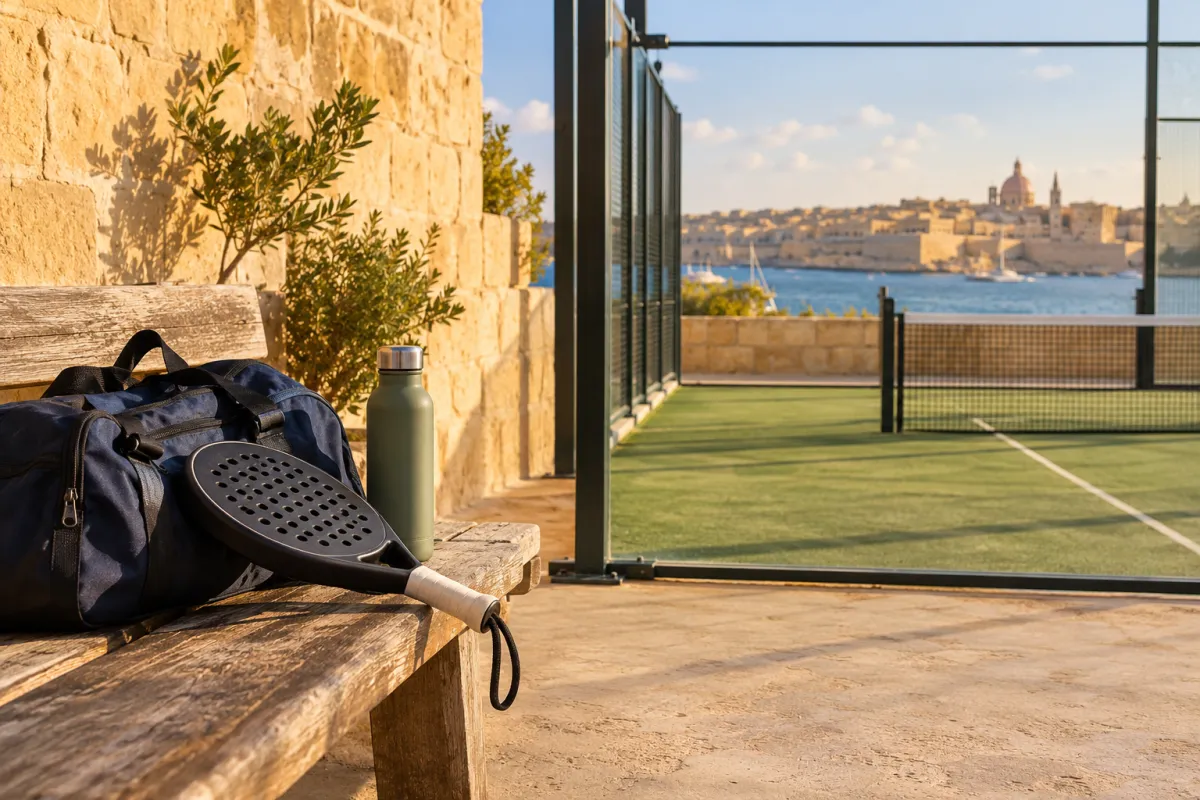
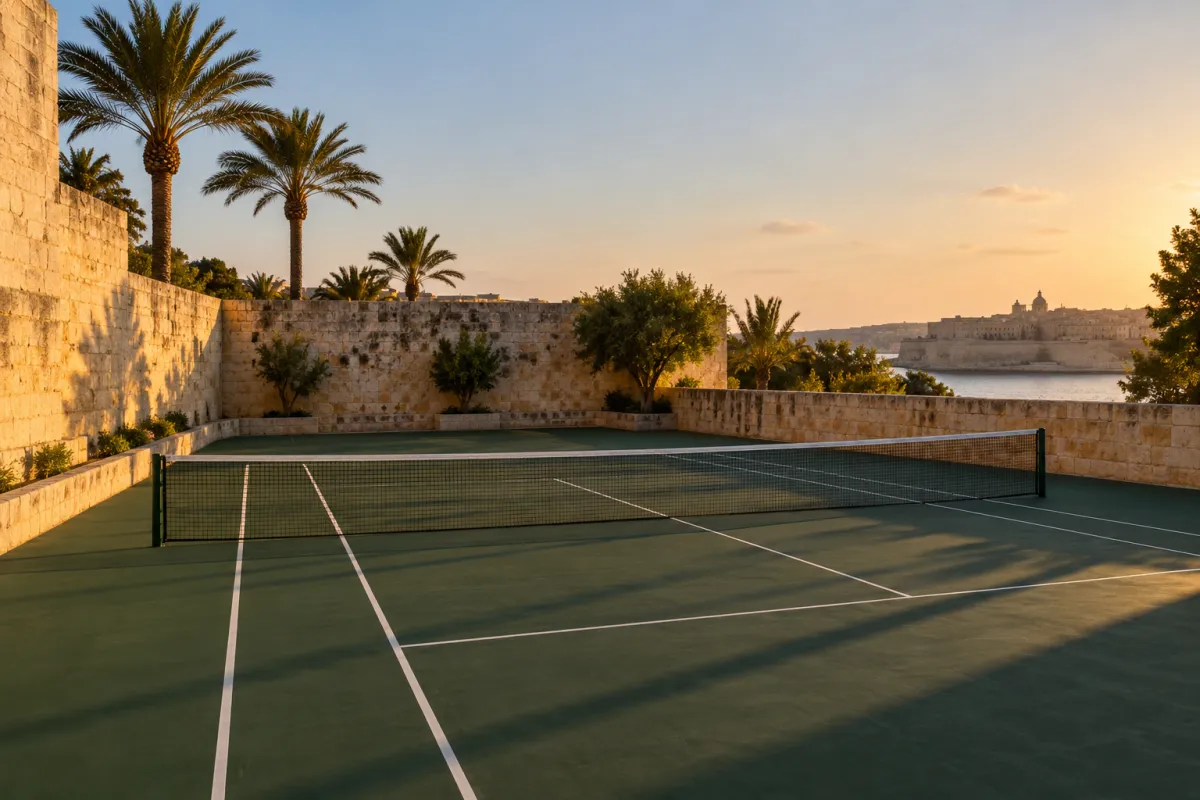
Marsa Sports Club is a long-established private club with tennis, squash and padel courts among its facilities. If you were hoping to join long term, the club states that “The Committee of Management has temporarily suspended accepting new applications for Club Membership until further notice” (Marsa Sports Club). The realistic route for newcomers is a temporary visitor pass, covered in the prices section below. A visitor pass gives general access to the grounds, but courts are charged separately, so budget for both.
Community and amateur clubs
This is where most friendships happen. Many towns have a local football club, and there are amateur and social groups in a range of sports, from running and cycling to volleyball, hockey and rugby. Water polo has a strong following in Malta and is mainly played in summer, while many land-based sports follow something closer to the school year, with a quieter spell in the hottest months. Ask any club you contact how their season runs before you commit, so you don’t join just as everything stops.
Look for clubs that explicitly run adult beginner or social sessions, or veterans’ and masters’ sections if you’re past your mid-20s and out of practice. If that’s you, our guide to making friends in Malta in your 30s has more on finding people at the same life stage.
Casual groups: running, walking and sea swimming
Informal groups that run along the coast or swim in the sea are a gentle middle step. There’s usually no fee, but there is a meeting point and a time, which is what you need. Ask at sports shops, gym receptions and club noticeboards, and check that any group meets in a public place you can reach and leave on your own.
Not ready to join a club? MeetNow, a free app that works in your browser and on Android through Google Play, starting in Malta (the iPhone app is not in the App Store yet), is built for small in-person plans: a host posts something like a padel game at a public court with the time, seats and who pays, and picks who joins. It’s plans, not profiles, so it can be a low-commitment way to find a regular playing partner before you sign up anywhere.
What it costs: verified prices
Fees at community clubs vary a lot, so always ask about trial sessions, season or membership fees, insurance and kit before paying anything. For public and private facilities, these are the published rates.
| Facility | What you pay for | Price (EUR) | Source |
|---|---|---|---|
| Marsa Sports Club visitor pass | Adult full day / half day after 3:00 PM | €20 / €10 | Marsa Sports Club |
| Marsa Sports Club visitor pass | Adult weekly / monthly, parking included | €80 / €200 | Marsa Sports Club |
| Marsa Sports Club court fee | Squash, 45 minutes | €11 | Marsa Sports Club |
| Marsa Sports Club court fee | Tennis, 60 / 90 minutes | €13 / €19 | Marsa Sports Club |
| Marsa Sports Club court fee | Padel, 60 / 90 minutes | €28 / €42 | Marsa Sports Club |
| National Pool Complex, Tal-Qroqq | Single swim: adult / student or senior (60+) | €8 / €6 | SportMalta bookings |
| National Pool Complex, Tal-Qroqq | 10-session card: adult / student or senior | €70 / €50 | SportMalta bookings |
A quick way to read this: if you want one regular racquet session a week at Marsa, you’re paying for a pass plus a court each time, so compare that with a community club’s monthly or seasonal fee before deciding. Padel courts are shared between players, so splitting the court fee with a regular partner or group makes a real difference. For swimming, the 10-session card works out cheaper per swim than single entries if you know you’ll go weekly.
How to choose a club you’ll keep going to
The best club isn’t the most prestigious one. It’s the one you’ll still attend in February when it’s raining, the bus is late and you’d rather stay in. When you compare sports clubs in Malta for expats, judge them on these points first:
- Bus first, sport second. If a session needs two buses each way after dark, you’ll stop going by week four. Check the route before you commit. Residents can get free bus travel with a personalised card, explained in our Tallinja card guide.
- A fixed weekly slot. Drop-in anytime sounds flexible, but it means you rarely see the same people. A set evening or weekend morning builds familiarity much faster.
- A social bit afterwards. Ask directly: “Do people usually stay around after training?” A club where everyone vanishes into their cars is fine for fitness, less so for friendship.
- The right level. Beginner or social sessions matter more than you think. Being the weakest player in a competitive squad is a fast route to quitting.
- Language. Training may switch between Maltese and English. Nobody expects fluency, but learning a few greetings and the names of common drills earns a lot of goodwill with Maltese teammates.
- Season timing. Find out when the club is busiest and when it pauses. Joining at the start of a season is far easier than slotting in halfway through.
If two clubs tick most boxes, pick the one closest to home. Proximity beats almost everything else when your motivation dips.
A 12-week sports plan for your first 90 days
This plan assumes you’re starting from zero and feeling a bit flat. It’s deliberately small, one action a week. For a broader plan that also covers work, home and weekends, see our 12-week plan for loneliness after moving to Malta.
| Week | Action | Where | Cost (EUR) |
|---|---|---|---|
| 1 | Pick two sports you’d happily do in winter rain or summer heat, and check bus routes to the venues. | At home, with a bus route planner | Free |
| 2 | Book one solo session to get moving again, for example a swim. | National Pool Complex, Tal-Qroqq | €8 single adult entry (SportMalta bookings) |
| 3 | Send the club opener message below to two or three clubs and ask about trial sessions. | Club websites, email or social pages | Free |
| 4 | Go to your first trial session. Arrive a little early and introduce yourself to the coach. | The club’s training venue | Varies by club; ask first |
| 5–6 | Return to the same session on the same day each week. Learn three names and use them. | The same venue | Club fee, varies |
| 7 | Stay for the coffee or drink afterwards, even briefly. | Café or clubhouse near the venue | Pay your own |
| 8 | Offer to help: carry kit, keep score or lend a hand at a club event. | The club | Free |
| 9 | Suggest one small plan outside sport with two teammates. | A public café or seafront walk | Pay your own |
| 10 | Add a second, flexible activity, such as a racquet game with a teammate. | Marsa Sports Club with a visitor pass | €20 day pass plus court, e.g. tennis €13 per hour (Marsa Sports Club) |
| 11 | Ask about season or membership fees and commit if it feels right. | Club secretary or committee | Varies by club |
| 12 | Review: who would you message if you were ill? Plan how your routine survives the next change of season. | At home | Free |
The weeks that decide everything are five to eight. That’s where most people quit, because the novelty has worn off and the friendships haven’t arrived yet. It feels like nothing is happening. Keep going anyway: this is exactly the stretch where people stop seeing you as “the new one” and start expecting you.
Copy-paste opener messages
The hardest part is often the first message. These are short, friendly and easy to say yes to. Edit them to sound like you.
To a club you’d like to try
Hi, I’ve recently moved to Malta and I’d like to start playing again. I’m at a beginner-to-intermediate level. Do you take new adult members, and is there a session I could try before joining? Happy to pay a trial fee. Thanks!
To a teammate after a session
Good session! I’m still finding my way around. Do people usually grab a coffee after training? I’d love to join next time.
Suggesting a plan outside sport
I’m going for a walk along the Sliema front on Sunday morning and then breakfast, pay your own. Anyone from the team want to come along?
To a Maltese teammate
Where do people from the club usually watch the big matches? I’d be up for joining if that’s okay with everyone.
To someone who’s gone quiet
Haven’t seen you at training for a couple of weeks, all good? We missed you in the warm-up.
That last one matters more than it looks. In a place with high turnover, being the person who notices when someone’s missing is one of the fastest ways to become someone people trust.
Making friends in Gozo as an expat through sport
Making friends in Gozo as an expat is a slower, different game. The island is smaller and quieter, especially in winter, and social life leans even more on family and parish networks than on Malta. There are fewer clubs and fewer sessions, so you’ll have less choice. The upside is that the groups which do exist tend to be close-knit, and a newcomer who keeps showing up gets noticed quickly, usually in a good way.
- Start with your local council and parish. Ask what community sport, walking or fitness activities run in your village. Many are never advertised online.
- Use the coastline. Walking and sea swimming suit Gozo well, and informal groups form around them. Stick to known routes and public meeting points.
- Keep one Malta-side anchor if you need it. If your sport simply isn’t available in Gozo, one regular session on Malta can work if you plan around the crossing. Check our Gozo ferry timetable guide before you commit to an evening slot.
- Be a regular everywhere. Same café, same bakery, same bench after your walk. In a small community, recognition builds into conversation faster than you’d expect.
- Host small. In quieter months, a simple shared plan, like a weekend walk followed by coffee, often works better than waiting for an organised event.
How long does it take to make friends in Malta?
The honest answer: longer than you’d like, and usually longer than it took at home. There’s no reliable figure for it, and anyone who promises friends in a fortnight is selling something. What I see again and again is a pattern. Acquaintances come quickly, within the first few weeks of a regular activity. The kind of friend you’d text when you’re ill, or who’d help you move flat, tends to take months of regular contact. Your first winter is often the real test.
Sport speeds this up because it builds in repetition you’d never manage socially on your own. You see the same people every week without having to organise anything. Signs it’s working, even when it doesn’t feel like it:
- People save you a spot or wait for you before warming up.
- You’re added to the team’s group chat.
- Someone asks where you were when you miss a session.
- You get invited to something that isn’t sport.
Expect turnover, too. Some of the people you click with will leave Malta, and that’s not a sign you’ve failed. The skill you’re building with sports clubs in Malta for expats isn’t one friendship; it’s a reliable way to keep meeting people, whoever stays and whoever goes.
Christmas alone in Malta: keep one fixed thing
Christmas alone in Malta catches many newcomers off guard. Maltese friends disappear into family gatherings, other expats fly home, and many club sessions pause for the holidays. The villages are festive, with lights and cribs, but festive can feel lonelier when you’re on your own.
- Ask before the break. In early December, ask your club whether any informal sessions continue over the holidays and who’s staying on the island.
- Check facility hours. Public pool and complex hours can change over the holidays, so check SportMalta’s booking pages before you set off.
- Post a small plan in your team chat. Something like: “Anyone around over Christmas? Coastal walk and coffee after, pay your own.” You’ll often find you’re not the only one.
- Give the day a shape. Something active in the morning, a call home, a proper meal, something outdoors later. Unstructured days are the hardest ones.
- Volunteer. Parishes and charities often welcome extra hands over the holidays, and it puts you among people with a shared purpose.
Meeting new people safely
Clubs are generally a safe, structured way to meet people, but the usual rules still apply whenever you’re meeting someone new, whether that’s a training partner, a walking group or a casual game:
- Meet in a public place, such as a club ground, public complex or busy café.
- Tell a friend where you’re going and who you’re meeting.
- Arrange your own way home, whether by bus, taxi or your own transport.
- Leave if anything makes you uncomfortable. You don’t owe anyone an explanation.
For sea swimming in particular, go with others and only swim where conditions are suitable for your ability.
When loneliness needs more support
When it’s more than loneliness
Loneliness is common after a move and usually eases with time and routine. But if you’ve felt low most days for weeks, lost interest in things you used to enjoy, are struggling to sleep or eat, or are having thoughts of harming yourself, please talk to someone. This isn’t medical advice; it’s a pointer to people who can help.
- Emergency: if you or someone else is in danger, call 112.
- Supportline 179: Malta’s national support line for anyone who needs someone to talk to or help finding the right service.
- Your GP or local health centre: a sensible first step for ongoing low mood; they can refer you on.
For a fuller list of services, including English-speaking options, see our guide to mental health support for expats in Malta. Helplines last checked January 2026.
Want to turn this into an actual plan? MeetNow is a free app for meeting people in person: a host posts a plan at a public place, says who pays (host pays, split, pay your own or free) and picks who joins. It is live on the web and works in your browser, starting in Malta. The Android app is on Google Play; the iPhone app is not in the App Store yet. Open MeetNow and see the plans posted in Malta.
FAQ
Can expats join sports clubs in Malta?
Yes. Most community and amateur clubs welcome adult newcomers regardless of nationality, and many have international members alongside Maltese players. Ask whether there’s a trial session, what the season or membership fee covers, and whether competitive matches need any extra registration with the sport’s federation.
Can I become a member of Marsa Sports Club?
Not at the time of writing: the club says its Committee of Management has temporarily suspended new membership applications until further notice. Newcomers can still use the club with a temporary visitor pass (daily, weekly or monthly), with court fees charged separately for squash, tennis and padel.
What is the cheapest way to start doing sport in Malta?
Free options include running, walking and sea swimming with informal groups. For a paid but flexible start, pay-per-session swimming at SportMalta’s National Pool Complex at Tal-Qroqq needs no membership, and a 10-session card lowers the cost per swim. Community clubs that train at SportMalta facilities often keep fees modest.
How long does it take to make friends in Malta?
Usually months rather than weeks. Most people find acquaintances come quickly, but the kind of friend you’d text when you’re ill tends to take a season of regular contact. Going to the same session every week and staying for the chat afterwards speeds this up more than anything else.
Is making friends in Gozo as an expat harder?
It can be slower because there are fewer clubs and social life leans heavily on family and parish networks, especially in winter. On the plus side, groups are close-knit and regulars get noticed quickly. Ask your local council and parish about activities, join walking or swimming groups, and plan any Malta-side sessions around the ferry timetable.
What should I do if I’m spending Christmas alone in Malta?
Plan it rather than letting it happen. Ask your club before the break whether informal sessions continue, check public facility opening hours, suggest a small pay-your-own walk or coffee with others who are staying, and give the day a simple structure. If low mood goes beyond the holidays, talk to a GP or contact a support line.